











Select a language
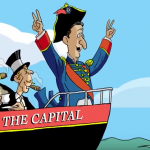
What will happen if British voters choose to leave the EU in the 23 June referendum? While Nicolas Vadot and Euronews executive board president Philippe Cayla have released a short animated film depicting the Gloomy aftermath of Brexit. As the UK votes out of the EU and decides to sail away from the Continent with its bags of saved cash, Europe’s top politicians decide to “save” Scotland. “We thought that caricaturing European leaders was a good way to make them popular amongst a wide public. That’s why we needed a cartoonist who was good at portraying them, and Nicolas Vadot was perfect for that!”, says Philippe Cayla. “I wanted to point out the two main risks faced by the British should they vote for Brexit”, he adds: “Scotland’s secession and money drain from the City. Then I added some clichés to add some humour, while showing that Britain’s EU partners will be merciless should the Brits vote ‘Out’.”
Even more gloomy is the UK Treasury analysis on the ‘Immediate economic impact of leaving the EU’: “a vote to leave would represent an immediate and profound shock to our economy”, it says. Britain would face a recession in the first year after the Brexit, with the loss of half a million jobs, while GDP would fall by 3.6 percent, salaries would go down by 3 percent and the pound would lose 12 percent to the Euro. And that is just the “light scenario”. Under the “severe scenario”, GDP would fall by 6 percent, 820,000 jobs would be lost, salaries would go down by 4 percent and the pound would lose 15 percent to the euro.
Both sides are scaremongering, but the economic arguments for Bremain seem to add up, with the latest opinion polls showing that the “In” vote is leading. Bookmakers have come to the same conclusion. Analysts say that young voters will be decisive, as those under 35 are more likely to vote to remain.
Do you like our work?
Help multilingual European journalism to thrive, without ads or paywalls. Your one-off or regular support will keep our newsroom independent. Thank you!


