











Select a language
In this essay, I will demonstrate that the Georgian Dream is the first accelerationist government, and that it is merely a small part of the authoritarian tsunami that is threatening the entire world. To better understand the Georgian Dream's vision and the significant role played by China, we must analyse current global politics and abandon the political framework of perestroika.
The perestroika lens must be shattered
In the current global political climate, it is somewhat amusing to see how so-called [Georgian] civil society appeals to the free world, given that there is practically no trace of it left. The current US president previously owned a chain of sham online universities, while Elon Musk, the self-proclaimed fighter “against corruption”, is trying to convince streamers on X (formerly Twiter) that he is a true gamer, before admitting he boosted his position on the Leaderboard in The Path of Exile 2 and Diablo IV.
The bet placed by the Georgian Dream on Donald Trump’s victory in 2024 presidential election isn’t accidental; it doesn't expect Trump to “understand”, but rather hoped that the United States will abandon the Democrats’ geopolitical ambitions, a change which is already becoming evident.
The wave of anti-terrorist wars led by George W. Bush had its roots in Bill Clinton’s militaristic humanism in the post-Soviet era. In the early 2000s, this generated the expectation that Georgia would join NATO under the rising influence of the US. Yet in the era of Trumpian anti-globalisation, that prospect now seems remote.
The assumption of political scientist John Mearsheimer and Russian studies scholar Stephen Cohen (expressed before the 2014 Russian annexation of Crimea) suggesting that the war in Ukraine would be primarily determined by NATO expansion has now become mainstream across political spectrums.
Ivanishvili, the Superman
In a 2009 essay, billionaire libertarian activist Peter Thiel declared that he no longer believed freedom and democracy were compatible. For Thiel, democracy represents a bloated state with an ever-growing class of beneficiaries. What, then, is the alternative? He proposes unrestrained techno-capitalism – a system critics often call techno-feudalism. Such a society is far from democratic, because elections gradually lose their meaning.
So what should governance look like? According to economist Hans-Hermann Hoppe, a monarch is a dynastic monopolist who treats subjects as possessions. Under democracy, monopolies and exploitation do not disappear; instead, power shifts to a temporary “caretaker” who manages the state for the benefit of themselves and their allies. This figure does not own the country, but can use it while in office. They have rights of “usufruct” but not ownership of the state’s capital assets. This does not eliminate exploitation; rather, it makes it less predictable and encourages careless treatment of public resources.
In my view, the only genuinely “democratic” moment in Georgian history was the peaceful transfer of power in 2012. Beyond that, almost nothing in the country functions as it should in a democratic system. Elections remain a clear example: none have taken place without coordinated voter manipulation – through bribery, threats or promises of benefits.
The modern feudalism represented by Bidzina Ivanishvili and his Georgian Dream party is not an isolated phenomenon; nostalgia for feudal order exists elsewhere in the world.
Accelerationism: Anti-liberal Anti-democracy
Accelerationism’s core principle is simple: rather than restraining capitalism, it should be driven forward at full speed. Left-wing accelerationists believe that having elected someone like Donald Trump will eventually push capitalism to such an absurd extreme that it collapses. Right-wing accelerationists, meanwhile, argue that democracy and liberalism obstruct technological progress; therefore, power should shift fully to the “feudal” class – billionaires. In the West, even where democratic institutions are strong, authoritarianism now has a firm foothold. Distrust of institutions is also incredibly high precisely where they function best.
Philosopher Wendy Brown states that neoliberalism is a key driver of anti-democratic and anti-institutional sentiment. Studies consistently show that economic inequality may erode trust in institutions and fosters polarisation. It is no accident that some people who voted for Bernie Sanders also voted for Trump. Protectionism and anti-globalisation sentiments resonate strongly among MAGA supporters but also among parts of the progressive left. Both Sanders and Trump present themselves as anti-establishment figures promising to “make America great again” – one through healthcare reform and taxing the rich, the other through dismantling the “deep state” and reshoring production.
In Georgia, decades of neoliberal policy led to the transfer of core state functions to NGOs. The Ministry of Environment, for example, does not assess major development projects; construction companies conduct their own assessments and submit them for approval. In practice, the Ministry may issue permits before any environmental evaluation has taken place. This practice has been sharply criticised by the UN Sustainable Development Programme.
Research has largely vanished from Georgian universities, despite their mandate to conduct it. Most PhD students must work additional jobs simply to afford tuition. As a result, social, political and cultural research is carried out primarily by NGOs. Yet state institutions that have relied on NGO support – such as the legislative system and local government – still fail to function effectively. This became evident in the 2000s and has not improved.
In a summary by the Carnegie Endowment for International Peace, John K. Glenn, former director of the Council for European Studies at Columbia University (New York), noted that NGOs in post-communist countries played an essential role in building institutions associated with democratic governance, despite minimal resources. However, he also stressed that these NGOs had little influence on how those institutions ultimately operated.
Today it is clear that consultations, workshops and training manuals cannot ensure the proper functioning of state institutions. Their effectiveness depends entirely on societal culture and direct public demand. In Georgia, institutions exist largely on paper, which has enabled autocrats to seize control with ease.
A significant part of Georgian society is seeking political alternatives and rejecting the idea that democracy consists merely of voting every four years. If Georgia is to avoid sliding into irreversible authoritarianism, the hope lies with these people
It is therefore unsurprising that some public figures once linked to the liberal left have rallied around Georgian Dream. They no longer believe democracy can emerge in Georgia, arguing that it will forever be a marketing tool in the hands of the former ruling United National Movement – the party of ex-president Mikheil Saakashvili, now under house arrest. Crucially, for these figures, “National Movement supporters” includes anyone who is not Bidzina Ivanishvili. They place their hopes in this ascetic, carrot-juice-drinking “Superman” who “genuinely loves Georgia”. Ivanishvili is not cruel, they claim; on the contrary, they believe he can cure the country of its fatal illness.
Of course, they are wrong; but that’s not the most important. What is important is whether Ivanishvili acts in his financial interest, which is still unclear. Among his most fervent supporters, he is viewed as a messianic figure. Their unwavering faith alone shows how harmful Georgian Dream’s actions are. The party imagines an affluent state shaped by Ivanishvili’s benevolence and sense of responsibility.
Ivanishvili has linked his wealth to the Cartu Fund [his philanthropic organisation] and the Georgian state budget. According to the party’s narrative, he repays national debt, supports publishers and artists, and funds the construction of churches and universities – in short, he takes care of the Georgian people. Many Georgian Dream supporters believe he is the only one who can save the country. We may criticise this as irrational, but political loyalty is rarely rational.
A recent example illustrates this clearly. Many Americans believe USAID is corrupt, citing “evidence” that has repeatedly been debunked. Even when proven false, Trump supporters cling to the belief that the establishment is inherently corrupt. I believe such convictions stem from neoliberal inequality, social alienation and the political echo chambers of social media.
Politics is rarely rational. People’s political attitudes seldom change in response to arguments. Consider the 1995 O. J. Simpson trial: many believed he was unjustly targeted due to institutionalised racism. As journalist Sam Smith observed, the defence narrative was “the mythic translation of stories never allowed to be told… everything was true except the names, times and places.” His observation resonates today with widespread disillusionment in Georgia and elsewhere.
The paternalism of authoritarianism
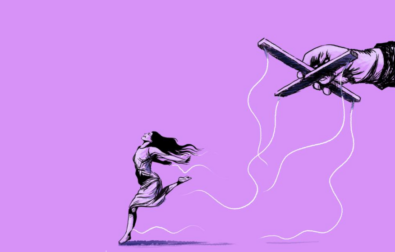
The distinction between right-wing and left-wing accelerationism is often ambiguous. Popular blogger Curtis Yarvin (Mencius Moldbug) claims that a country, like a company, needs a CEO to succeed. By this logic, is Ivanishvili not Georgia’s national CEO? Like a CEO, his responsibilities are undefined, and governance is delegated to trusted subordinates. His authoritarian style mirrors linear, corporate-style management.
This paternal tone also characterises Georgian Dream’s response to citizens demanding new elections or the release of political prisoners. It resembles a father offering forgiveness to a misguided child – if only they show remorse and behave properly.
The conservative wave has reached the European Union. In France, the entire political spectrum has united to block Marine Le Pen, while in Germany the Alternative for Germany (AfD) is now the second-largest party – something inconceivable a decade ago. Eurosceptic parties may soon lead some of the EU’s most influential states. This trend is not irreversible, but it casts a shadow.
European integration requires institutional reform and democratic culture – an extremely beneficial but long-term process. Yet European conservatism has given Georgian Dream new opportunities to influence areas once beyond its reach, such as universities, film, theatre and research bodies.
What leverage does the EU have? Sanctioning Georgian Dream officials might make Georgia less attractive to European investors, but EU investment in Georgia is modest, and an embargo is unlikely. As Michael Roth, Chair of the German Bundestag’s Foreign Affairs Committee, noted during a press conference last January in Tbilisi, sanctions against specific individuals require unanimous approval from EU ministers. This is improbable given that the Georgian government enjoys support from pro-Russian forces within the EU – including Germany’s AfD, Hungary’s Viktor Orbán and Slovakia’s Robert Fico.
The current geopolitical climate in the EU and US works to Georgian Dream’s advantage. Trump’s future stance is unpredictable, but Georgian Dream’s investments in these relationships have paid off.
China’s silent tentacles
For decades, Georgia’s political class and Perestroika-era intellectuals fixated on Russia while overlooking China’s growing influence. Local think tanks alternately portray China as a threat or a negligible actor – sometimes both. The Civic Idea NGO founded by former defence minister Tina Khidasheli has exemplified this ambivalence.
In its report “Chinese Investment in Georgia: A Drop in the Ocean”, Civic Idea notes that the largest direct investments come from the UK, the Netherlands, and Malta. It argues that true economic partnership requires growing direct investment accompanied by expanding business activity. Chinese companies building roads, bridges and tunnels in Georgia are funded largely by Georgian taxpayers and operate at the government’s request. Their involvement, therefore, does not reflect increasing Chinese investment or rising economic appeal.
At first glance, it is surprising that the UK and the Netherlands rank as top investors, but the explanation is straightforward: many major Georgian companies are formally registered there, including Mars (Crystalbet), Silk Road Group and Tbilisi Energy. These companies appear as foreign investors.
Still, the report does not discuss the huge economic importance of Chinese-managed infrastructure projects. Although the 2017 free trade agreement with China has not produced an economic boom, China’s role in Georgia’s infrastructure – especially in strategic areas – is significant.
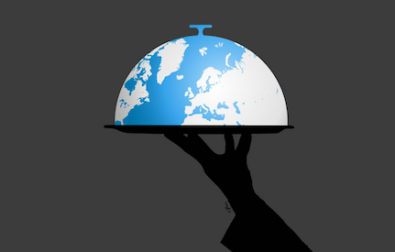
Cooperation with China benefits Georgian Dream because Beijing does not concern itself with Georgia’s internal politics, democratic reforms or cultural issues. Meanwhile, Georgia is valuable to China for Belt and Road Initiative logistics. Ideally, Georgia would provide a route connecting China to the EU via the port of Anaklia. This route has become more important since the war in Ukraine disrupted China’s land routes through Kazakhstan, Russia and Belarus. Georgia could also facilitate trade between China, Azerbaijan and Turkey through modernised infrastructure.
State propaganda suggests that if Georgia becomes a key transit corridor, the threat of Russian aggression will diminish. Illustrating these aspirations, POSTV analyst Nukri Shoshiashvili said on 1 June 2024: “Why does this happen [Chinese investment in infrastructure and industry]? What is its goal? Exactly the same as the US had in Europe after WW2, very similar to the Marshall Plan. It’s not only an economic project, more a large-scale social and political project: what Europe was in the last 70 years of peace, now Caucasia must be with its Middle Corridor.”
Nobody yet knows the future scale of the Belt and Road Initiative. It may not be viable for China to pursue export-centred strategies in the long run. But many believe that large-scale Chinese investment often becomes a form of economic colonisation, as seen in several African countries.
Georgia’s alternatives
In the aftermath of the war in Ukraine and the rise of anti-globalist powers, Georgia does have alternatives. Yet Georgian Dream and Ivanishvili continue presenting him as a benevolent “national manager.” They have succeeded partly because the opposition remains politically stuck in an earlier era – if not in Cold War nostalgia.
Many Georgian Dream supporters fail to recognise authoritarianism as a weakness of the government. The same is true among segments of the US Republican Party and supporters of new “conservative” autocrats worldwide. Distrust of “the system” is widespread – even though what constitutes “the system”, the “Deep State” or the “Global War Party” is rarely clear. Accelerationist governments exploit this for political gain, often exacerbating them. Their message is that everything is corrupt and must be destroyed so society can start anew. This worldview is relatively new – and requires new responses if democracy is to survive.
Georgian Dream enjoys deep support and is executing its vision through steady, often brutal steps. Geopolitical shifts cannot justify the documented cases of torture and the violent dispersal of protests in recent months. The party clearly intends to instil fear through excessive force. It will not relent until it has complete control over every sphere of social life.
As a result of this foreign-policy shift, a significant part of Georgian society is seeking political alternatives and rejecting the idea that democracy consists merely of voting every four years. If Georgia is to avoid sliding into irreversible authoritarianism, the hope lies with these people. The country is witnessing unprecedented protest movements and the emergence of a politically engaged society. The struggle ahead will be difficult, but it is underway.
👉 Original article on Indigo
O
Do you like our work?
Help multilingual European journalism to thrive, without ads or paywalls. Your one-off or regular support will keep our newsroom independent. Thank you!


