













Select a language
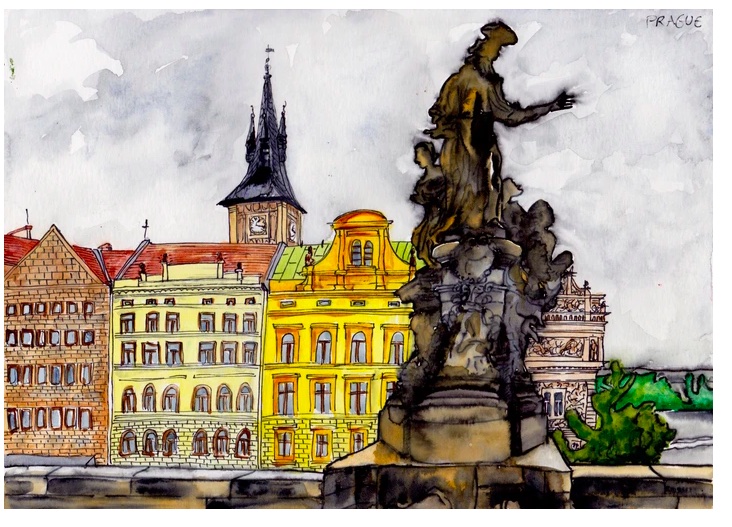
Once upon a time, in the bleak year of 1985, when Konstantin Chernenko died just thirteen months after Yuri Andropov, and a certain Mikhail Gorbachev became the head of the USSR, which was then still a country that was supposed to last forever, Jiří Dienstbier, one of the most inspiring Charter 77 dissidents in the phenomenally grey Gustáv Husák's Czechoslovakia, wrote a charming, highly utopian essay called Snění o Evropě ("Dreaming of Europe").
The essence of his utopia was a vision of a continent without two power blocs, no Warsaw Pact, no NATO, where all citizens would enjoy peaceful life in a "common European house": the Czechoslovaks, the Balts, the Yugoslavs hand in hand with the Germans (united, of course!), the Norwegians, the British; believe it or not, at that time he even dreamed of the Russians joining the great European family.
In a magical turn of events, it took less than five years for Jiří Dienstbier to become the foreign minister of Czechoslovakia after the 1989 revolution, which was called "gentle" or "velvet" because of its peaceful and civil nature.
One of the most common slogans to be seen on the do-it-yourself banners that adorned Czechoslovak squares in those innocently naïve November days was quite oxymoronic in nature, for it read "Return to Europe" or "Back to Europe", which seems to make no sense in a country that is geographically described as Central European.
But there it was, declaring the ambition to fulfil the utopia of Dienstbier's daring book.
Although it took fifteen long and turbulent years - which probably brought more disappointments and losses than gains and joys - to fulfil this dream, when the day finally came in 2004, the Czechs were ready to confirm their ambition to become part of this community of "advanced" European nations by a resounding majority: almost four out of five voters who took part in the referendum expressed their wish to join the EU – the majority was overwhelming and the mood was jubilant.
Cut.
Twenty years have passed and we see a very different picture. A picture of a country deeply disinterested in European affairs, with one of the lowest turnouts in European Parliament elections. A picture of a country deeply divided between the defenders of the struggling, underperforming centre-right government and the supporters of its ever-growing nationalist, populist, authoritarian opposition. A picture of a country with arguably the most inspiring democratic leftist tradition in the whole of the former Eastern bloc, with no significant left parties left. A picture of a deeply disillusioned country with a fragile democracy on its last legs.
How this will affect this year's European elections remains to be seen. Perhaps there will even be charming side stories told by the few foreign reporters who bother to come. Maybe you will read a nice one about the EU's strongest Pirate party sending some brilliant and bright young people to Brussels. Or the one about a rejuvenated Green Party that, after nearly twenty years in the wilderness, is offering an attractive ticket headed by a charismatic young woman, Johanna Nejedlová, who made a name for herself with a successful campaign to redefine the crime of rape in Czech criminal law, with the former leader of the Czech Fridays for the Future movement, Petr Doubravský, running at her side.
But however heartwarming these stories may be, they will be nothing more than a deceptive distraction, since these lists will provide the next European Parliament with at most three to four MEPs - out of a total of 21 Czech MEPs. In other words, this will be a tiny unit compared to the army of political "monsters" that will be elected on the lists of the extreme right, the ultra-conservative right and, above all, on the list of Andrej Babiš's populist movement, which is almost certain to win the European elections in the Czech Republic - the only question is by how much and how many MEPs it will add to the previous result of six.
The Czech Republic is also almost certain to retain its dubious uniqueness as the only EU country with no elected MEPs from either the social democratic or the left. But while the implosion of the Czech left – the Social Democrats were the strongest party in the Czech Republic only ten years ago – is highly instructive, it is another story.
A country with arguably the most inspiring democratic leftist tradition in the whole of the former Eastern bloc, with no significant left parties left
The chaotic pre-election campaign will bring all kinds of torture to those who believe, as I do, that the European Union has the potential to become the true ideological heir of Tomáš Masaryk's and Dienstbier's Czechoslovakia. They will now look in vain for parties that promise to defend European interests in the Czech context rather than the opposite, as is currently the case.
So the most interesting events will come after the elections. Will Emmanuel Macron and his European liberal compatriots repeat their colossal hypocrisy by inviting Andrej Babiš's Orbánist MEP pool back into the liberal Renew group? Or has the lesson of Babiš campaigning alongside Orbán and Fico against the liberals in the recent Slovakian parliamentary elections been enough?
Of course, Macron is not alone. It took too long for the European socialists to come to terms with their membership of Fico's party, or for the EPP to kick out Orbán. Here is a radical suggestion: could it be that this condescending "intra-European orientalism" with which CEE political entities are treated by their French or German counterparts contributes to the widespread disillusionment with the EU that we see across the region?
Whatever the answer, for the Czechs the final sentences of the current political chapter will not be written now, but only in the parliamentary elections of 2025, when the authoritarian parties are expected to turn their ever-growing support into a landslide. It is a unique time to live in this country. For we in the Czech Republic are witnessing the death of a democracy foretold.
The European elections will be only a minor incident on this fatal journey. Nevertheless, one could say that when the 200 million citizens of the Union go to the polls to elect the next cohort of MEPs, a European question will loom large: how did it happen that the Czechs do not dream of Europe anymore?
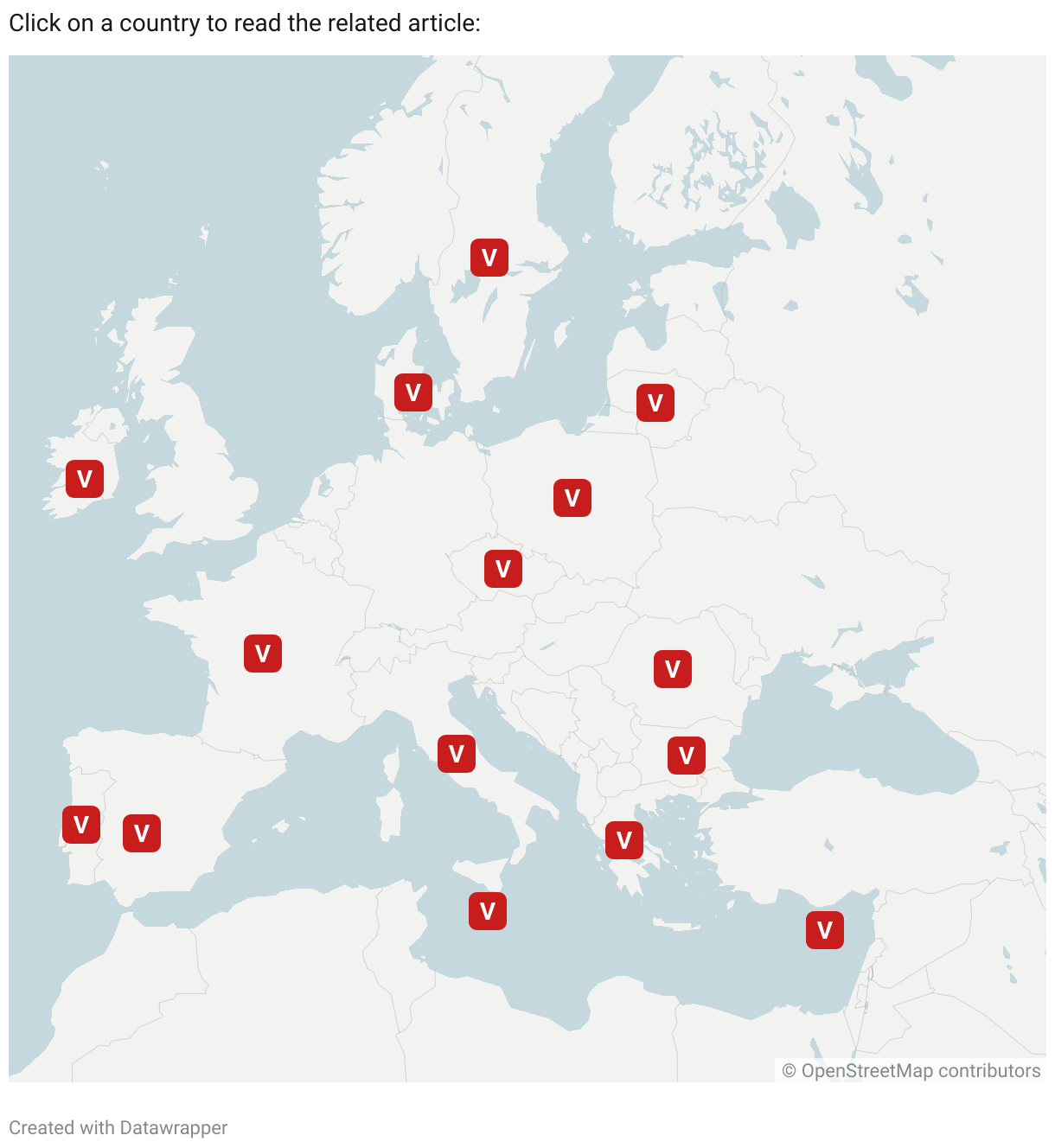
This article is part of the Voices of Europe 2024 collaborative project, involving 27 media outlets from all over the EU and coordinated by Voxeurop.
Do you like our work?
Help multilingual European journalism to thrive, without ads or paywalls. Your one-off or regular support will keep our newsroom independent. Thank you!


