














Select a language
The banlieue is “a village where everyone knows each other; where there are criminals, liars, kind people and bad people; where stories are passed down, as well as misfortunes and joys; but above all, it’s a village.” Rachid Laïreche, a journalist for Libération daily, tells me this at a bistrot table in the 13th arrondissement of Paris. Originally from Montreuil, a town in Seine-Saint-Denis, east of Paris, Laïreche is the author, together with Ramses Kefi, of Le Retour du roi Jibril. Les contes de la cité (“The Return of King Jibril: Tales of the Town”, L’Iconoclaste publisher, 2025), a book with the banlieues as its backdrop. The banlieue, he adds, is also “a village where there are more poor people than elsewhere.”
In France and elsewhere, the word banlieue evokes densely packed imagery, facts and stereotypes surrounding poverty, unemployment, crime, colonial and post-colonial history. These are regions on the “margins”: on the margins of data (too much of this, not enough of that), on the geographical margins (typically of large city centres, in this case Paris), and on the margins of politics (of power dynamics and decision-making).
Despite their proximity to the “centre”, these territories are characterised by severe economic, social, and environmental inequalities, as well as a culture that is unique to the territory and its history.
In France, many of these contradictions are concentrated in Seine-Saint-Denis, also known as Neuf-trois (“Nine-three”) – 93 being the number of the administrative division, or district. Part of the Ile-de-France region.
Seine-Saint-Denis is the poorest district in metropolitan France: 27.6% of its 1.7 million inhabitants live below the poverty line (compared to the national average of 15.4%, a figure which is rising). "The fact that these are precarious, poor neighbourhoods says a lot. It also says that there are very strong social dynamics. Dynamics of subsistence, of bonds between inhabitants, which are very important," says Héléna Berkaoui, journalist and editor-in-chief of the Bondy Blog, an online newspaper created in the wake of the 2005 banlieue riots.
The riots erupted after the deaths of two teenagers, Zyed Benna and Bouna Traoré, while they were hiding out of fear (and only out of fear) from a police check in Clichy-sous-Bois, also in Seine-Saint-Denis. The Bondy Blog works to fill the void in the representation of working-class neighbourhoods, not only in terms of how they are portrayed, but also in terms of how the news is produced, and above all by whom.
| The Seine-Saint-Denis, district of records |
| Seine-Saint-Denis is the youngest department in metropolitan France (42% of residents are under 30) and, as Le Monde reports, the department is deprived of almost everything: there are fewer teachers, fewer police officers, fewer magistrates, and fewer doctors (49.8 general practitioners per 100,000 inhabitants, compared to a national average of 83.5). And then there’s the environment: “In this district of the Ile-de-France region,” Socialter magazine reports, “in addition to five Seveso-classified establishments, there are already numerous incinerators, data centres, motorways, and polluting infrastructure. And the inhabitants – two-thirds of whom are first- and second-generation immigrants, often post-colonial – are among the most exposed to soil pollution, scorching heat, lack of green spaces, and energy insecurity.” However, this also happens to be one of the most dynamic districts in terms of economic activity. “Seine-Saint-Denis is a picture of contrasts,” explains Raymond Lehman, co-author of a study that breaks down socio-demographic data from INSEE, “the district’s indicators reflect an extraordinarily elevated demand for social services in the Ile-de-France region, but also in metropolitan France.” “The unemployment rate is 17.1%, compared with 12% across France,” Lehman continues. At the same time, Seine-Saint-Denis is the “third district (of a total of four) in Ile-de-France in terms of number of jobs (over 605,000 in 2021),” and where the number of jobs has seen the greatest increase. “Since the early 2000s, there has been a remarkable economic dynamic,” Lehman observes. “The number of jobs has increased. Many large companies have opened offices or relocated there (BNP, SNCF, Veolia, ADP, Generali Siemens, EDF, not to mention the public institutions.” However, the inhabitants are reaping none of the benefits: “The unemployment rate is not falling,” confirms Lehman. |
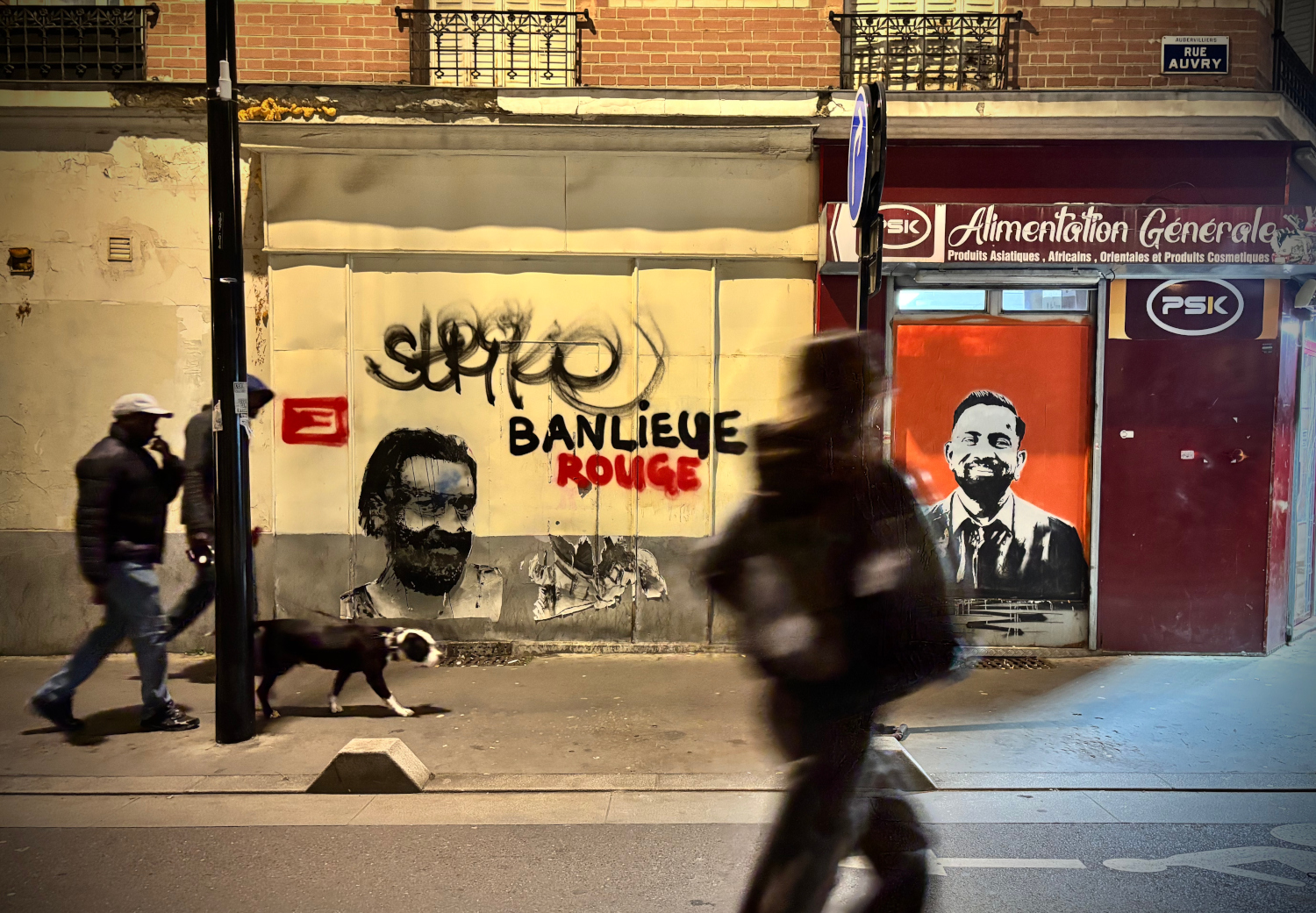
Seine-Saint-Denis is home to several towns of varying degrees of fame, including Saint-Denis itself, Montreuil, Saint Ouen, and Aubervilliers. The latter – where I live – exemplifies the dynamics at work in the department.
Aubervilliers, a case study of urban and social renovation
Didier Hernoux and Bernard Orantin welcome me into the headquarters of their association, the “Société de l’histoire et de la vie à Aubervilliers”, a few steps away from the town hall. Aubervilliers is one of the largest municipalities in Seine-Saint-Denis (90,000 inhabitants) and is ranked as the sixth poorest town in France, with a poverty rate of 41% and an unemployment rate of 22%.
Hernoux and Orantin explain that Aubervilliers was once an “agricultural village that fed Paris”, then an industrial city, and today is experiencing a process of post-industrialisation and economic tertiarisation common to many cities in the Paris suburbs.
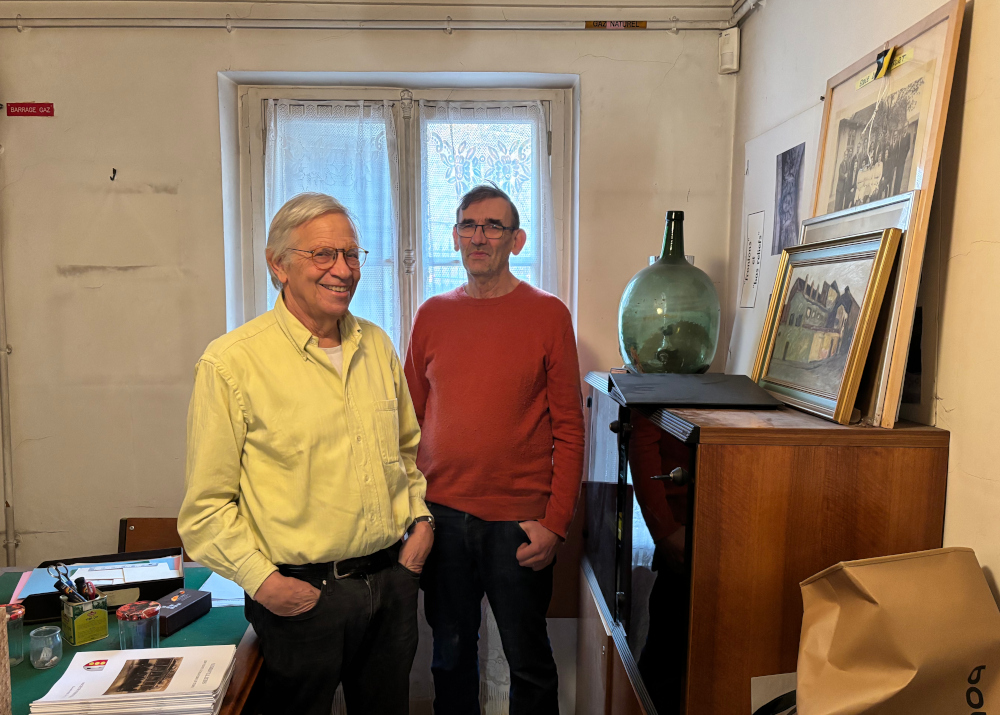
Aubervilliers’ agricultural past is very much present at the association’s headquarters: a small two-storey house with what used to be the farm buildings at the back. Up until the First World War, the town had been growing exponentially, and was the scene of several waves of migration, first European (Polish, Italian, Portuguese, and Spanish), followed by post-colonial immigration. "Slowly, deindustrialisation has led to what we see today: concrete growing everywhere," Hernoux tells me with a smile, referring to the number of construction sites springing up like mushrooms in the municipality.
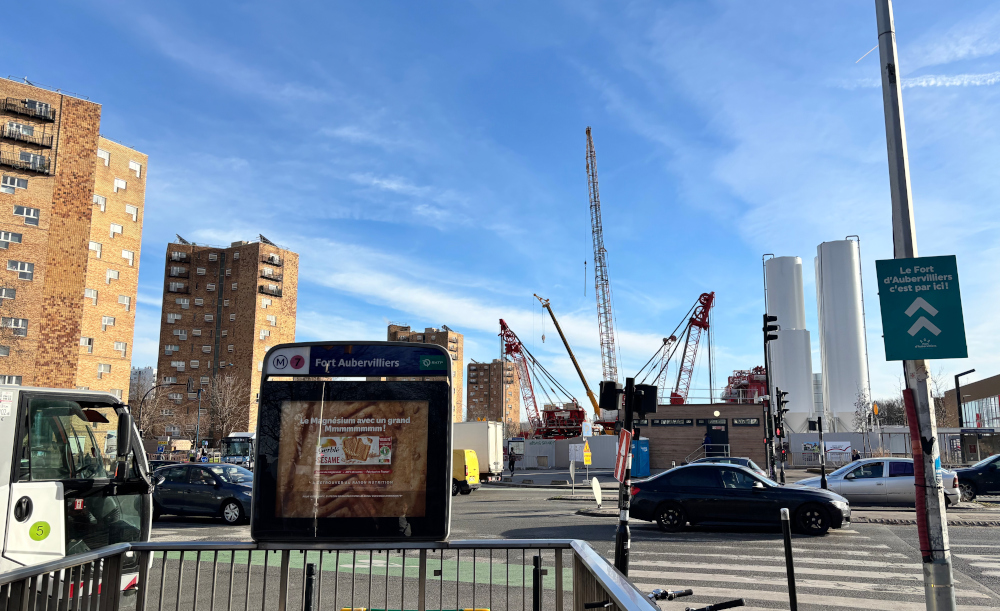
I counted five construction sites around the association’s headquarters alone – not to mention the massive site that occupies and blocks the town square. After welcoming the extension of metro line 12, it now hosts the construction site for line 15, one of the lines that are part of the “Grand Paris” project, the urban development initiative that will connect the three districts surrounding Paris with 200 kilometers of tracks and 68 stations, at an estimated cost of €32.5 billion.
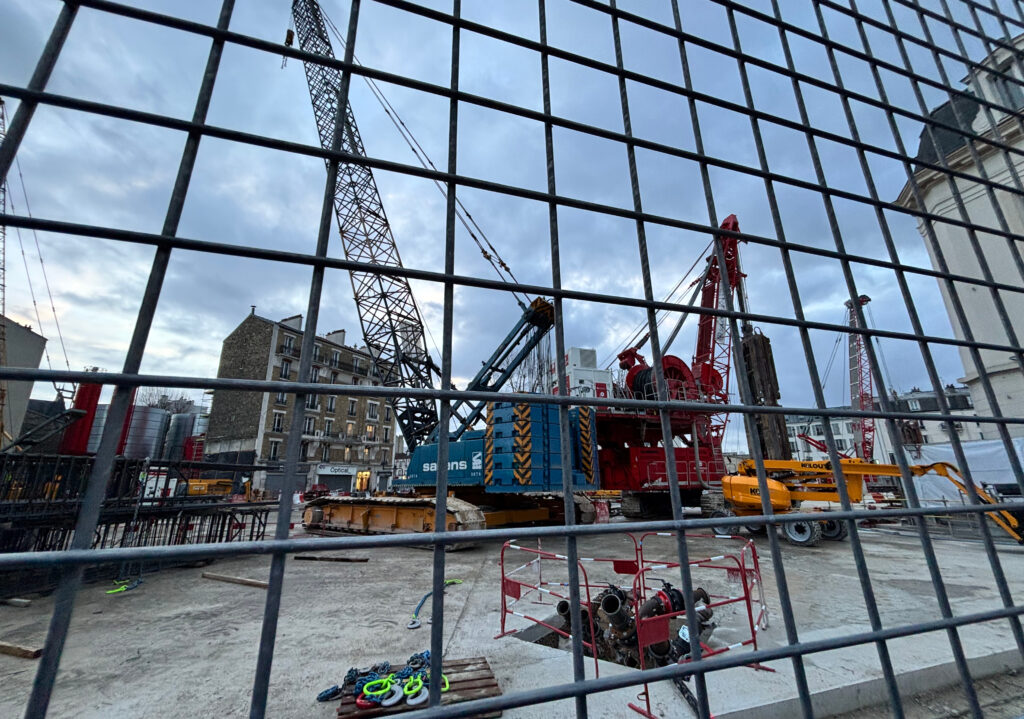
Hernoux and Orantin have observed the industrial decline, similar to that seen in other towns in Seine-Saint-Denis: “Yes, there are plenty of jobs now, but they are mainly in the service sector. It’s not the same people who are employed.”
"Today, people are moving to [Aubervilliers] because of the rapid property development, but most of them have no ties to the city," they add. This dynamic is familiar to many towns on the outskirts of large urban centres: new populations are attracted by the proximity to the capital, quick transport links, and relatively lower costs – in the case of Aubervilliers, sometimes close to half the cost per square metre in Paris – but they have no genuine interest in the town they are moving to.
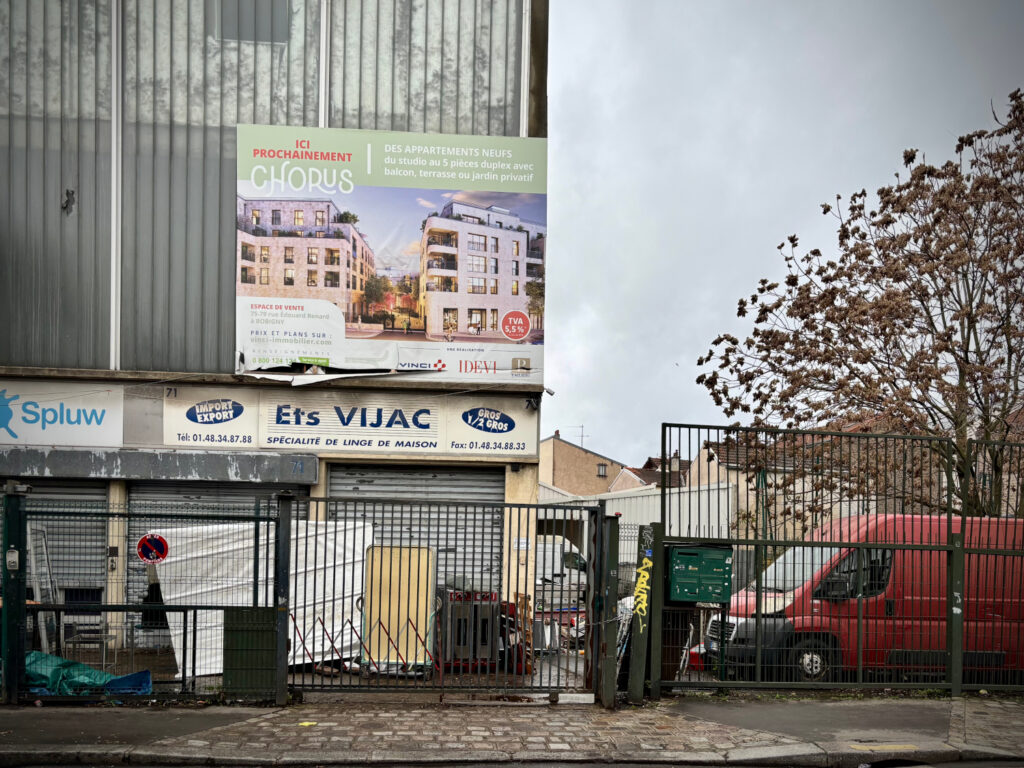
The risk, they tell me, is that Aubervilliers becomes a commuter town. They add that these are “political choices”, because “either you decide to focus on jobs and urban planning, or you move in that direction.”
The history of social housing is the history of France
Sébastien Radouan is a historian, lecturer in History and Architectural Cultures at ENSA Paris-La Villette and now cultural mediator for AMuLoP (L’Association pour un Musée du Logement Populaire – Association for a Museum of Social Housing).
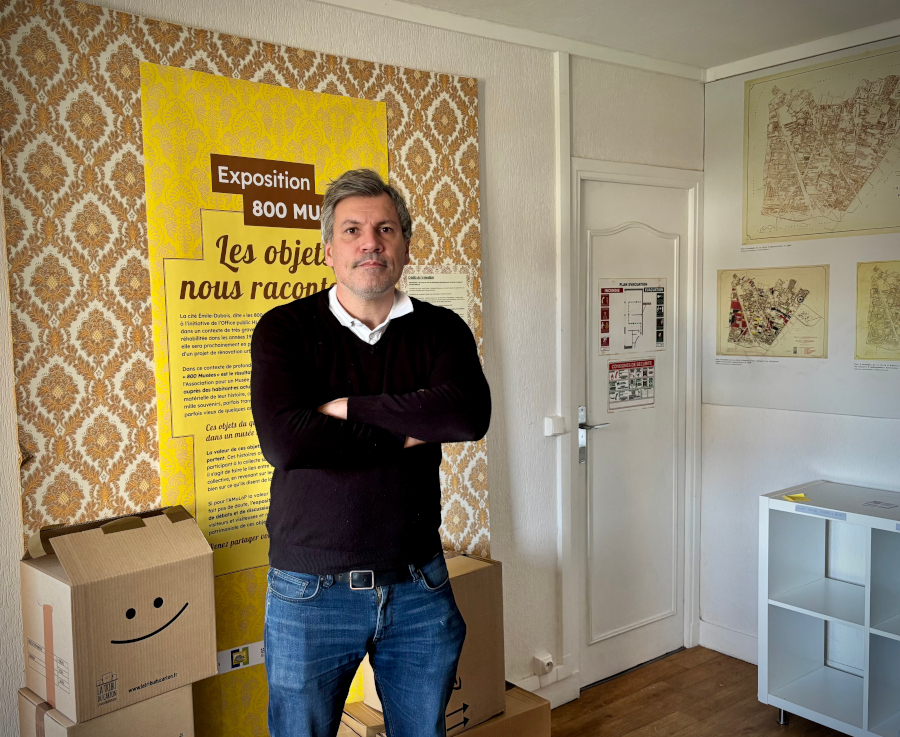
The offices are located in an apartment in the Cité Emile-Dubois or Cité des 800: an entire neighbourhood of social housing that once consisted of 796 dwellings (today there are only half that number, with the others having been demolished). We are at the Fort D’Aubervilliers metro station, where another impressive construction site on line 15 stretches towards the newly built eco-neighbourhood.
At lunch, Radouan explains to me that the Cité Emile-Dubois is set to be replaced by private housing, with twice the number of social housing units it currently has. The residents are in the process of being relocated, or have already been relocated to the new social housing units that are already built. Since these are new buildings, the rent is often higher.
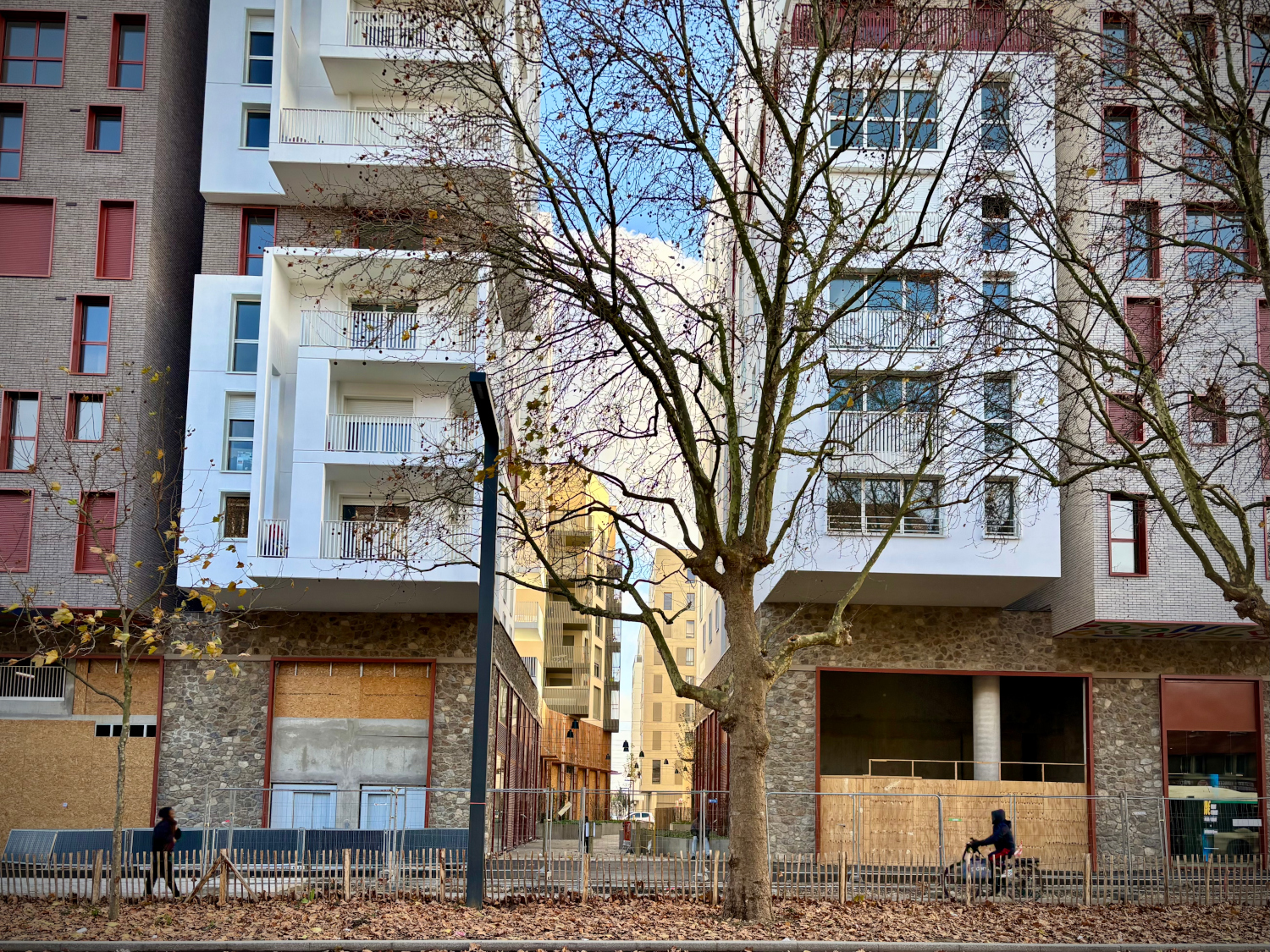
While some may be satisfied with the change, Radouan tells me, others are far from it. For some of the residents he has worked with, “demolition triggers several thought processes”, including the simple “need for something to survive”.
With demolition on the horizon, there is no more maintenance, making it “better to leave”, while others can’t help wondering “why a solid structure has to be destroyed instead of being repaired.”
‘A city like Paris inevitably expands, but this is not happening with the poor, but against the poor’ – Héléna Berkaoui
This urban renewal policy, which began in 2003, led to the creation of the ANRU (National Agency for Urban Renewal). Its aim was to move away from the model of “grands ensembles” like the Cité Emile-Dubois and to “remake the city” by creating so-called “social diversity” in neighborhoods with a high concentration of social housing.
The idea was to attract more affluent social classes through private housing, thus creating “economic diversity,” which ultimately leads to gentrification.
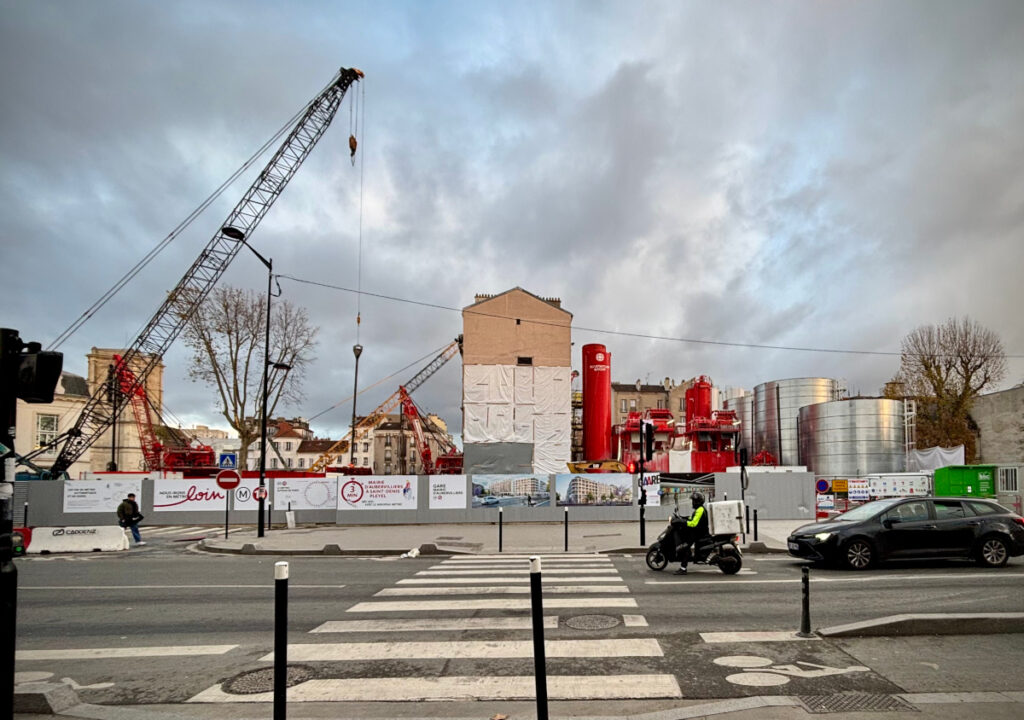
The ANRU’s interventions can involve social or private housing, demolition or renovation, and public infrastructure. The agency, whose stated aim is to improve housing and living conditions, deals with neighbourhoods “classified by law as ‘priority’ due to their high poverty rate”, explains Thibaut Prévost, a spokesperson for ANRU, in an email.
Demolishing these large housing units means breaking with the urban planning of the grands ensembles, a model that has been heavily criticised over the years for being ”monotonous, repetitive, and dehumanising”, says Radouan, before adding that “every form of construction generates a culture.” And the culture generated by these neighbourhoods is “an urban culture that is disappearing, that we are destroying.”
These are structures, he explains, “that have had a significant impact on French urban history, that have enabled a large part of the population to access better services, and whose construction is intelligently designed in terms of use and economy of materials.”
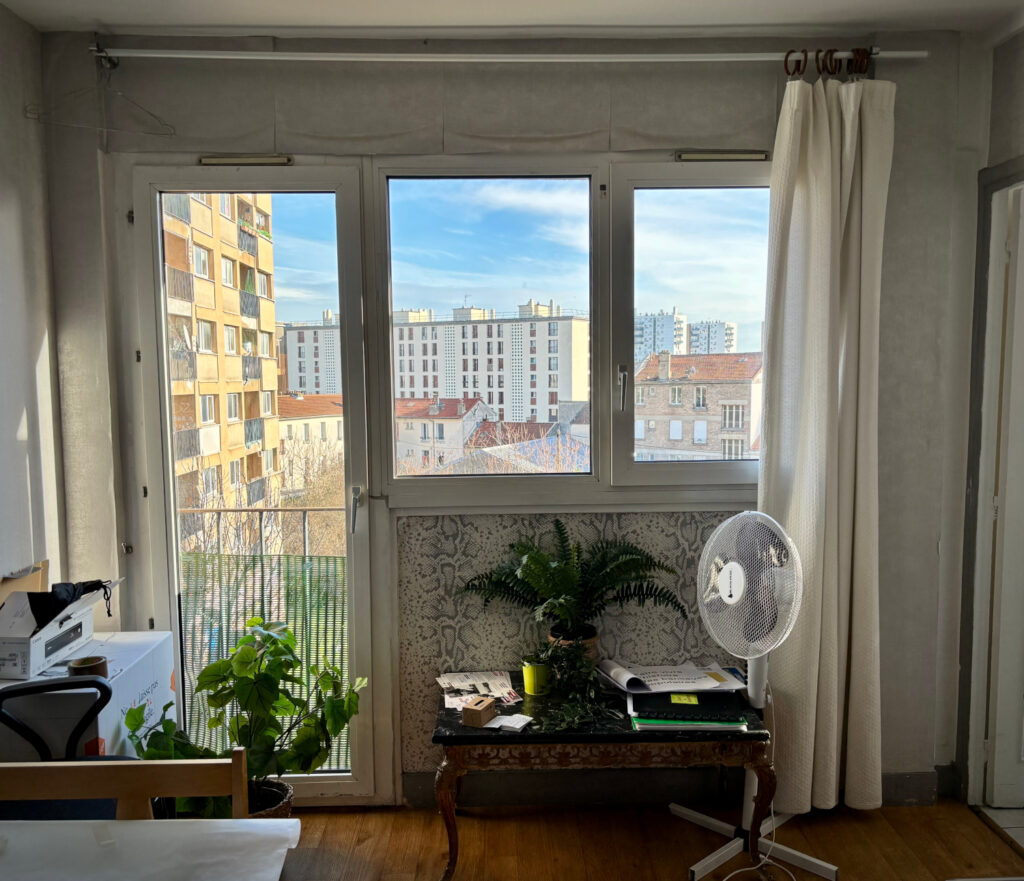
We are witnessing a form of “destruction of cultures, of savoir-faire,” says Radouan. “We should be much more attentive to family histories, to the environment, and to what exists.” Three hundred and sixty social housing units are being destroyed, and of course others are being built elsewhere, but “these are 360 social housing units at the metro exit,” and therefore connected to the rest of the city and the region.
Gentrification or mixité sociale?
"It’s also important to point out that there are forced departures due to house prices becoming too high, or urban redevelopment projects forcing people to leave. And in neighbourhoods like these, that’s not an insignificant fact," Héléna Berkaoui of the Bondy Blog tells me, on the topic of Seine-Saint-Denis.
Seine-Saint-Denis also hosted the 2024 Paris Olympics, which led to the construction of major infrastructure (swimming pools, sports facilities, and housing) that has helped to partially redesign the area.
"I don’t know if we’ll be the ones who benefit from Grand Paris," says Berkaoui, referring to the plan to create a metropolitan region comprising the capital and surrounding departments. "A city like Paris inevitably expands, but this is not happening with the poor, but against the poor."
An important book on this subject, Les naufragés du Grand Paris Express (“The Castaways of the Grand Paris Express,” La Découverte publisher, 2024), recounts the experiences of those living through the demolition of social housing, which is being rebuilt further away and at greater expense, while private housing prices keep rising.
In an article in StreetPress, sociologist Anne Clerval, co-author of the investigation, explains: “the social difficulties of working-class neighbourhoods are inaccurately explained through the lens of the geographical concentration of the working classes […]. Mixité sociale [“social diversity”] is nothing more than a project to scatter them around, which will solve nothing, quite the contrary.”
Pride and awareness of a culture is something that comes up again in my discussion with Héléna Berkaoui: “These are populations with a history of post-colonial immigration, who have a very special relationship with their neighbourhoods: they are immigrants who thought they would leave, but then stayed.” This “identity conflict” gives the neighbourhood a different value. For example, if we talk about rap or urban culture, it is easy to see that there is a certain pride in the place.” It is a form, says Berkaoui, of “reversing the stigma.”
What stigma? That of suffering and living with the common conception that these are “notorious neighbourhoods, known for their poverty, and for being targeted by the media for that very reason.”
"Urban planners see gentrification as an opportunity to improve infrastructure and add services. However, if these changes are made without involving residents in the transformation process, people are forced to move away due to the increased cost of living. This leads to what is known as the peripheralisation of poverty, and a sense of dislocation from the place where the inhabitant lives. This results in isolation, depression, and high levels of stress among the displaced population.” This is Albanian urban planner Dorina Pllumbi writing about Tirana in the independent newspaper Kosovo 2.0, but it’s an analysis that can be applied to any banlieue in Europe.
As Berhaoui tells me, “urban planning does not take such ties into account, because they are informal ties of mutual aid; and because they are not formalised, they are not taken into consideration in restructuring plans.”
“When thinking about the city, gentrification says a lot,” Berkaoui concludes. It says something about the lack of interest in the people who live in those neighbourhoods, as well the “housing crisis, which is not regulated by the state,” and has fostered a “carnivorous capitalism that seriously abuses the poorest people in need of housing.”
🤝 This article was produced as part of the PULSE project within a series on “peripheral” areas in Europe in collaboration with Il Sole 24 Ore, OBC Transeuropa, and El Confidencial.
O
Do you like our work?
Help multilingual European journalism to thrive, without ads or paywalls. Your one-off or regular support will keep our newsroom independent. Thank you!


