













Select a language
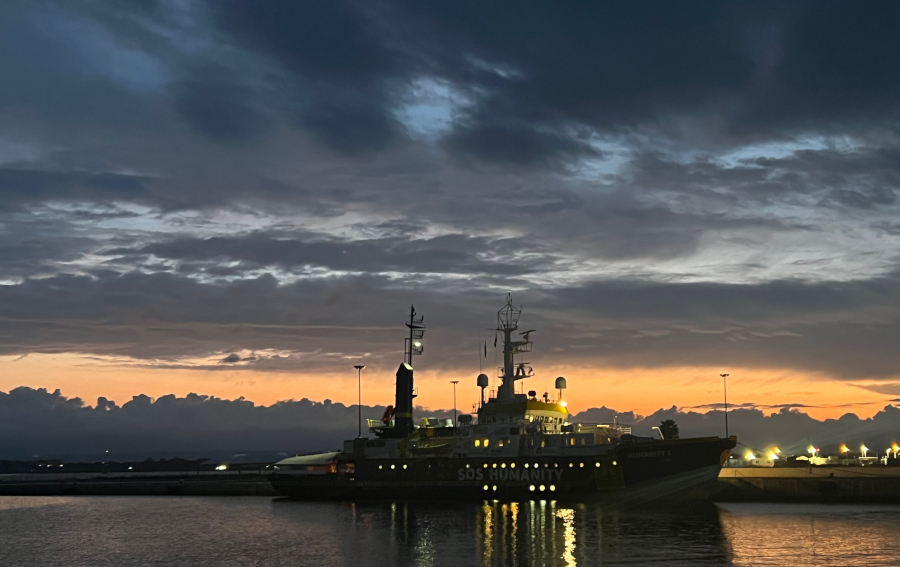
The Humanity 1, a ship of the German humanitarian organisation SOS Humanity, was ready to set sail to the central Mediterranean: engines checked, rescue inflatables in working order, food and fuel supplies sufficient to patrol the Mediterranean waters for weeks.
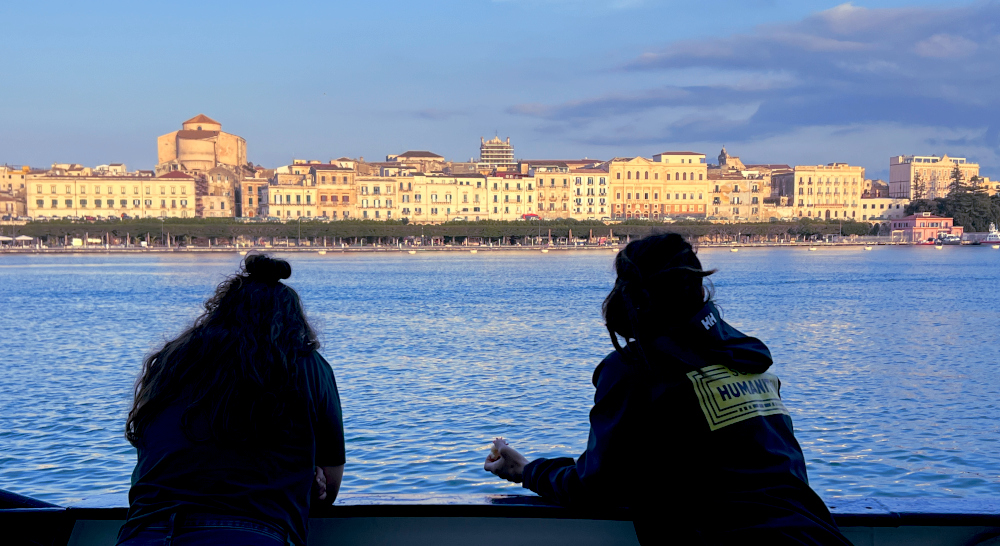
Stuck between Trapani and Syracuse (on the coast of Sicily) for weeks, the crew waited, unable to intervene, as the planned rescue mission was blocked by Italian authorities.
The Central Mediterranean route, which connects Libya and Tunisia to Italy and Malta, is the world’s deadliest for migrants. More than 1,300 people died attempting to cross it in 2025 alone, and over 20,000 have lost their lives trying to reach Europe via this route in the past decade.
Boats are often overcrowded and unseaworthy, with little fuel or safety equipment. This makes search and rescue operations critical – and often the only way to prevent mass fatalities at sea. So how could the Humanity 1, a ship designed to save lives, have been blocked in port?
On 13 February 2026, the Italian authorities stopped the Humanity 1 in Trapani, issuing a sixty-day administrative order and a fine of €10,000. They accused the crew of failing to coordinate with the Libyan Rescue Coordination Centre: Italian regulations stipulate that NGO vessels must defer to the authority responsible for the designated search and rescue zone.
Every day that passes weighs more
However, humanitarian organisations argue that this obligation is highly controversial. The Libyan authorities have repeatedly been accused of human rights violations, including returning rescued people to unsafe conditions. These accusations raise serious concerns about their compliance with international maritime law and the principle of non-refoulement of asylum seekers.
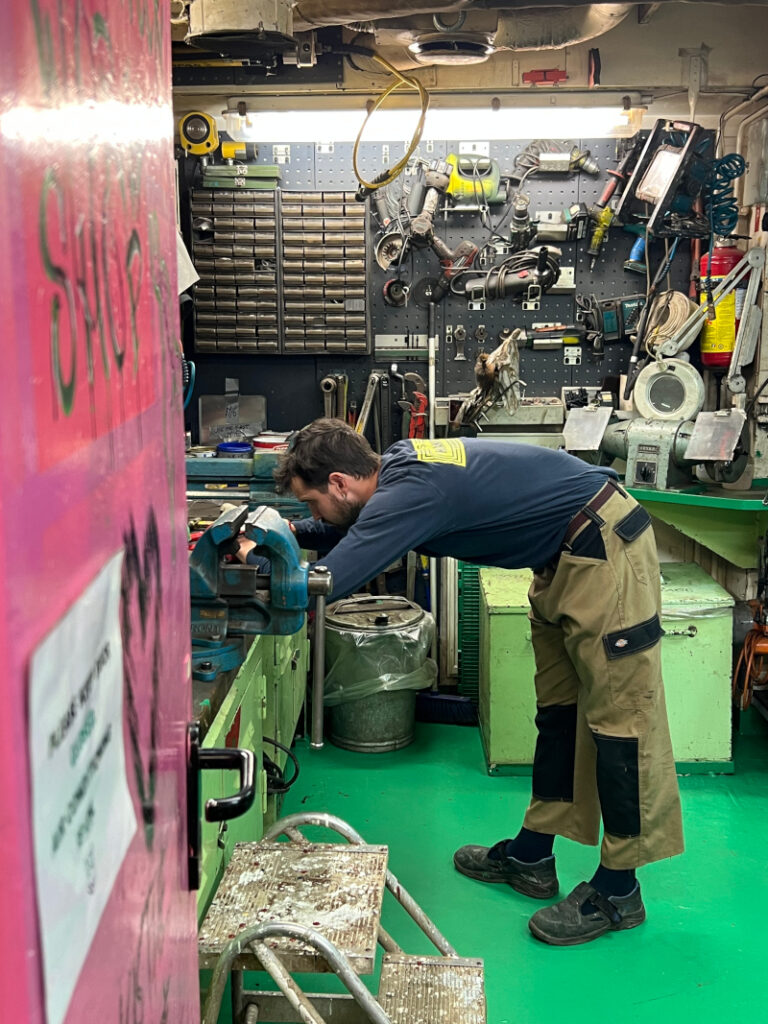
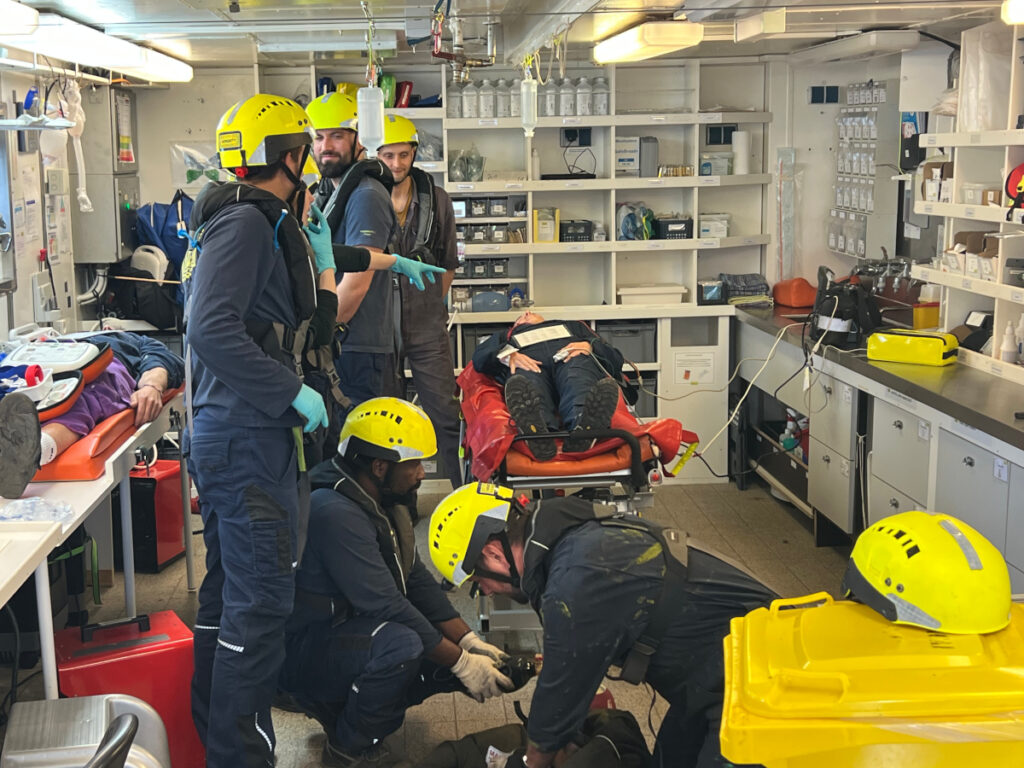
Sophie, who is part of the Search & Rescue team, goes below deck every morning as if nothing has changed. She carries out drills, improves communication with the bridge during simulations and participates in ongoing operational tests that ensure readiness and safety.
Around her, life on board continues in its usual rhythm: There are Arabic workshops to communicate with those rescued at sea, hands learning knots and safety manoeuvres and moments of team building that quietly reinforce trust. By insisting on the daily routine, the crew achieves more than merely passing the time; they create a fragile yet deliberate continuity, a means of keeping the future open even when everything stands still.
Lukas, SOS Humanity’s communications manager for this crew rotation emphasises that “maintaining discipline and readiness is not just operational, it’s psychological. If the crew loses focus, the cost is not only morale but safety.” He explains that “the costs pile up, the planning becomes more complicated, and yet we have to keep spirits high. It’s a challenge every single day.”
Sophie adds: “Many volunteers took unpaid leave and crossed half of Europe to be here. Every workshop or moment of discussion with the team is a way to survive mentally during this wait. We cannot move, but we can strengthen the team, share experiences, and learn new things. It’s essential for enduring.”
The crew alternate technical sessions with more informal activities such as reading maps, discussing safety strategies and evacuation drills, taking part in collective cooking sessions and engaging in open discussions. The ship stays still, ready, while the sea remains out of reach.
The feeling of helplessness can be crushing for some. Stephen, as a human rights observer, is responsible for monitoring the situation at sea liaising with the maritime authorities and drafting monitoring reports on the ship’s activities. “Seeing people in distress and knowing that we cannot intervene is wearing,” he explains. “Every day we have to live with this powerlessness, while the Mediterranean continues to cry out for help.”
Lukas recounts the practical and psychological weight of the situation: “Three weeks of waiting are logorating,” he says. “It’s not just time lost: it’s physical and mental energy that gets consumed. Every day we find ourselves having to manage the consequences of immobility, while lives at sea remain at risk.”
The Justice Fleet and the strategy of wearing down
The blockade of the Humanity 1 stems from Italian regulations that impose strict coordination rules on NGO rescue vessels operating in the central Mediterranean. In particular, the authorities – often the Libyan authorities – require ships to follow instructions from the relevant Rescue Coordination Centre and may detain vessels and impose fines if they are deemed to be non-compliant. These legal provisions have significantly simplified the process of authorities stopping ships on administrative grounds, even when they have carried out rescue operations.
For humanitarian organisations, including those within the Justice Fleet alliance like the Humanity 1, such measures amount to a structural obstruction. They are challenging these detentions in court, arguing that being forced to cooperate with Libyan maritime actors – who have been widely accused of systematic human rights violations and of returning people to unsafe conditions – may itself breach international maritime law and the principle of non-refoulement.
The case of the Humanity 1 is emblematic of how regulatory frameworks can immobilise life-saving vessels while imposing obligations that humanitarian organisations consider incompatible with the fundamental rights of people in distress at sea.
This strategy of wearing down is not new. Over the past years, other ships of the civil fleet have faced similar obstacles. In 2025, the Sea‑Eye 4 was detained in Palermo for over six weeks after rescuing dozens of people at sea, with authorities citing technical inspections and alleged failure to comply with port directives.
Similarly, the Ocean Viking, operated by SOS Méditerranée, faced repeated port blockades in Italian harbours in both 2024 and 2025, with some blockades lasting several months. Even the Iuventa, a ship operated by the Berlin-based organisation Jugend Rettet, was seized by Italian prosecutors in 2017 following multiple rescue operations. Each of these incidents temporarily prevented life-saving missions, illustrating a pattern in which administrative measures are used to delay or hinder humanitarian action.
Lukas comments on this broader pattern: “We are not alone in facing these blockades. Each vessel that waits in port is a message about the clash between law and human needs. It’s exhausting, but it also strengthens our resolve to keep documenting and speaking out.”
Through these episodes, the Justice Fleet aims to expose the conflict between national legislation and international maritime law, highlighting how regulatory measures can effectively paralyse humanitarian action. Each blockade, whether it lasts weeks or months, becomes a visible reminder of how political and legal pressures can interfere with life‑saving missions at sea.
The new bill and the European Migration Pact
While the Humanity 1 was waiting in the port of Syracuse, the Italian parliament was debating an even more restrictive measure. Giorgia Meloni’s government has presented a bill that allows for a real “naval blockade” of NGO ships. In the event of “security risks” – a vague term encompassing migratory pressure – the authorities could prevent the ships from entering Italian territorial waters for up to six months and detain them for up to 120 days.
“This year, for the first time, we analysed the numbers of people rescued at sea by NGOs and the rescue events themselves: once again, the data speaks clearly”, starts Fabrizio Coresi, Migration Policy Expert at ActionAid International Italia. “Even as NGO rescues increase relative to the total number of sea arrivals, the assignment of distant ports is also increasing, in clear violation of international law and the law of the sea, with the effect of leaving the search and rescue area without adequate coverage.”
For Coresi, the vagueness of the terms used in the Italian bill and the definition of their operational scope make this provision extremely worrying. “Regardless of its actual feasibility, it would represent an additional, intolerable blow to our democracy. The hope is that the rule of law will prevail.”
‘Each vessel that waits in port is a message about the clash between law and human needs. It’s exhausting, but it also strengthens our resolve to keep documenting and speaking out’ – Lukas
The bill fits into the European context of the Migration and Asylum Pact, which is due to come into force in June 2026 and will provide mechanisms for the externalisation of asylum procedures and agreements to divert migrants outside the EU.
The result is a system in which NGO ships represent the final visible barrier to the increasingly restrictive control of the sea.
In Trapani and Syracuse, in courts and European rooms, a conflict between international law and national legislation is unfolding. NGOs that respect search and rescue conventions find themselves subjected to administrative detention, financial strain, constant wear and tear, and uncertainty. Although previous detentions have often been annulled by judges, the stop-and-appeal mechanism continues to paralyse ships.
Gazing out at the sea, Lukas, the SOS Humanity’s communications manager explains that “every single day we’re stuck at anchor outside a port reminds us why our work is important. The sea calls to us, and every delay comes at a human cost. But we keep preparing, training, and documenting, because if we don’t do it, no one else will.”
On 5 March, a hearing was held at the Court of Trapani, during which the judge heard arguments from both sides but did not rule on the merits of the case. After three weeks of wearing blockade, the rescue mission was officially cancelled on 18 March, leaving open the question of how European and Italian policies will continue to shape, delay, or deny the possibility of rescue at sea.
Do you like our work?
Help multilingual European journalism to thrive, without ads or paywalls. Your one-off or regular support will keep our newsroom independent. Thank you!