















Select a language
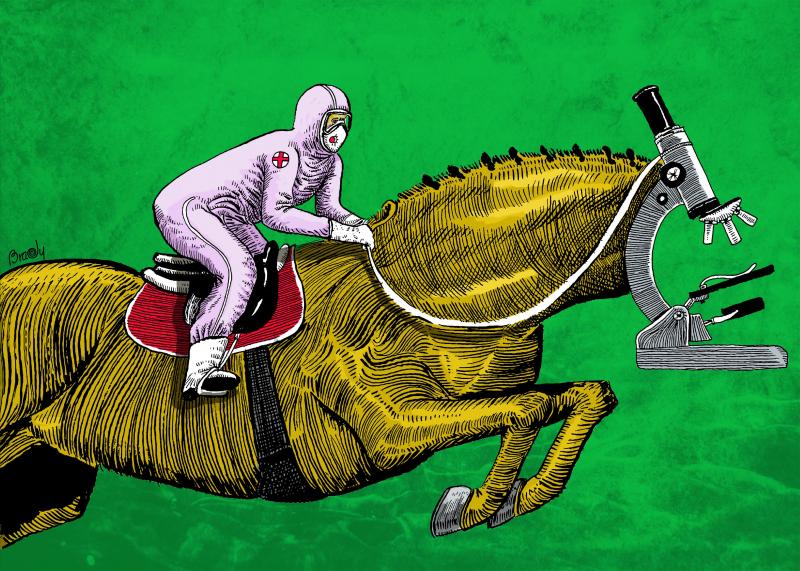
Mental-health disorders affect people across all classes, age groups and occupations. A number of studies show that veterinarians are at higher risk of suicide than others. For example, the US Centers for Disease Control and Prevention published an analysis in 2019 showing that women working in the profession are 3.5 times more likely to die by suicide than the general population, and men 2.1 times more likely. Similarly, a European study published in Frontiers in Veterinary Science reports that the suicide rate among vets is twice that of other medical professionals and four times that of the general population.
Is this true of countries beyond Europe? Gonzalo Moreno, chairperson of the General Council of Veterinary Associations of Spain (CGCPVE), says that there is some evidence to that effect, even if caution is advisable. Social and cultural differences notwithstanding, there are some unique risk factors that apply to this particular profession.
“We have evidence that the mental-health problem amongst vets is serious and not limited to suicide”, he says. “There is also burnout, anxiety, depression, and so on.” The CGCPVE is currently conducting a study in collaboration with the Galatea Foundation to better understand the situation in detail.
In Spain, vets belong to the healthcare profession, as set out in Law 44/2003. Representatives of the sector point out that suicide always has multiple causes. However, certain risk factors do recur consistently in the literature.
Risk factors for vets
Moreno points to the important vocational aspect of the veterinary profession, which involves a deep personal commitment to the work. “We have a great deal of responsibility, and there is ever greater societal consideration for animals”, he says. The Spanish government estimates that in Spain there are more than 15 million pets. Vets not only look after the health of these animals but also – in their public-health role – that of farm animals.
As part of their day-to-day work, vets are accustomed to dealing with illness and, inevitably, death, with all that this entails. Furthermore, like other healthcare professionals, they have increasingly had to deal with incidences of aggression from members of the public. 60 percent report having suffered some form of violence.
As for working conditions, vets face demanding hours, including on-call duties, which can interfere with their private life. Financial security can be a bigger challenge than for other healthcare vocations, says Gonzalo Moreno. Pay is “quite low”, and the profession is seen as less prestigious than other branches of medicine.
A comparable situation reigns elsewhere in Europe. In France, “veterinary deserts” are a regular subject of public debate. In such regions, often rural, vets can work 80-hour weeks or be on call 24 hours a day. Surveys have found a risk of suicide three to four times higher for vets than the French national average. The problem of physical assaults has also been worsening.
‘We have a great deal of responsibility, and there is ever greater societal consideration for animals’ – Gonzalo Moreno
In Lithuania too, vets report the same challenges, alongside emotionally draining clinical outcomes, demanding clients and limited opportunities for rest. One issue in particular has been spotlighted in this Baltic country: “emotional responsibility”. For a dissertation published in 2023, 133 vets working with small animals were surveyed. The results suggest that the emotional responsibility involved in treating animals and interacting with owners plays a “significant role” in stress. Almost 97% of the interviewees reported feeling emotional distress following the death of an animal they had cared for over several years.
European countries vary widely in terms of working conditions and culture. Yet in Hungary, too, there is discussion over the link between animal euthanasia and stress. A vet from Debrecen calls the suicide rate “alarming”, and traces it to the frequency with which veterinarians are confronted with death. Euthanasia remains a “sensitive and unresolved issue in veterinary medicine”, he says. “Professionals have learned to relativise it, viewing it as a way of ending suffering rather than a tragedy in itself.”
Solutions
In most of Europe, vets are subject to mental-health check-ups. Some countries are going a step further. The news portal of Poland's National Chamber of Veterinary Medicine reports that almost 36% of those surveyed showed symptoms of depression, while 40% suffered from anxiety disorders. 39% admitted to having had suicidal thoughts, and 60% knew of a colleague who had taken their own life or attempted to do so.
Following this research, a support programme for vets was launched in June 2025. Regional chambers (of which membership is compulsory to practise) offer Polish vets access to two free sessions per month. In the first two months, 249 accounts were created on the portal.
In Spain, Gonzalo Moreno believes that good data must be available if reforms are to proceed on the basis of sound knowledge. As chair of the council of vets, he has contacts at the Ministry of Health. The ministry’s commissioner for mental health acknowledged that there was no data on suicides and that, to date, public policies have not specifically addressed this issue. Beyond the data, Moreno also advocates tackling the “structural causes” of burnout. Working conditions and pay are key, as is the problem of assaults.
Álvaro Toledo is a psychologist and coordinator of the Study and Research Group on Suicidal Behaviour at the Madrid College of Psychologists. In the case of suicides, he advocates for the systematic use of psychological autopsies. These might provide useful information about the factors and circumstances that were present and how these may have interacted over time. He emphasises that suicide is a complex and multi-causal phenomenon. “There are factors that increase vulnerability, but none on its own explains suicidal behaviour."
In other words, a profession does not in itself determine whether a person will develop suicidal behaviour, but it can become a risk factor. “Certain working conditions that persist over time compound other personal problems“, says the psychologist. “There are work situations that can lead to significant wear and tear, such as excessive workload, long working hours, lack of rest, difficulty balancing work and personal life, and high levels of responsibility. All these persistent circumstances can contribute to feelings of exhaustion, failure and loss of control, and may lead to despair.”
Healthcare professionals are not, by definition, at greater risk, he emphasises. “In the case of vets, there are studies. But there are none, for example, on delivery drivers or bakers. It is very hard to say for certain that vets are at a uniquely high risk."
👉 Original article on El Confidencial
🤝 This article was produced as part of the PULSE collaborative project. Francesca Barca (Voxeurop), Justė Ancevičiūtė (Delfi, Lithuania), Alicja Gardulska (Gazeta Wyborcza, Poland) and Boróka Parászka (HVG, Hungary) contribute to it.
🗣️ Have a question, comment or suggestion? Share it with us through the PULSE reader form – we read and reply to every message. Be part of Europe’s conversation. Your experiences and ideas can inspire the next stories we tell. Join the PULSE readers’ community by filling in this short form.
Do you like our work?
Help multilingual European journalism to thrive, without ads or paywalls. Your one-off or regular support will keep our newsroom independent. Thank you!


