











Select a language
Can Big Tech still be held to account for its ethical, civil and criminal liabilities? The events of this summer in Ireland have thrown the issue into stark relief. On 16 August, five teenagers died on the M9 motorway, after driving the wrong way in a stolen car whilst filming themselves. This behaviour is linked to a viral trend on TikTok, where young people video themselves deliberately driving the wrong way on motorways. They do this to garner “likes” on social media, which boosts their self-esteem.
The tragedy has reignited the debate about such videos and the role of the platforms on which they are shared. The media committee of the Oireachtas, Ireland’s parliament, invited the platforms to explain themselves. TikTok initially declined two invitations, before changing its mind. On 23 September, its representatives took their seats alongside those from Meta and Google. X did not attend. TikTok’s change of heart came only after intense public pressure.
It was not the first time something like this had happened. In January 2026, Elon Musk’s social network, X, had already refused to explain itself to the same committee regarding Grok, its artificial intelligence (AI) tool, which was accused of enabling the creation of sexualised images of real people. During the Irish presidential election in October 2025, the social platforms removed only 13 of the 85 pieces of content flagged as disinformation by the Irish branch of the European Digital Media Observatory.
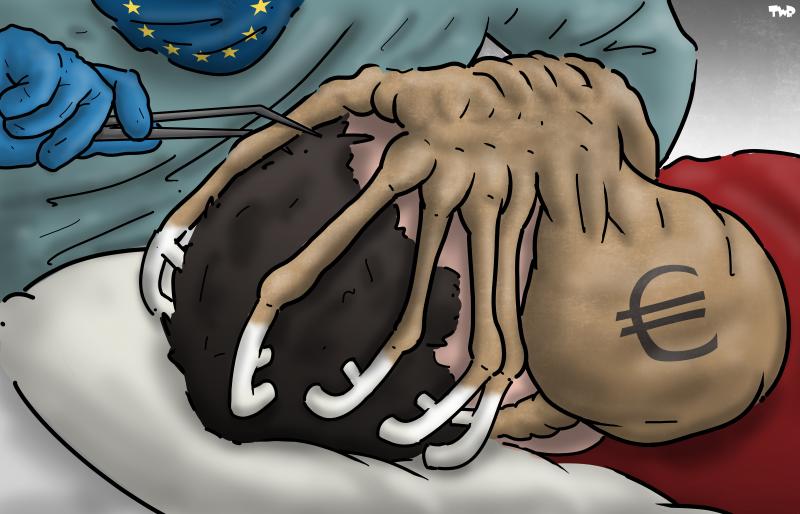
The episode reveals a democratic deficit that plagues the whole of Europe. Elected representatives can invite, question and challenge the tech giants. Yet rarely can they compel them to appear and (still less) to provide substantive answers to questions.
Inviting is not the same as compelling
The most telling example of this is still playing itself out. Since 2021, Amazon has repeatedly refused to appear before the European Parliament’s employment and social affairs committee, which has wanted to question the company about working conditions in its warehouses. In February 2024, the parliament revoked the access badges of Amazon’s 14 lobbyists – a first since an instance involving Monsanto in 2017.
Despite the ban, representatives of the Seattle-based firm held at least 66 meetings with MEPs the following year, according to Transparency. International. And Amazon was the major tech company that met with senior Commission officials most frequently in the first half of 2025: 43 times. Yet in June 2025 it did not send its executives to the hearing on which the lifting of the ban depended.
Testifying does not mean cooperating
In February 2025, Google, TikTok, Meta and X appeared before the science and technology committee of the UK House of Commons. There they refused to provide clear information on various subjects, including the monetisation of false and harmful content; advertisers’ methods; how recommendation algorithms work; and content moderation. The politicians present were left frustrated. A hearing without proper answers is a more subtle form of obstruction than a flat refusal to talk – and one that is more difficult to penalise.
A case in Poland shows how absurd the loophole can become. On Facebook, fake AI-generated videos show President Karol Nawrocki promoting fraudulent investment schemes. In September, a committee of the Polish parliament summoned Meta to account for the abuse. The company did not attend, which was permitted under Polish law. Yet it was Nawrocki himself who, in January, vetoed the law implementing the European Digital Services Act (DSA). He argued that it constituted “administrative censorship”. A new version was only signed in September.
Unable to subpoena the company, Poland is seeking other means of pressure. Rafał Brzoska, founder of the logistics and courier firm InPost and himself a victim of false advertising, proposes that any platform profiting from a scam should pay 150% of the revenue generated. Nearly 190,000 people have signed his petition.
At the end of August, Warsaw asked the European Commission to impose a fine of €250 million on Meta: an investigation by Poland's national cybersecurity team found that Meta had not taken down 106 of the 122 adverts flagged as fraudulent.
France and Italy: the tough two
The ability of national parliaments to compel the tech companies to appear before them – and to cooperate – varies considerably between countries. In Ireland and Poland, repeated refusals to appear have resulted in no formal sanctions. At the other end of the spectrum sits France.
Parliamentary committees of inquiry there have genuine coercive powers: witnesses are legally obliged to appear, take an oath and answer the questions put to them, and refusal to do so constitutes a criminal offence. However, appearing under oath does not prevent evasive answers or the withholding of documents. Furthermore, executives can stall and call upon their lawyers for help. The effect can be to turn the hearing room into a theatre where an empty farcical version of accountability is played out.
The case of Italy is similar. The major platforms regularly appear before ordinary committees of the Italian parliament, which do not have the coercive powers of a court. Conversely, Italy’s parliamentary committees of inquiry operate “with the same powers and the same limitations as the judicial authority” (set out in Article 82 of the constitution). The distinction is not just theoretical: this year, the Italian senate established a committee of inquiry into the deliberate and widespread dissemination of false information online and its effects on the right to information and the formation of public opinion.
A legal maze
It is no coincidence, then, that most of the US tech giants have their EU headquarters in Ireland. The EU’s General Data Protection Regulation (GDPR) created a "one-stop shop" mechanism that assigns regulatory jurisdiction to the country where a company’s EU headquarters is located. As host to the European headquarters of Meta, Google, TikTok and others, Ireland has become the de-facto regulator for the continent. The effect has been to leave other national authorities largely powerless on matters covered by the GDPR.
Since the introduction of the GDPR in 2018, the Irish Data Protection Commission has taken the lead in 89% of the 2,459 cross-border complaints it has received, according to data compiled by The Journal. When France's data-protection agency, CNIL, imposed a €60 million fine on Meta for its use of cookies, the company invoked the GDPR’s one-stop shop to challenge French jurisdiction. Its appeal was unsuccessful, but the argument illustrated how companies can creatively exploit the architecture of European regulation to limit the scope of any national regulator.
Things may be different when Big Tech executives are physically involved. Pavel Durov, founder of the messaging platform Telegram, had for years been refusing to cooperate with the French courts when he was arrested at Paris’s Le Bourget Airport in August 2024. The charges against him explicitly included refusal to cooperate with law enforcement. The month following his arrest, Telegram reversed its longstanding policy and announced that it would begin sharing user data with the authorities upon presentation of a valid court order. The lesson was stark: a nation state can compel compliance – but only when it can physically reach the person responsible.
Digital evidence
Most requests for digital evidence do not end that way. A circular from the French justice ministry published in April 2026 acknowledged a persistent difficulty in obtaining data from foreign digital service providers. It urged prosecutors to route their requests via Eurojust, Europol and international liaison magistrates when direct requests failed.
Austria’s experience with the Appeals Centre Europe shows the same trend at the regulatory level. Dublin-based ACE is the EU’s dispute resolution body, established by the DSA and launched in November 2024. It helps individuals challenge platforms’ decisions on content removal. ACE has had some limited success at cooperation with Meta, but has hit a near-total brick wall in the case of YouTube: only 29 of the 343 admissible disputes concerning the video platform have been resolved.
The ACE’s main lever is financial: platforms must pay a fee for the processing of each dispute, currently amounting to around €300. An ACE employee described this tactic to Der Standard as the “mosquito effect”: amounts that are individually negligible, collectively irritating, and far from decisive. Furthermore, the centre’s decisions are not legally binding.
The same pattern repeats itself throughout the EU: platforms cooperate only when it is in their interests to do so, or when the cost of refusal becomes too high
The European Commission, by contrast, has teeth. On 5 December 2025, it imposed a fine of €120 million on X, notably for obstructing researchers’ access to its data. It has levelled similar charges against TikTok and Meta.
The DSA allows the Commission to demand data, documents and access to systems. It does not allow a parliament to subpoena a senior executive. Back in 2018, the European Parliament expressed regret that Facebook refused to send representatives with the appropriate seniority to its hearings. Nothing has changed on this point since then.
Writing the rules rather than just following them
The persistent regulatory vacuum has another explanation: the companies concerned exert influence over potential regulation. The sector's spending on lobbying at European level rose from €113 million in 2023 to €151 million in 2025. Its top ten companies spend three times as much as the top ten in the pharmaceutical, financial and automotive sectors combined.
According to Corporate Europe Observatory, SOMO and LobbyControl, one in five participants at the Commission’s seminars on the Digital Markets Act had links to the companies that the DSA regulates.
Where direct lobbying proves insufficient, the industry funds third-party intermediaries – academic allies, trade associations and think tanks – to reshape regulatory narratives without leaving any visible traces. The “digital omnibus package”, presented by the European Commission on 19 November 2025, provides the clearest demonstration of this. Corporate Europe Observatory and LobbyControl compared it, article by article, with the positions of the lobby groups: the Commission’s proposals aligned strikingly closely with those of the tech giants.
They included a request from DigitalEurope to reclassify pseudonymised data as non-personal data – which would exempt it from the protections of the GDPR and make it available for training AI systems. Another example: the right of access to one’s own data would be restricted in cases of “abuse”, a provision suggested by Google in a document addressed to the German government. According to the data-protection organisation Noyb, 90% of requests for access are already not being met.
The European Commission, for its part, believes that simplification is necessary. In his report on competitiveness, Mario Draghi himself identified the GDPR and the AI Regulation as obstacles to European innovation. Support for this goes beyond industry circles: on 16 June 2026, the European Parliament adopted the AI section of the omnibus bill by 423 votes to 57, following a report tabled by the European People’s Party (conservative) and Renew (liberal).
The text bans AI-powered nudity-deepfaking applications. However, it postpones any obligations on “high-risk” systems until the end of 2027 – a deferral that Meta had been pushing for. The section on data remains under discussion.
A troublesome asymmetry
The same pattern repeats itself throughout the EU: platforms cooperate only when it is in their interests to do so, or when the cost of refusal becomes too high. The Telegram case serves as a reminder that physical jurisdiction still matters. The fine imposed on X shows what the Commission is capable of. And Poland's experience suggests that money is a more effective lever than reputation. Getting a result in this field means playing hardball.
Even so, the European Parliament remains unable to compel Meta’s executives to explain their aforementioned request to defer obligations relating to high-risk systems. It is an asymmetry that European law has yet to resolve.
🤝 This article has been produced as part of the PULSE Europe collaborative project. Noel Baker (The Journal Investigates, Ireland), Hannah Krause (Der Standard, Austria), Justė Ancevičiūtė (Delfi, Lithuania), Rafał Górski (Gazeta Wyborcza, Poland), Silvia Martelli (Il Sole 24 Ore, Italy) and György Folk (EUrologus, Brussels) contributed to it.
🗣️ Have a question, comment or suggestion? Share it with us through the PULSE reader form – we read and reply to every message. Be part of Europe’s conversation. Your experiences and ideas can inspire the next stories we tell. Join the PULSE readers’ community by filling in this short form.
Do you like our work?
Help multilingual European journalism to thrive, without ads or paywalls. Your one-off or regular support will keep our newsroom independent. Thank you!