














Select a language
Finns are expected to vote in record numbers in June's European Parliament elections. In the last EU elections in 2019, the turnout was 40,80%. However, this figure is expected to increase significantly by up to 10 per cent in the upcoming elections, marking a significant increase in voter participation. The increased interest in voting in the 2024 EU elections compared to 2019 can be explained by several factors.
For Finns, a key factor for the 2024 EU elections is the significant change in the European security situation compared to 2019. Russia's attack on Ukraine, which began in 2022, has highlighted the importance of the EU as a guarantor of security and stability in democratic Western Europe.
Finns' interest in EU politics has also been partly increased by Finland's NATO membership, which began in spring 2023, and its impact on the European security architecture and the EU's role in the continent's defence policy. The rest of Europe is now often reminded that the country shares more than 1,300 kilometres of common border with Russia. This puts Finland in a much more sensitive geopolitical position than countries from which Russia is further away.
Until the Russian invasion, most Finns thought that the best way to keep in touch with Russia was to remain a non-aligned Western country. Russia's attack on Ukraine, as former Finnish President Sauli Niinistö (centre-right coalition party) said, took off the masks. Obviously, Finland had to exchange the role of mediator with its unreliable neighbour for a real military alliance with the West. Finland has enough experience to know that Russia believes in nothing but force.
The Finns' awakening to a new reality is well illustrated by the fact that only a few months after Russia attacked Ukraine, 188 members of Finland's 200-seat parliament voted in favour of joining NATO.
NATO membership has given Finland security guarantees that if Finland is attacked, other NATO countries will come to its aid. This is a significant change from the previous policy of neutrality, in which Finland tried to avoid direct military alliances.
The Finns’ awakening to a new reality is well illustrated by the fact that only a few months after Russia attacked Ukraine, 188 members of Finland’s 200-seat parliament voted in favour of joining NATO
At the beginning of March, Finland's head of state changed from Niinistö to Alexander Stubb (Coalition Party). These changes include a shift towards a more western-oriented foreign policy, especially in relation to Russia, and a stronger emphasis on Finland's role within the EU. These changes could have an impact on the upcoming EU elections.
While Niinistö represented the traditionally cautious line of Finnish presidents towards Russia, Stubb, who is about twenty years younger, is a clearly Western-oriented politician who has previously served as a member of the European Parliament, prime minister and foreign minister. His election as the new head of state in early March has brought significant changes to Finland's international position and foreign relations, which could potentially influence the upcoming EU elections.
Although domestic power in Finland rests with the government, headed by the Prime Minister, the President still has an important position as the leader of Finland's foreign policy and its visible face to the world. Even though security was clearly the most important motive for Finns to vote in the EU elections in the last Eurobarometer, other factors have increased Finns' interest in the EU.
Crises boost EU support in Finland
In the 2019 EU elections in Finland, climate change played an important role in the pre-election debate, reflecting global concerns about the environmental crisis. Green values received more attention and many parties made environmental protection a central part of their election programmes.
As the 2024 elections approach, many new issues have emerged, although some of the themes of 2019 remain relevant. Climate change and environmental issues remain central. However, their treatment has shifted from individual measures to more comprehensive strategies that include a green transition in all sectors of the economy.
Climate change remains one of the most critical global issues, and its importance has only been highlighted in recent years. The EU has set ambitious targets to combat climate change. Finns, who are generally very environmentally aware, see the EU elections as a channel to influence the direction of environmental policy.
Many Finns were particularly interested in the question of how the EU would like to regulate how Finns should look after their forests.
Interest in the EU has also increased because the COVID-19 pandemic taught Finns that EU countries can serve their citizens better when they cooperate than when they act alone. The EU's role in dealing with the pandemic and the economic recovery was significant, and this has led to a greater appreciation of the EU among the Finnish people, which may contribute to the expected record EU elections in Finland.
Another key theme was the sustainability of the economy, particularly the development of the digital economy, which has begun to transform labour markets and economic structures across Europe. Once home to the world's largest mobile phone company, Nokia, Finland understands the importance of technology as a driver of society.
Finland has also invested in recent years in raising EU awareness and education in schools and in public debate. This has contributed to a better understanding of the importance of the EU and its impact on Finland, which has increased motivation to vote, especially among young people.
Immigration remains an important issue
Immigration and asylum policy was an important topic in 2019 and was widely discussed in the national and European context. Like many other EU countries, Finland struggled to balance humanitarian responsibility and national security.
Immigration and integration remained important issues in Finland. However, the 2024 EU elections will see a discussion on EU enlargement and the management of external borders in a new way.
The Russian border, across which the Kremlin began deliberately sending asylum seekers late last year, has been of particular concern to Finns. The issue has not only highlighted the challenges of managing external borders, but also raised questions about the EU's role in dealing with such issues. Last winter, Finland had to temporarily close its borders to prevent the operation from expanding, a move that could potentially affect the upcoming EU elections.
The problem is that Finland should comply with international agreements that guarantee the right to seek international protection. Reforming asylum policy and increasing cooperation with countries of origin are issues that require a new approach.
Finland remains a technology country
Economically, Europe and Finland have faced new challenges, such as economic recovery from the pandemic and the effects of the conflict between Russia and Ukraine.
These issues have highlighted the need to strengthen Europe's independence in terms of energy supply and production chains, which is also reflected in the themes of the election campaigns.
As the 2024 EU elections approach, the role of technology, particularly in the areas of artificial intelligence and digital services, has become more prominent in the Finnish discourse. This shift highlights the potential of technology to shape our future and instils a sense of optimism and hope among citizens.
Data protection, cybersecurity and the ethical issues of technology are key issues as Finland and other EU countries consider how best to harness the power of technology while protecting citizens' rights.
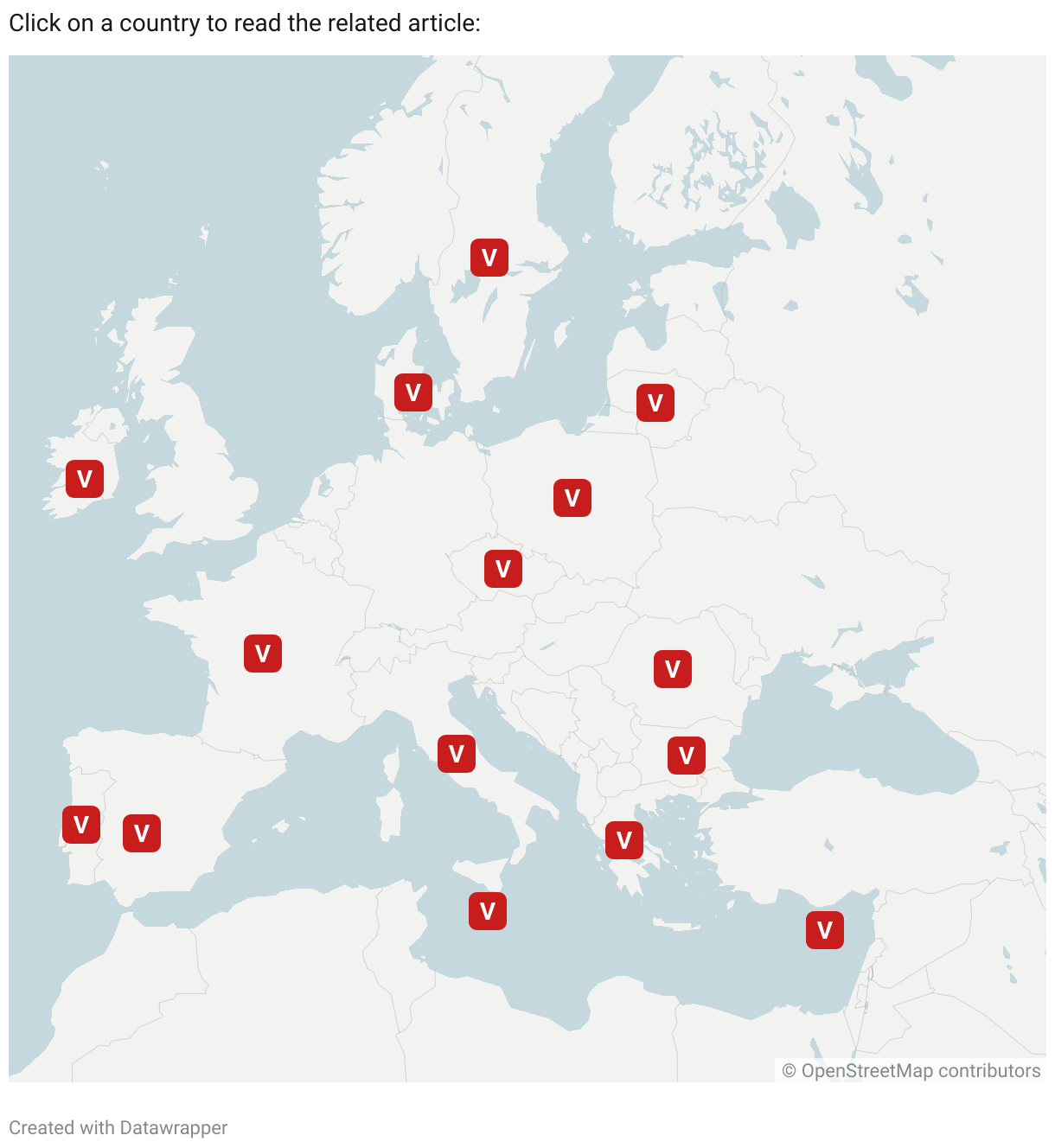
This article is part of the Voices of Europe 2024 collaborative project, involving 27 media outlets from all over the EU and coordinated by Voxeurop.
Do you like our work?
Help multilingual European journalism to thrive, without ads or paywalls. Your one-off or regular support will keep our newsroom independent. Thank you!


