









Select a language
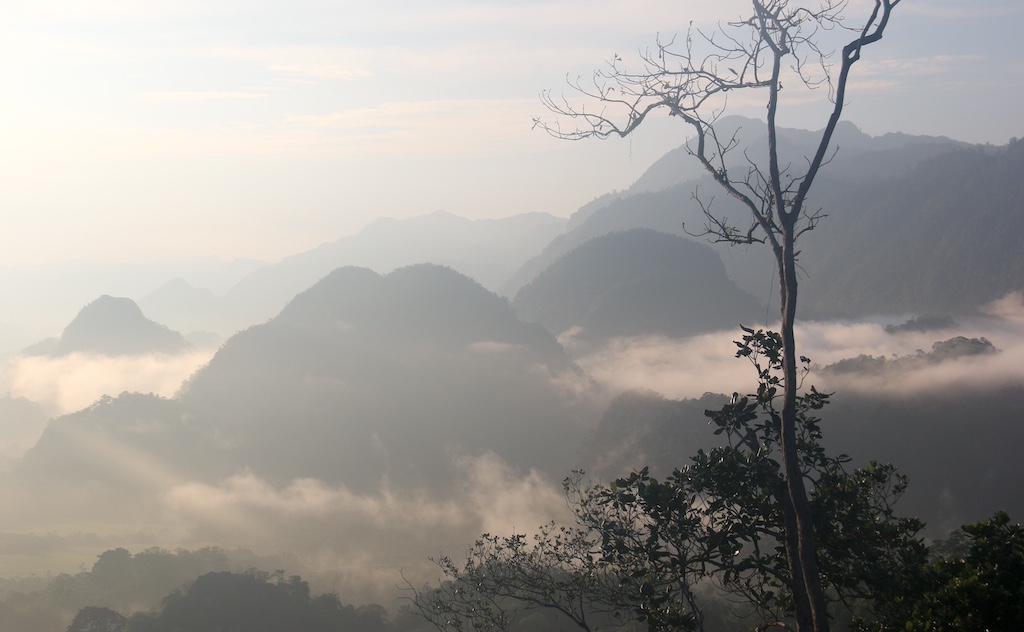
“Harming the forest will bring harm back to those who did it.” Wadimula’s relatives say she is 110 years old. She belongs to the Tolaki people, and she may be the last person alive who remembers when the remote valley she lives in was home to the gods of the trees.
In those days, nobody would have dared to cut down the woods to extract nickel – the mineral that has turned Sulawesi, Indonesia's fourth-largest island, into a manufacturing hub for electric vehicles (EVs). Wadimula’s whispered warning dissipates into the silence of the once sacred and now scarred hills above the village of Walandawe.
Other than us, there is no one else to hear Wadimula’s words unwittingly echoing UN Secretary-General António Guterres’ 2020 caution – "Nature always strikes back" against man-made ecological crisis. Least of all are they heard at Volkswagen’s headquarters.
Our investigation set out to test the sustainability claims of the German automaker, the world’s second-largest, and number-one player in the European automotive industry.
We found that companies in VW’s battery supply network source from operations linked to documented destruction of the Tolaki people's homeland, and that the German automaker's exposure may be worse than that of its competitors sourcing nickel from the same suppliers.
The German multi-brand automotive group holds a 27% share of the European EV market – far above that of any rival. According to analysts at Mobility Global (a former division of Stadard & Poor’s), more than 70% of the nickel used in VW’s EV batteries originates from Indonesian mines, compared with an average of 44% across the rest of the European EV fleet in 2025. In the US, the share of EVs incorporating Indonesian nickel is considerably lower, at around 33% in 2025.
The vast and remote piece of land carpeted with lush rainforests inhabited by Tolaki natives is at the same time home to the world's largest nickel deposit and a unique hotspot for biodiversity, with 98% of non-flying mammal species found nowhere else on earth. This is the contradiction at the heart of the clean energy transition: the minerals it needs are often buried beneath the ecosystems it claims to protect from the impact of global warming.
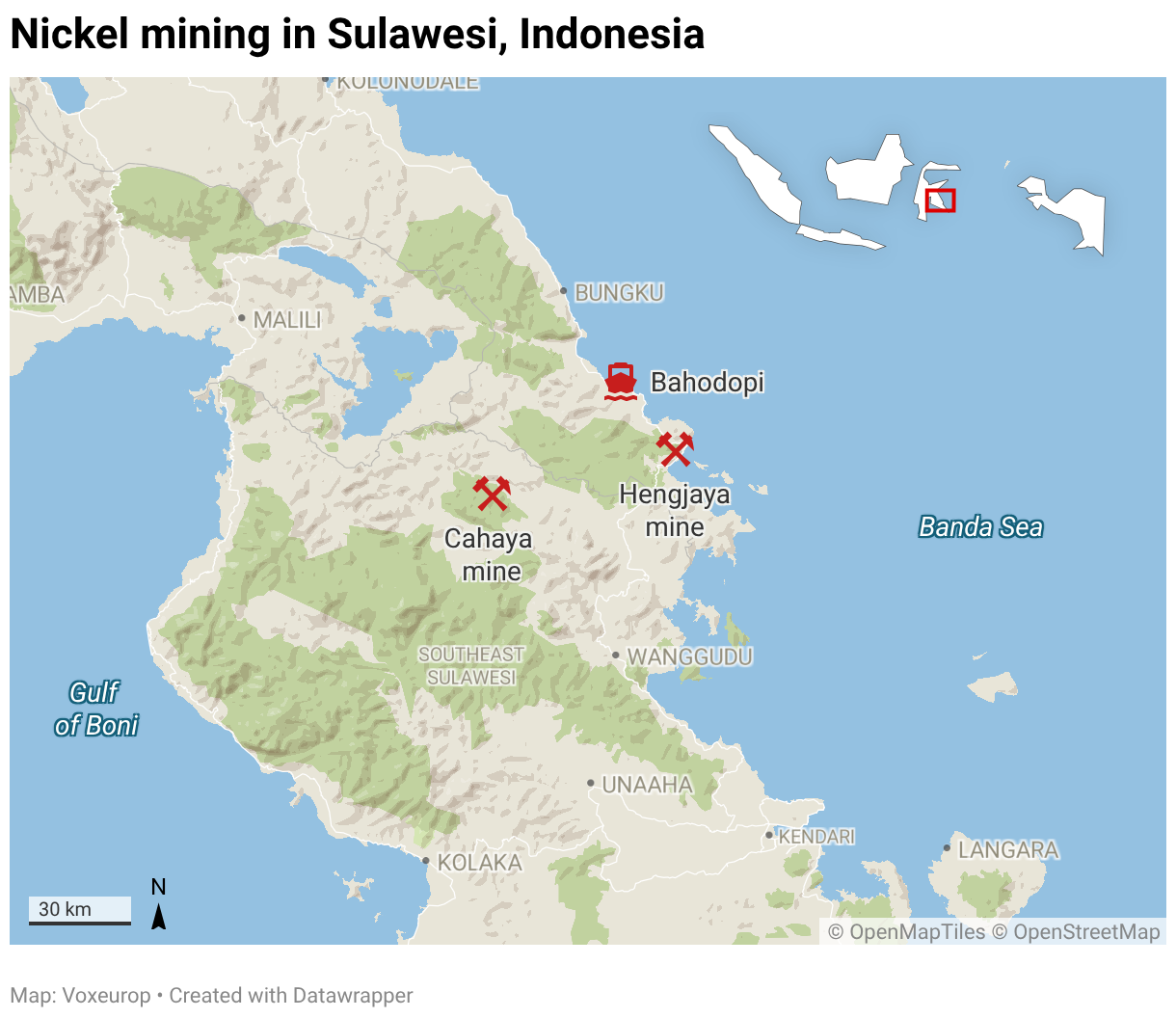
Wadimula’s home sits at the outskirts of one of the world’s largest nickel mines. The Cahaya concession spans 21 000 hectares (roughly the size of the city of Düsseldorf in Germany) and contains 3 million tonnes of nickel-rich limonite, the ore found in the upper layer of tropical soil.
This volume accounts for 5% of Indonesia’s vast reserves. The country's export, worth $20 billion, represents over half of the world’s nickel production, with output increasing by 13% between 2024 and 2025. In those respective years the battery sector made up about 11.5% and 15,2% of the global nickel consumption. According to the International Energy Agency, global demand will double, reaching 5.5 million tonnes by 2040, mostly driven above all by EVs Western markets.
Nickel matters because it boosts the energy storage capacity of cathodes – the positive electrode inside an EV battery – making it the cheapest way to build a long-range EV. Such a car requires roughly 30 to 40 kilograms of the mineral. Cheaper alternatives with longer lifespans, namely Lithium Iron Phosphate (LFP) batteries, still suffer from lower driving ranges and reduced efficiency in sub-zero climates.
VW touts its EVs as symbols of green transition. Its popular ID.3, ID.4 and Skoda Enyaq were among the top 20 best-selling EVs in 2024 and 2025. Those models used batteries that may very well have contained nickel that left the Cahaya concession during the same years.
In its sustainability and model marketing material reviewed for this investigation we found no reference to the rampant deforestation that has been disrupting biodiversity as well as the livelihoods and cultural heritage of the Tolaki Indigenous people.
While Volkswagen serves as the central case study of this investigation, the lack of transparency over these adverse impacts is common across the major automotive brands tied to the same suppliers.
Through in-depth field reporting, satellite analysis, corporate disclosures and trade data covering 2024 and 2025, we traced the company's exposure to a supply chain associated with the destruction Wadimula has spent her life warning against – from Indonesia's mines to car factories across Europe and the United States.
Ravaging primary forests and undermining climate change mitigation
VW sources over 80% of its EV battery cells from two suppliers: CATL, the Chinese multinational and the world’s largest battery manufacturer, and its South-Korean rival LG, ranked third globally, which has become the main supplier of the German car maker. Together, the two companies account for almost half of the global EV market.
The dependence is reciprocal: over the last two years, VW has increased its reliance on these two suppliers, which in 2023 represented less than half of its purchases. According to the research firm Benchmark Minerals International, VW-registered vehicles accounted for nearly 17% of the combined battery output from CATL factories – in China and overseas – and LG Energy Solutions’s plant in Poland in 2025, surpassing all other automakers bar Tesla, which scored the same share.
VW and CATL have collaborated since 2018. In 2024, CATL’s battery systems were mounted on around 24% of Volkswagen's electric vehicles sold that year. An expanded global partnership signed recently confirmed that more than 200 Gigawatt-hour of battery cells have been delivered to the German automaker by mid-2026, powering 45 models across eight of the group’s brands.
Both CATL and LG produce battery cells using cathode materials largely sourced from Zhejiang Huayou Cobalt – widely known simply as “Huayou” – one of China's ten largest cathode manufacturers. This commercial relationship is formally disclosed by Huayou in its annual reports for 2024 and 2025, which additionally list VW alongside other auto-makers as end users of its products.
In 2025 CATL and LG were the largest buyers of the 116,000 tons of cathodes produced by Huayou via its subsidiary B&M, also known as Bamo.
Our investigation found that, during the same 2024-2025 timeframe, Huayou was sourcing nickel ore from mining concessions in Sulawesi – among them Cahaya – where extractive activities have caused extensive deforestation, destroyed habitat for endangered species, and deprived local communities of collective farmlands.
Huayou operates the world’s largest nickel smelter powered by High-Pressure Acid Leaching (HPAL) technology through its Indonesian subsidiary Huayue Nickel Cobalt. Located in Bahodopi district, on Sulawesi’s South-eastern coast, the facility sits inside the Indonesia Morowali Industrial Park and refines limonite ore into Mixed Hydroxide Precipitate (MHP), the primary raw material to make battery cathodes.
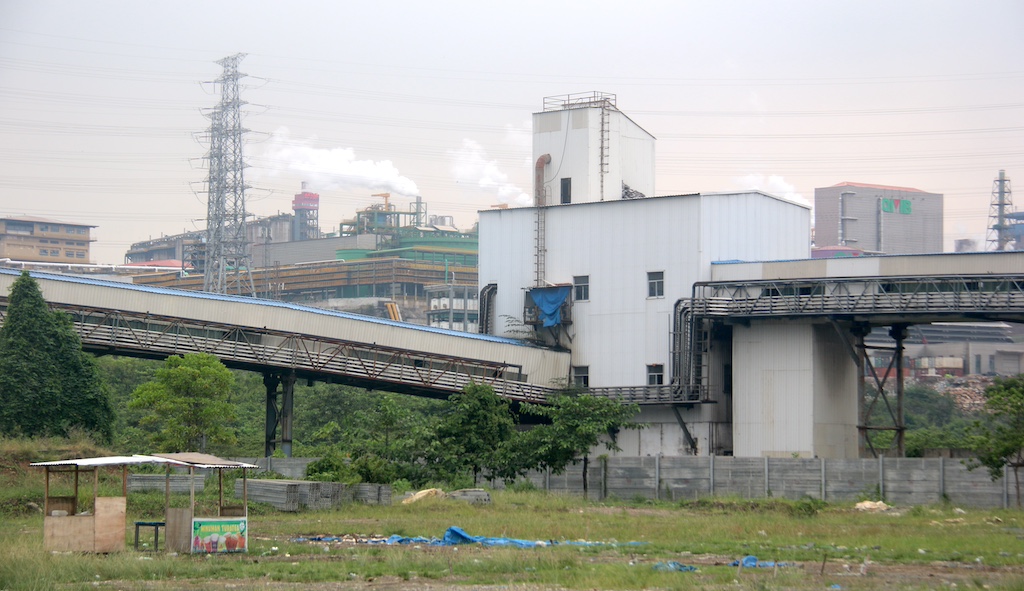
Nickel smelting is heavily dependent on coal-fired power. The resulting carbon footprint is substantial – an average of 93 tonnes of CO₂ per tonne of nickel produced, a significant share of Indonesia’s total carbon emissions. Most of the coal supplying the Morowaly complex comes from mines in Kalimantan (Borneo island), west of Sulawesi, and is extracted by major operators such as Adaro and Bumi Resources, both of which have been linked to deforestation.
The industrial complex in Morowali regency is the country’s leading nickel hub, accounting for 50% of the national production. Beyond its climate footprint, nickel processing inside the complex affects communities in the surrounding area through air and water pollution.
The limonite entering Huayou’s smelter mainly comes from the Cahaya concession. Additional ore is transported via road from the nearby Hengjaya Mineralindo mine (5,983 hectares). This smaller concession, which is majority-owned by the Australian group Nickel Industries, is similarly the subject of a land dispute with smallholders – in this case unrelated to the Tolaki communities affected by the Cahaya concession.
Both sites are located within an area of land defined as “production forest” (hutan produksi) which, according to Indonesian law, should be primarily exploited for the purpose of harvesting forestry products, such as timber, bamboo, honey, and natural palm sugar, rather than for industrial activities.
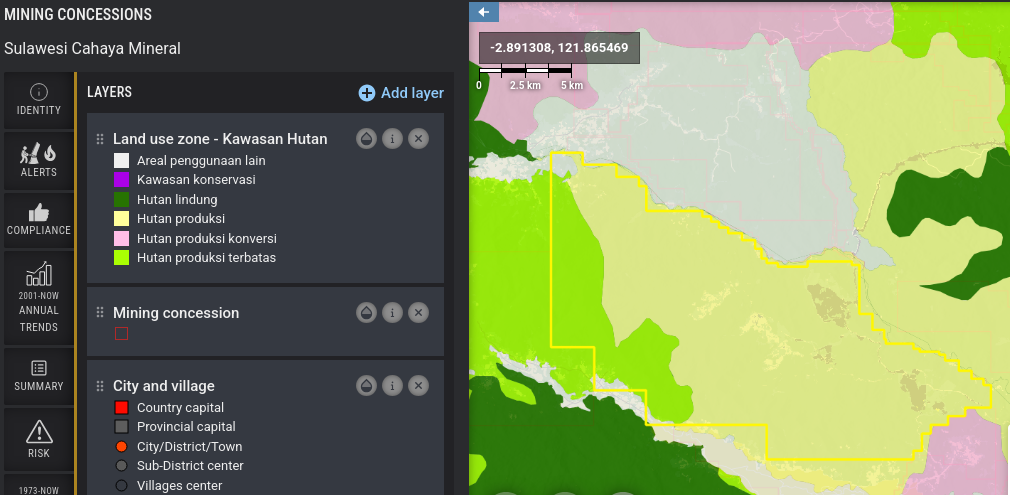
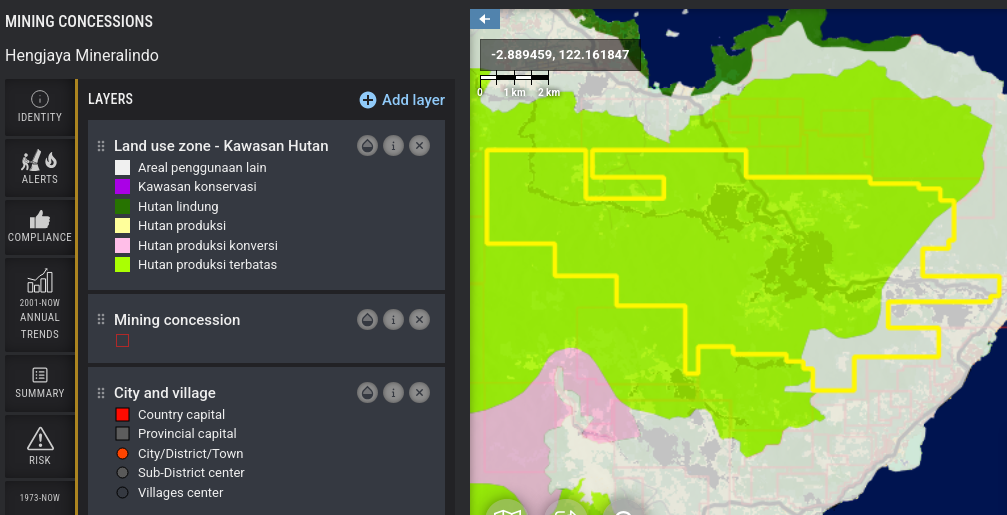
However, subsequent derogations enforced in 2021 have weakened these safeguards, thus expanding mining licences to boost investment while eroding the boundaries of restricted forests.
Notably, the legal requirement for the government to maintain a minimum forest cover of 30% nationwide was removed and extractive companies have been entitled to borrow woodland for a given period of time upon post-mining rehabilitation obligations.
Also, licensing has been accelerated in strategic economic zones, including the Morowali region, that were designated by the government, especially for nickel production which represents an increasing share of Indonesia’s GDP as exports surge.
As a result, over hLoalf of the original forest area overlaps with nickel mining concessions.
Sulawesi Cahaya Mineral (SCM), the company granted the mining permit for the Cahaya area, intends to mine 8,400 hectares in total (40% of the concession) in a woodland categorized as “limited production forest” (hutan produksi terbatas) where large-scale clearing should be strictly prohibited in principle but permitted in practice by the pro-industry exemptions adopted by the government.
For its part, Hengjaya Mineralindo has been licensed to use 2,000 hectares (over 60% of the concession) in an area which used to be classified as “protected forest”, a special status excluding open-cast mining.
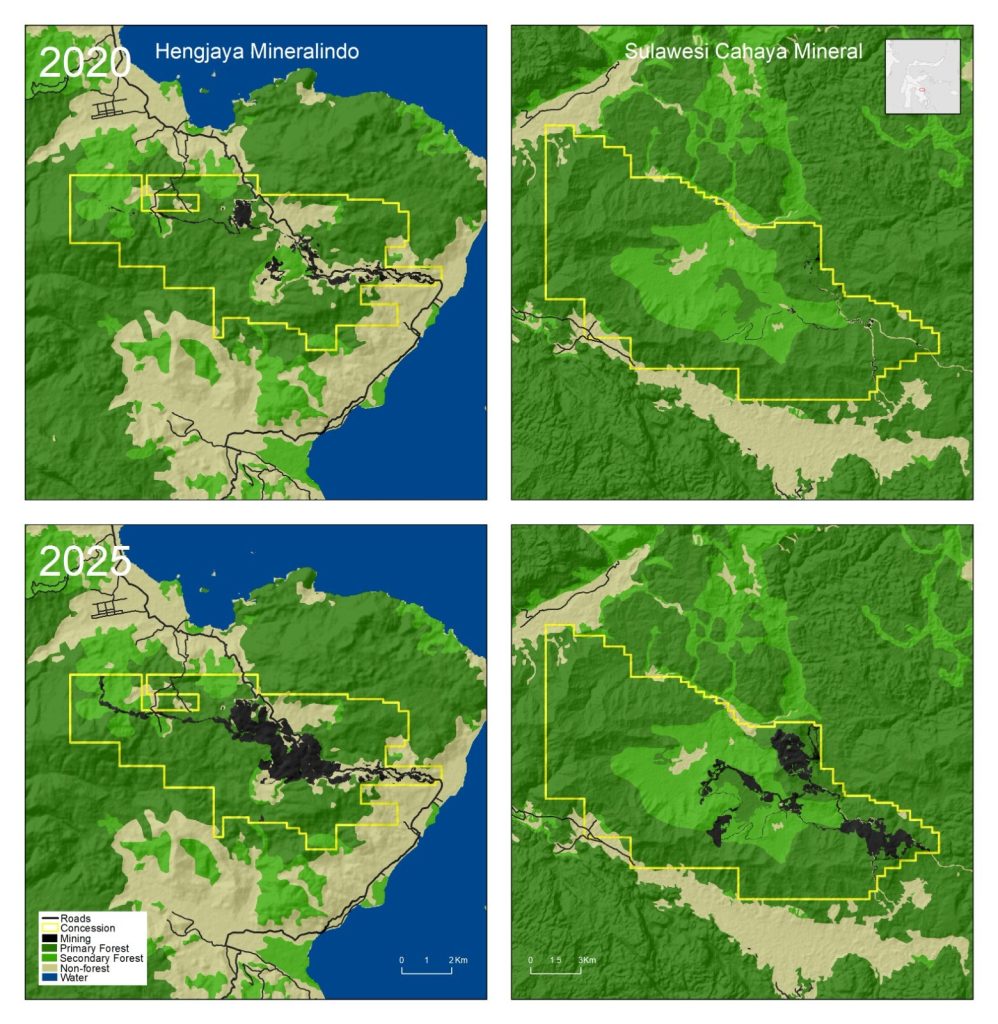
Forest cover data (primary forest, secondary forest, and non-forest) were obtained from the Ministry of Forestry. The mining expansion areas (black) were identified through using Planet and Sentinel-2 satellite imagery.
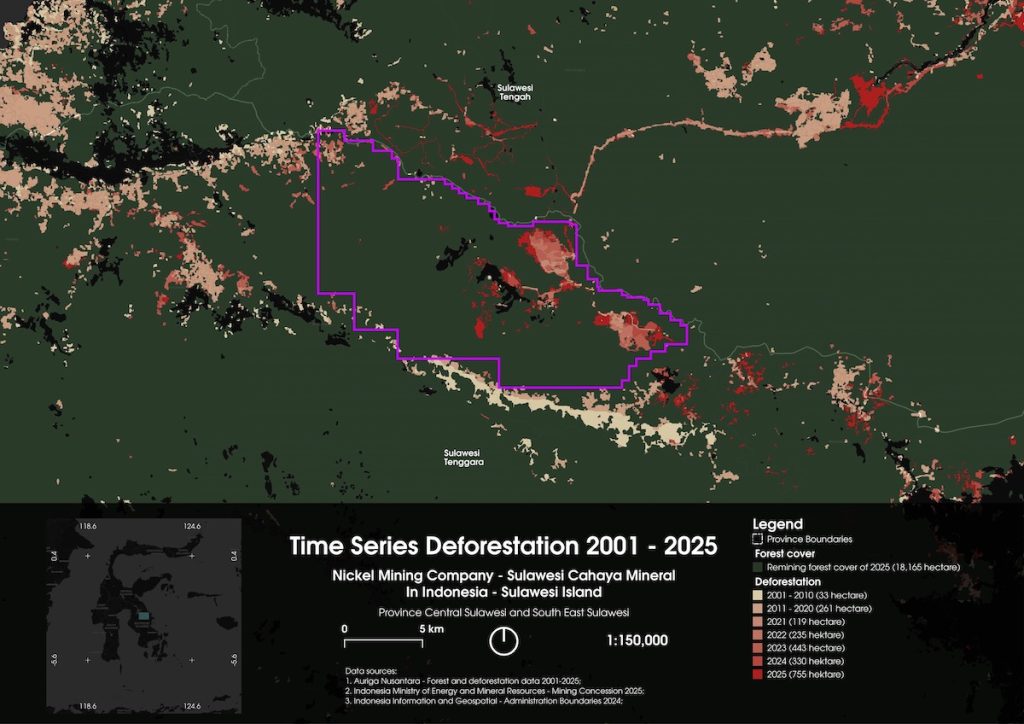
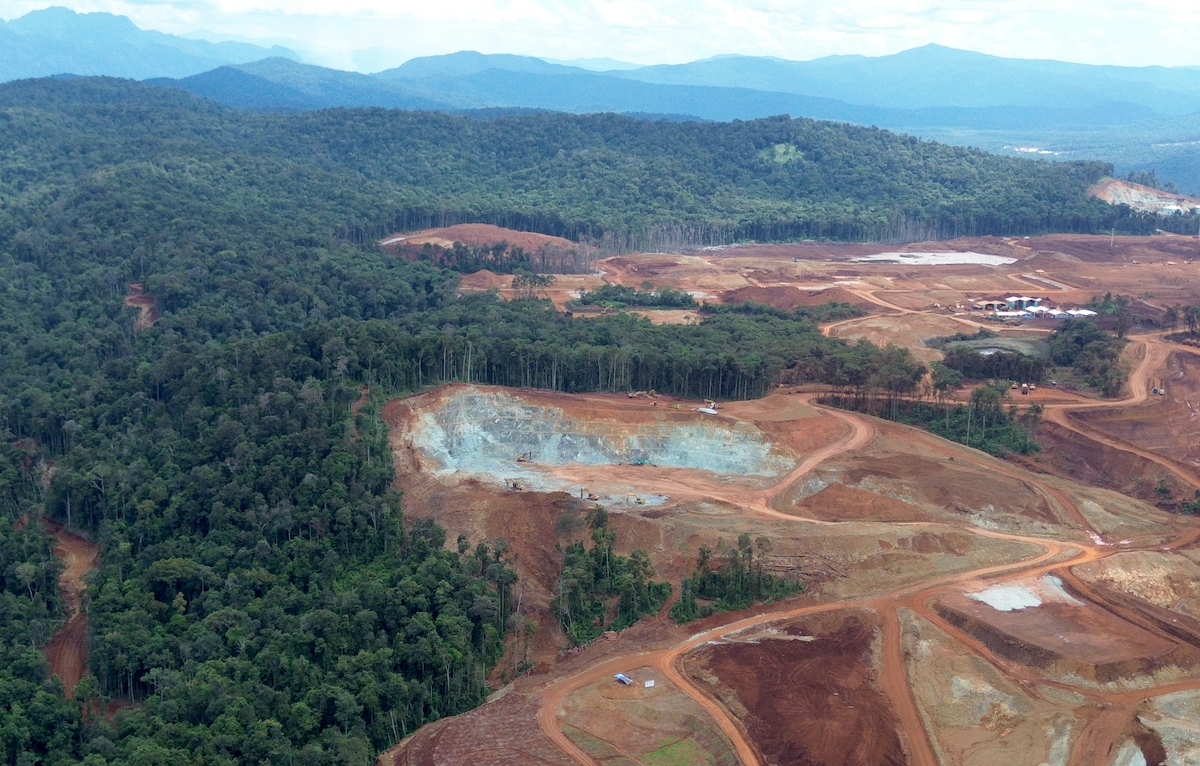
Footage in our possession shows barren mining pits carved into once-lush primary rainforests – woodlands which have never been substantially altered by humans. In 2001, these crucial old-growth native ecosystems covered 97% of the Cahaya concession and 95% of Hengjaya, according to Global Forest Watch (GFW), a monitoring platform managed by the World Resources Institute.
GFW relies on a scientific definition of primary forest that includes larger areas than those delineated by the Indonesian government and other countries according to politically-agreed international standards.
Indeed, the definition of “primary” endorsed by the UN Food and Agriculture Organisation (FAO) excludes forests that have been partially degraded by human activity, and therefore downgraded to secondary forests, even though they retain their critical value as biodiversity hotspots.
Also, mining is exempt from the Indonesian moratorium of 2011 which banned commercial licenses in primary forests.
Spatial analysis conducted by geospatial firm TreeMap indicates that 66% of the forest loss recorded since 2001 within the area now encompassed by the Cahaya concession – equivalent to approximately 1,490 hectares – can be attributed to nickel mining. This includes the expansion of mining pits, the construction of industrial facilities, and the roads connecting them.
Despite holding a valid licence, SCM received two administrative sanctions in 2025 for illegally clearing more than 450 hectares of forest beyond the boundaries of its permitted clearing area within the concession. The Indonesian Ministry of Forestry did not respond to our request for comment.
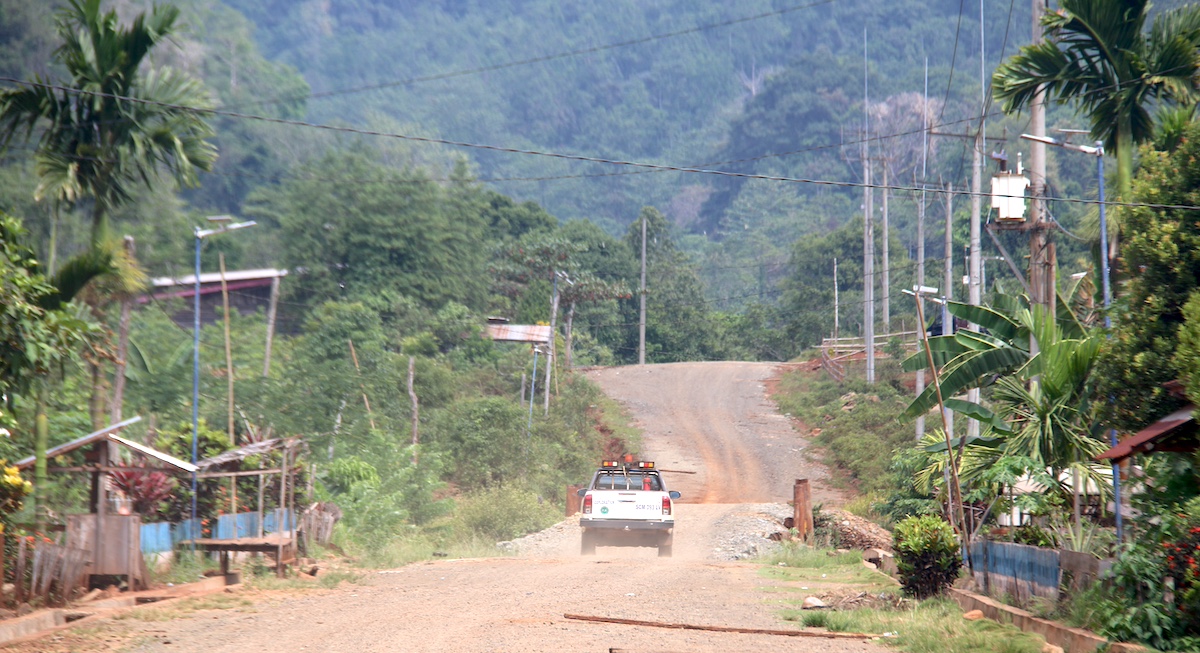
At the Hengjaya mine, nickel operations wiped out 772 hectares of forest, exceeding half (precisely 53%) of the total forest loss recorded in the concession since 2001.
In the run-up to the start of the processing operations in 2021 by Huayou’s smelter in Morowali, ore extraction soared, accelerating forest loss. “Respectively around 94% and 67% primary and secondary forest destruction by nickel mining in the Cahaya and Hengjaya mines has occurred in the last five years,” said David Gaveau, Founder of The TreeMap. “Only in 2025, 712 hectares of trees were lost to nickel production, representing nearly 20% of all deforestation recorded in the two concessions to date.”
Altogether, the overall decline in canopy cover in the two concessions potentially linked to the VW nickel supply chain equates to nearly 2,360 hectares – approximately the size of 3,500 World Cup football fields.
When considering primary forests alone, more than 2,211 hectares have disappeared across the two concessions since the start of mining operations (2012 in Cahaya and 2017 in Hengjaya), according to GFW methodology. Approximately , 1,269 hectares have been cleared since 2020, based on calculations by TreeMap. (1)
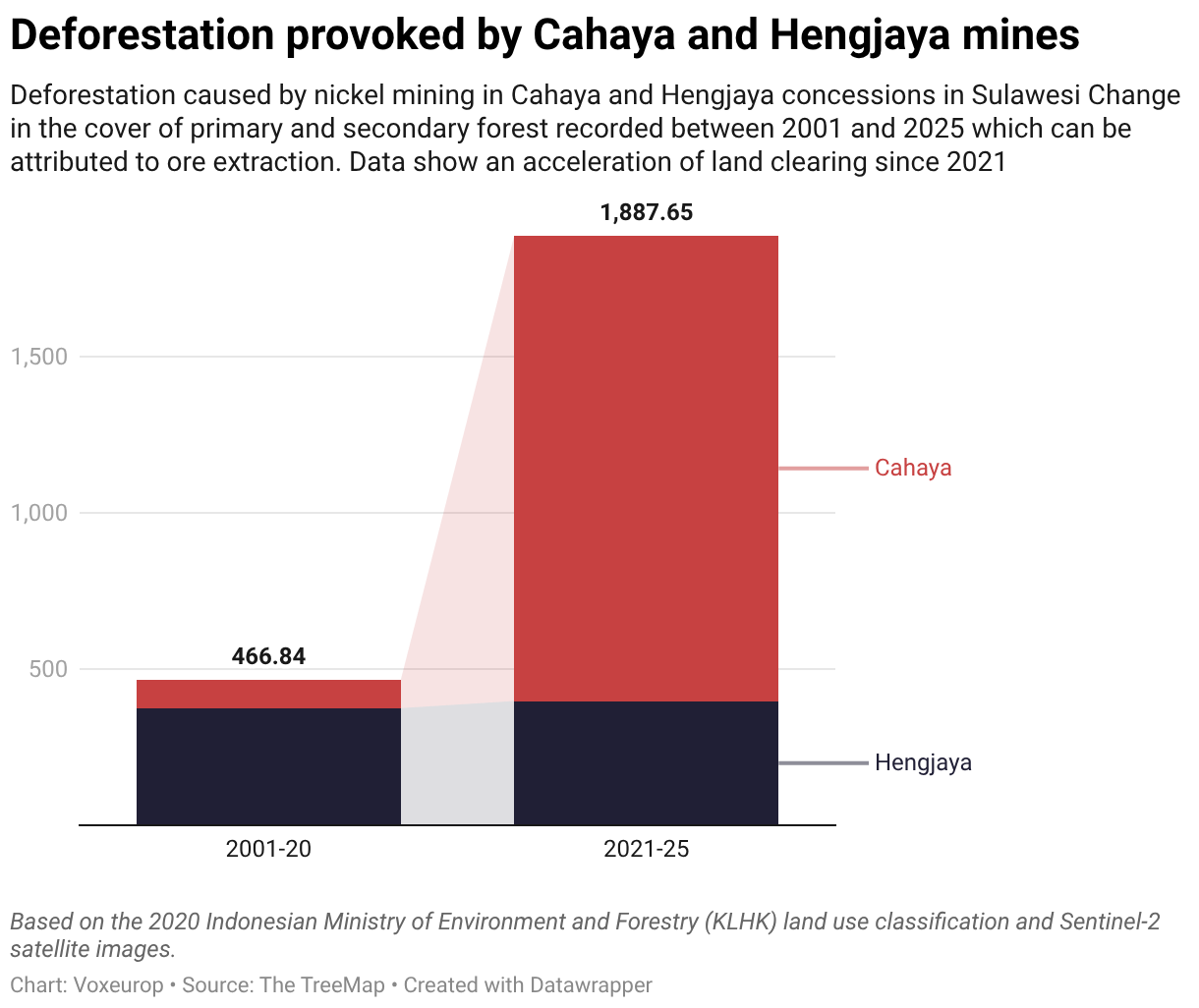
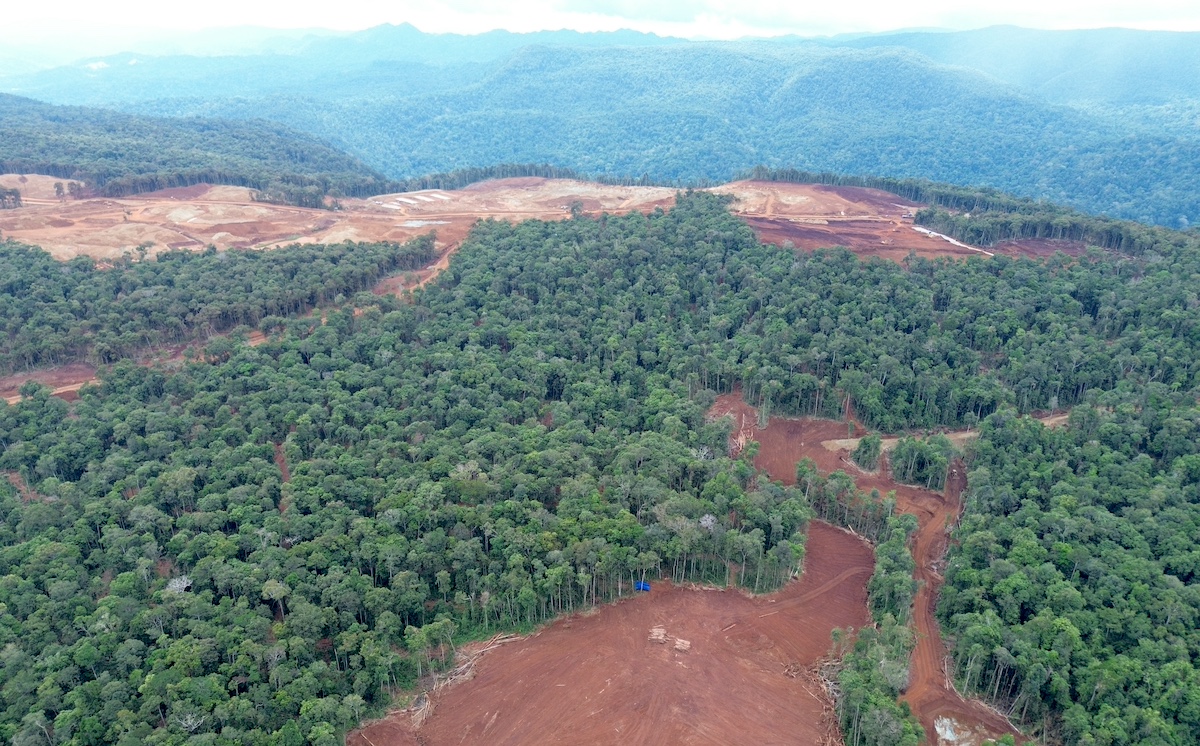
Furthermore, over 90% of the forest within Cahaya is labelled as a high-value carbon sink. As clearing intensifies, additional carbon dioxide (CO₂) is released into the atmosphere, contributing to the very human-induced climate change that EVs are supposed to mitigate by replacing combustion engine vehicles
Papers published in Nature in 2025 warned that the global carbon footprint of nickel mining could be 4 to 500 times higher than previously reported and, amounting in Indonesia to over 10 tons CO₂ per tonne of nickel produced.
“Our estimates suggest that the combined primary forest loss associated with nickel extraction in the two concessions has so far generated around 1.9 million tons of CO₂,” said Radost Stanimirova, Research Associate at the World Resources Institute. This volume equates to over 14% of all emissions released from (mostly mining-related) primary forest loss in Morowali region in the last 25 years, and to the emissions from over 410,000 combustion engine cars in one year (assuming that each emits an average of 4.6 metric tons of CO₂ per year).
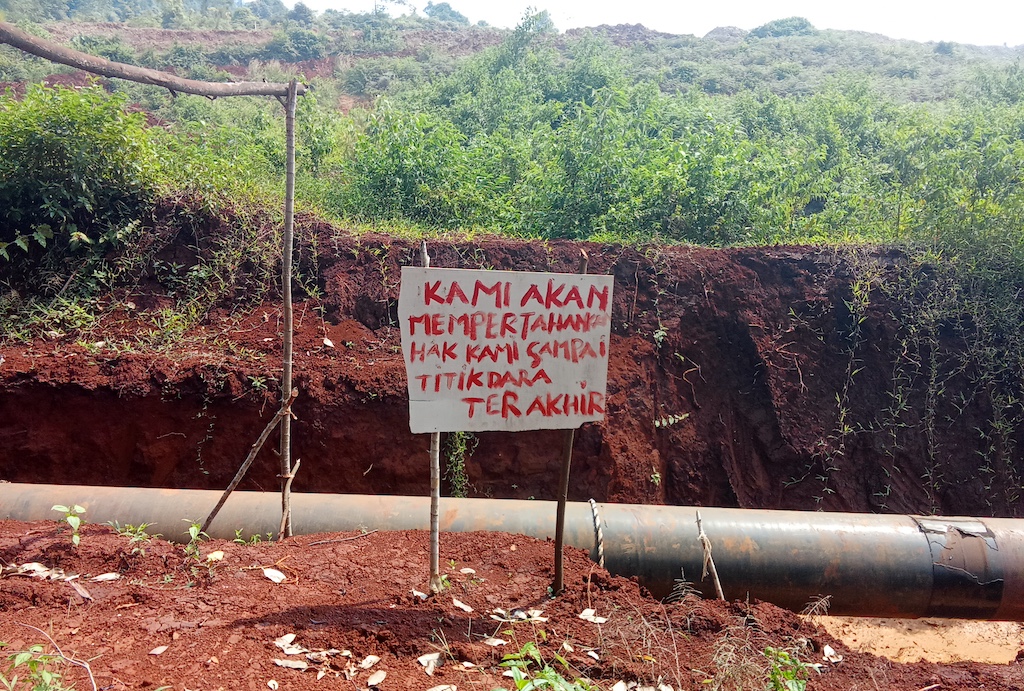
This data throws into question the production process behind EVs – and their actual climate credentials. According to a recent study published in Nature Climate Change, the immediate destruction of biodiverse, carbon-rich forests to extract raw materials for zero-emission vehicles could itself outweigh the long-term ecosystem benefits the energy transition is expected to deliver.
That’s not all: crucially, a confidential report commissioned by SCM itself in 2022 acknowledged that deforestation in the concession contributes to a chain of cascading impacts: deforestation leads to increased soil erosion and greater surface runoff, resulting in higher downstream flow laden with sediments. All this results in both flooding and river pollution.
These findings were confirmed by a survey conducted last year by the local NGO Center for the Study and Defence of Community Rights (Puspaham) which accuses the company of breaching the legal obligations aiming to prevent water degradation and recurrent flooding currently affecting the communities.
Forest loss poses threats to endangered species
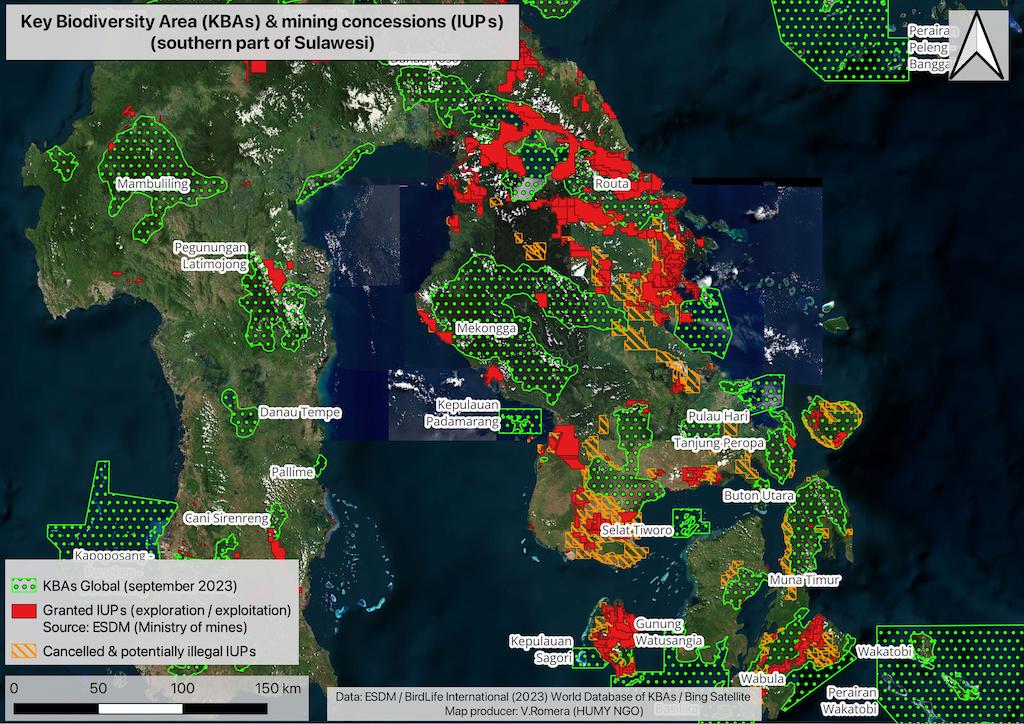
Additional analysis by the NGO Auriga, based on government data, shows that the two concessions overlap slightly with the 142,000-hectares-wide Key Biodiversity Area (KBA) established in the Routa province, which extends into the Morowali forestland and covers over 90% of its surface.
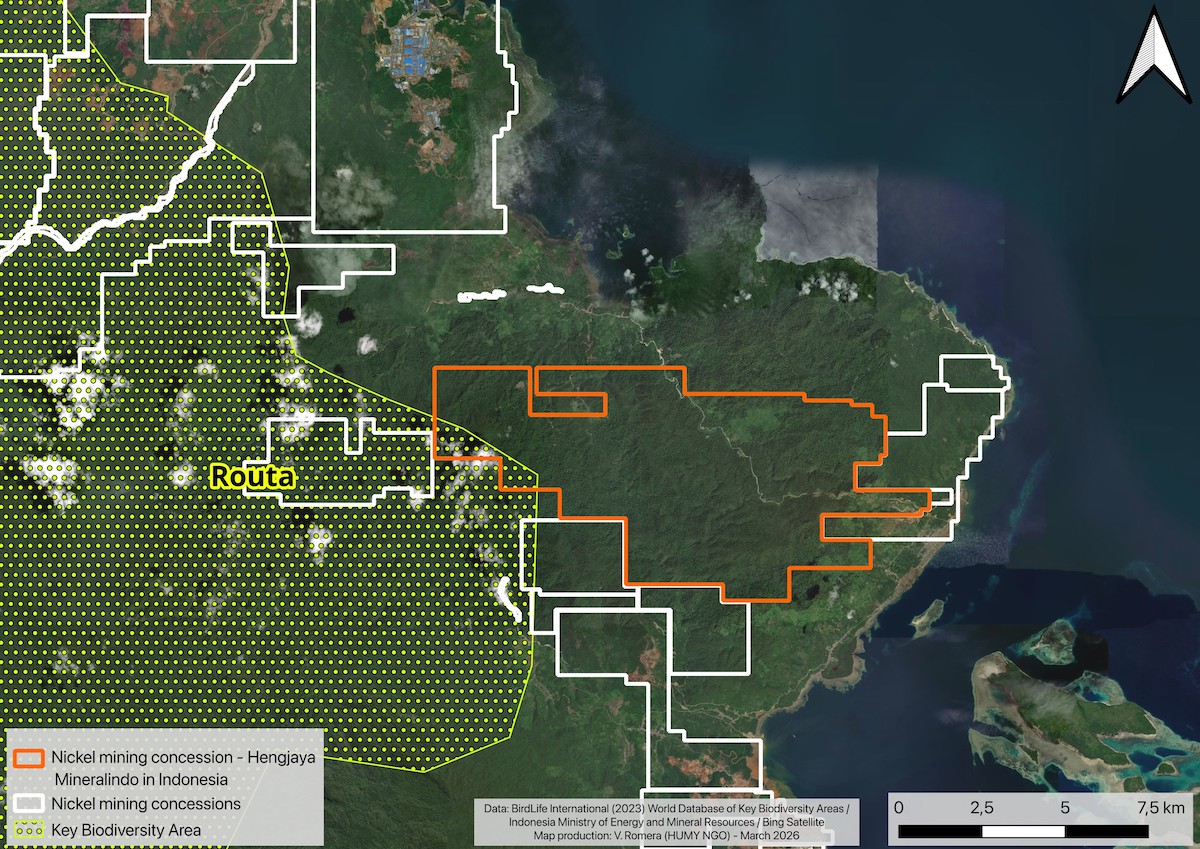
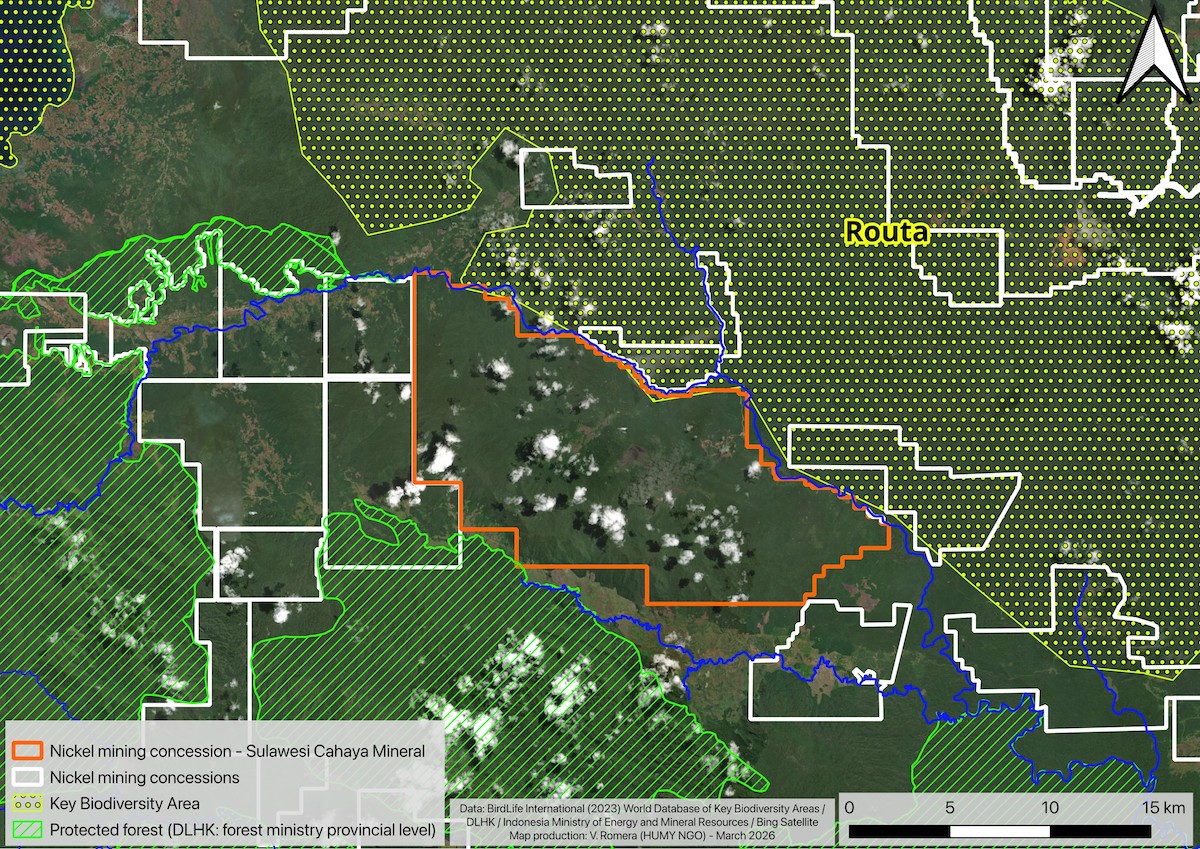
Like all KBAs, this ecological reserve was designated by conservation groups in Indonesia according to the standards of the World Conservation Union (IUCN) (2) and aims to protect endemic wildlife including the anoa (Bubalus depressicornis). This South Asian “dwarf” buffalo appears in the IUCN Red List of endangered species and is on the brink of extinction, mostly due to poaching. In Tolaki’s tradition it embodies strength and is ceremonially offered to restore social harmony.
“There is a wide gap between best practices and Indonesian law which permits rainforest destruction,” says Marcy Summers, director of the US-based Alliance for Tompotika Conservation – an international NGO focused on wildlife protection in Sulawesi. KBA Routa was backed by the Southeast Sulawesi Natural Resources Conservation Agency (BKSDA Sultra), a public body – yet Key Biodiversity Areas carry no formal legal protection. “A lack of recognition does not mean lack of importance,” Summers adds. “They provide critical safe habitats for species under threat.”
Recently appointed by the Indonesian government to the committee updating the official ten-year conservation plan for the anoa, Summers is watching the impact of mining expansion on this endemic species at close range. “As mining expands, the anoa population declines because this species requires large, intact forests to survive and cannot live in fragmented landscapes,” she says. “Once habitats shrink below a given threshold, populations collapse.”
The IUCN strategy for the conservation of anoa demands efforts to “maintain and […] expand the […] habitat” whose “loss, fragmentation, and degradation together represent [...] the main threats”.
Last year, a population of anoa was found roaming between the workers' dormitories in the Cahaya concession and was moved to a reserve set aside by the mining company in collaboration with the Natural Resources Conservation Agency which has also started an investigation into a slaughtered buffalo allegedly found in the mining area.
“The idea of relocating anoa to protect them is scientifically flawed,” said Summers. “Relocation without proper ecological study is irresponsible, you cannot simply move wildlife and expect survival.”
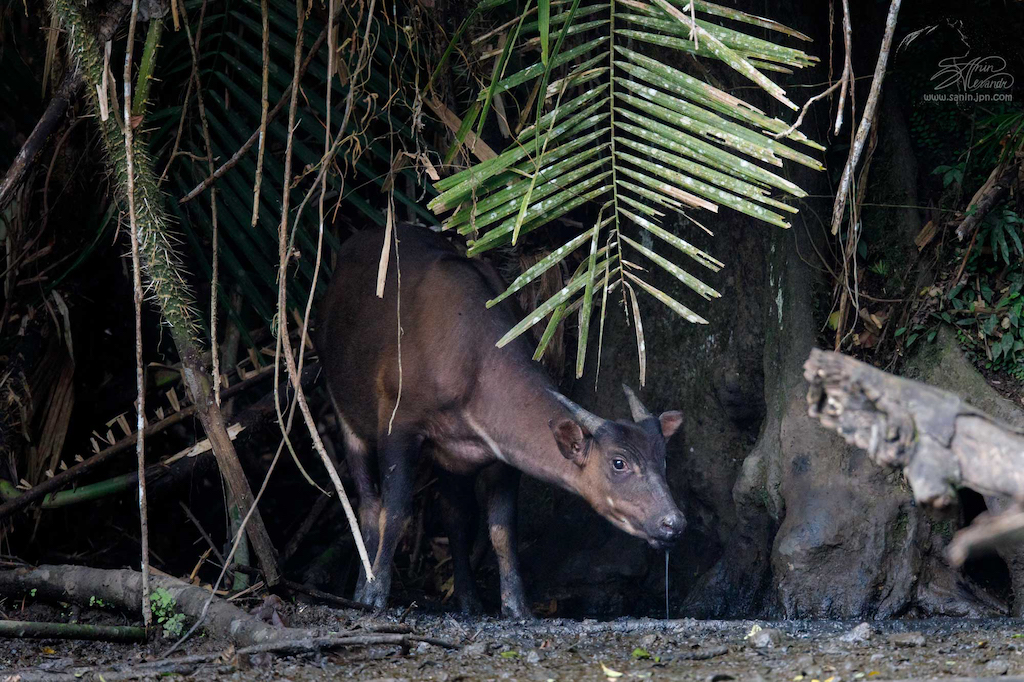
SCM’s unpublished 2020 environmental impact assessment, which we obtained, identifies the Anoa as one of the species found in the concession and commits to protecting biodiversity and the forest when mining has ceased. However, it does not detail any scientifically proven measures.
A IUCN analysis published in 2025 asserts that so-called restoration is not equivalent to the original forest and habitat. It adds that “restoration potential” should be “demonstrated before project activities commence".
The study’s authors indicate that the nickel sector has generally become a major driver of deforestation in Sulawesi. They found that 77% of mining supplying the Morowali industrial complex takes place in primary forests which has already resulted in the loss of over 12,000 hectares of forest. Also, a quarter of the nickel concessions area overlaps with potential community land, “creating uncertainty and tensions between mining companies and local communities”.
More specifically, they warn that 22 different nickel mining concessions, including Cahaya and Hengjaya, overlap with over 40% of the 58,000-hectares KBA Routa, “raising significant conservation risk”, threatening endemic species, including anoa.
The Hengjaya mine exhibits the second-highest level of forest ecosystem disturbance among all overlapping nickel mines.
“Due to inadequate oversight from law enforcement authorities, protection measures exist only on paper. In practice they are not implemented,” said Kisran Makati, Director of Puspaham, which filed a formal complaint with the public authorities. “The evidence of this failure is that the viral information about the slain Anoa has led to no concrete action.”
Tolaki’s broken promise
For the Tolaki people, the destruction of their natural homeland by Cahaya’s mining operations has come to symbolise a broken promise of development, traded off against their traditional culture and economy.
“We used to ask the forest for protection in return for our offerings; destroying it means destroying our own life,” Wadimula told us.
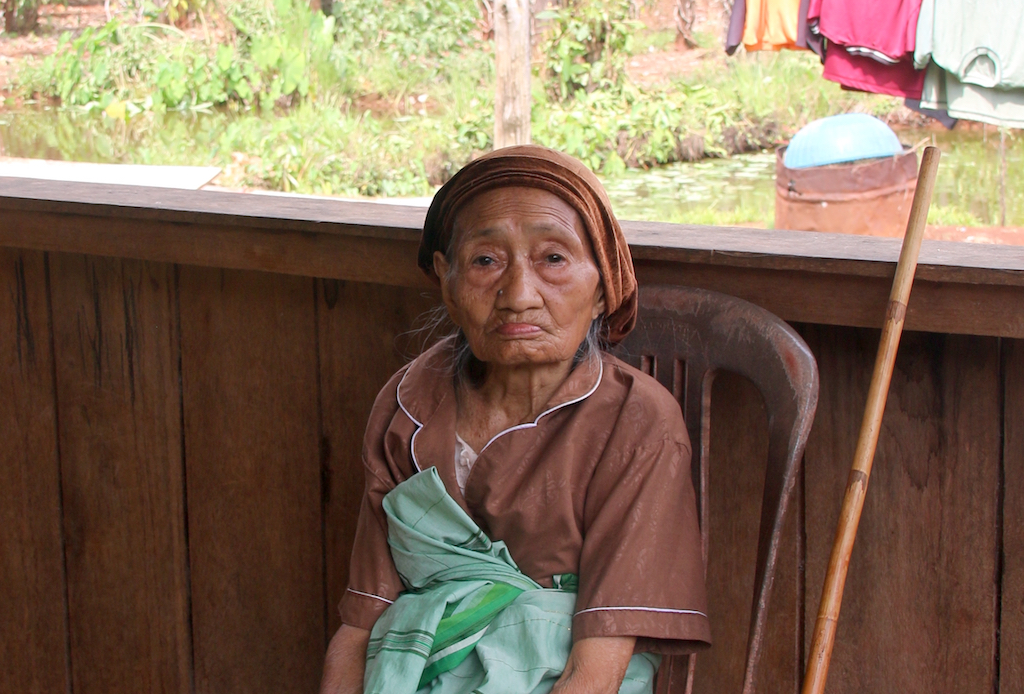
Although the belief that the forest is a living spiritual ancestor has largely been replaced by Islam and Christianism rituals, the Tolaki people continue to rely on the woods for harvesting rattan, damar resin, agarwood and other materials for weaving.
“Skilled craftsmen could earn between five and ten million rupiah [€250-500 / $300-600] a month from these products,” said Yusuf Unggahi, a villager in Walandawe. He lives and farms atop the valley, less than one kilometre from the concession.
“If all the other elders were still alive, they would not have allowed nickel mining to ravage our traditional way of life and source of income,” said Hastina, Wadimula’s niece-in-law. “But she is the only one who still follows the old ways, and after she passes away, no one else will hold to the same values.”
When the nickel mining project was proposed by SCM, indigenous families agreed to hand over their ancestral land. They thought that the ore smelter planned within the concession would bring long-awaited employment and welfare beyond their subsistence economy.
“The agreement was signed with the community in 2013, ten years before mining operations started and I became village head,” said Guslan Kades, of Walandawe. “But the company has not yet complied, despite offering other benefits such as roads and schools."
A government-approved document from 2020 reaffirms SCM’s pledge to construct the smelter. We obtained the paper from Ahmad Coni, a former SCM manager. “I resigned in 2025, right after I heard that the company was going to formally amend its commitments, and betray our community,” he said.
Eventually, SCM opted to supply ore directly to Huayou’s processing plant in Morowali likely to save refining costs, leaving the Tolaki people with neither the forest they depended on nor the prosperity they had hoped for.
“If raw nickel is exported rather than being processed here, we will have just been deprived of our land and left with nothing,” said Coni.
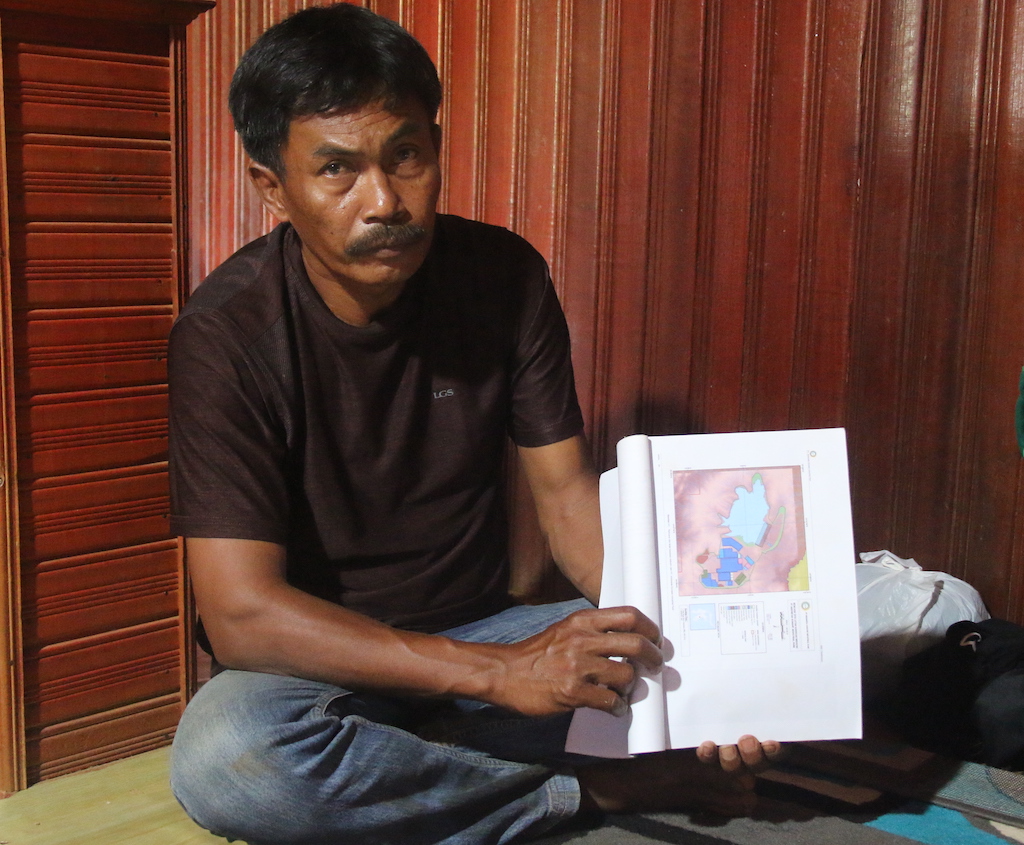
SCM’s unfulfilled plan has created tensions and divisions within the local community.
“The project was not intended to benefit everyone, but only a few wealthy villagers, including both Tolaki and non-native settlers. They saw an opportunity to establish businesses around the smelter and convinced the majority of villagers that everyone would make money, although unskilled individuals would have little chance to get a job,” Yosuf told us. “Back then our common land rights and the negative long-term impacts, such as loss of forest products and pollution, were ignored. Now we recognise our mistake.”
Amid economic insecurity, demonstrations sparked against SCM last summer, urging the company to build the smelter and pay for land acquisition. Besides this, they demanded a higher profit share for the local administration (which owns 2.5% of the capital) and public services.
“Pursuing fairly shared compensation and attracting investments in renewable energy initiatives would be far safer than clinging to polluting industrial development,” Yosuf said, criticising the mainstream doctrine.
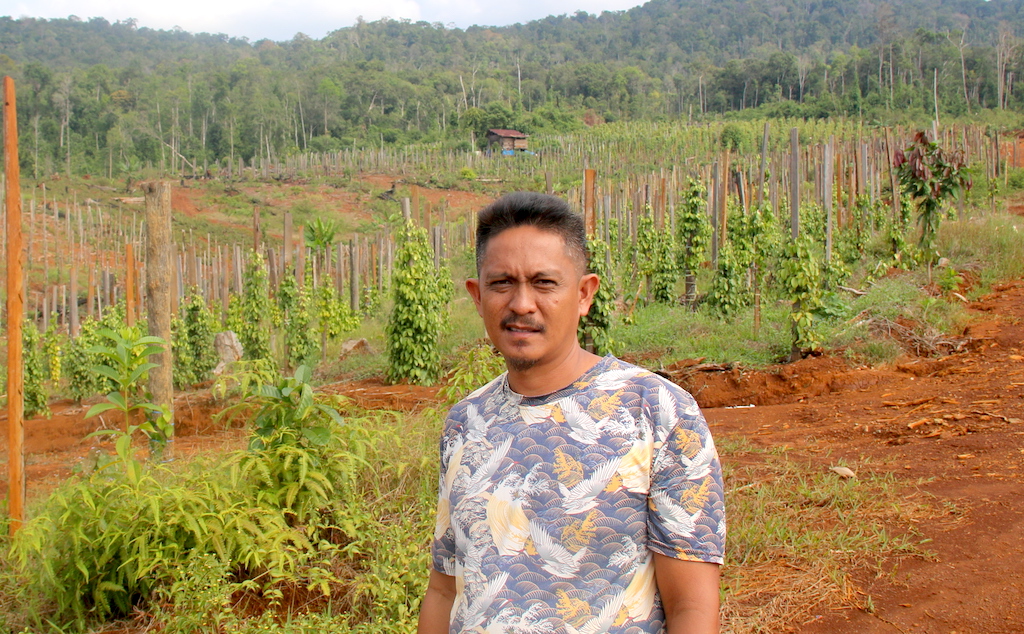
“Beyond the loss of wild plants that we gather, our farmland lies within the company’s concession and keeps shrinking as mining advances,” said Guslan Kades, the community head. “We fear the environmental damage and what the next 10 or 20 years will bring. We are uncertain whether we will still be able to use our natural resources after the mine closes.”
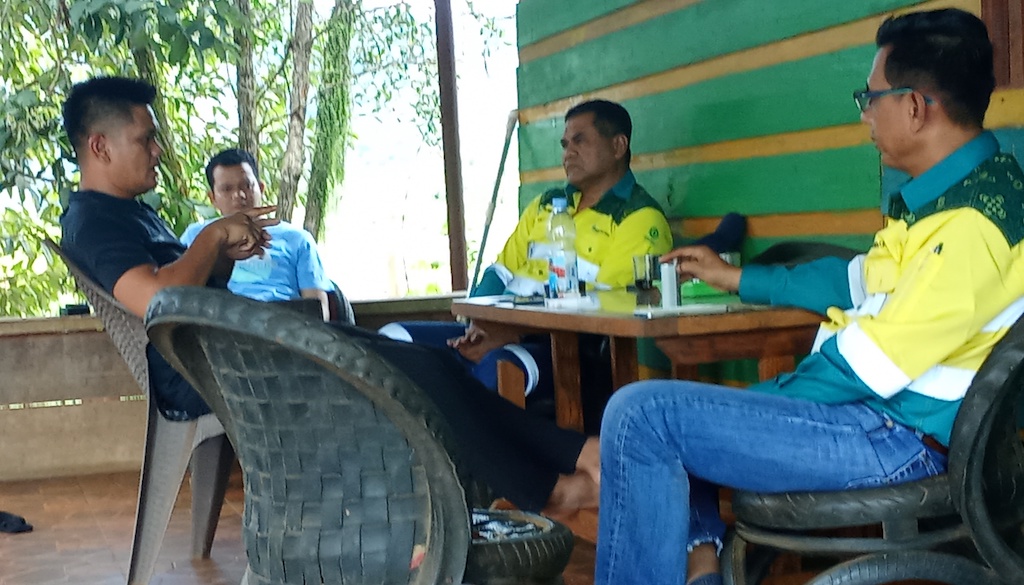
We watched Guslan in front of his house, as he discussed the issue with two SCM officers. They told him that decisions are up to investors. Their names lead back to Volkswagen.
Following the supply chain
In fact, SCM is a subsidiary of Merdeka Battery Materials. The Indonesian conglomerate took control in 2022, following multiple changes of ownership since 2010, when the Australian firm Rio Tinto was first granted an exploration licence.
Merdeka Group lists CATL and Huayou among its shareholders, alongside the Chinese Tsingshan Holdings Group, which directly owns 49% of SCM. Through its sister company Shanghai Decent Investment, Tsingshan indirectly holds a dominant stake in the Morowali Industrial Park and significant stakes in Nickel Industries – which, besides controlling Hengjaya mine, is also a minority shareholder in Huayou’s smelting facility in Morowali.
“The involvement of the same actors in both mine ownership and downstream processing operations supplying VW tightly links the German company to what happens on the ground,” said Thea Parson, Forest Commodities Manager at the NGO Mighty Earth.
When asked to comment on its ties with Huayou and, indirectly, with the Cahaya and Hengjaya mines, Volkswagen stopped short of a denial. “We cannot rule out that the mentioned companies might potentially be within our supply chain, and we take potential risks [...] very seriously,” a VW spokesperson told us. “However, due to contractual obligations with our business partners, we cannot disclose specific details.”
That statement is contradicted by the corporate and shipment records cited in this investigation, which establish a continuous chain of commercial relationships linking VW to CATL, CATL to Huayou, and Huayou back to the Cahaya and Hengjaya mines.
Beyond documents confirming the overall flow of materials between these companies in 2024 and 2025, our reporting – with the research support of Empower – tracked, where records allowed, the quantities, values and transportation routes of nickel shipped at each stage of the supply chain: from the Cahaya and Hengjaya mines to Huayou’s smelter in Indonesia; from there to Huayou’s and LG’s cathode plants in China; and finally from CATL’s and LG Energy Solutions’ battery cells factories to VW’s production sites in Germany.
In 2024, while an additional 330 hectares of forest were cleared in SCM’s concession according to analysis by Auriga, the mining company delivered 11 million tonnes of limonite – almost all of Cahaya’s production – to Huayou’s smelter in Morowali.
Deliveries nearly increased to 12,5 million tonnes throughout 2025, according to Merdeka’s quarter reports (3), compared to 2024. Limonite is mainly transported via a 50km-long conveyor belt cutting through the KBA Routa.
Huayou’s plant has also continued to receive ore from the Hengjaya mine by lorry, as confirmed by drivers we interviewed on the ground.
In 2024, nickel processed into MHP by Huayou and worth $606 million (€525 million), left Bahodopi port, adjacent to Morowali industrial complex, aboard several cargo vessels – followed by further shipments worth $470 (€407 million) in 2025.
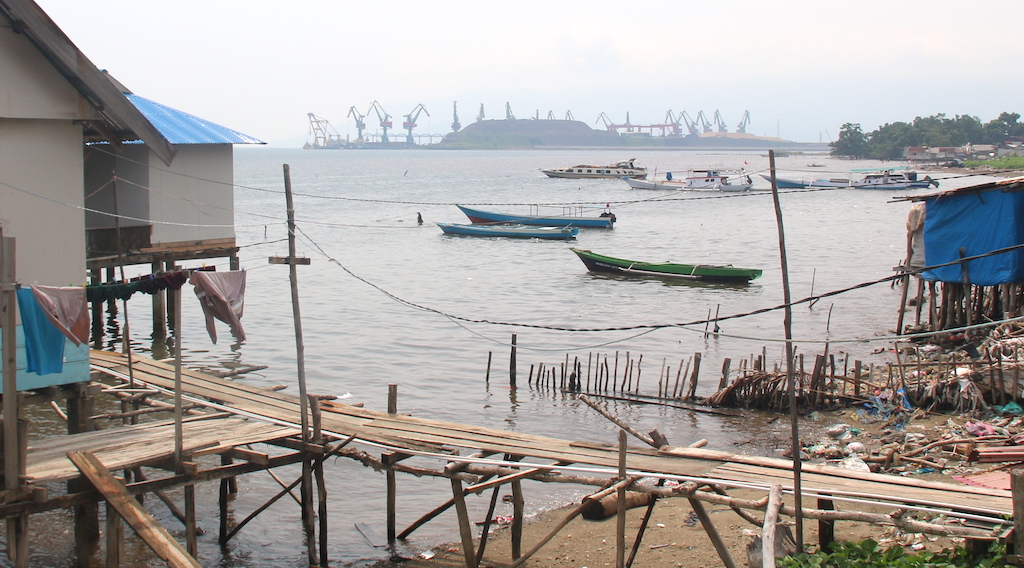
Shipment value and routes are drawn from records shared by Eximpedia, which cite Huayou as both exporter from Indonesia and importer in China – respectively via its subsidiaries in Morowali (Huayue Nickel Cobalt ) and in Hong Kong (Huayou International Mining Limited).
All consignments were bound for the eastern Chinese port of Zhenhai and the southern port of Qinzhou, from where they were transported overland to Huayou’s integrated manufacturing sites in Quzhou City (Zhejiang province), southwest of Shanghai, and in Yulin City (Guangxi province), near the Vietnamese border. Both plants refine MHP into nickel sulfate – an intermediate feedstock processed into precursor materials used to manufacture cathodes at the same locations.
Huayou publicly states that most of the MHP fed into its Quzhou plant is imported from its Morowali smelter and contains nickel ore mined in Sulawesi – that is from the Cahaya and Hengjaya concessions.
Quzhou plant has historically supplied nickel-containing precursors to Huayou’s downstream subsidiary B&M, which specialises in cathodes manufacturing in its plants in Chengdu and Tianjin.
The Chinese processing
Official Chinese sources confirm that B&M supplies CATL and that it has delivered large quantities of cathodes to the battery giant, with shipments from its facility in Chengdu, central China, as reported by reliable financial information platforms in 2024 and 2025. Deliveries occurred also from B&M facility in Tianjin, south of Beijing, in 2024. That same year, in its response to a regulatory inquiry by the Shanghai Stock Exchange, Huayou confirmed group-level supplies of cathodes to CATL.
Huayou’s cathodes may have proceeded by road or rail to any of the facilities forming CATL’s battery cell manufacturing network across China and beyond, including Germany and Hungary in Europe. (4). It is plausible that B&M plant in Chengdu supplies cathodes to CATL’s battery production site in Cheng-A Industrial Park, which hosts both facilities.
Completing a consistent timeline, in October 2024 more than 24 tonnes of cell modules – worth $390,000 (roughly €380,000) were delivered across the Indian and Atlantic Oceans from CATL to VW’s facility in Braunschweig, northern Germany, according to data from Volza analysts.
Huayou's processing complex in Quzhou also includes a joint venture established with LG Chem, a subsidiary of the South Korean conglomerate LG. This plant supplies nickel-based precursors used to produce cathodes at another facility jointly owned by the two companies in Wuxi, west of Shanghai – where Huayou and LG each hold a majority stake in their respective joint ventures.
Those cathodes are then shipped from China to LG Energy Solutions’ battery production facility in the Polish city of Wroclaw – Europe’s largest – which manufactures cells and delivers them by rail to VW’s plant in Braunschweig.
Supply chain figures
Data confirms the dominance of Huayou within VW’s value chain.
Huayou ships annually over 90,000 tonnes of cathode materials – roughly 3% of the entire Chinese production – largely through its subsidiary B&M. B&M accounts for nearly 40% of Huayou's global sales and ranks second by shipped volumes in the Chinese market. As early as 2018, VW’s two largest battery suppliers had already secured significant shares of B&M’s business: CATL accounted for 27% of its total output , while LG generated 14% of its revenue.
Furthermore, Huayou is arguably the largest nickel ore processor in Indonesia, a country the company cites as its sole source of supply.
Around 75 % of Indonesian nickel is exported to China. In 2024, Indonesia accounted for 63% of total Chinese imports of mixed hydroxide precipitate (MHP) to make cathodes, Huayou smelter in Morowali has a MHP processing capacity of 60,000 tonnes per year, equating to one third of the company’s shipped volumes in 2024. In the same year, these volumes accounted for over 50% of the total Indonesian production.
Based on these figures we can estimate that in 2024 – the year for which we managed to track nickel all the way from mines to VW’s EV factories – Huayou's Morowali plant, refining ore from the Cahaya and Hengjaya mines, accounted for roughly 10% of all MHP flowing into China – a share that, based on the supply chain links documented in this investigation, plausibly reached CATL’s production lines, and ultimately VW's batteries (6).
In 2024 and 2025, LG Energy Solutions purchased cathodes worth $875.7 million (€809,4 million) and $200.5 million (€177,3 million) respectively from its Chinese manufacturing site in Wuxi.
We asked Deutsche Bahn, the German national rail operator, the exact volumes of battery cells transported from Wroclaw to Braunschweig during the same period, but received no response.
Benchmark Minerals International was able to determine the annual quantities potentially produced at each upstream site along CATL’s and LG’s supply chains. Huayou’s Quzhou plant has a capacity of 46,000 tonnes of precursor material; B&M’s plants in Chengdu and Tianjin have a combined cathode capacity of 103,000 tonnes, while LG Chem’s plant in Wuxi has a capacity of 60,000 tonnes.
Precisely how much of that precursor material Huayou subsequently supplies to LG Chem’s cathodes plant in Wuxi – or how much of B&M’s cathode output reaches CATL’s battery factories – cannot be determined from public available records. Huayou’s public filings disclose neither the quantities nor the precise timing and routes of individual shipments across China.
"As the tonnage moving between plants is not publicly reported by the companies, it is difficult to provide the exact quantity of material flowing," said William Talbot, an analyst at Benchmark Mineral Intelligence.
No material evidence conclusively establishes whether nickel ore from the Cahaya and Hengjaya concessions – processed by Huayou – was incorporated into the battery cells shipped by CATL to Volkswagen in October 2024. The same applies to those supplied by LG Energy Solution’s plant in Poland, which were made with cathodes sourced in 2024 and 2025 from the facility that LG operates jointly with Huayou in China.This does not, however, call into question the well-documented supply chain links connecting both mines to Volkswagen via Huayou, CATL and LG.
EV batteries production stages
Indonesia
- Battery grade nickel ore (limonite) is extracted from upper soil laterite deposits formed through intense weathering in tropical climates – Cahaya and Hengjaya mines (both also contain cobalt which makes up a small proportion of EV battery cathodes, most of which consist of nickel)
- Limonite is refined into intermediates such as mixed hydroxide precipitate (MHP) – Huayou’s smelting subsidiary in Morowali
China
- MHP is processed into nickel sulfate which is amalgamated with cobalt, and manganese into chemical precursors, further combined with lithium to produce e high-energy-density cathodes – Huayou plants in Quzhou and Guangxi
- Cathodes (positive electrode) are assembled with anodes (negative electrode) and electrolyte (conductive medium that transports positively charged ions between the anode and cathode) to form battery cells, enabling storage and energy release during charging and discharging – Different CATL plants
Germany
- Cells are grouped into modules and integrated into lithium-ion battery packs with management and cooling systems – VW factory in Braunschweig
- Battery packs are mounted into vehicles, supplying energy to power electric propulsion – VW factory in Zuickau
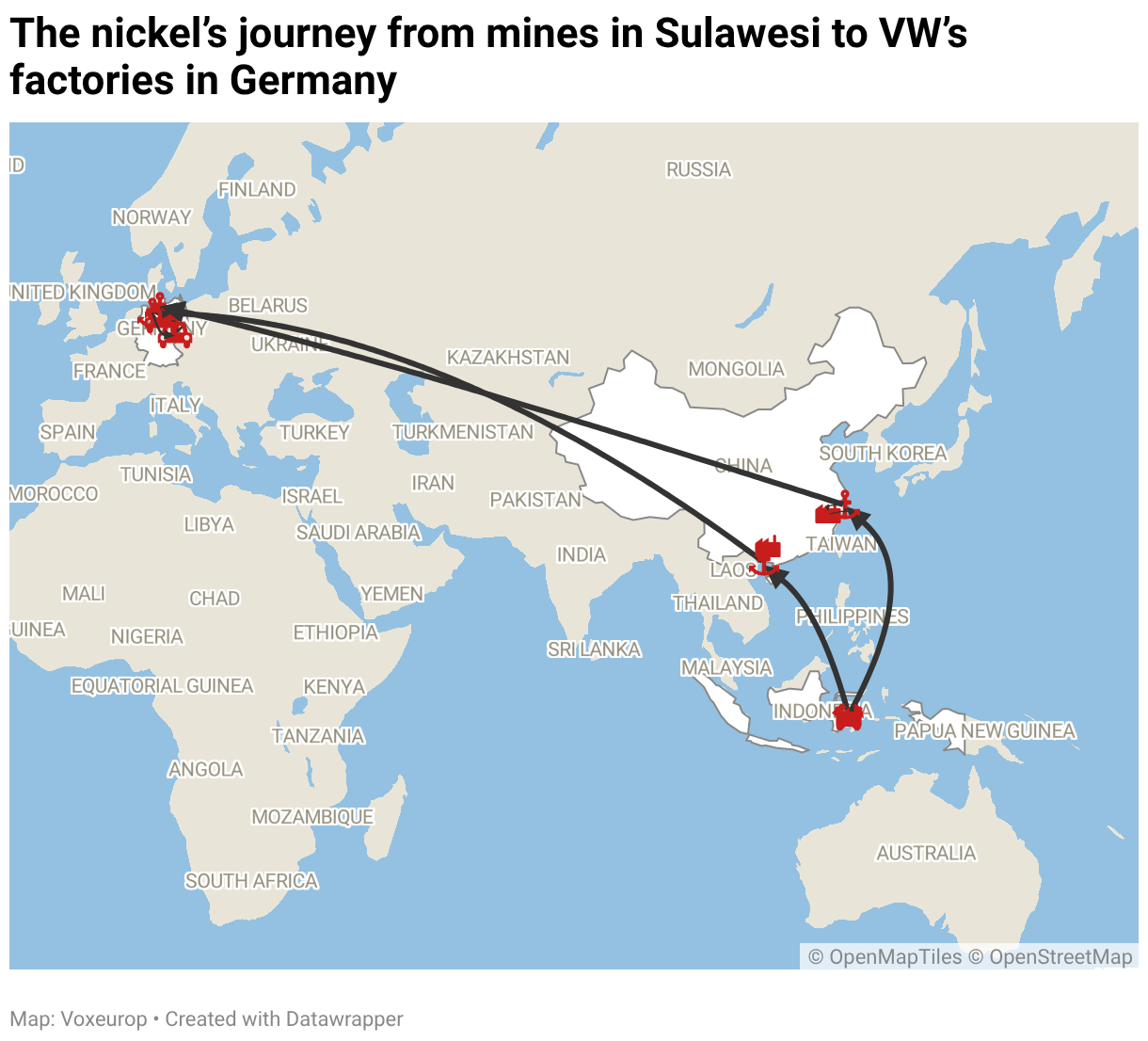
Furthermore, trade records for 2024, 2025 and 2026 from Sayari name Kuehne+Nagel as the importer of CATL battery cells. Containers carrying the battery cells were unloaded at the German ports of Hamburg and Bremen. Both harbors are primary intercontinental hubs with direct road, rail and waterway connections to VW’s Braunschweig factory. (5) The Swiss logistics giant, which counts major automakers among its clients – including VW – , declined to say whether it shipped CATL products to the German company or not.
At the Braunschweig plant, VW assembles battery packs from CATL cells – cells whose supply chain, as documented in this investigation, links directly to the Cahaya and Hengjaya mines. The completed packs are then transported by rail to VW’s plant in Zwickau, south-eastern Germany).
Here VW produces several EV models for its different brands – including the ID.3, ID.4, ID.5, the Audi Q4 e-tron and Sportback e-tron and the Seat Cupra Born – for a total 204,000 vehicles delivered in 2024. In 2025 Zwickau factory rolled out 1 million EVs.
The 600 000 battery packs manufactured every year in Braunschweig are also mounted on the Seat Mii electric, the Škoda Citigoe iV (produced in Slovakia) and Skoda Enyaq iV (produced in Czech Republic).
From the end of 2024 (and 2025), all named VW EV models were marketed as environmentally-friendly and sold to millions of drivers in Germany and across Europe, including France, Spain, Italy, and the United Kingdom.
The same battery packs are incorporated in the ID. Buzz minibus, produced by VW in Hannover (near Braunschweig), which has been driven on US roads as well since 2024, although exports have been suspended as of 2026 due to waning demand.
One supply network for many automakers
In the annual reports we reviewed, Huayou lists Volvo, Ford, General Motors, Tesla, BMW, Stellantis and Hyundai as end users of its cathodes. Mercedes-Benz also appears linked to Huayou according to a market source.
Panjiva data shows CATL battery shipments in 2024 and 2025 to the US-based factories of Volvo, Ford, General Motors, Tesla and Mercedes-Benz, as well as to BMW and Stellantis in previous years. CATL also lists Hyundai – significantly present both in Europe and the US – among its customers.
LG Energy Solutions’ supplies battery cells to Audi, BMW, Ford, Porsche and Fiat – the Italian brand now part of Stellantis. Renault has also confirmed sourcing batteries from the same Polish plant.
When asked to comment on their alleged link with Cahaya and Hengjaya mines, all these companies gave broadly similar responses: they do not source nickel directly, they assess and mitigate adverse impacts, and require their suppliers to comply with their responsible sourcing standards (which are similar to VW’s) – but declined to comment on specific sourcing arrangements or share the results of their on-site audits.
“We are aware of our responsibility for the economic, environmental and social impacts of our business activities and take these responsibilities seriously,” a Porsche spokesperson said.
“We are committed to protecting human rights and the environment,” said a Ford spokesperson. “We are reviewing the allegations and will determine any appropriate next steps based on that review.” His colleague at Mercedes-Benz said: “We take reports of environmental and social harm in raw material supply chains – including nickel from Indonesia – seriously and assess them as part of our risk-based due diligence.”
“We have identified a nickel mining site in Sulawesi, Indonesia, as being a tier-n supplier (e.g. indirect) in our battery supply chain,” a Renault Group spokesperson said. “We have engaged with the relevant business partners, to verify some ESG information concerning Sulawesi Cahaya Mineral.”
“We are aware that nickel mining in Indonesia presents significant environmental, human-rights and community-related risks,” a General Motors spokesperson said. “We are aware of our responsibility for the economic, ecological and social impact of our actions,” repeated an Audi spokesperson.
“We are aware of the environmental and social challenges associated with nickel production in Indonesia, including risks related to deforestation, biodiversity loss, and ecosystem degradation,”echoed the spokesperson of Stellantis which officially mentions Huayou's factory in Quzhou among its suppliers.
“We recognise the importance of protecting forests, biodiversity and local communities,” a Hyundai spokesperson said. “We regularly monitor and assess our suppliers, including mineral suppliers, to ensure compliance.”
“During 2025, we conducted [...] onsite audits [...] on suppliers part of our battery supply chains, 2 of them located in Indonesia [...] with further battery supply chain partners during 2026 and onward,” a Volvo Cars spokesperson said.
Tesla is the only company which did not answer our inquiry.
Questionable sustainable sourcing
Through its Code of Conduct, VW is committed to ensuring the “protection of the natural ecosystem, especially […] endangered habitats of wild animals,” and that “supply chains are free of deforestation […]”.
This company’s sustainable sourcing policy claims compliance with “applicable law,” “international biodiversity regulations,” including IUCN recommendations and the OECD Guidelines for Responsible Business Conduct.
Specific IUCN resolutions call for safeguards for primary forests [...] and support to conservation efforts by indigenous peoples and local communities, creation of biodiversity-friendly supply chains and the “designation of no-go zones for mining in ecologically or culturally significant areas”.
The OECD Guidelines urge multinational companies such as VW to ensure “protection of forests […]” and “sustainable [...] use of [...] ecosystems” as “highly important to [...] livelihoods” and identify “potential adverse impacts on biodiversity”.
VW requires its suppliers to enforce its Code of Conduct, including conformity with the IUCN and OECD standards, and to extend these standards to their business partners.
While CATL’ sustainability policy only uses broad environmental language without formal no-deforestation clauses, Huayou’s Code of Conduct requires its suppliers (e.g. mining companies) to “avoid [...] production in [...] fragile ecosystems, and primary forests”.
“To meet VW’s sustainability requirements, both CATL and LG should have engaged with Huayou either to press Merdeka and Tsingshan to halt the destruction of forests, particularly those categorised as primary, or to immediately stop sourcing ore from the Cahaya and Hengjaya concessions in Sulawesi” said Mighty Earth's Thea Parson.
VW’s comments and no comments
VW declined to comment on the alleged misalignment between its suppliers’ practices and its own sustainability requirements. All upstream companies in Indonesia and China named in this investigation likewise declined to respond to our inquiries, with the exception of LG Energy Solutions.
“We have [...] a Code of Conduct for Suppliers [...] and conduct regular assessment of suppliers’ compliance status, making efforts to minimize environmental and social risks across its supply chain”, an LG Energy Solutions spokesperson said.
The EVs sustainability coalition “Lead the Charge” ranks VW number five among the top 18 largest carmakers in terms of responsible sourcing efforts. However, in its latest report it states that the company still fails to disclose the results of its supply chain checks.
“We rely on satellite monitoring programmes […] to detect deforestation activities and protect biodiversity in sensitive regions,” said VW spokesperson who however declined to share the results of the carmaker’s space observations as well as the audits conducted by the company in 2024 and 2025 at the locations of direct suppliers (e.g. CATL), refineries (e.g. Huayou), and mines (e.g. SCM).
It is worth noting that VW is a member of the nascent, voluntary certification platform Initiative for Responsible Mining Assurance (IRMA), which only validates mines adhering to strict safeguards to minimise the impact on ecosystems (including KBAs like Routa) and community rights.
“We do not claim that mining can be sustainable, there is no such thing as zero-harm extraction. The question is how much harm we are willing to accept,” said Cecilia Mattea, Europe Regional Lead at IRMA. “Our auditing and assurance system aims to improve transparency and accountability, so that automakers can no longer say ‘We didn’t know’ and are incentivised to put pressure on their suppliers to do better.”
Nevertheless, VW’s Code of Conduct does not require suppliers to source exclusively from IRMA-certified mines – Cahaya and Hengjaya are not among these.
VW spokesperson cited third-party assessments in its supply chain under the Responsible Minerals Initiative (RMI), which is, however, very different from IRMA. RMI audits cover smelters but not their ore suppliers. This is demonstrated by the audit conducted on Huayou carried out in 2024-2025 by the US-based assessor Underwriters Laboratories Inc, which makes no reference to upstream mining sources. Therefore, they cannot guarantee that VW’s supply chain is free from deforestation.
A company’s environmental responsibility
Huayou’s sustainability report 2024 mentions visits at mining sites and risk assessment reports, without however detailing findings and naming concessions.
VW’s exposure to ecological devastation may increase as additional refined nickel production comes online this year in Morowali through a new joint venture between Huayou and Merdeka, which is expected to boost mining expansion.
Under Germany’s due diligence obligations, which took effect in 2023, and the more stringent ones that the EU will enforce in 2027, VW should prevent and mitigate environmental and social harms caused by its suppliers and sever ties in the absence of improvements as a last resort.
Both sets of rules explicitly refer to the OECD guidelines, which require the removal of adverse impacts “even where national laws (e.g. those in Indonesia) do not”. Although these recommendations are not legally binding, they are considered as enforcement benchmarks by lawmakers.
“The fact that there is a permit does not automatically mean deforestation can be ignored,” confirmed a European Commission spokesperson.
Hence, in principle, VW should avoid nickel from the Cahaya and Hengjaya mines even if forest clearance in both concessions is authorised by the government.
“EV manufacturers can't deny culpability without proving where they are and aren’t sourcing from,” added Parson. “They need to provide effective remedies, including cutting off suppliers linked to adverse impacts.”
“We cannot decarbonise the automotive sector by replicating the same harms caused by the oil and gas industries," said Mattea.
Moreover, the decarbonisation benefits of VW’s EVs compared to cars powered by fossil fuels may be overstated precisely because of unaccounted deforestation, including that in Cahaya and Hengjaya concessions. This raises serious questions about the “carbon neutral” label promoted by the German automaker.
VW publicly claims that the carbon footprint of its products – assessed through what is technically known as a Life Cycle Assessment (LCA) – covers raw material extraction and is verified against international standards which, however, are only voluntary. (7)
Those standards define only a non-binding list of environmental impacts – including the conversion of forested land into commercial use – while leaving it to individual companies to decide which impacts their LCA should specifically cover.
Neither VW nor TÜV NORD CERT, the Cologne-based private auditor that certified VW’s LCA and its EVs climate performance using its own methodology, confirmed that emissions from forest loss caused by mining were included in the assessment.
According to a European Commission spokesperson, it remains uncertain whether such emissions will be covered by the forthcoming EU verification requirements. A public consultation on the regulatory options to be implemented is still ongoing.
The German automaker, which has not set a time-bound commitment to end deforestation, did not confirm a specific connection to the environmental and social harm caused by SCM or to explain what measures are planned to comply with legal requirements and avoid potential legal sanctions.
Mighty Earth and the South-East Sulawesi office of the Indonesian NGO Walhi have just submitted a formal complaint to VW through the automaker’s grievance review mechanism, highlighting the company's alleged involvement in harmful impacts of Cahaya and Hengjaya mines.
Despite the supply chain links and environmental and social harms allegations documented in this investigation, VW, CATL and Huayou together attracted approximately $1.81 billion (€1.54 billion) in “sustainability-labelled” investments across Europe in 2025 – equivalent to over 20% of the total value of shares held in the three companies by funds marketed under the EU’s green finance regulatory framework, according to market analysts at Morningstar.
Meanwhile, the Tolaki people are bearing the hidden costs of the so-called sustainability flaunted by Volkswagen and its competitors – costs that, as Puspaham's Kisran Makati puts it, stay precisely where the damage is done. “The damage stays here, but the benefits go elsewhere.”
Footnotes
(1) The two figures may not be directly comparable. The difference reflects the different forest baselines used: the Ministry of Forestry’s 2020 land-cover classification for The TreeMap, and a satellite-derived primary-forest map for GFW that includes some areas classified as secondary forest by the ministry. When both primary and secondary forests are considered, The TreeMap estimates that 1,888 hectares of forest have been converted to mining since 2020.
(2) The Key Biodiversity Areas Partnership, including the IUCN (International Union for Conservation of Nature) and BirdLife International alongside other global conservation groups, aims to map and protect vital habitats for plants, animals, and water life according to science-based rules about threatened species and rare ecosystems.
(3) Merdeka Battery Q1 2025 activity report; Merdeka Battery Q2 2025 activity report; Merdeka Battery Q3 2025 activity report; Merdeka Battery Q4 2025 activity report
(4) The closest CATL facilities to Huayou’s plants are Liyang and Lingang, near Shanghai port. They are located approximately 250 km and 350 km to the north and northeast of the cathodes producer’s site in Quzhou. Moreover, CATL units in Xiamen and Ningde, connected to local ports, are respectively situated about 450 km and 700 km east of Huayou’s site in Guangxi, and 410 km and 657 km south of Quzhou.
(5) Hamburg port authority cites China as its most important trading partner, with over 2 millions containers handled in 2024, and lists major shipping companies, such as MSC, Maersk and Hapag Lloyd, among its linear services departing from the Chinese ports serving CATL facilities.
(6) The 10% figure is derived from the following calculation: 33% (share of Huayou MHP produced in Morowali) x 50% (share of Indonesia MHP export attributed to Huayou) x 63% (share of China MHP import originating from Indonesia).
(7) The ISO 14040 and ISO 14044 standards define only a non-binding list of environmental impacts – including the conversion of forested land into commercial use – while leaving it to individual companies to decide which impacts their LCA should specifically cover.
Lorenzo Di Stasi and James Jackson contributed to this investigation.
Supported by Journalismfund Europe and the Pulitzer Center.

Do you like our work?
Help multilingual European journalism to thrive, without ads or paywalls. Your one-off or regular support will keep our newsroom independent. Thank you!