









Select a language
You can buy a teddy bear or a super-polluting gas on the same website. A search for “refrigerant gas” returns thousands of listings within seconds.Each comes with its own sales agent. We negotiated terms for bulk shipments from China in a few clicks, from desks in the EU and the UK.minute
This is not the dark web – it is the wide open internet, accessible to anyone with a browser and a search bare dark web – it is the wide open internet, accessible to anyone with a browser and a search bar.
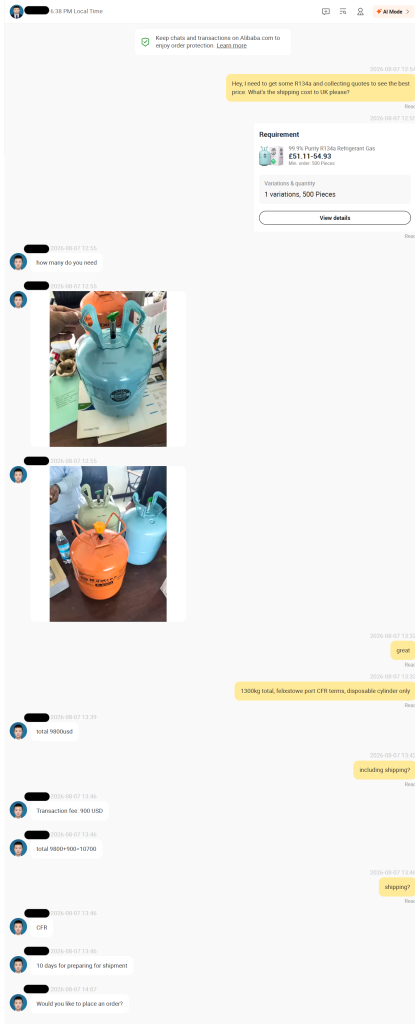
Reporter: “Hey, I need to get some R134a and collecting quotes to see the best price. What's the shipping cost to UK please?” R-134A is refrigerant gas widely used in air conditioning systems. The salesman responds 2 minutes later.
Seller: “How many do you need”
Reporter: “Great. 1300kg total, felixstowe port... disposable cylinder only”
Seller: “total 9800usd”
Reporter: “including shipping?”
Seller: “Transaction fee: 900 USD. total 9800+900=10700”
Reporter: “shipping?”
Seller: “10 days for preparing for shipment. Would you like to place an order?”
On legal advice, we did not complete any purchases. We obtained quotes and payment details – exposing how readily restricted gases could be offered for sale online, often without checks on import quotas or documentation.
Four exchanges are enough to open a route into the trade of gases that trap heat hundreds to thousands of times more effectively than carbon dioxide. Hydrofluorocarbons (HFCs) cool supermarket freezers and car air-conditioning systems, and are used to make insulation foam. They were introduced in the 1990s to replace the CFCs that were destroying the ozone layer.
Over the past year, Voxeurop, together with IrpiMedia, the Balkan Investigative Reporting Network and Balkan Insight, has investigated how illegally sold HFCs enter the European Union and the United Kingdom, and how the market is changing as governments seek to stem the flow.
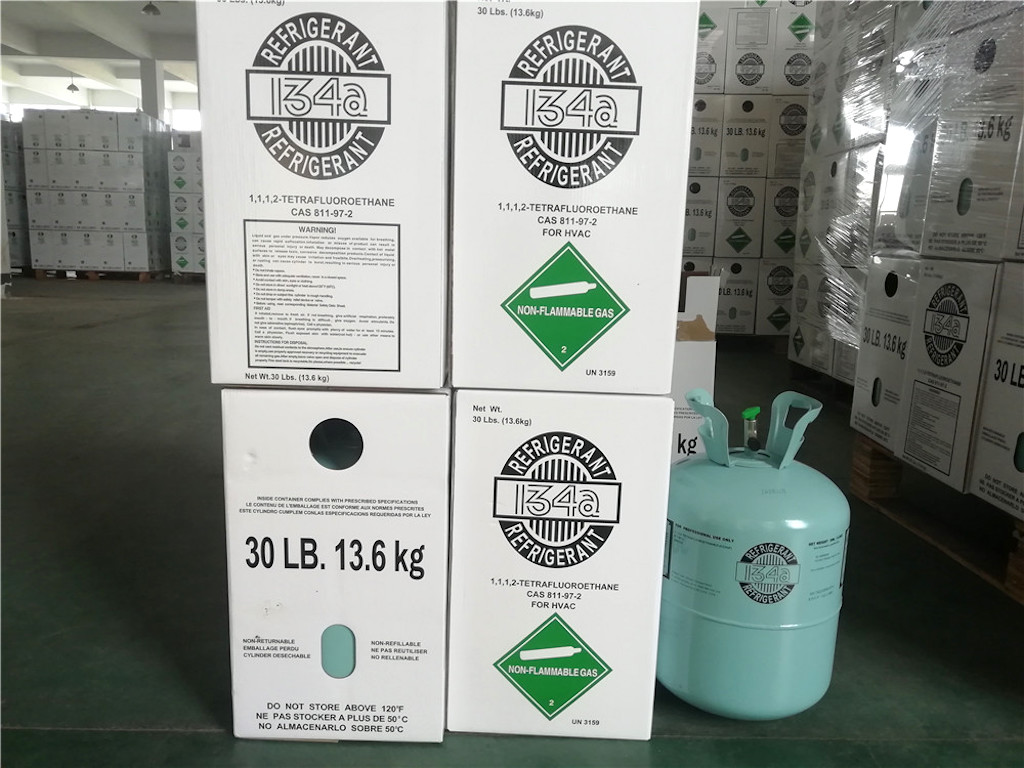
To this purpose, we posed as buyers online and in person, analysed marketplace listings, reviewed court records and gathered seizure data from customs authorities across Europe. Around half of the 65 suppliers we contacted on Alibaba and Made-in-China were ready to ship single-use “disposable” cylinders, which have been banned in the EU since 2007.
The EU and the UK have been phasing down HFCs since 2015 under the European regulation on fluorinated gases (F-gases), which the UK kept after Brexit. Producers and importers need a quota to sell legally recyclable cylinders, while disposable HFC cylinders are entirely banned. In 2024, the EU went further and set a full phase-out by 2050.
The rules work, and that is part of the problem.
As quotas shrink, legal gas gets more expensive and cheap, illegally and outside-of-quota gas becomes more tempting, argues Fionnuala Walravens, campaign lead on illegal F-gases trade at Environmental Investigation Agency (EIA), a London-based NGO that tracks environmental crime. Penalties, she adds, are rarely high enough to deter anyone. Illegally traded HFCs also undercut legitimate suppliers with cheaper prices, as tightening regulations squeeze legal supplies.
The squeeze is about to tighten. In 2027, the EU's HFC quota will halve, while Great Britain’s will fall to 24% of its baseline. Because the EU and neighbouring countries cut at different speeds, smugglers have gaps to exploit, notes Tatiana Terekhova, senior programme management officer at OzonAction, a branch of the UN Environment Programme (UNEP).
“If left unchecked, they would undermine the international community’s efforts to address the global climate emergency,” said former UN special rapporteur on toxics and human rights Marcos Orellana.
Loosely regulated online marketplaces allow buyers in the UK, Italy, and Romania to order disposable HFCs directly from China and Turkey, with shipments planned by sea. Smugglers also transport the gas by road and sea into southern Europe via the Balkans.
Key routes run from Turkey through the Balkans to the EU and UK, Albania and Bulgaria into Italy, and across the EU’s eastern borders from Ukraine and Belarus. Routes also link North Africa to southern Europe, Greece through Turkey to the UK.
Online marketplaces
Over two months, we posed as buyers seeking disposable cylinder shipments to the UK, Romania and Italy – three countries hit by illicit HFC trade – on two platforms with the most HFC listings.
Of the 42 companies that responded, 33 (around 80%) were willing to sell disposable cylinders, which are illegal to sell in the EU and UK. Several more offered to ship refillable HFC cylinders without asking for evidence that the buyer held an import quota. Both Alibaba and Made-In-China were reached for comment. (1) In total, we contacted 65 companies.
Together, the companies willing to sell accounted for roughly 1,500 HFC listings. Around 40% of the companies willing to sell to us carried Alibaba’s “verified” badge, which the platform says that it has passed a third-party inspection including on-site verification.
A listing that is taken down can be back online “in less than 24 hours,” observed Angelica Candido, of the European FluoroCarbons Technical Committee ( EFCTC) which represents HFC manufacturers in Europe. “You just need to change the IP.”
Virtually all the companies willing to sell disposable HFC cylinders were listed as being Chinese. Many of the verified companies were based in Zhejiang, an industrial province in eastern China.
The price gap does the rest. Sellers offered bulk HFCs for roughly $5 to $15 per kilogram for orders of around 1,000 cylinders. The same gases sell for around 60 euros per kilogram in the EU, and between £80-£100 per kilogram in the UK.
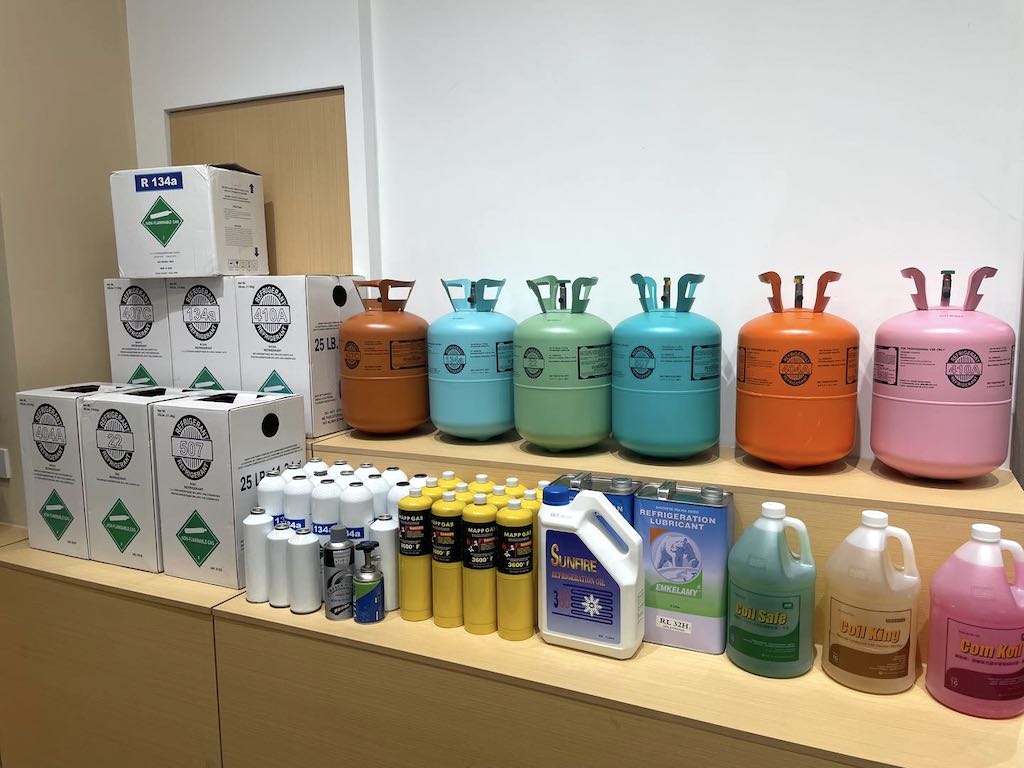
A separate analysis by the EIA and partner organisations found that none of the listings it tracked met the requirements of the Digital Services Act – DSA, the EU law that obliges marketplaces to identify their traders and remove illegal products. None offered the cylinder take-back scheme mandated by the F-gas regulation.
Chemical companies want more cross-border cooperation. “The priorities are different from one country to another — the enforcement is fragmented,” said Adriana Jalba, environmental advocacy advisor for chemical manufacturer Arkema.
In the UK, for example, Scottish tech firm Vistalworks received nearly £60,000 in government funding to tackle illicit online HFC sales in 2020. Despite its Estonian sister company continuing to operate within the EU, Companies House records indicate the UK company dissolved in August 2026.
UNEP’s 2025 Montreal Protocol meeting on ozone depleting substances highlighted just three countries – China, the UK and US – reported cases of illegal production, imports and sales of HFCs, including through online marketplaces.
International efforts to halt the illicit trade of HFCs already exist, including operations led by the European Anti-Fraud Office (OLAF) and Europol, who have conducted several high-stakes interceptions in Europe. In 2024, for example, OLAF directed an Operation “Khione”, which included 16 EU countries, plus Ukraine and Turkey. Cross-border information sharing also exists between the EU and the UK.
Physical smuggling
Online sales are just a sliver of the black market. Behind them lie organised distribution networks moving large volumes of HFCs, often through legitimate businesses.
There is no single method for moving HFCs into Europe. Authorities have found gases mislabelled as other chemicals, left undeclared aboard vessels, hidden beneath blankets, and concealed inside polystyrene boxes.
One well-documented technique exploits a mechanism designed to ease legitimate trade. Under the EU’s external transit procedure, known as T1, goods arriving from outside the EU can move between customs points without paying duties or being formally imported. HFCs declared as bound for a non-EU country can cross the bloc, then be diverted and sold inside it.
Eastern Europe and the Balkans
Bulgaria is a main gateway for illegal HFC trade entering the EU. It reports more HFC seizures than any other European country since at least 2024, according to UNEP data. The volumes of F-gases seized almost doubled, from just under five tonnes in 2023 to almost 10 so far in 2026 - most of these being HFCs - according to Bulgarian customs data. The main hotspot is Kapitan Andreevo, the crossing between Turkey and Bulgaria near the Greek border, the customs agency said.
From Bulgaria, HFCs sometimes flow into Romania, identified by EIA as another major entry point. Since 2018, Romanian authorities have seized 103 tonnes of HFCs at the Ukrainian border, customs data shows. Over the same period, Ukraine reported just around a tonne in legal exports to Romania, according to the UN’s Comtrade database – less of 1% of what was seized.
Court records suggest how the gas gets through: by smugglers exploiting the transit procedure and established cigarette-smuggling networks already in place. In 2021,13.5 tonnes of HFCs from Turkey disappeared after being unloaded near Bucharest, although they had been declared as transit goods bound for Serbia.
Convictions remain rare: of the 13 Romanian cases we identified, only two resulted in guilty verdicts, both without prison sentences. Prosecutors dropped the charges in most of the others. Walravens pointed to similar cases being dropped because of the high cost of destroying seized gas.
Serbia is both a declared destination for HFCs crossing Bulgaria and an entry point in its own right. We ran interviews with dozens of authorised refrigerant handlers, seven of which described illicit flows of refrigerant between Serbia and its neighbours.
“Historically we’ve seen a lot coming in from Serbia,” said Walravens. “It is perfectly located surrounded by EU countries.”
Black market also operates in Serbia through unlicensed workshops and air-conditioning refills and gas trades off the books. Authorised technicians complain that these competitors charge as little as half their prices because they don’t buy their gas from legitimate suppliers.
Many automotive air-conditioning technicians still use older refrigerants instead of lower warming alternatives like hydrofluoroolefins (HFOs), mainly due to lower cost and wider availability. For R-134a, commonly used in commercial refrigeration, Serbia recorded exports totalling 12.6 tonnes to the European Union between 2022 and 2024, according to EU Commission data, indicating that Serbia is not only a destination market for these gases but also acts as an exporter in certain categories.
At the same time, imports from the EU were particularly significant for R-134a, with more than 16 tonnes imported between 2022 and 2024, while the volume recorded for other HFCs was relatively small.
Italy and the UK
In Italy, one of Europe’s largest consumers of these gases, we documented at least 90 seizures since 2019, involving more than 800 tonnes of HFCs – although numbers appear to be decreasing rapidly since 2024. That is roughly 2 million tCO2e (tonnes of carbon dioxide equivalent) – comparable to the annual emissions of around 434,000 petrol cars – and the highest volume recorded for any country in the past five years, in the EIA's global tracker.
The illegal trade routes appear to be shifting. Italian customs data record dozens of large consignments originating from China until 2024. From then, they come in smaller amounts and have been traced back to Southern Italy from Tunisia, Albania, Greece and Bulgaria.
Great Britain, however, has followed a slower phase-down than the EU.
UNEP data show HFC smuggling routes from Greece, Turkey and Iraq to the UK, sometimes via Bulgaria – initially by car – and onwards from the UK to the US. Illegal shipments from the EU to the UK carried gases equivalent to at least 409,127 tCO2e in 2019 – comparable to the annual emissions of about 90,000 cars.
But enforcement gaps suggest the true scale is higher. Unlike their EU counterparts, UK customs officers have no real-time access to importers’ remaining HFC quotas, notes EIA’s Fionnuala Walravens. She also points to loopholes in the “representative quota” system, which lets overseas companies trade HFC in the UK through a UK-based company. Great Britain has not updated its representative system since 2015 to reflect EU reforms, including requirements for quota holders to demonstrate chemical industry experience, justify their need for a quota and limit registrations to one per address.
Nearly 200 HFC consignments were found to be illegal between 2020 and 2026, according to freedom-of-information requests to the Environment Agency. One of them alone carried gas equivalent to 52,760 tCO2. Between 2018 and 2025, the authorities issued or agreed nearly £4.5 million in civil penalties. Public records show that several companies and individuals were penalised more than once, among them the HFC trader John Brett and carmaker Rolls-Royce.
Not all illegal consignments were cylinders of refrigerant. Equipment sold already filled with HFCs, such as morgue gear, beer dispensers and ice cream machines, were also among the consignments deemed non-compliant.
“If you go and get a gelato, that will be running on F-gases,” says Walravens. “It’ll be the worst F-gases I'm afraid.”
Seizures reveal only part of the picture. They show what authorities catch, not what crosses borders undetected or disappears into informal networks.
UNEP’s Terekhova warned that the true scale of illegal HFC trade remains "extremely difficult" to establish as so few countries report cases.
The chemicals may be increasingly restricted, but finding someone online willing to sell them still only takes seconds.
- Alibaba's reply: Alibaba.com, a Verified Supplier is a seller whose business profile and production capabilities have been independently assessed, certified, and/or inspected on-site by accredited third-party verification agencies (such as TÜV Rheinland, SGS, Bureau Veritas, or Intertek).”
🤝 This investigation is supported by Journalismfund Europe.

.
Do you like our work?
Help multilingual European journalism to thrive, without ads or paywalls. Your one-off or regular support will keep our newsroom independent. Thank you!