







Select a language
This article is reserved for our subscribers
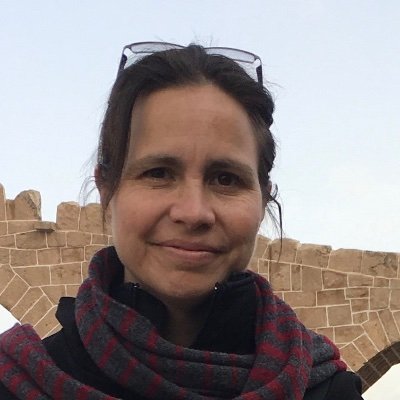
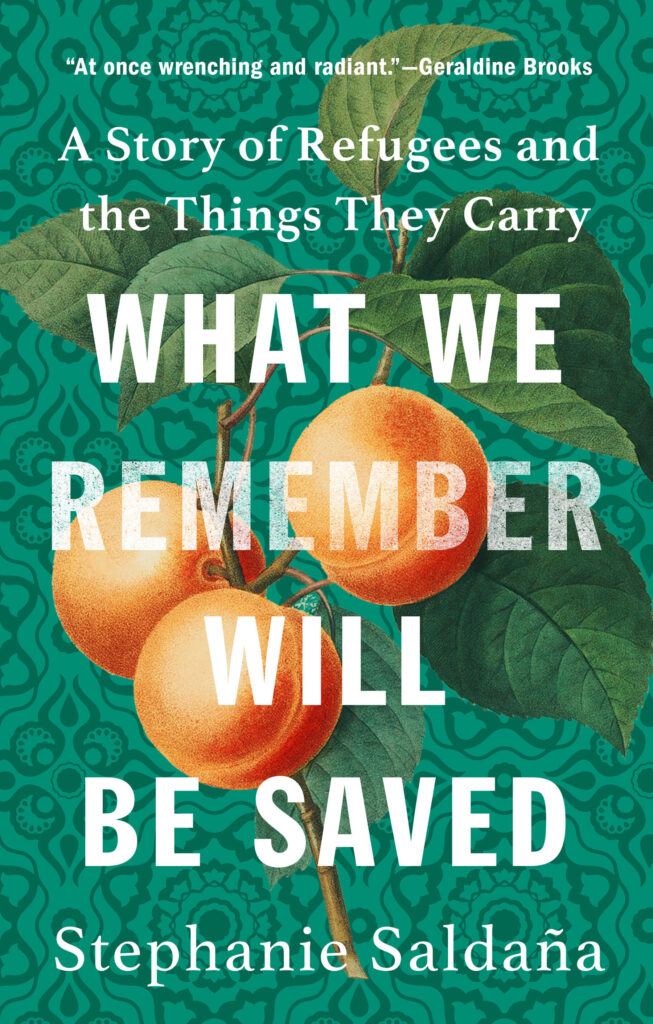
Stephanie Saldaña is an American author and journalist who has spent many years living in and documenting the Middle-East for many years. In her new book, What We Remember Will Be Saved (Broadleaf Books, 2023), she tells the story of six migrants who left their homes after the civil war in Syria, and of the things they took with them. In a deeply human story, she reflects on memory, cultural preservation and what is truly saved when nothing else survives.
Voxeurop: The book has been out for about a year. How do you feel about it?
Stephanie Saldaña: It was a book that took such a long time to write. It was a real labour of love to follow these stories and to get to know these people. And I, of course, had a lot of anxiety about doing justice to their stories. In that sense, it was a relief to have it out in the world, but even so, I've always felt very protective of it. It came out on September 12 and then October 7 happened, and the world looked elsewhere. I just hope it's a story that people will return to in time. I think that now more than ever, people need to be aware of the worlds that are destroyed in war and of the people who are entrusted with carrying their histories. In a sense, I feel that the book is more relevant now than it's ever been, even if it might not seem that way.
This book is about confronting and surviving trauma. The people in your book have the tools to do that, they have so much to offer and to teach people.
I think they're rememberers, the people I write about. People often ask me how I found them. It's easier than you think: every community, every family has its rememberer, and they will lead you to them. And these people remember, and by remembering they hold something together in a community or in a family. And I think this book is really people sharing how they do that.
You open up the story by describing them as “hidden historians”. We see history as a narrative told by academics or journalists. But your approach to tell history through the stories of the people, the historians of war.
And I think that's part of what happens with a book like this. I was living in Syria when the war broke out, and I found out that the story that was being told about the war was completely different from the stories that Syrians were telling each other about it. As a writer, you feel a kind of nudge, you wonder what is the space between these two things? Why are there two different stories being told? And how can I tell or share this other story that they're all telling each other, which is about saving things, about surviving?
That was always the challenge of this book. When the book came out, I didn't want to use the word “refugee” in the subtitle. In the whole six years that I wrote this book, I never felt that I was writing about “refugees”. I was writing about people who I knew, who were historians, artists, musicians.
Your book seems detached from the whole refugee discourse, which tends to see people as faceless mass.
Absolutely. I also think that one of the weaknesses in writing about displaced people is that very often it's just their journey that’s written about, and so they become what happened to them. I wanted to write a different book, in which the people themselves are the story, to really remind people that every single person contains an entire world, an entire history. So, for it not to be a book about what happened to them, but a book about who these people are.
As journalists, we try to bear witness to the world, but we often make things worse. Do you think that there is a limit to what journalists can tell?
I don't know if there's a limit to what journalists can say, but I do think that the more we hear the voices of displaced people, the more we will truly understand what's going on. And the more that we refuse to listen to them, the more we will continue to believe some kind of version, or projection of history which is not reality.
Showing the people also reminds us of their humanity.
People have said these horrible phrases to me, things like “your writing humanises refugees”. And I always say that no, they're plenty human! But it humanises the readers who have lost their humanity. Or people say things like, “you give voice to the voiceless”. And I wonder what they’re talking about – they talk all the time! You just don't listen. We've come up with these phrases in order to excuse the fact that we've created categories of humans, the people who are worth something and people who are worth less.
Do you think that we've lost our sensitivity?
[Refugees in Lesbos] told me that people come, write about [them] and nothing changes. So what's the point? As a writer, I certainly have days when I feel the same way. What's the point? This is not happening in secret. That was the shocking thing about Lesbos: you read about it and you think it's going to be hidden in the middle of nowhere. What does it mean, when we can do these things in plain sight? I grew up thinking that the role of a writer was to make people aware, that if people just knew what was happening then things would be different. But when everyone knows, what do you do? Nothing changes. With this book, I think I definitely had my moments of despair. And then, I just decided that this book was for the people who gave me these stories. It's for them, and that's it. Whatever anyone else gets out of it is something extra.
I suppose the war in Gaza has affected you very differently now that you’ve made this book?
Since October 7, when I watch [the news about] the war in Gaza and hear about people's homes being destroyed, I’m just experiencing what a home is about, the years it takes to save the money, the things from their old villages that are in there that they'll never get back again, about the memories that are in there … I've always thought that homes should be considered a form of heritage. They contain so much of a life. And when I see how many people have lost their homes – not just the homes, but the tens of thousands of lives who have been lost … When you write a book like this, it really puts you in front of every human being an entire world, and you see the loss of life on that scale.
Every person has a story. Every home, every tree, every neighbour, every friendship is a story. I just think about all of that loss, and it's completely catastrophic. We will hear those stories in time – we will.
Were you looking for something in particular when you wrote your book? In “What We Remember Will Be Saved, what's the “what”?
I tried to avoid writing about Syria for a long time. The war started in 2011. I didn't start the book until 2016. At a certain point, I knew that I needed to write something. And I knew that the only way I could access it was by looking at things that were very small, it was just too overwhelming. I thought that if I entered through something small, it might be a door that would lead me to something bigger. I also thought that I would never dare ask people what they had lost. But if I asked people what they had saved, maybe they might slowly start to talk about what they had lost, but it would be their choice. I think the “what” was really a question word. I didn't know, when I set out, whether anything would be saved. It was a journey in order to see, I think – sounds stupid to say this – but [to see if] hope was cheap.
I wanted to see if there was something – I don't even want to use the word hope – that had survived, that I could talk about honestly, and that wouldn't feel cheap. Something that wouldn't feel like a lie. That was important to me, that it would be true, [even though it wasn’t supposed] to be easy. That it could be that hard and painful, and at the same time that something could still survive.
Would you say you found it?
No, they found it. I didn't find anything. They found it and they gave me a glimpse of it.
🤝 This article is published within the Come Together collaborative project
Do you like our work?
Help multilingual European journalism to thrive, without ads or paywalls. Your one-off or regular support will keep our newsroom independent. Thank you!


