










Select a language
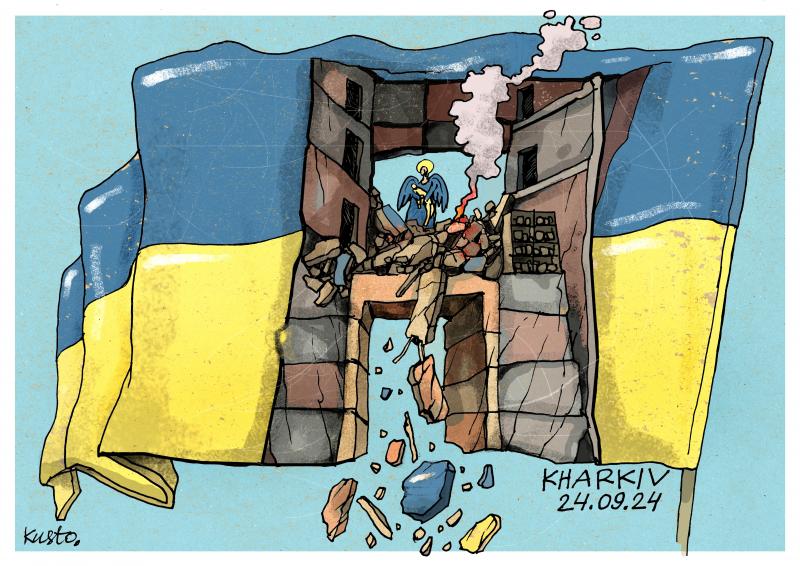
When the first explosions hit Kharkiv in the early hours of 24 February 2022, Maryna Svitlychna didn’t need confirmation. “When we woke up because the whole building was shaking, somehow I knew within the first second that the war had started,” recalls the 27-year-old Ukrainian student, who now lives in northern Italy, and sometimes does freelance journalism, including with Voxeurop.
“There was no other thought.” Four years later, she is completing a Master’s degree in European and International Studies in Trento, in north-eastern Italy. She is safe, she says, but the war has not left her.
Svitlychna is from Kharkiv, a city in north-eastern Ukraine, just a few kilometers from the Russian border. She experienced the first days of the full-scale invasion at close range. “The Kharkiv region is bordering Russia, so there were not only airstrikes, but also tanks and military personnel entering the city.”
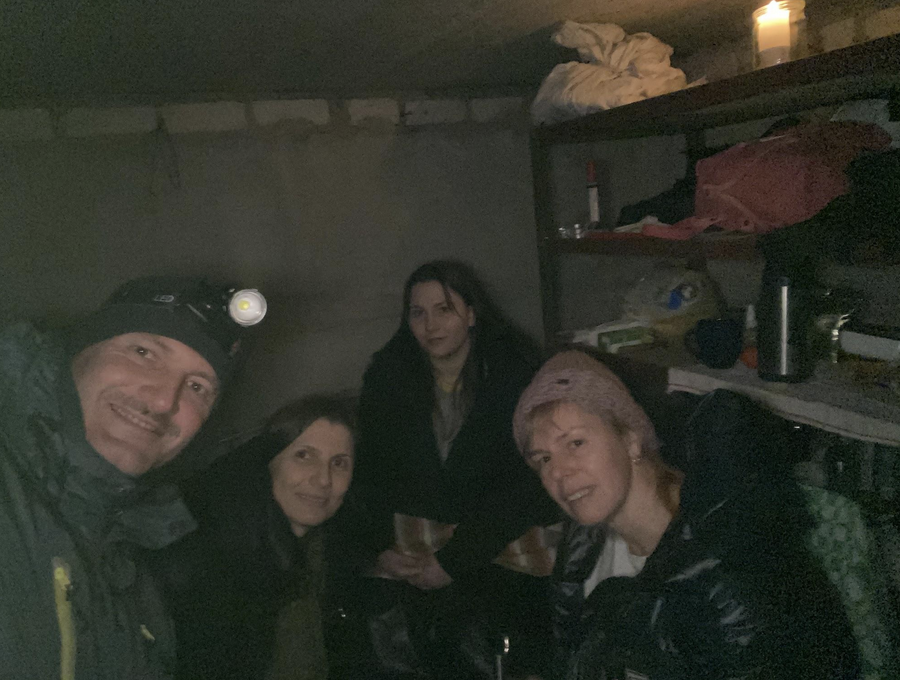
The options were limited and, above all, dangerous: “The nearest bomb shelter to my house was a 30 minutes-walk away and was located within the territory of the Khartron, a research and production company that designs spacecraft control systems and electronics. The shelter itself was one of the first main targets”. Svitlychna’s mother's office was there and “it was blown up in the first days. Of course no one was going to work those days, but it meant she lost her job”.
Instead, she and her mother found refuge with a classmate’s family in a private house with a basement. “I was ‘lucky’,” she says. “It was kind of a relatively safer option.”
For ten days, life revolved around survival, mostly in the basement. “We slept in our winter jackets and shoes so that we wouldn’t lose time putting them on to run to the basement after hearing jets or explosions.” Communication with the outside world was sporadic, most of the time there was no connection.
Svitlychna and her mother only came home just twice: once to collect food and to gather the documents and some belongings. “It was not safe to come back: their windows faced my house and we sometimes saw tanks going around it. We didn’t know which forces they belonged to, but probably Ukrainian, as there was an old military base in the area which was also under attack. Honestly, I was happy to stay with this family because it felt safer. We had a man with us who understood the situation and had licensed weapons because he used to be in the military. They had a car, which we later used to leave for Western Ukraine”.
The road west and to Italy
Leaving Kharkiv took some time. Without a car and with the transport system overwhelmed, escaping required patience and luck. “Taxi drivers were asking for an enormous sum of money, and the situation at the train station was difficult during the first few weeks.”
Svitlychna and her mother fled with her host family when the curfew was lifted. “We left on 4 March.” The journey west took five days due to restrictions and checkpoints. From there, the decision to leave Ukraine altogether was made quickly. “It made no sense for us to stay in western Ukraine. There were no jobs, our budget was limited, and rent prices had skyrocketed.”
‘We don't know when the war will end. We don’t know if we are at the beginning or in the middle of the war’ – Maryna Svitlychna
The activation of the EU’s Temporary Protection Directive offered a way forward. Through friends, she found a host family in Trentino, Italy, where she lives today.
According to estimates by the Centre for Economic Strategy (CES), an independent Ukrainian think tank, 5.6 million Ukrainians were living abroad as refugees at the start of 2026. “Ukraine continues to lose population after four years of the full-scale invasion,” adds CES researcher Iryna Ippolitova. Migration remains the main driver, with around 300,000 people leaving in 2025, alongside war casualties and falling birth rates”.
Building a future in exile
While in Italy, Svitlychna resumed her studies and attempted to regain a sense of direction. “I am finishing my Master’s degree in European and International Studies. I tried to take a lot of courses to gain more knowledge, and participated in a number of summer schools and Erasmus+ BIPs. I continue learning languages, in the hope that it will benefit me somehow and provide opportunities in a number of countries”.
She has also completed internships with organisations such as the Osservatorio Balcani e Caucaso Transeuropa (OBCT) and the Center for Civil Liberties. Yet stability remains fragile. “Financially, the situation is difficult.”
Physical safety has not translated into emotional distance. “I am physically safe in Italy, but it is still very difficult mentally”. News from home remains overwhelming. “This month, for example, Kharkiv has been attacked several times a day.” Sometimes, the psychological burden interrupts her daily life. “I have times when I just wouldn’t speak to anyone because of my mental state.”
The destruction of familiar places has been particularly hard to process. “At one point almost all the places that mean something to me had been destroyed: my kindergarten, my school, my university and the sports centre where I used to go.” These moments create a sense of disconnection: “I couldn’t bear conversations about normal everyday life,” she says.
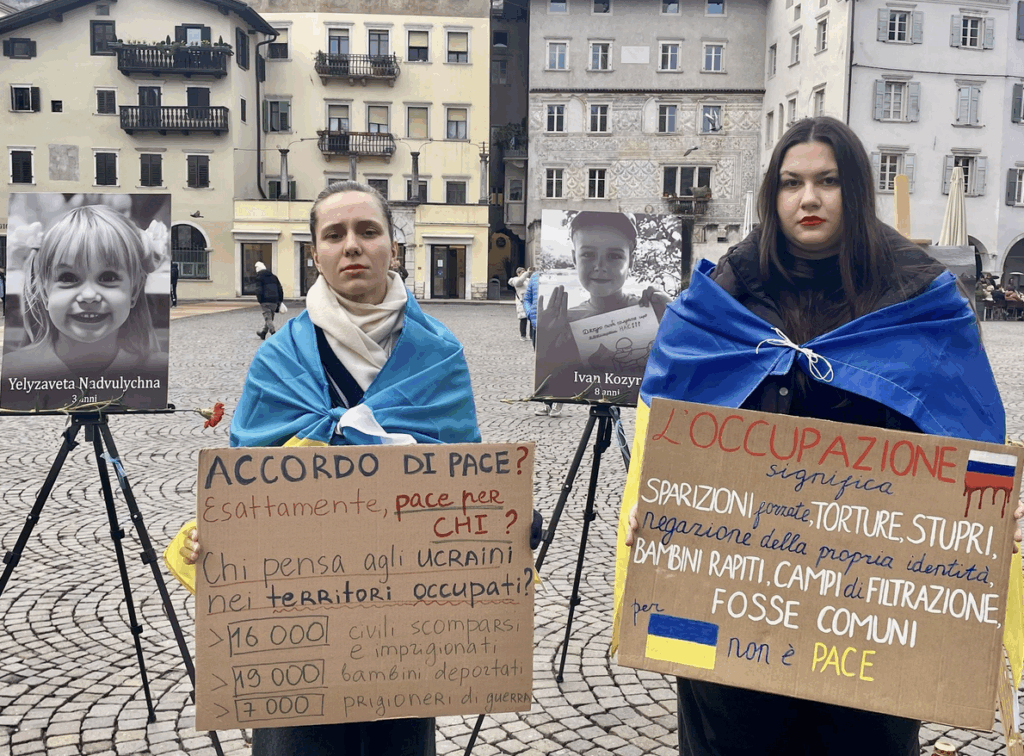
There is also a growing feeling of isolation in Europe. “There are also these feelings now that other people don’t care at all. Of course I know that I have people who do care, although they don’t say so”. The feeling is that “most Europeans are tired of the war in Ukraine and don’t know what is going on at all. Some even think it is over. If I can say so, the war in Ukraine is not popular anymore. Whenever I collect money either for military or humanitarian aid, I only gather some money from my Ukrainian followers. The same goes for stories and publications [on social media]: in the last two years I can maybe name five foreigners I follow who have posted something on Ukraine. It is not only my experience, I know a lot of people who feel the same.”
Even local initiatives struggle to attract attention. She recalls a screening of a documentary about Mariupol in Trento: “Only me and my Ukrainian friend came, nobody else.”
Between return and moving on
“I haven't been to Ukraine for over 4 years already, because my family is in the Kharkiv region and I don’t feel safe going there due to the constant attacks, and also don’t see the point in risking going to any other city in the west as I don’t have anyone there”. Svitlychna misses her city and she wishes she could return, but “for now”, she says, “I am not thinking of moving back to Ukraine after the war ends. The situation regarding security, economic stability and prospects is very complex”.
Ukraine is not safe or secure now and it won’t be even if the war ends: “We are still finding bombs from WWII, and it will take time to clear the land of mines after this war. A lot of housing and infrastructure will also need to be reconstructed before it is safe”. If she could “find a good and well-paid job position in Ukraine” she would come back. But now the situation is complicated: “The cost of living is very high in relation to the low salaries, especially if you need to rent”.
According to the State Statistics Service, the average full-time salary in Ukraine was 30,926 Hryvnia (about 600 euros) as of December 2025, (data from January 2026). However this varies by region, from about 48.000 hryvnia in Kyiv to about 22.000 hryvnia in Kirovohrad, in central Ukraine.
“One of the main reasons is the fact that we don't know when the war will end. We don’t know if we are at the beginning or in the middle of the war”, Svitlychna added. “I saw many Ukrainians who didn’t integrate into Italian or other societies at all because they thought that they were not going to stay there long. As a result, four years later they still don't know the language, have great difficulties finding a job. They also have very limited social life. I don’t want to put my life on hold. I believe that the right thing for me to do now is to start my career. Maybe I will succeed, maybe I will meet my partner in the meantime and create a family. It would raise further questions about where to live”.
The CES estimates that between 1.3 and 2.2 million people could return to Ukraine once the war ends, depending on the scenario. Among Ukrainian citizens abroad, 66% are of working age (18–65). Young people (those under 35) account for more than half of Ukrainian refugees (56%). However, according to CES data, they are also the demographic group that is least likely to return.
“Currently,” explains Iryna Ippolitova of the CES, “we see that young people under 35 are much less likely to return to Ukraine than older people, especially those over 50. There are many reasons for this, including better integration in host countries, economic factors such as jobs and salaries, and most importantly, security risks. The return of these people is possible under certain conditions. First, security must be guaranteed and the war must end. The way in which the war ends is also important for this generation: most refugees would only consider returning if the war ended completely and civilian flights resumed in Ukraine. A frozen conflict would have a much smaller impact on their willingness to return.”
What peace mean?
For Svitlychna and many other Ukrainians, the idea of “peace” goes far beyond a ceasefire. It involves justice, accountability and security guarantees. “For me ‘peace’ means that abducted children and prisoners of war are returned to Ukraine, that the temporarily occupied territories are liberated, and that war criminals face justice and accountability. It should also include Russia's military incapacitation and reliable treaties backed by the international community to prevent reoccupation and the securing long-term security. Furthermore, Russia should pay for the post-war reconstruction to enforce economic stabilisation”.
Svitlychna is sceptical of diplomatic agreements that cannot be enforced. “Ukrainians no longer believe them,” she says, citing past treaties violated by Russia. In her view, any durable settlement would require strong international backing. “There should be a strong NATO backup to ensure the peace agreement is trustworthy, with no possible loopholes.”
🤝 This article was produced within the the PULSE project’s cross-border European journalistic cooperation. Lorenzo Ferrari from OBCT contributed to it.
O
Do you like our work?
Help multilingual European journalism to thrive, without ads or paywalls. Your one-off or regular support will keep our newsroom independent. Thank you!


