













Select a language
On 22 June 2026 in Montreal (Canada), a man killed one police officer and one bystander, and injured one more person before being shot dead by police. A few hours later, Rebel News, a far-right Canadian media organisation, published the attacker’s roughly one-hundred-page manifesto.
The manifesto calls for an armed insurrection in the name of male supremacy, and sets out a political programme aimed at recruiting new followers.
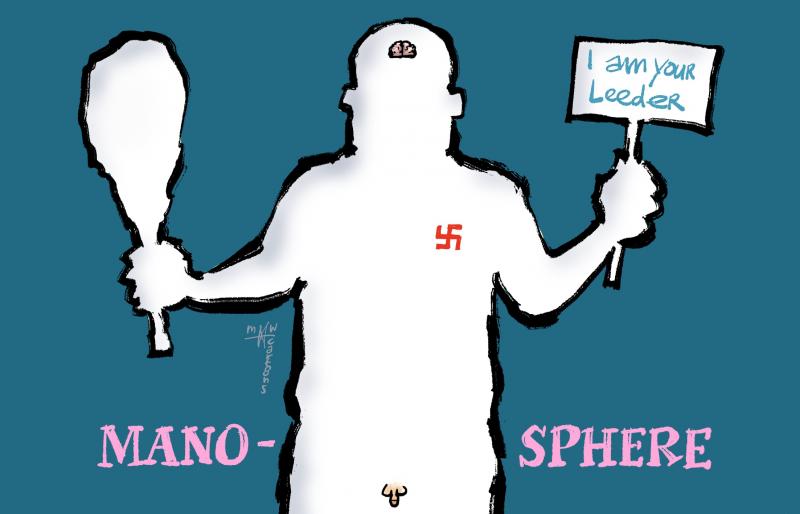
The text has been widely linked to the “incel” movement, a term that has received significant coverage in the press. Incels belong to a broader movement known as masculinism, which views women as the root cause of social malaise, especially among men, and shares numerous links and positions with the far right.
| Incel attacks in North America On 6 December 1989, Marc Lépine, aged 25, killed 14 women at the École Polytechnique in Montréal. After separating the men from the women, he declared his “hatred of feminists.” In 2014, Elliot Rodger killed six people (including three women) and injured 14 in Isla Vista, California. Rodger became a leading figure in the “incel” movement, with a 140-page manifesto, and a video on YouTube in which he announced his intention to “slaughter all the blondes” who had rejected him. In 2018, Alek Minassian killed 10 people, mostly women, in Toronto, after writing on social media of an “incel rebellion.” |
Incels, "involuntary chastity” and lookism
The term “incel” is derived from “involuntary celibate.” According to Francis Dupuis-Déri, an expert on anti-feminism and masculinism and a professor at the University of Québec in Montréal, the word celibate should be read in the sexual sense "involuntary chastity”, because for incels, “the main issue is sex, not forming a couple.”
The incel movement consists of “tens of thousands of young men who see themselves as inherently disadvantaged, and who, for this reason, believe they are ignored by women, who refuse to have sex with them.”
Dupuis-Déri”s definition is echoed by Stephanie Lamy, researcher and author of La terreur masculiniste (“Masculinist Terror”, Editions du détour), in which she analyses and maps out the various types of masculinist and anti-feminist movements and their methods: MGTOW, pick-up artists, incels, etc.
Writing about the Montreal attack and “incels” in Mediapart, Lamy argues that “the crux of this ideology is not ‘involuntary celibacy’, but rather the belief that some men are genetically oppressed – because they are ‘ugly’ – whilst a minority of men monopolise access to women thanks to their genetic capital. ‘Lookism’. This is the term we should use to avoid perpetuating their propaganda.”
The problem is not celibacy, Lamy continues, “but the male supremacism of a group of men who believe they have the right to resort to violence to claim a resource – women”s bodies – and who spread misleading propaganda about the supposed problem of male loneliness.”
What is masculinism?
According to Francis Dupuis-Déri’s definition, masculinism is an “anti-feminist movement, based on the mistaken idea that men suffer because of women, feminists and the feminisation of society.” Such ideas perpetuate the myth of a “crisis of masculinity” (the title of one of Dupuis-Déri’s books). Although there is no single definition of this phenomenon, the word has a history dating back to the 19th century.
A brief glossary: machismo, anti-feminism, masculinism
To simplify matters somewhat, we can define machismo as the idea that women are in a position of inferiority compared to men; anti-feminism as a movement that opposes the advancement of women’s rights (and the related critique of male power and privilege); and masculinism as a social and political movement that actively seeks to halt the advancement of women’s rights in a society perceived as dominated by women, and feminists in particular. All of this is typically accompanied by a victimhood narrative concerning a “crisis of masculinity”, which has persisted for centuries. Radicalisation occurs both online and offline.
It is also important to note that masculinism is not the “flip side” of feminism, which is a movement for the emancipation and rights of women. The advance of women's rights is not the cause of male suffering nor of the loss of men's rights. No one is denying that there is male suffering, but this is the result of different forms of inequality, whether social, local or structural.
| Europol against masculinist radicalism Europol’s Project Medusa has led to the dismantling of an international network of sexual predators specialising in chemical submission. The recently published findings of this international investigation identify “networks of influencers and online communities that promote and foster extreme ideas about masculinity and hatred towards women.” Within this misogynistic worldview, they write, “women are seen as objects without autonomy, inferior, and manipulative. According to these groups, male dominance is an entitlement, violence and coercion are justified means of asserting control, and sexual access to women is something that can be taken, even without consent.” |
Masculinism – a dangerous ideology
On 24 June, an informative report on the rise of masculinist movements and the threat they pose was presented to the French parliament. The result of work by the Delegation for Women”s Rights in the French Senate, the text outlines the red flags associated with this ideology, and identifies the risks it poses in terms of violence, radicalisation, and the movement’s links to conspiracy groups and the far right.
Despite shortcomings highlighted by the journalist Pauline Ferrari, the report is richly documented and features contributions from many researchers, journalists and civil society representatives.
France has to be credited for taking this issue much more seriously than other countries in Europe, and also addressing the risk of terrorism, discussed here.
The report cites Céline Berthon, director-general of the Direction Générale de la Sécurité Intérieure (DGSI, the French domestic security services), and a note issued by her organisation. According to the DGSI, “masculinism is establishing itself as a radical ideology in every sense, possessing all the characteristics of radicalisation mechanisms.”
Is sexism on the rise in Europe?
According to data from the European Institute for Gender Equality (EIGE), in the European Union 36% of women and 45% of men tend to agree with the idea that men earn more because they do more demanding jobs. Furthermore, 26% of women and 46% of men consider it acceptable for a man to control his wife’s finances.
Most worryingly, 42% of women and 45% of men believe that a woman is at least partly to blame if her privately shared intimate pictures are circulated online without consent.
| France: hostile, violent sexism According to a barometer survey conducted on behalf of the French High Council for Equality (HCE) – the data from which was published on 21 January – 84% of women have experienced at least one instance of sexism (harassment, sexual violence, vulgar jokes, etc.). The report identifies two forms of sexism: paternalistic sexism and hostile sexism. The former is ostensibly benevolent, present in everyday life, and legitimises a hierarchical division between men and women. According to paternalistic sexism, women should be “protected and loved” by men (75% of respondents), and women are “naturally more gentle” (62%). Hostile sexism is a violent form of sexism which manifests as hostility towards women and may include aggressive or disparaging behaviour. “Certain manifestations of hostile sexism,” the report states, “are no longer merely isolated individual practices, but form part of a collective ideological framework and mobilisation.” According to the same report, in France 17% of people aged 15 and over – almost 10 million people – subscribe to hostile sexism, and 23% subscribe to paternalistic sexism. The HCE notes that there is a worrying overlap between hostile sexism and masculinist radicalisation. The organisation defines masculinism as “a structured ideology, with political, economic, financial and cultural reference points”, and adds that “between 2019 and 2023, $1.18 billion (€1 billion) was invested in Europe by networks hostile to women’s rights and equality.” Spain: “Equality has gone too far” In recent years in Spain, terms such as “misogyny” and “machosphere” have become part of the conservative narrative. These are movements that promote anti-feminist and misogynistic ideas, and whose supporters believe that feminism is responsible for many of their personal and social problems, explains Ana Somavilla of El Confidencial. According to a 2024 survey by the CIS institute, around 52% of young men aged between 16 and 24 agree that “things have gone too far” with gender equality, to the extent that they now feel discriminated against. According to the 2026 Report on Spanish Youth published by the SM Foundation, gender equality is now important to only 45% of respondents, compared with 67% in 2020. As many as 66% of respondents believe that some women seek to secure privileges by demanding equality. Italy: a “non-existent” phenomenon ISTAT (the Italian National Institute of Statistics) estimates that around 31.9% of Italian women have experienced physical or sexual violence since the age of 16 (over 6 million women). The Department for Equal Opportunities has published a Strategic Plan on Violence against Women and Domestic Violence for the period 2025–2027. According to the data contained in the report, 53.6% of people aged between 18 and 74 “believe at least one stereotype regarding gender roles. The figure is higher for men, and compared with the first survey, the figure is falling, particularly amongst women.” Around 20% of the men interviewed “believe that violence is provoked by the way women dress.” The report does not use the terms “masculinism”, “manosphere” or “incel culture”, and uses the term “masculinity” only once, explains Martinez Velasco of OBCT. A study of the Italian Manosphere conducted by Elisa Ignazzi, Mara Maretti and Lara Fontanella, published by the University of Chieti-Pescara, analyses hundreds of Facebook pages linked to the manosphere and characterised by a shared sense of male victimhood and hostility towards women, where ideologies centred on traditional gender roles, sexism and anti-feminism are disseminated. |
🤝 This article is part of the collaborative journalism project PULSE. Ines Martinez Velasco (OBCT, Italy) and Ana Somavilla (El Confidencial, Spain) contributed to it.
Do you like our work?
Help multilingual European journalism to thrive, without ads or paywalls. Your one-off or regular support will keep our newsroom independent. Thank you!


