











Select a language
This article is reserved for our subscribers
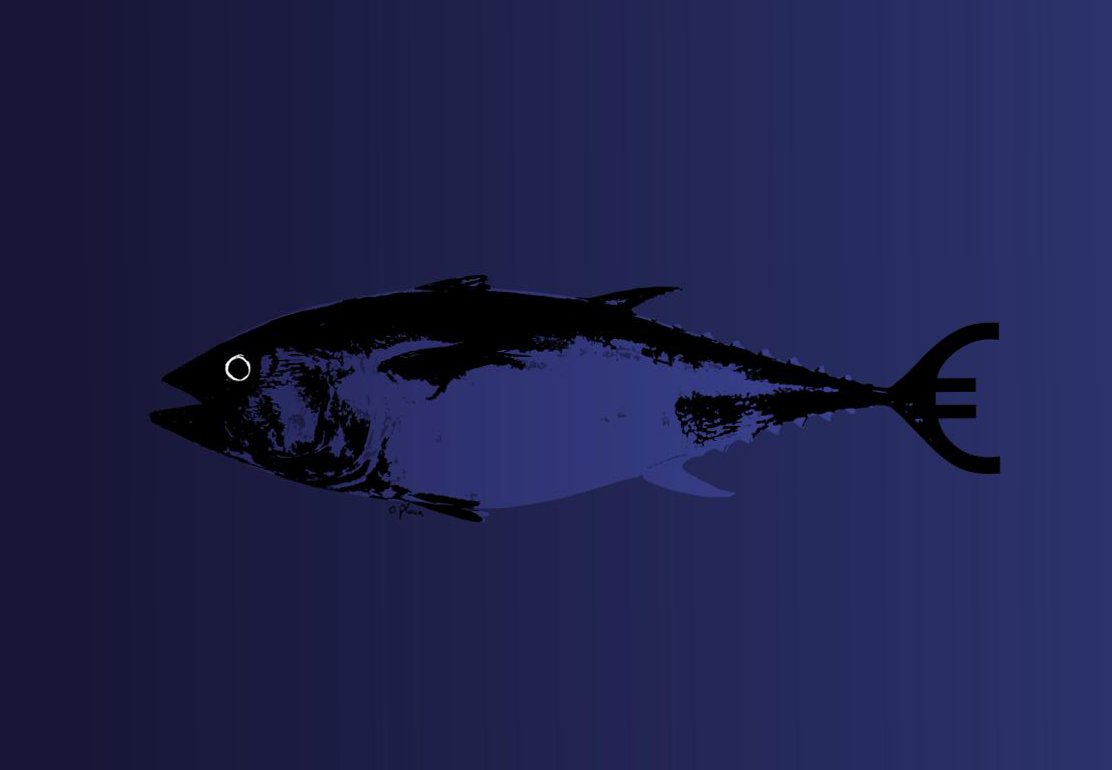
The alleged import and farming of uncertified Atlantic bluefin tuna from Libya in Croatia has reached a turning point. After the European Commission (EC) sent a letter to Croatia in February 2022, highlighting serious shortcomings in the government's oversight of tuna operations, not much has been heard about the EU's investigation into Croatia's tuna farming scandal. A year after the letter, which was sent following whistleblower revelations published by Croatian media, the Commission recently decided to press ahead with its infringement procedure. The stench of fraud is still in the air, even though the story broke two years ago, in the summer of 2021.
On 28 September this year, the European Commission sent a reasoned opinion (the second stage of an infringement procedure) to the Croatian government, which then had two months to respond and take appropriate measures to avoid being taken to the European Court of Justice. So far, the European Commission's Directorate-General for Fisheries (DG Mare) has been slow to follow up on the case. Indeed, the move by Brussels’ officials to enforce the EU legal framework (Regulations 1224/2009, 1380/2013, 1005/2008 and 2016/1627) may collide with the huge economic interests at stake.
Bluefin tuna aquaculture in the Mediterranean is a highly profitable business. It has been growing steadily and is expected to peak at 34,385 tonnes in 2020. This growth has been driven by the main export market, Japan, where the average market price was recently €44 per kg. A record price of €9,000 per Kg was achieved at an auction held in 2019. Croatia pioneered the development of tuna farming in 1996. Although its farming capacity cannot be compared to Malta and Spain, which are home to the largest tuna farms in Europe, its production totalled 4,372 tonnes in 2021. This represents about 10% of the tuna farmed in the Mediterranean.
"The Croatian murky vicissitude shows how far the greed for tuna and money has gone,” said Ignacio Fresco Vanzini, Senior Policy Advisor at the NGO Oceana. It all started a thousand miles south of the Croatian coast, in the open sea between Libya and Malta. Despite securing almost a third (15,703 tonnes) of the EU's yearly total of 49,405 tonnes, Maltese fish farmers are still struggling to produce the quantity the market demands. That's what could happen to the Fish&Fish company, owned by the Azzopardi Group, Malta's largest seafood company. When the Libyan vessels Cyrene and Morina offered to sell their catches at the end of June 2020, the deal seemed too good to pass up.
So Fish&Fish rushed to make its offer and subcontracted its Croatian competitors, Pelagos and Jadran, to feed and fatten the purchased tuna in their farms before selling it to its Japanese customers. The two companies are indirectly related: Pelagos is jointly owned by Ante Gotovina and Milan Mandić, who is also a member of the board of directors of Jadran Tuna. According to a loan agreement between Pelagos and Fish&Fish (or rather a commercial agreement, as the latter corrected by email), the bluefin tuna always remained the property of the Maltese company, which sold it to its client," said Dunja Zloić Gotovina, Sales & Marketing Director at Pelagos.
Following the supply chain
Two tugs, one flying the Maltese flag and the other the Italian flag, transported the fish to Croatia. Local fisheries inspectors were to check the certificates proving the legal origin of the tuna. In fact, every catch must be reported through the traceability system, the Electronic Bluefin Tuna Catch Document (eBCD), set up by the International Commission for the Conservation of Atlantic Tunas (ICCAT), which brings together 52 countries around the world. The organisation was set up in 1966 to control catches and conserve stocks, which were on the brink of collapse in the 1990s due to overfishing and have now successfully recovered.
The eBCDs system follows the supply chain from the catch on the fishing vessels to the landings in the ports to the retailers. Once quotas for species have been set, each ICCAT member allocates a certain number of tonnes per member state to its domestic vessels, which cannot be exceeded. The European Commission, which represents the EU in ICCAT and monitors the implementation of the rules in its territorial waters, distributes the quotas to the member states, which must then submit an annual management plan.
In early 2022, Croatian Chief Inspector Pupić Bakrač accused the government of breaking the law and retroactively falsifying the certificates long after the tuna had been imported by Pelagos and Jadran. In his statement, Bakrač said that none of his colleagues had seen the original certificates that accompanied the fish at the time it was landed in the port of Zadar. "In the absence of formal documents, the fisheries inspectors should have ordered the release of the tuna," Bakrač claimed at the time, after immediately informing the Zadar Police and the County Prosecutor's Office of the violation. "Only a small part of the tuna was released, about 50 heads, it is a pro forma, all the rest was put in cages, and since two euros per head was paid, a huge profit was made".
Bakrač's comments and confidential documents leaked to the editor of the Morski news agency, Jurica Gašpar, also reveal discrepancies in the licensing process. "The companies already caged the tuna in mid-August (i.e. in their farms) and only after that they applied for a formal permit, so their action is illegal and should have been sanctioned," Bakrač said in an interview with Gašpar. We were unable to reach Bakrač for further comment. In addition, the delay in the approval of the operations by the Croatian authorities has raised further suspicions. According to the leaked documents, the applications were submitted by Jadran and Pelagos on 31 August and 7 September respectively.
When we checked the data with Pelagos, they told us that they had 500 kg of tuna in cages on their farm. Jadran did not respond to a request for comment. Furthermore, the leaked documents show that the permit was issued just six months later, on 5 March 2021, during the slaughter of the tuna before it was shipped to Japan. "The slaughter took place from 2 March to 17 March 2021," Gotovina told us. The date of issue was implicitly admitted by the government itself, which, as reported in Gašpar's article ‘This is the route of imported tuna to Croatia’ published on 1 February 2021, publicly claimed that it was not true that the tuna had been in Croatia for 6 months without valid documentation. Gašpar quotes the Ministry as saying that additional controls were carried out after the transfer to the farming cages and that, contrary to Bakrač's accusations, it "did not organise a meeting on the subject of 'legalisation'".
All these statements confirm that, at the very least, the tuna has been caged in the farms without prior and formal authorisation. "To carry out a transfer or caging without authorisation would be against [...] ICCAT recommendations," the European Commission spokesperson told us.
Nevertheless, the Croatian government insisted that the chronology was consistent: in its official statement, reported by Gašpar, the Ministry of Agriculture stated that it had received the documents already on 6 August 2021 and had shared them with DG MARE as well as with the Japanese Fisheries Agency. However, these assurances did not seem to meet the expectations of the European Commission.
Conflicting versions
After the arrival of the tugboats, on 24 August and 2 September 2021 respectively, verifications were carried out in close contact with the administrations of Italy and Malta (whose vessels transported the tuna) and Libya (which had to supervise the eBCDs supposedly delivered by its vessels) and authorisations were issued, according to the Croatian government.
“On each fishing vessel, tugboat and tuna farm there is an ICCAT observer who reports any non-compliance to ICCAT, the Commission and the competent fisheries inspection, therefore, it would be impossible to produce appropriate documentation subsequently or to manipulate it”, reads the Croatian Ministry statement. “You have my reassurance that the fish in question was captured, towed, caged into farms and harvested under all pertinent ICCAT regulations,” corroborated to us Saviour Caruana, Director at Fish & Fish.
However, the Croatian version is disproved by the Commission and Italy. “There is no obligation to notify the European Commission of such transfers or caging before they occur,” the EC spokesperson said: “We receive only the declarations and reports, but not the eBCDs associated with those operations.” Giovanni d'Onofrio, director for the protection of marine resources at the Italian Directorate-General for Fisheries, said: “We have never been involved in this issue and we have no formal information”. We asked the Croatian Ministry to disclose information demonstrating the inspections timeline. “Due to internal procedures we are not in liberty to share documentation or to communicate details you are asking,” the information service replied.
“The ICCAT and EU regulations only require the existence of an authorisation, but the content or form of the authorisation is not established, and is therefore left to the discretion of the competent authority,” the Commission’s spokesperson explained.
In his interview with Gašpar, Bakrač reiterated: “I know that the tuna came without documents because I am aware of official communications (i.e. between Croatian and) Libyan authorities about this aspect.” As of November, the Libyan vessels that caught the tuna are no longer on the list of vessels authorised by ICCAT.
In fact, the Croatian government's version of events was not enough to convince the Commission, which has a duty to evaluate the implementation of the Common Fisheries Policy by member states. The formal notice sent by the Commission to Croatia in February says: “National authorities should investigate potential non-compliance cases and take [...] measures against those responsible for infringing EU law.” The EC spokesperson we spoke to did not share any further comment on the infringement procedure. On 7 July 2023 we submitted an FOI request to gain access to the Croatia-related documents held by DG Mare in Brussels, but our request was rejected on 6 October 2023.
No data made available
Last July, ICCAT rejected a similar request from the NGO WWF, stating: "The data you are requesting is only available to the managers of one of the entities involved in the operations related to these eBCDs," the Assistant Executive Secretary, Miguel Neves Santos.
ICCAT discussed the Croatian issue internally during its meeting on the management of bigeye tuna fisheries and aquaculture in March 2002. According to the minutes, the EU replied to other ICCAT members that "as this is an ongoing infringement procedure concerning Croatia, they are not authorised to make details of the case publicly available".
Japan, which suspended imports of Croatian farmed tuna in 2022, and the US threatened to refuse to approve the EU's annual tuna management plan over concerns about non-compliance.
In the end, they agreed on condition that the EU would pursue the case in the ICCAT Compliance Committee. In response to a request made by the chair of the committee in July this year, the Commission sent an official letter on 1 October stating that "the Croatian authorities have been making changes to address these shortcomings for 18 months".
Ahead of mid-November's ICCAT meeting, NGOs were given the opportunity to be consulted by the Commission, which told them that although the legislative changes made by the Croatian government were still being analysed, Croatia had made great progress in monitoring farms. "The Commission stressed that it was not important whether Croatia had imposed fines or not, but that its control system was adequate," said Alessandro Buzzi, Mediterranean fisheries manager at WWF.
We asked DG Mare whether it expected the Croatian government to impose fines on the companies involved in the alleged fraud. "Since we’re now awaiting responses from Croatia, no decision can be taken before we have evaluated the potential measures that Croatia wants to take," the Commission’s spokesperson replied.
Do you like our work?
Help multilingual European journalism to thrive, without ads or paywalls. Your one-off or regular support will keep our newsroom independent. Thank you!