







Select a language
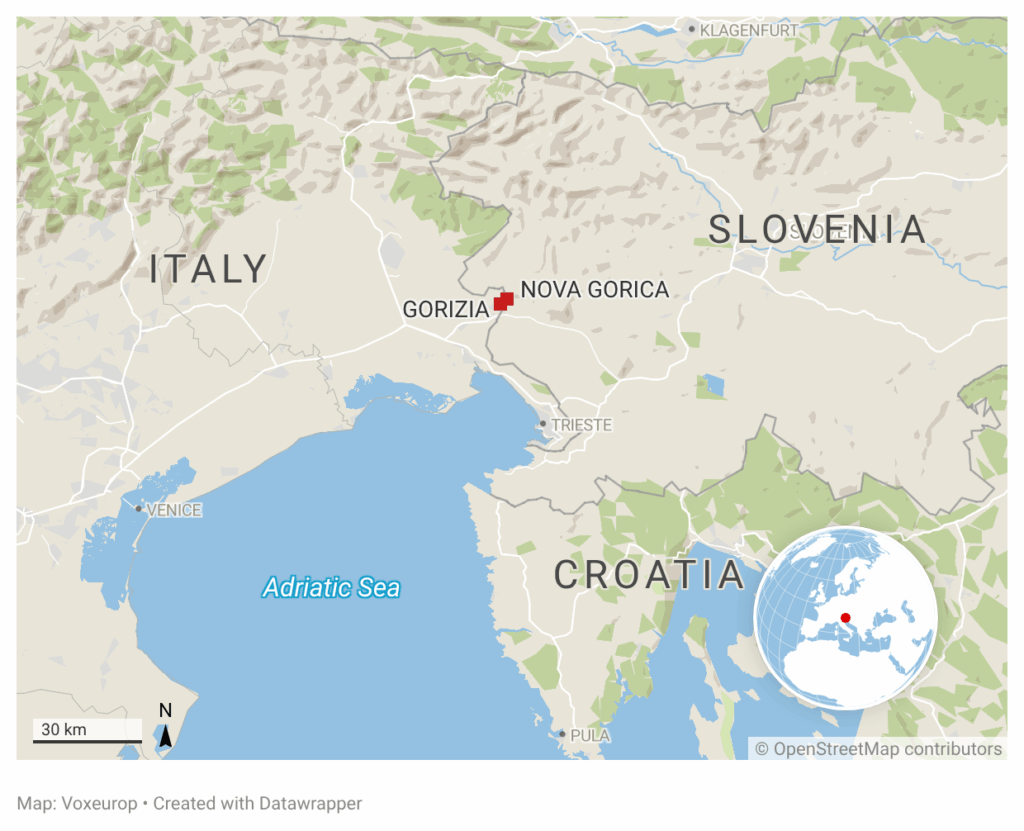
There are few places in Europe where the idea of a border is both deeply rooted and completely absent from the landscape. So it was unsurprising that in 2025 Nova Gorica and Gorizia were together chosen as the inaugural European Capital of Borderless Culture.
On one side is Nova Gorica, a new town built practically from scratch in Yugoslavia after the Second World War; on the other, Gorizia, a thousand-year-old former Habsburg city. Gorizia was inherited by Italy after the First World War, but a part of its suburbs and hinterland passed to Yugoslavia following the defeat of fascism.
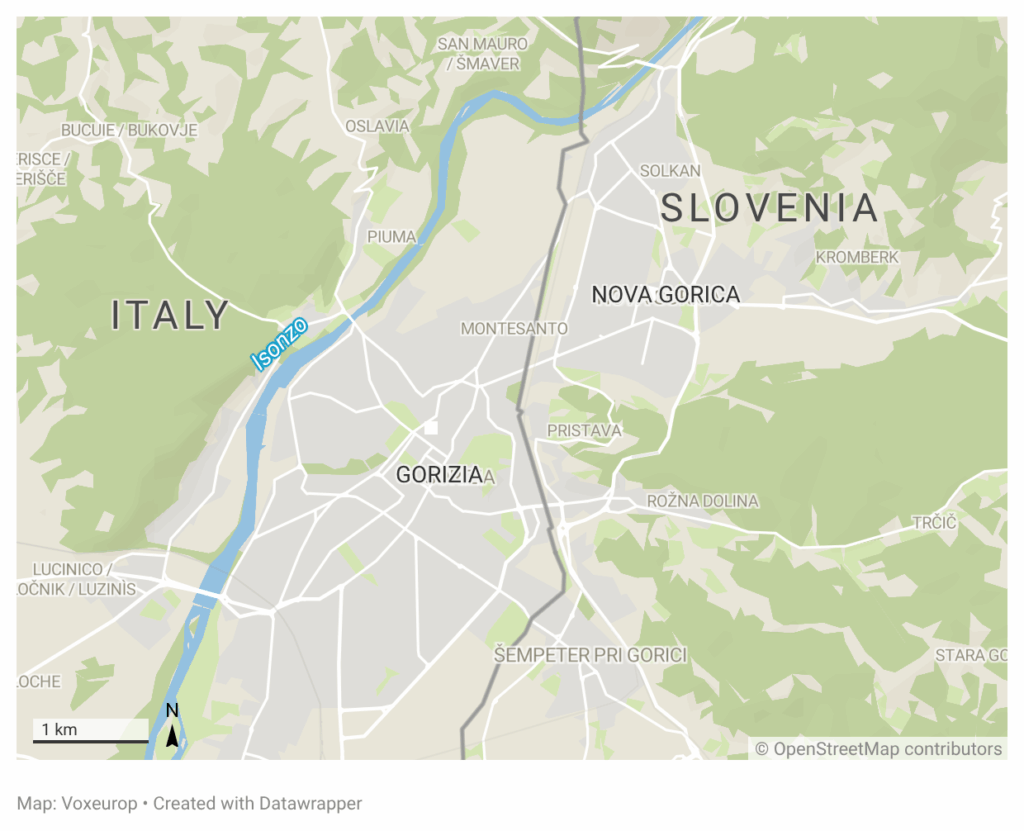
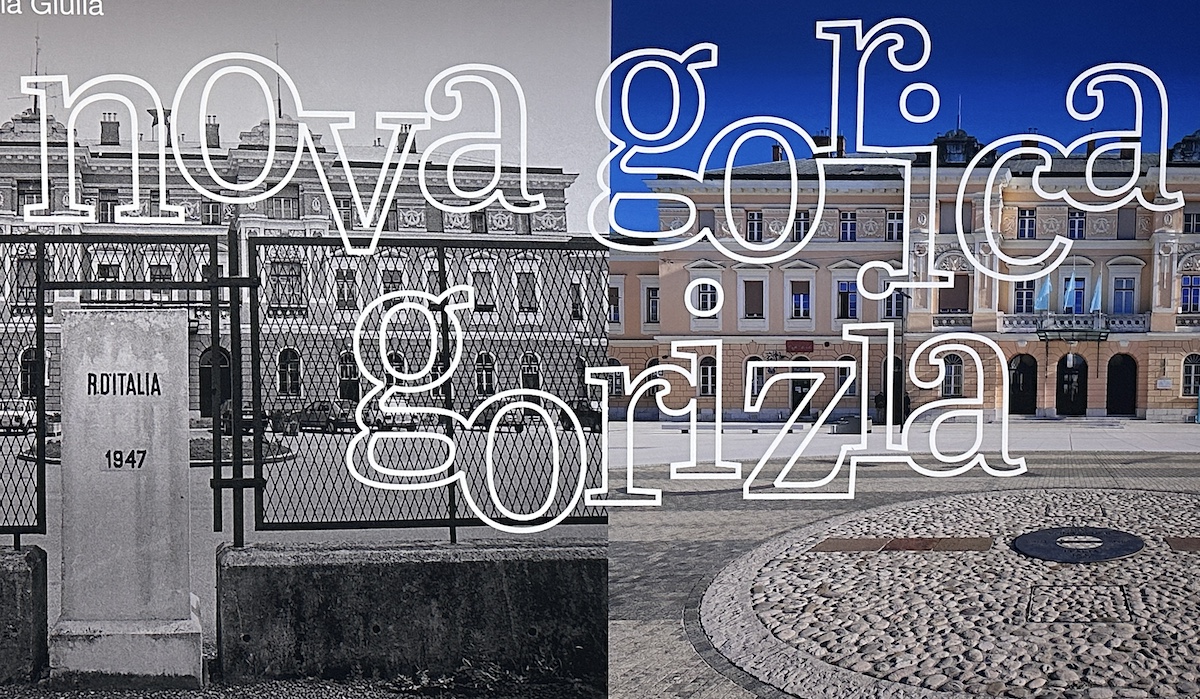
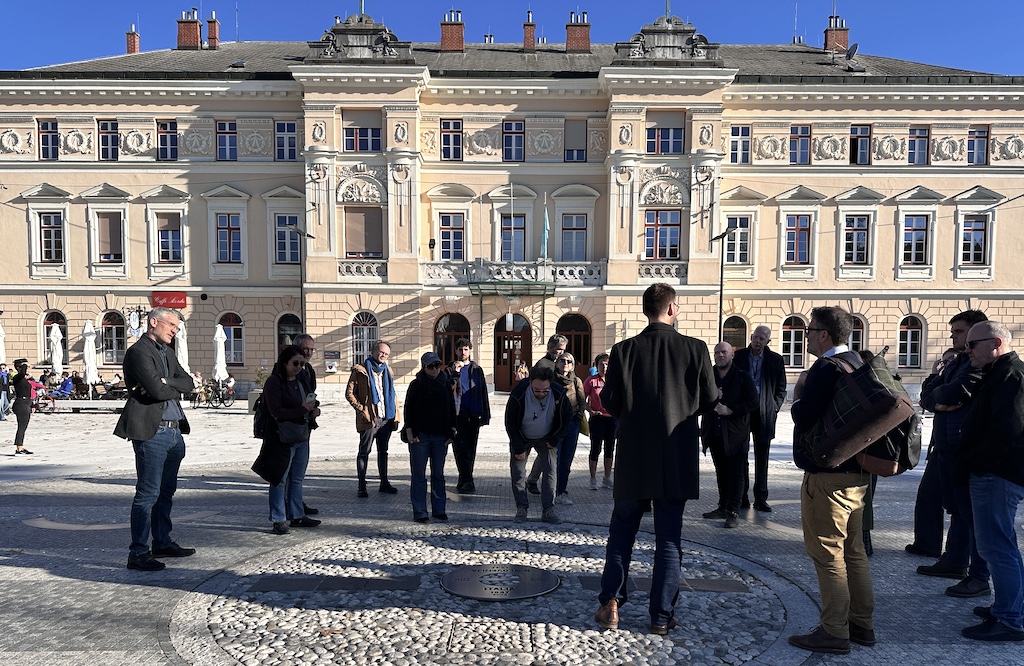
Much less famous than the one in Berlin, a wall – or rather, a high barbed-wire fence – divided the city. It was a stark sight that greeted travellers in the station square of Nova Gorica. The fence was gradually dismantled after 2004, when Slovenia joined the European Union. After the country joined the Schengen area in December 2007, the border became redundant.
All that remains today is a plaque riveted to the ground in front of the station and some vestiges of the fence's base. They remind us that there was a time when two visions of Europe and the world faced off here. Inevitably, the place has become one of the physical relics of the end of the Cold War, and a symbol of European unity. On this late autumn day, tourists are lining up to take pictures with one foot on each side of the dividing line.
Today, Slovenians and Italians live in relative harmony. The two cities that once turned their backs on each other are now so intertwined that you can walk between them without noticing. But symbols remain to remind us that this was not always the case – and indeed that, for some, the divide is not yet completely healed.
"It is hard to talk of true reconciliation when Mussolini is still an honorary citizen of Gorizia”, says Luka Lisjak Gabrijelčič, “and when the association of veterans of the X MAS [an elite unit of the Salò regime] is still welcome at Gorizia city hall, with commemorations attended by the deputy mayor for culture.“ This historian and political scientist is editor of Nova Gorica's cultural magazine, Razpotja.
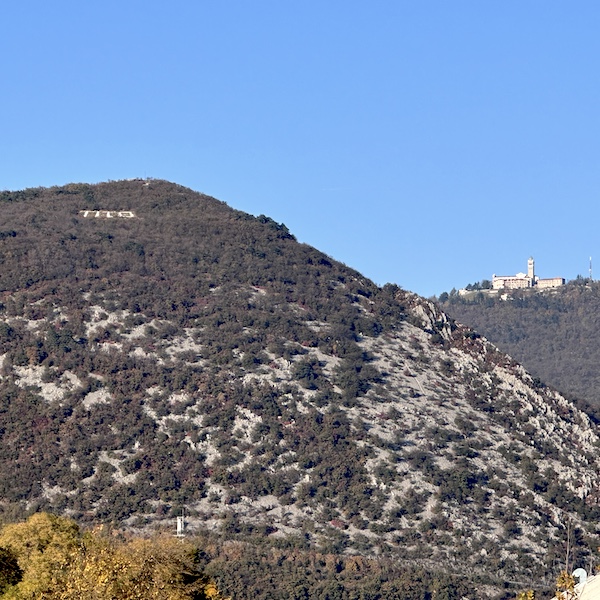
Moreover, adds Gabrijelčič, on the other side of the border “the word 'TITO' is still clearly visible above the city, not as a relic of the past, but as a tribute paid a decade ago”. The inscription on Mount Sabotin, which overlooks the city and was the scene of a bloody battle during the First World War, honours the founder of socialist Yugoslavia (who ruled from 1953 to 1980). As if in response, an Italian triband lights up at night a few dozen metres away. Here, the border is still very real.
“After Slovenia joined the Schengen area, many hoped that the ‘twin cities’ would be united for good in a single cross-border urban space”, says Gabrijelčič. “But those expectations were disappointed. During the 15 years that followed, it was often said that ‘the most difficult walls to break down are those in people's minds.’”
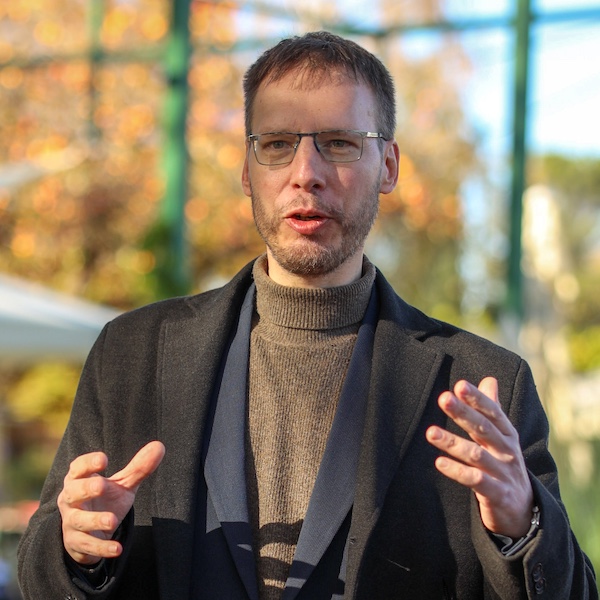
The mayor of Nova Gorica, Samo Turel, expresses similar sentiments when discussing the European Capital of Culture award: “This project is the realisation of a 40-year dream for residents on both sides of the border. What better way to truly break down the remaining barriers: those in our minds and cultures.”
Speaking at the 33rd Conference of Eurozine, the European cultural news network (of which Voxeurop is a member), Turel recalled that this border “was carved into the flesh of the population [...], separating farms from their own barns, courtyards from buildings, and cemeteries.”
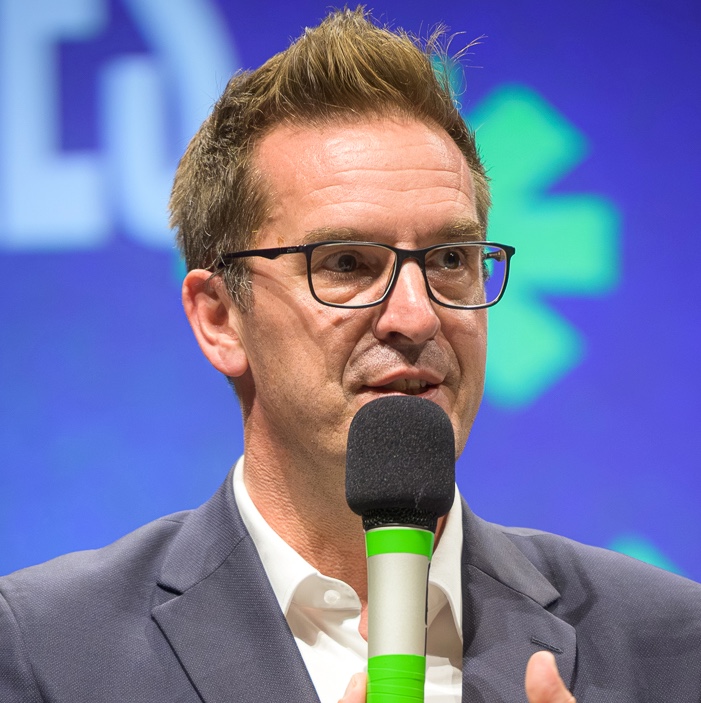
The conference was co-organised by Razpotja at EPIC, a cultural centre located just next to the Italian border and dedicated to 20th-century memory. The site is described as “no man’s land” by Mija Lorbek, director of the European Capital of Culture project. It was precisely to help overcome such a physical and mental demarcation, explained Lorbek at the conference, that the two cities dreamed up the cross-border European Capital of Culture.
Gabrijelčič agrees about the project’s relevance: “I think it has been important for both cities. Culture has become a bigger part of everyday life in Nova Gorica and Gorizia, and there is greater awareness of its importance in two urban areas that perhaps neglected it too much in the past. Above all, both cities have realised that they have important stories to tell a wider audience. Stories that remain relevant to today's Europe. Even more so than in the past.”
It might be tempting to say that these two towns have been “reunited”, like so many others that were divided by wars and treaties and then brought back together. But the case of Nova Gorica and Gorizia is different and somewhat unique.
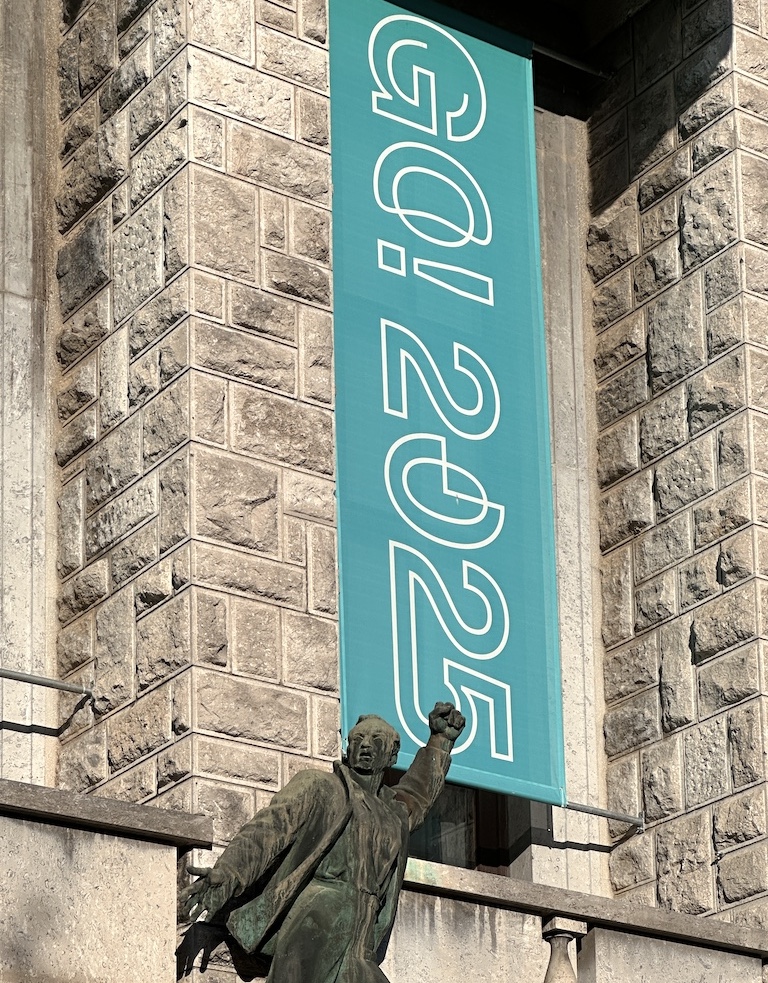
When the border between Italy and the socialist Yugoslav republic of Slovenia was demarcated by the Treaty of Paris in 1947, it was decided that in Gorizia it would follow the route of the transalpine railway line, which linked Trieste to Linz in Austria and crossed the northern corner of the city. Nova Gorica’s train station was thus one of the first buildings in the new city that Marshal Tito, who ruled Yugoslavia until his death in 1980, set out to erect as a symbol within sight of the West.
The new city was built according to a plan by Slovenian architect Edvard Ravnikar, a student of Le Corbusier, and was inspired by the rationalism in fashion at the time. Tito intended it to be a showcase for socialism. The contrast with baroque Gorizia could not be greater. Young people from all over Yugoslavia, the “mladinici”, helped build Nova Gorica’s new city centre. Its main pedestrian street was one of the first of its kind in Europe.
The heart of Nova Gorica is the esplanade, which is flanked by a theatre and the city hall. Designed by architect Vinko Glanz, the latter features various nods to recent history, such as the four socialist-realist sculptures adorning the façade (the two “Rebels” obviously looking towards Italy). Inside, in the council chamber, a fresco by Slavko Penkov illustrates the history of Primorska (the hinterland region of Nova Gorica). One section depicts the Italian occupation (1916-1943) and the atrocities that accompanied it. Legend has it that Italian guests at the council chamber's long table are always seated opposite this part of the fresco.
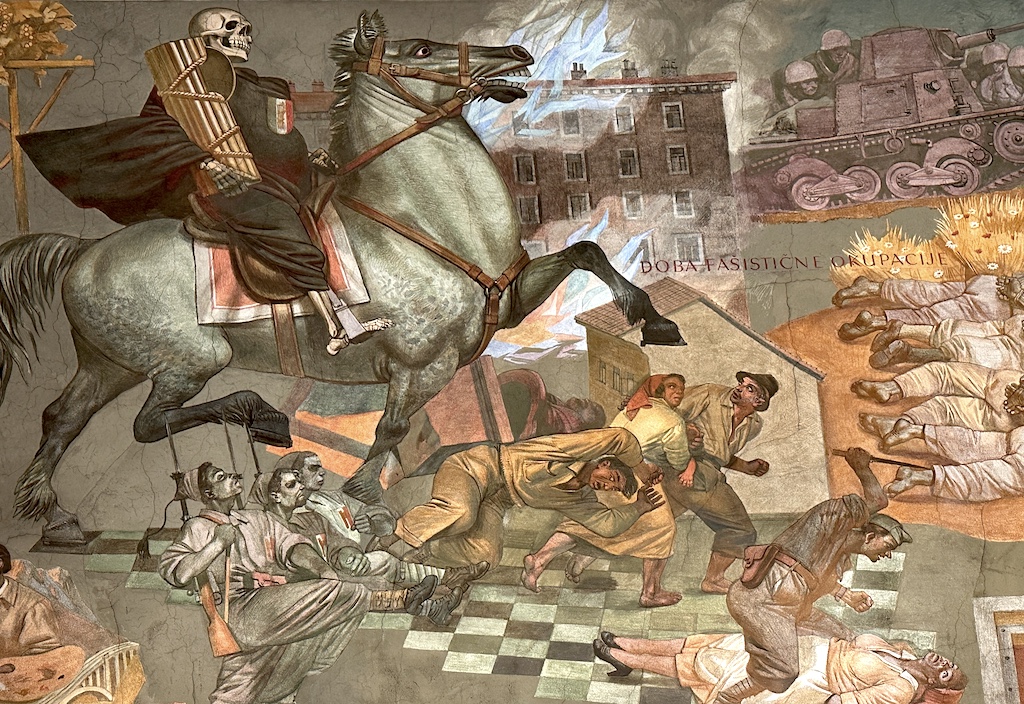
If true, the anecdote carries weight, suggests Luka Lisjak Gabrijelčič: “Historical accounts remain divided, often heatedly and not without acts of violence – although more verbal and symbolic than physical. On the other hand, there are more and more initiatives that encourage dialogue between these different interpretations, and attempt to present them as elements of a layered reality.”
The twin cities' residents seem to have embraced that reality. An example: the physical barrier that disappeared overnight in February 2004 reappeared in March 2020. “The Covid-19 pandemic marked an important turning point”, says Gabrijelčič, the historian. “Overnight, the wall – in almost the literal sense of the word, because a metal fence was erected – stood up again. Families were separated. Many people could no longer cross the border to go to work or visit friends and family. It was a truly traumatic moment that brought home just how integrated the two towns had become."
In recent years, “this realisation has led to lots of joint projects”, confirms Gabrijelčič. “But many people are left with a bitter taste in their mouths. The police checks at the border that were put in place during Covid are still there, now in the name of fighting immigration.”

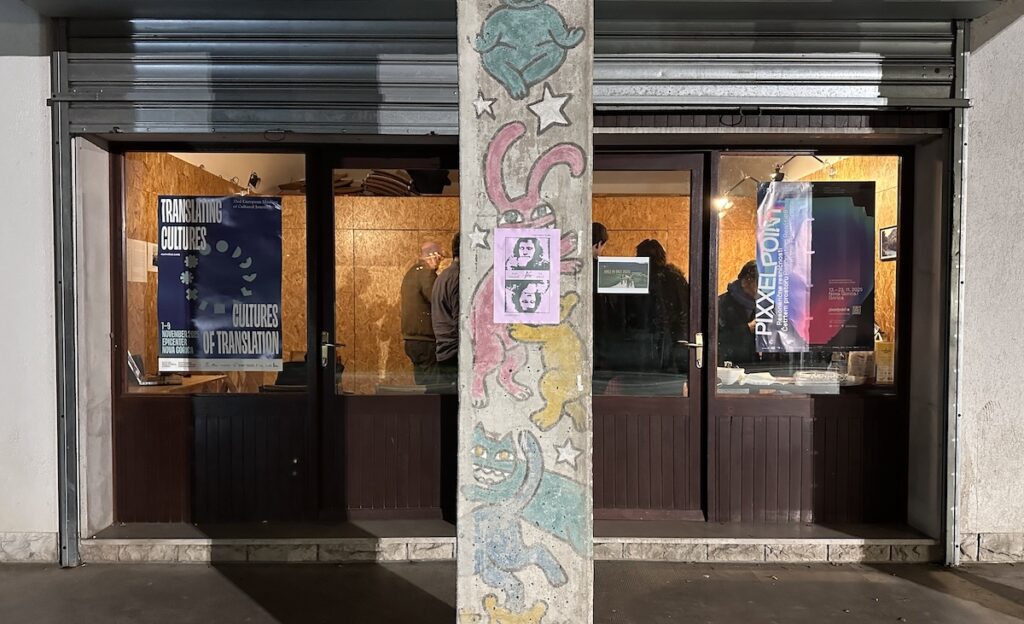
In the evening, on the Italian side, at the border post between Erjavčeva Ulica and Via San Gabriele – the only road crossing between the two cities – not many motorists are heading into Gorizia.
A border guard waves them through with only perfunctory questions. Opposite his dimly lit guardhouse, the Slovenian side has been transformed into the cultural and artistic centre. Its mission is to explore the shared memories of the people of these “two communities that live side by side yet in parallel realities”.
| The European Capital of Culture: from symbolic title to contested policy instrument |
| Since its launch in 1985 as a largely symbolic initiative aimed at cultural exchange, research shows that the European Capital of Culture (ECoC) has clearly transformed into a policy tool combining cultural governance, urban development and EU identity-building. Academic evaluations now describe the programme as a hybrid instrument balancing cultural expression with economic returns, city branding, and long-term 'legacy planning'. Studies comparing ECoC cities since the 1990s have highlighted a recurring tension between bottom-up cultural participation and top-down political control, particularly when large infrastructure budgets and EU visibility are involved. The year 2000, when nine cities were designated simultaneously, marked a turning point. After this, the European Commission progressively formalised selection criteria, evaluation mechanisms, and legacy requirements. By the 2010s, researchers were increasingly criticising what they termed the 'instrumentalisation of culture': cities using the ECoC label to justify regeneration driven by real estate, flagship buildings and tourism strategies that often marginalised local cultural actors. Comparative analyses of cities such as Pécs 2010 (Hungary), Sibiu 2007 (Romania) or Plovdiv 2019 (Bulgaria) show that while visitor numbers often rise temporarily, social and cultural benefits depend heavily on governance models and the autonomy of local cultural institutions. Although initially conceived as a locally driven cultural renewal project, the programme was gradually taken over by central political interests. This resulted in cost overruns, delayed flagship projects, and lasting institutional damage. Hungarian media outlets, including HVG, extensively reported on how cultural programming was repeatedly subordinated to construction deadlines and political symbolism. Several of the promised cultural venues either opened years late or never fulfilled their intended function. Over a decade later, Veszprém-Balaton 2023 was deliberately presented as a corrective response by Viktor Orbán’s government. Learning from the experience in Pécs, the organisers avoided making single, prestigious investments and instead distributed resources across dozens of smaller towns and cultural initiatives. Against this background, the cross-border Nova Gorica–Gorizia 2025 model is widely regarded by scholars as an experimental corrective: shifting the emphasis from infrastructure-led competition to shared heritage, borderland memory, and transnational civic participation. However, whether this model can withstand the structural pressures that shaped earlier ECoCs remains to be seen. The European capitals of culture for 2026 are Oulu (Finland) and Trenčín (Slovakia). |
🤝 This article was written as part of the European PULSE project. György Folk (EUrologus/HVG) contributed to it.
Do you like our work?
Help multilingual European journalism to thrive, without ads or paywalls. Your one-off or regular support will keep our newsroom independent. Thank you!