








Select a language
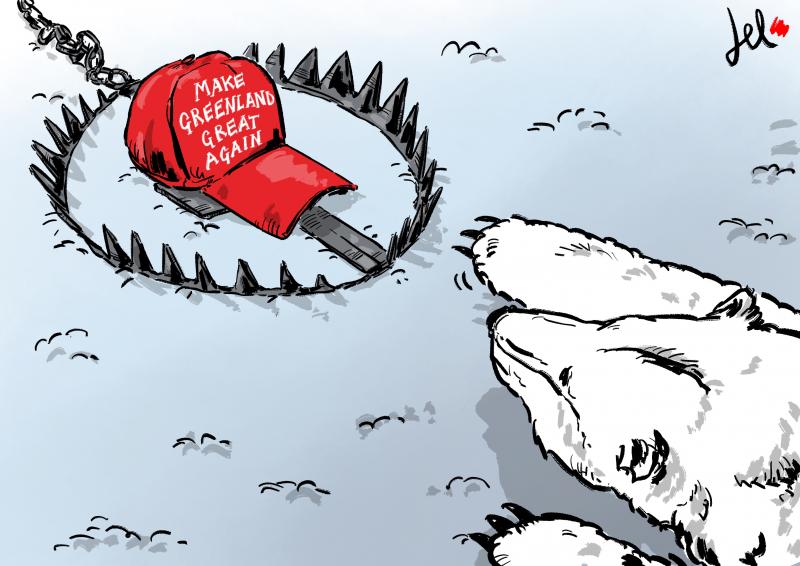
Whilst the bombs on Iran and the closure of the Strait of Hormuz have diverted the US President’s attention away from Greenland, the people of the Northern Atlantic island remain wary of the calm. Negotiations between the US, Greenland and Denmark are still continuing, after all, and it would surprise no one if Donald Trump ramped up the rhetoric again.
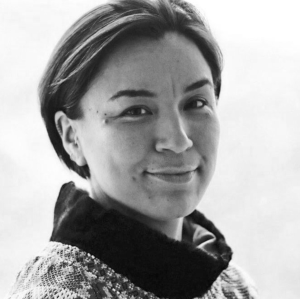
In this conversation with Der Standard, 38-year-old entrepreneur Josepha Kûitse Kunak Thomsen speaks about the relationship between Copenhagen and the indigenous population, which remains an unequal one.
The daughter of a Danish father and a Greenlandic mother, she grew up in Greenland and now lives in Denmark with her two children.
Der Standard: When was the first time you realised that your background was a cause of racism?
Josepha Kûitse Kunak Thomsen: At twelve years of age. A boy called me a ‘fisherman’s whore’ and other names. I started crying and didn’t understand that I was being insulted because of my background, even though I had already experienced this in Greenland.
There, we were separated into Greenlandic classes. One class was for children who were purely Greenlandic, and the other for those who also spoke Danish. People shouted that I should just go ‘home’ to Denmark – and that was despite the fact that I spoke Greenlandic at that time. So I decided I would stop speaking Greenlandic, because the Greenlanders were being racist towards me. And then I realised that everyone is racist. Now I speak a few words again.
You are now reconnecting with your Greenlandic roots. You earn your living through traditional mask dance, among other things. What does it mean for you to be indigenous in modern times?
It feels good to finally be recognised, to finally be seen and heard. I’ve been sharing indigenous culture as a tour guide and through Greenlandic mask dance for over ten years now. I feel that people are finally becoming more supportive instead of simply looking the other way.
Because whilst many know that racism does exist and that we are treated differently, many also say: ‘Oh, but that’s perfectly normal.’ You know, that it’s just a joke. But it isn’t.
Do you feel that the Danes are aware of the crimes of the colonial era?
No, because the general attitude is: “Oh, but we’re not killing you, so relax; things could be much worse for you.” But racism isn’t okay just because we’re not dying. In Denmark, the narrative persists that they were kind colonial rulers. But now that cases like the forced contraception of Greenlandic women are coming to light, I do wonder how long people can keep clinging to this narrative. I’m not saying you can change the past, but you could acknowledge that it was a shitty time.

At the start of the year, it felt as though the entire media world had landed in Nuuk to report on the threatened annexation of Greenland. What did you think of the coverage?
I think it’s good that the media have finally focused on the people. That they’ve finally got closer, because I was fed up with reports being written from so far away. We were always just mentioned as statistics – for instance in connection with unemployment or sexual abuse; we were always just the sad story. So it was refreshing to see that the story of the people was being told.
Did Trump’s talk of a possible annexation affect the Greenlandic community?
The community has always been strong in Greenland, but I didn’t feel that this had reached Denmark. Here, nobody knows anything about Greenland because it simply isn’t taught. I feel that the older generation, around 70, had a much closer relationship with Greenland because they knew the place and had actually been there.
‘You can experience racism anywhere in the world, and no one is worth less than others just because they’ve experienced it. And I think it’s so important to say: No, not all Danes are terrible. People are just people’
The younger generation was less interested, but now attention has returned and the sense of belonging is growing stronger again. It’s lovely to see the Greenlandic flag hanging in windows in Denmark too, and not because someone from Greenland lives there, but because there are people who care.
So perhaps Trump’s aggression had a silver lining after all?
I really hate to say this, because I know Trump is mad, but he did bring about something positive. For instance, when he said that the Danes don’t treat the Greenlanders particularly well. We do receive free healthcare and shouldn’t overlook the many benefits we enjoy, but we still experience a great deal of racism.
Can you give an example?
There still exists a system in which children are being taken away from their mothers because of their background. Even our family was classified as at risk – as ‘orange’. And that’s despite the fact that I speak fluent Danish, have a master’s degree and run my own company. When I asked why we’d been classified that way, I was told it was because of my Greenlandic background. And because the children would speak Greenlandic, so they’d have problems when they started nursery, and I thought to myself: ‘I can’t even speak Greenlandic myself. How on earth is that supposed to be a problem?’
And that’s when it dawned on me that everyone in the system is shaped by their own prejudices and their own ideas about what Greenland is, because we’re only told statistics about Greenland. Not the cultural differences. If even I experience this, despite Danish being my mother tongue, I dare not think how difficult it must be for people who barely speak Danish.
Will you ever have to tell your children a more nuanced story about the relationship between Greenland and Denmark?
My children are two-and-a-half and almost six years old and, thankfully, don’t pick up much from the news yet. And I won’t give them a mobile phone for as long as I possibly can. But yes, I will have that conversation with them one day. Because even within Greenland itself, people from the east of the island experience hostility.
So I want to give my children a nuanced picture of what the world is like. You can experience racism anywhere in the world, and no one is worth less than others just because they’ve experienced it. And I think it’s so important to say: No, not all Danes are terrible. People are just people. The world is a terrible place, but also a wonderful place, and we simply have to know that both exist and are part of life.
🤝 This article was produced as part of the PULSE project. Emma Louise Stenholm from Føljeton contributed to this.
👉 Original article on Der Standard
Do you like our work?
Help multilingual European journalism to thrive, without ads or paywalls. Your one-off or regular support will keep our newsroom independent. Thank you!


