












Select a language
Nuuk – It’s Thursday evening and news of the alleged “framework agreement” that Donald Trump is said to have reached with NATO Secretary General Mark Rutte is spreading quickly. The “What the f**k” that booms from the mobile phone speaker ends on a high note and hangs in the air for a moment. In the pause that follows, two women stare at each other across the phone’s display. Nina and Najaaraq, both 57 years old, are shocked by yet another U-turn from US President.
Aaja Chemnitz, one of the two Greenland members of parliament in Copenhagen, quickly clarifies matters in a Facebook post: “Nothing about us without us” – a phrase the Greenlandic government has been hoisting aloft like a banner since the American National Security Strategy was published in early 2024. The phrase means the people of Greenland want to sit at the table when decisions are being made about their country, which they call Kalaallit Nunaat – “The land of the Kalaallit”.
Once again, the islanders first learned of the supposed deal only through the media. Even Greenland's Prime Minister, Jens-Frederik Nielsen, knew nothing about it.
Longed-for peace
The people of Nuuk want nothing more than to be left in peace. For more than a year, the world's attention has been focused on the Arctic island and its approximately 57,000 inhabitants. “The media frenzy has been intense in recent months,” says a saleswoman in a shop selling outdoor gear in downtown Nuuk, turning to look out the window. In the snowy street, a camera crew is approaching passers-by for soundbites. “But what we've seen in recent weeks sets a new record.”
All the major media companies – from Al Jazeera to ZDF – have flown into Greenland's tranquil capital, and the locals have clearly had enough of the microphones and cameras. Passing each other in the icy cold, normally the residents nod to each other politely or smile when their eyes meet. Now, they look down at their boots as soon as a video camera or photographer hoves into view.
They are also sharing guidelines for foreign journalists on social media to remind the journalists that the people of Greenland are not just a story or a headline – they are people acutely affected by Trump's threats.
Partners welcome
Emiia, 27 years old, teaches Greenlandic at a primary school. “I teach my pupils not to talk to the media if their parents aren't there,” she says. “If they are not, they should say ‘no’, loudly.” The children are constantly asking her about the current situation, but she can only answer some of their questions. After all, no one knows what Donald Trump wants in Greenland and how he will behave in the future.
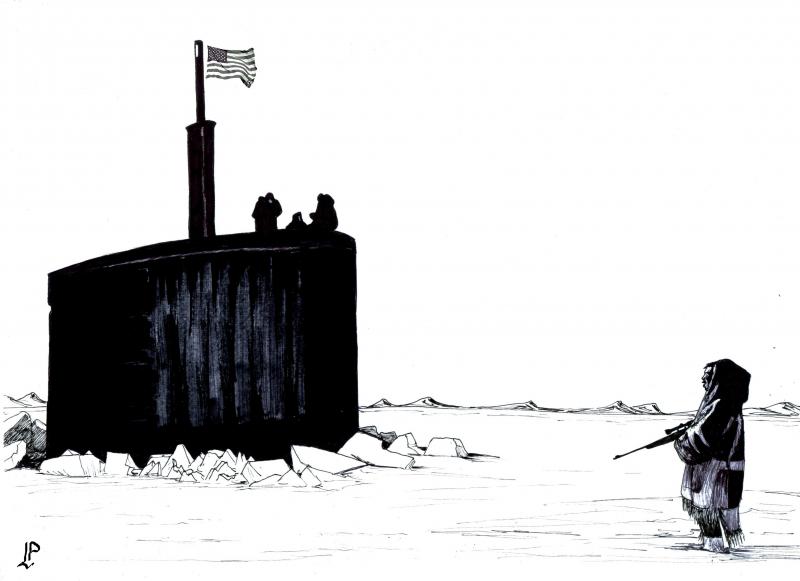
Since 1951, the US has had virtually free rein when it comes to military operations and armament on this strategically important island. No one is preventing the government in Washington from opening more military bases – although the United States itself has closed all of them except for the Pittufik base. Nor is anyone preventing the US from extracting the country's valuable raw materials.
“We have always said that like-minded partners are welcome at any time,” says Naaja H. Nathanielsen, Greenland's Minister of Mineral Resources, in her office in Nuuk. Extraction would only have to be carried out in harmony with the local population and benefit Greenlanders as well as foreign investors.
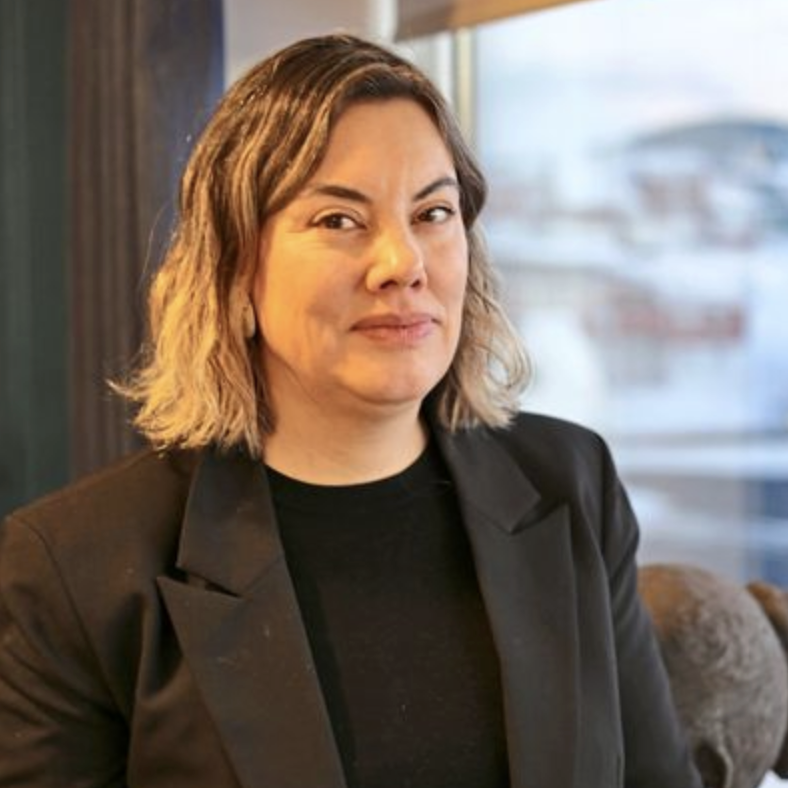
Back in 2021, a major project in Kvanefjeld – at the southernmost tip of the island – was shut down by Greenland’s parliament. Although the site contains the third-largest known deposit of rare earths, with a particularly high ore grade, mining it is not permitted. This is because the rock, along with the rare earths, also contains the eighth-largest deposit of uranium in the world.
In the US state of Arizona decades of exposure to uranium mining and abandoned mines have left behind massive environmental pollution, which has had catastrophic long-term consequences for the indigenous Navajo and their land, and Greenlanders fear the same fate.
Topic: Environmental changes
Furthermore, as Nathanielsen points out, the deposits in Greenland are no “quick fix” that can meet the current demand for rare earths. Simply to get a mine up and running takes an average of 16 years, she says, mostly because the infrastructure is not there – like roads, since towns in Greenland are not connected by any roads at all.
The first overland route between two settlements was only opened this summer – a 170-kilometre-long sand track between Sisimut and the capital's airport, Kangerlussuaq. Nor is it merely a question of roads, since mining on a large scale would require more ports and airports as well.
Melting ice
Even experts are unable to predict the impact of increased military activity around Greenland on the fragile ecosystem. What is certain is that the body of water known locally as Pikialasoruaq – the northern waterway between Canada and Greenland – affects the Gulf Stream, which in turn affects the whole world. It is also a reality that rising temperatures are melting the essential ice barrier in the far north. Inuit on both sides of the sea are therefore advocating for a marine protection area. In a world where climate agreements are being abandoned, this will be a tough task.
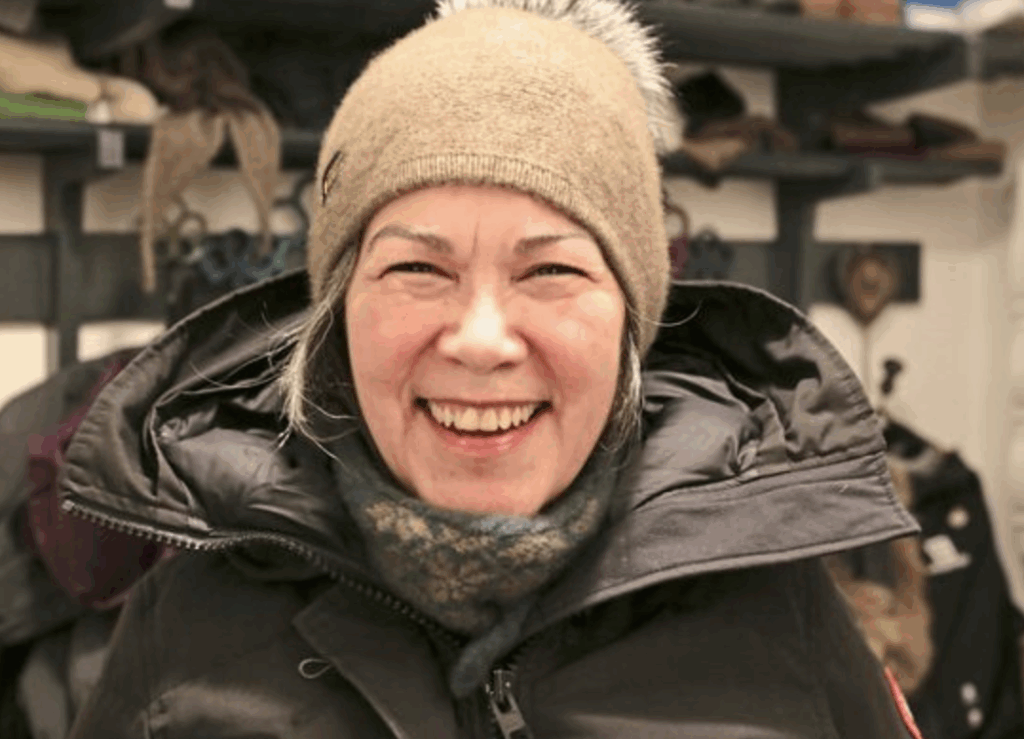
Environmental change comes up every day in conversations in Nuuk, where the noticeably warmer winters worry people. “Between November and February,” says 57-year-old Najaaraq, “it used to be consistently freezing cold. It's simply not normal to have above-zero temperatures in January, like we do now.” Down at the harbour, before setting off in search of halibut, cod and seals, fishermen also talk about the retreating ice.
While the residents of the capital remain relatively unaffected by the changes, people from Ilulisaat in the north report that seas that once froze over completely, allowing them to head out across the ice on dog sleds to hunt, take longer to freeze over in fall and melt sooner in spring – and the ice can be dangerously thin in the depths of winter as well. “Even in my own childhood the ice fields were bigger,’ says primary school teacher Emiia, who comes from a town known for its icebergs.
Because US President Trump is well known for questioning deals that have already been made, Greenlanders remain on guard. This week, the government published a brochure outlining how to prepare for emergencies. Backup generators and water canisters soon sold out across the island. Grocery store shelves too are also emptying – and not only because food deliveries typically reach the island just once a week. (Shipping accidents can delay deliveries by as much as two weeks.)
“People are unsettled,” says Arnakkuluk Jo Kleist, a 41-year-old self-employed management consultant who has lived in Nuuk her whole life. Over a coffee in the Katuaq cultural centre, she repeatedly nods to acquaintances or raises her hand in greeting. Kleist also notes “a certain heaviness and sadness” among the population. People are drawing up contingency plans and, in some cases, actually thinking through how they could leave the country in an emergency to save themselves and their loved ones. “We always thought that we were far away from the rest of the world on our big island,” says Kleist. “And now the global spotlight is bringing such distress.”
To counter their worries, Kleist says, Greenlanders are trying to lend each other strength. Politicians are being hugged even by people who would not normally vote for them. After foreign policy expert Vivian Motzfeldt advocated for Greenland’s rights on the international stage in Washington and Brussels, she was greeted on her return by a sea of flags at the airport. “It's a bit like in sport,” Kleist says. “When the national team is playing, it doesn't matter if the players come from rival teams. They all represent the country.”
The land of the Inuit
The land, which in truth belongs to the Inuit, is bound up closely to the Kingdom of Denmark – through, for example, Danish nurses like 33-year-old Nikolai, who is working at the hospital in Nuuk for a month (for the third time) because of staff shortages. The ties are also reflected by family members who left for Europe in the hope of finding a better social system there.
The history with Denmark also has many dark chapters, unfortunately. Najaaraq lived in Denmark in her twenties and thirties. “No one wanted to serve me in shops,” she says. “On the bus, people shouted at me to go home.” Even in Greenland the 57-year-old was not always accepted. As the daughter of a Danish father, she never learned the language of her Greenlandic mother as a child, because in the 1970s Danish was the dominant language on the island as well. As a result, some did not consider her a full-fledged Greenlander.
‘Nothing about us without us’ - Aaja Chemnitz, Greenland MP in Copenhagen
“A lot of work remains to be done,” says Kleist. A commission will now tackle the dark legacy of the colonial era, so that Greenlanders can begin to work through the trauma passed down through the generations. The pressure Trump has placed on Denmark has already set some wheels in motion.
Future with Denmark
Last year, Danish Prime Minister Mette Frederiksen tearfully apologised to those affected by the coil scandal dating back to the 1960s and 1970s, when Denmark wanted to use forced contraception to limit population growth in its former colony; otherwise, the government reasoned, it would no longer be able to finance the welfare state.
Under the plan, more than 4,000 women and girls had intrauterine devices, or IUDs, inserted by doctors, and many later were unable to have children. Only recently did Copenhagen agree to pay compensation, though this could have been granted years earlier. “It makes you wonder why all this is possible now and what is behind it,” Kleist muses.
The message from Greenland’s government in Nuuk is clear: if a choice has to be made, Greenland wants to remain with Denmark. “But that doesn't mean we’ve forgotten,” Kleist notes. First, a hostile takeover must be prevented, and only then could discussions begin about the future with Denmark – a future that, from the Greenlanders’ perspective, could also lead to independence.
👉 Original article on Der Standard
🤝 This article was written as part of the European PULSE project. Emma Louise Stenholm (Føljeton) contributed to it.
O
Do you like our work?
Help multilingual European journalism to thrive, without ads or paywalls. Your one-off or regular support will keep our newsroom independent. Thank you!


