











Select a language
Herman Grech (1970) is a Maltese journalist and playwright. For over 30 years he’s been directing plays with a strong connection with social and political issues. These include Ben Elton’s Silly Cow (1999), Frank McGuiness’s Someone Who’ll Watch Over Me (2006), Kenneth Ross’s The Lockerbie Bomber (2013), and Anders Lustgarten’s Lampedusa (2016).
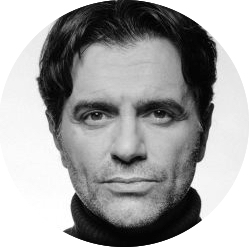
In recent years, he has focused on original work, writing, directing, and producing De-terminated: The Abortion Diaries (2018) and They Blew Her Up (2021). The latter, focusing on Daphne Caruana Galizia’s assassination, won the Malta Arts Council’s Production of the Year award and toured across Europe, in partnership with Voxeurop. He is the editor-in-chief of the Times of Malta.
Voxeurop: What is Press Mute about and how did you choose its characters?
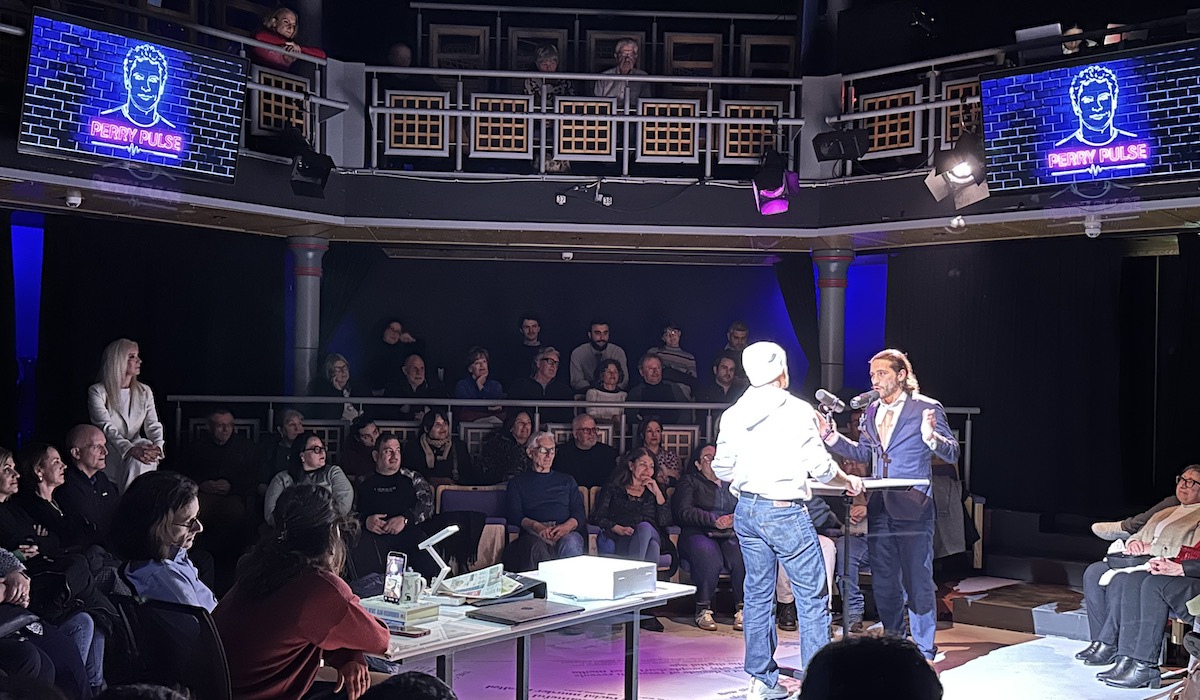
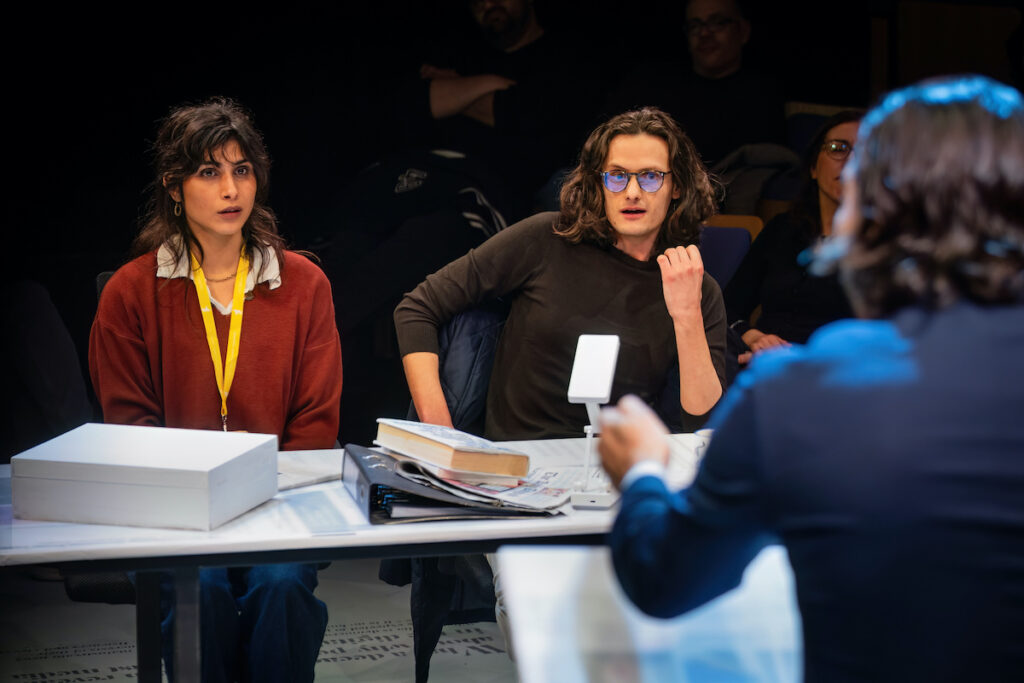
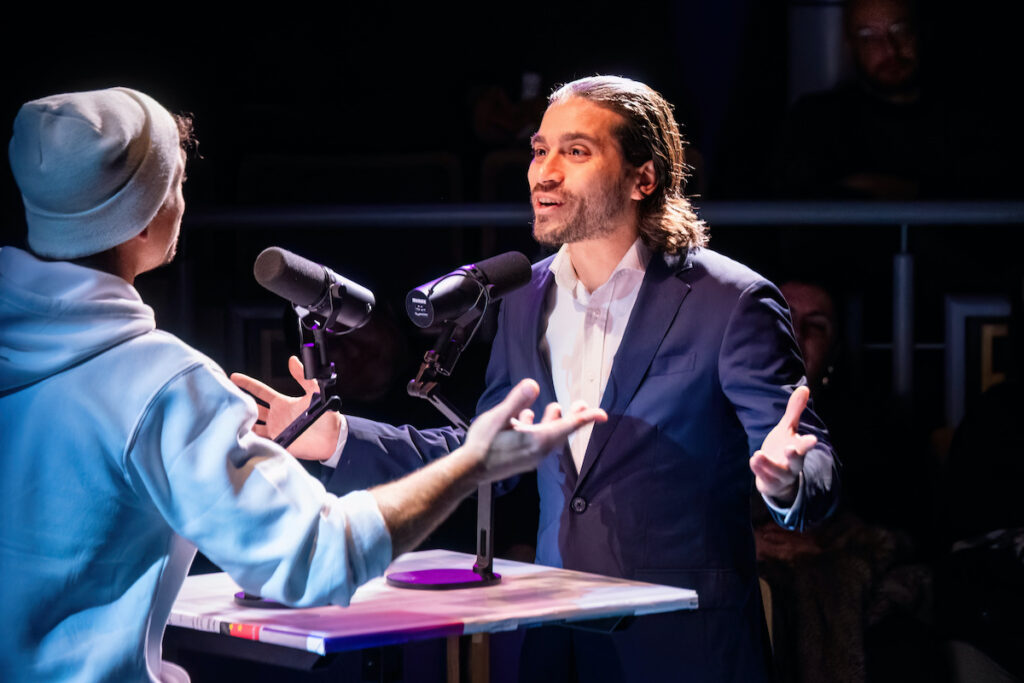
Herman Grech: Press Mute is a deep dive into the modern-day media world – it puts both legacy and social media under the spotlight and questions the way our online behaviour chisels democracy as we know it. I opted for a cast of five – two journalists on the brink of burnout, a podcaster, a charming and corrupt politician, and an Algorithm who knows us better than ourselves. Four of the characters are familiar, while I sought to give a human face to the Algorithm, a character that has had a big impact on the audiences. The one-act play is fast-paced, blends satire with drama and draws the audience members into the conversation.
Why did you feel the urgency to write it?
In a way, Press Mute is a cry of distress. I have been involved in journalism for almost 30 years and I find myself genuinely afraid of the world we are living in. It’s becoming increasingly difficult to tell the difference between truth and fiction, where noise, ugliness, and hatred are becoming normalised, amplified, and in many cases institutionalised. As authoritarianism rises, good is being framed as bad. Much of this shift has been driven by the misuse of media, and more specifically, by social media platforms fuelled by big tech that do not give a damn about the truth.
Press Mute grew out of that fear. This production, loosely inspired by the concept of ‘live journalism’, became somewhat of a cathartic experience for me. It is shaped by personal encounters, anecdotes, and the daily highs and lows of working in a newsroom, from the adrenaline of breaking a story to the exhaustion of watching truth struggle in a culture addicted to distraction.
How did you choose the actors?
I opted for a mix of actors and media players to play the five roles. The main actor is Malta’s most recognisable journalist; the actor playing the politician is a former journalist; the actress playing the Algorithm is one of the most popular podcasters; and the remaining two are professional actors. I felt that blending media figures into the cast would bring additional depth and authenticity to the story as it unfolds.
What has been the audience's reaction?
To be honest, I was terrified of this project – original work is always a risk, and the media world can feel somewhat niche. But the feedback has completely taken us by surprise. We sold out all the shows weeks in advance and had to open additional nights to meet demand.
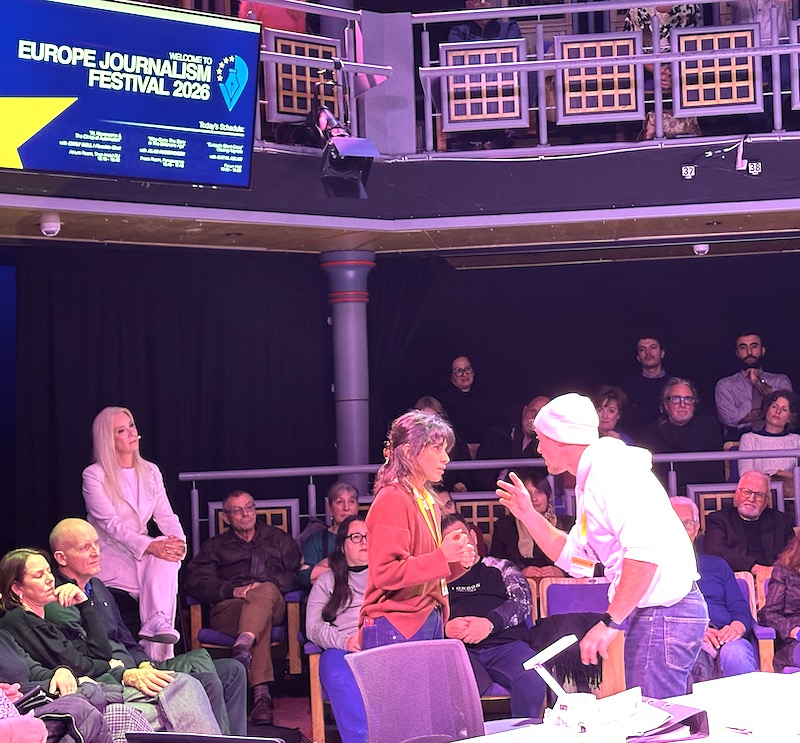
What has been most interesting is the debate that ensued after the curtain call. People spoke about how the play opened their eyes to their own online behaviour and helped them understand the threat posed by a world without independent news organisations. Some audience members even took out subscriptions to news websites after the show. The post-show Q&As were among the most engaging I’ve ever experienced.

What kind of questions were they asking and what seemed to be worrying them or what were they caring about?
I’ve been holding post-show Q&As for most of my recent productions. But this time, it was quite different. I sensed a genuine eagerness from audiences to go deeper – to reflect on what they themselves can do to help change the narrative, to explore how the media can communicate more effectively, and especially to discuss ways of fighting misinformation. Many said they walked out of the production questioning their own online behaviour and understanding the challenges of a newsroom these days. It was very encouraging for all of us, especially the journalists involved in this production.
Is it a strictly Maltese play, or does it touch on universal issues related to the media?
No, the play touches on universal issues, although some of the topics tackled in Press Mute fall within the Maltese context. It’s a play that should resonate with anyone who gets their news from independent media or spends hours scrolling on social media. It should impact anyone who is watching the horror unfolding in front of our screen.
Since it was written by a journalist and editor, it obviously has a bias, but it is also openly critical of the way we operate. And then we leave it up to the audience to decide the ending of the play.
What is your view on the media landscape today, in Malta and in Europe in general, and do you see reasons to hope?
The forecast is gloomy, with potentially devastating thunderstorms on the horizon. But it would be a disaster to give up the fight. We are up against billionaires who are buying out news organisations and manipulating algorithms.
We can all play our part if we want to stop that by changing our online behaviour, by supporting news organisations, and by calling out lies.
In this gloomy context, what keeps you doing such a depreciated job? And why choose theatre?
I have always believed there is a profound link between journalism and theatre. Both tell real-life stories in real time, and both carry responsibility. The stage, like journalism at its best, has the power to slow us down, to pull us away from distraction, to confront us with complexity, and to make us sit with uncomfortable questions.
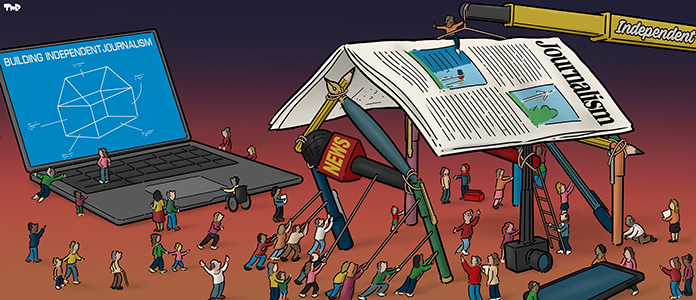
I also strongly believe that the death of independent journalism would signal the death of facts. And if I can contribute in my own way to try to bring about change – whether through my news organisation’s investigations or through the stage – then I will have done my job.
Do you like our work?
Help multilingual European journalism to thrive, without ads or paywalls. Your one-off or regular support will keep our newsroom independent. Thank you!


