









Select a language
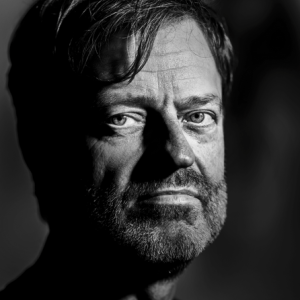
Ides Debruyne co-founder and managing-director of Journalismfund Europe, an independent non‐profit intermediary established in 1998 with the purpose of stimulating independent investigative journalism in Europe. In August 2025, Debruyne published an opinion piece on the organisation’s website entitled Exploiting Journalists Destroys Credibility, in which he denounced the common practice of not paying for investigations co-financed by Journalismfund Europe.
“How can media outlets denounce modern slavery and exploitation by corporations and governments while expecting their own freelance journalists to work for free? This hypocrisy undermines not just their moral authority, but also the very future of investigative journalism,” he wrote. We found this opinion piece highly relevant in the context of a Voxeurop series we have been working on. It seeks to highlight the precarious situation of information providers, particularly journalists, and how this precariousness, intersecting with various issues (including the media sector crisis and lack of regulation), endangers our democracies.
- Precarious, poorly paid, risky: freelance journalism in Europe
- Journalism, a bourgeois profession?
- The unbearable lightness of freelancing: a journey through the precarity of European journalism
- European Independent journalism and the quest for sustainability
Voxeurop: You have criticised the fact that newsrooms often do not pay freelancers for articles produced thanks to Journalismfund Europe grants. And you are right; in most cases, they don’t. They argue that they have limited resources or, worse, that the freelancers' work has already been paid by the grant. At the same time, grants of this kind enable the production of quality journalism that would otherwise not exist. How can we break out of this cycle?
Ides Debruyne: The most important thing to know is that Journalismfund Europe doesn't produce articles. It doesn't take any initiative in this regard, and we aren't involved in the research. It is the journalists who decide to start an international investigation. They realised that this would be expensive and that the media companies they wanted to publish their articles in would not pay for it, either fully or partially.
This problem is even more common for freelancers. Journalismfund gives money for research, but not enough for editing, production and post-production. The people who are being given the money have to ask the media for this.
I think it's weird that the media think they shouldn't have to pay for something delivered by a freelancer. What is that based on? No business would say, give it to me for free, because I know that most of the costs have already been paid by others. That's none of their business.
They should just be glad they don't have to pay the full cost. Just a little bit. Journalistic products that have a lot of money spent on research are often very good. We can see this in the awards the supported projects win and the impact some of them have. The improper appropriation of a research story without paying for it is unethical and, in many countries, also illegal. How can we break this cycle? By simply turning our backs on media outlets that do not pay. We need to communicate openly about this. After all, we are in the transparency business.
The problem of freelance remuneration is particularly acute in some European countries, as we have seen. There is little protection in all countries, and there are no European bodies. Are there any protection mechanisms in place or in the pipeline, and/or which ones do you think could be effective and feasible in practice?
Most importantly, journalists must stand up for their rights. They should not let the media take advantage of them. They need to make clear agreements with the media right at the start. It is also important to talk about money at the start. Maybe we should teach journalists some sales techniques? We also need to teach them to say no to a medium that won't pay. Perhaps there is also a role here for organisations such as the European Federation of Journalists, the Association of European Journalists or the International Press Institute.
For “healthy societies, quality journalism is essential. However, this ideal is challenged by the reality of decreasing funding, dwindling readership and limited public support. What can be done? Which direction should we take?
The way you interpret things depends on your point of view. If you compare it to Europe a few years ago, you may be right. But if you compare it to the period before 1989, we have to conclude that there are now more independent media outlets in many former Eastern European countries than there were then.
Before the Berlin Wall came down, it was not possible to criticise the government in this European region. Spain, Portugal and Greece were in the same situation 50 years ago. Now, this is no longer a problem in many countries. Since then, I have seen many new projects start.
‘Journalism’s first loyalty is to citizens. We are not sharing this message often enough’
Unfortunately, there is far too little money from democratic investors, unlike authoritarian oligarchs. When we started providing European cross-border grants in 2009, there was nothing like it. In 2025, we had a budget of 6 million euro. And we are not alone anymore. At the same time, the European Union is also increasingly convinced that it needs to invest in the media if it wants to strengthen fragile democracies. A democracy can fail, and it is fragile. We have to fight for it every day.
We need to start working together more effectively, across different countries. This is true not just for journalistic projects, but also for the business side. This collaboration could also mean lower costs. I'm talking about the online platforms that have been set up by journalists to investigate stories. This radical collaboration, possibly across borders, must keep going.
And, of course, these independent media must start talking more about how important journalism is for the citizens. We need to show the public that independent journalism is good for them, brings people together, makes debates better and strengthens democracy. Journalism’s first loyalty is to citizens. We are not sharing this message often enough.
This kind of radical collaboration should also be stimulated at the organisational level as well, and between local media outlets, as we do via our PM4D project. Small local media outlets can learn from each other through capacity-building.
Journalismfund Europe is trying to reinvent itself. In this global context (US funding cuts and more) and in Europe, with limited funds and many journalists relying on grants, what challenges are you facing?
We will have to wait and see what happens in the coming year. No one knows what will happen in 2026. Our budget for 2026 is already lower than in 2025, but we will do our best. I think the European Commission thinks more and more that it's important to support journalism and the media. The regranting mechanism organised by Journalismfund Europe [The fund receives money from, among other sources, the European Commission's calls for projects and re-distributes it among its grantees] is good for journalists and the media, and for donors too.
There is a lot of money in the world of philanthropy, but most of them don't dare getting involved. They don't really believe in the value of independent journalism and media as a democratic tool, even though they say the opposite. And in many countries, it is simply not possible to keep an independent journalistic platform alive through advertising or subscriptions. Some language regions are too small for that. The market does not solve everything. We will still need to rely on money from governments and other organisations. So, how do we organise and stimulate this? Because it's still dangerous. We want to keep working on limiting that risk with Journalismfund Europe in the future.
By the way, Journalismfund Europe supports not only investigative journalism, but also local media, and we are helping them to create strategies to survive in the business through several ways of getting revenues.
O
Do you like our work?
Help multilingual European journalism to thrive, without ads or paywalls. Your one-off or regular support will keep our newsroom independent. Thank you!