












Select a language
“The sea is harsh. And the work is also harsh if the wholesalers eat it all up.” So said the narrator of La Terra Trema, in 1948. Luchino Visconti's film recounted the injustice experienced by the fishermen of a small village near Catania in Sicily. They were struggling to feed their families because the price of freshly caught fish was kept low by the wholesalers.
Seventy-five years later, the economic dynamics of today's global village have become more complex still. Fishing has industrialised, and better scientific understanding of its impact in the Mediterranean has set alarm bells ringing. The sea remains a harsh place for many small-scale fishermen in the 22 countries bordering the Mediterranean. But they are not the only ones suffering. The marine ecosystem is too, since its fish stocks are mostly overexploited.
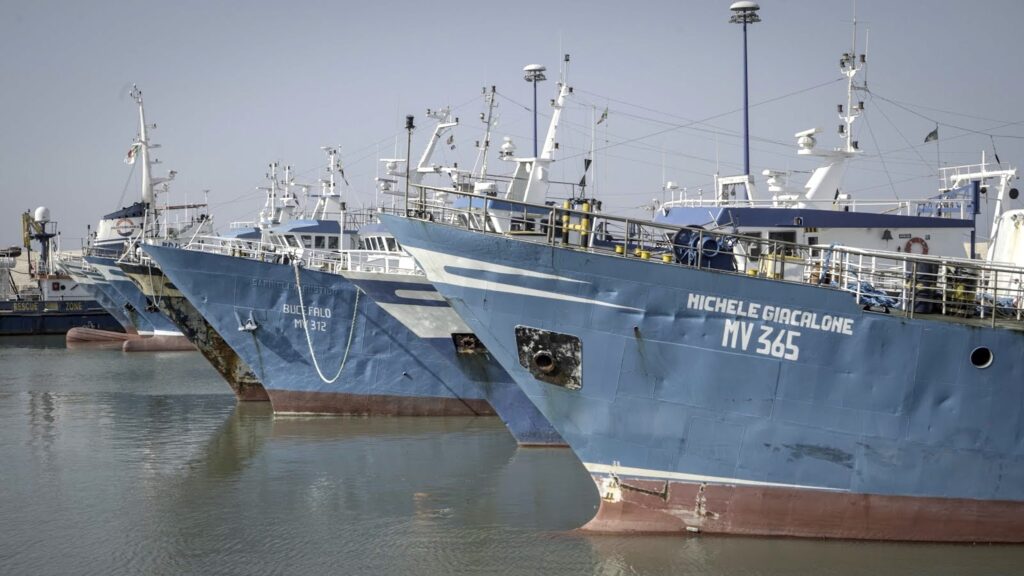
In Mazara del Vallo, in August 2022, captain and ship-owner Mimmo Asaro was venting about the situation of Mazara's prawn fishermen, whose fleet of trawlers has shrunk dramatically in recent years."'If EU laws don't kill us, we are still intent on living [on fishing]. We want to respect the sea but what bothers us is that non-EU countries do not follow the same laws. They work twelve months a year. We stop and they go on fishing. There are Italian [fish] traders from Tunisia who sell at a lower price than us," he explains from the deck of his fishing boat. "It's unfair competition. Everyone is against us."
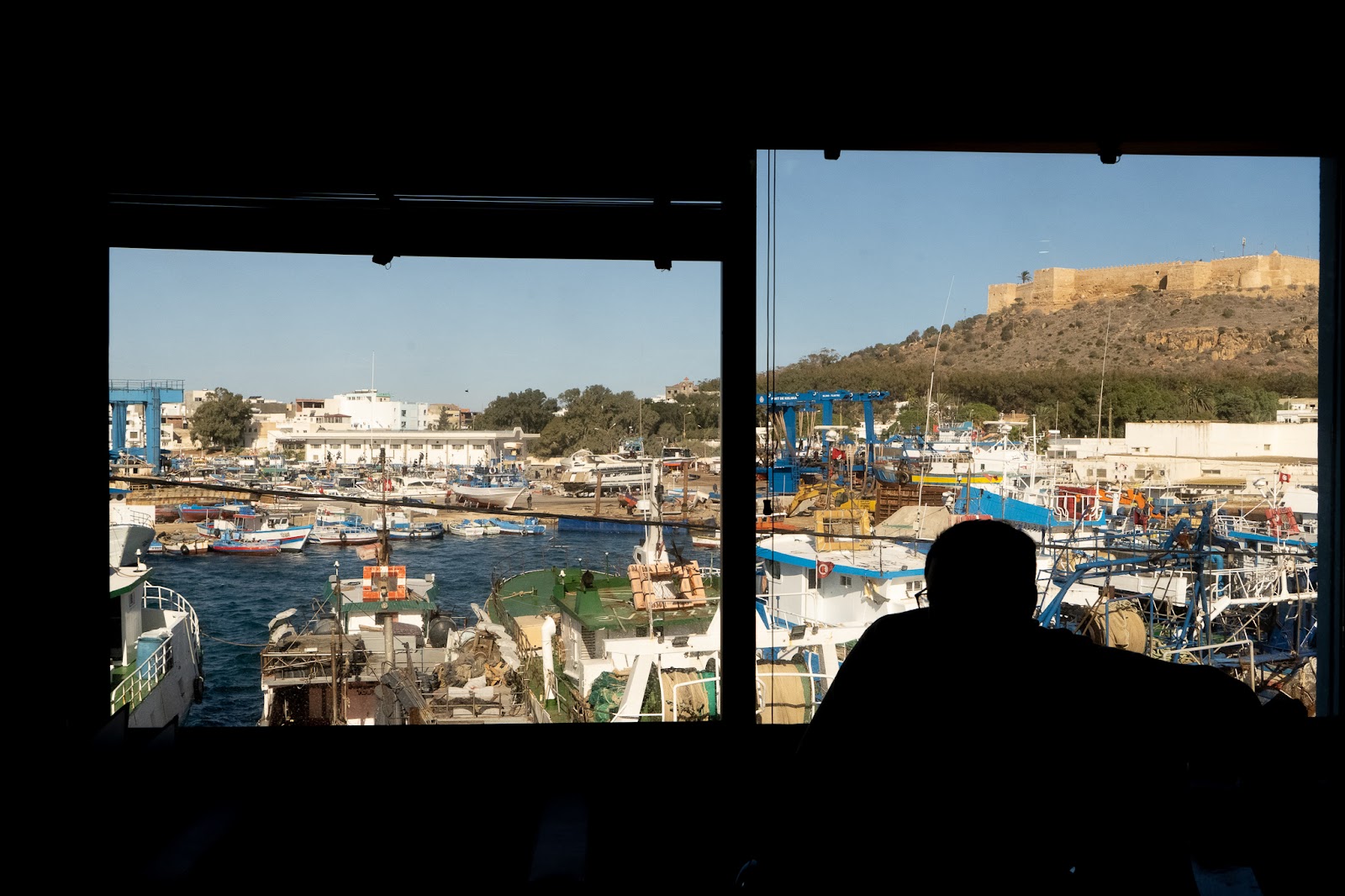
At a distance of 160 km and a few months, on the other side of the Sicilian Channel, a different view is offered by a Tunisian shipowner and fish exporter, Ashraf Hammami. He is in his office, overlooking the port of Kelibia, a coastal hub in northeast Tunisia. "The people of Mazara are complaining about the privilege they have lost. Sicily is no longer competitive for frozen-on-board fishing." On-board freezing is typical for shellfish, such as prawns. "Before, we Tunisians had to go through Mazara, where they then resold it. Now we don't, and that's why they are complaining. We’re no longer in the 1950s, when only the people from Mazara had boats. When the sun comes out, it comes out for everyone. If the fish is missing, it's missing for everyone."
Between these two entrepreneurs who compete for fish in the deep international waters of the central Mediterranean, there is agreement on one point: we need a moratorium that is respected by all. The alternative is that many marine species, including the most profitable ones, will collapse. Both men have spent their lives exploiting the sea: Captain Asaro was arrested three times in the 1990s, in the Gulf of Gabes, for trawling in Tunisian waters. In 1978, Ashraf's father brought to Tunisia the first freezer trawler, purchased in Mazara del Vallo. "We learnt the business of trawling from the people of Mazara. We exploited the same area, together," Ashraf adds.
Looking at data from recent decades (published by the FAO through the General Fisheries Commission for the Mediterranean, GFCM), it is clear that fishing has declined in Italy, just as it has increased in Tunisia. More generally, between 1970 and 2020, there was a decrease in fishing by European countries, on the northern shore of the Mediterranean – and an increase by non-EU countries, on the southern shore. Over the last decade, Europe's relative withdrawal has also reflected activism on the part of the European Commission. Under pressure from environmental NGOs and in light of alarming scientific data, the Commission has encouraged the decommissioning of fishing vessels, such as those in Mazara, in order to reduce fishing pressure and preserve fish stocks.
Despite this, the catch of marketable species in the Mediterranean is still high. 73 percent of them are overfished, i.e. taken out of the sea in unsustainable quantities. This pressure is estimated to be twice as high as the biological limits for maintaining fish stocks in the near term. In the Tyrrhenian Sea and central Mediterranean the recorded quantity of pink prawn (Parapenaeus longirostris) is well below sustainable levels, while pressure on the red prawn is increasing. The species that appears to be most threatened, according to FAO/GFCM data, is the hake (Merluccius merluccius), which in the Sicilian Channel is at an alarmingly low level. All these species are caught mainly by trawling.
A hundred years ago the district of La Goulette in Tunis was called Little Sicily due to the tens of thousands of Sicilian fishermen who lived there. The Italian fishers who work in Tunisia today are often there to take advantage of market opportunities on the EU's external borders, where controls are milder, labour is cheaper and the attitude of the authorities is more permissive. "What happened in Italy 30 years ago is happening now in Tunisia. In Mazara there used to be 300 fishing boats. Today there are 70", says Giamino Asaro (no relation to Mimmo Asaro), a Sicilian fishing-boat builder. Since 2014 he has been living and working in Mahdia, a small port just 130 km from the Italian island of Lampedusa.
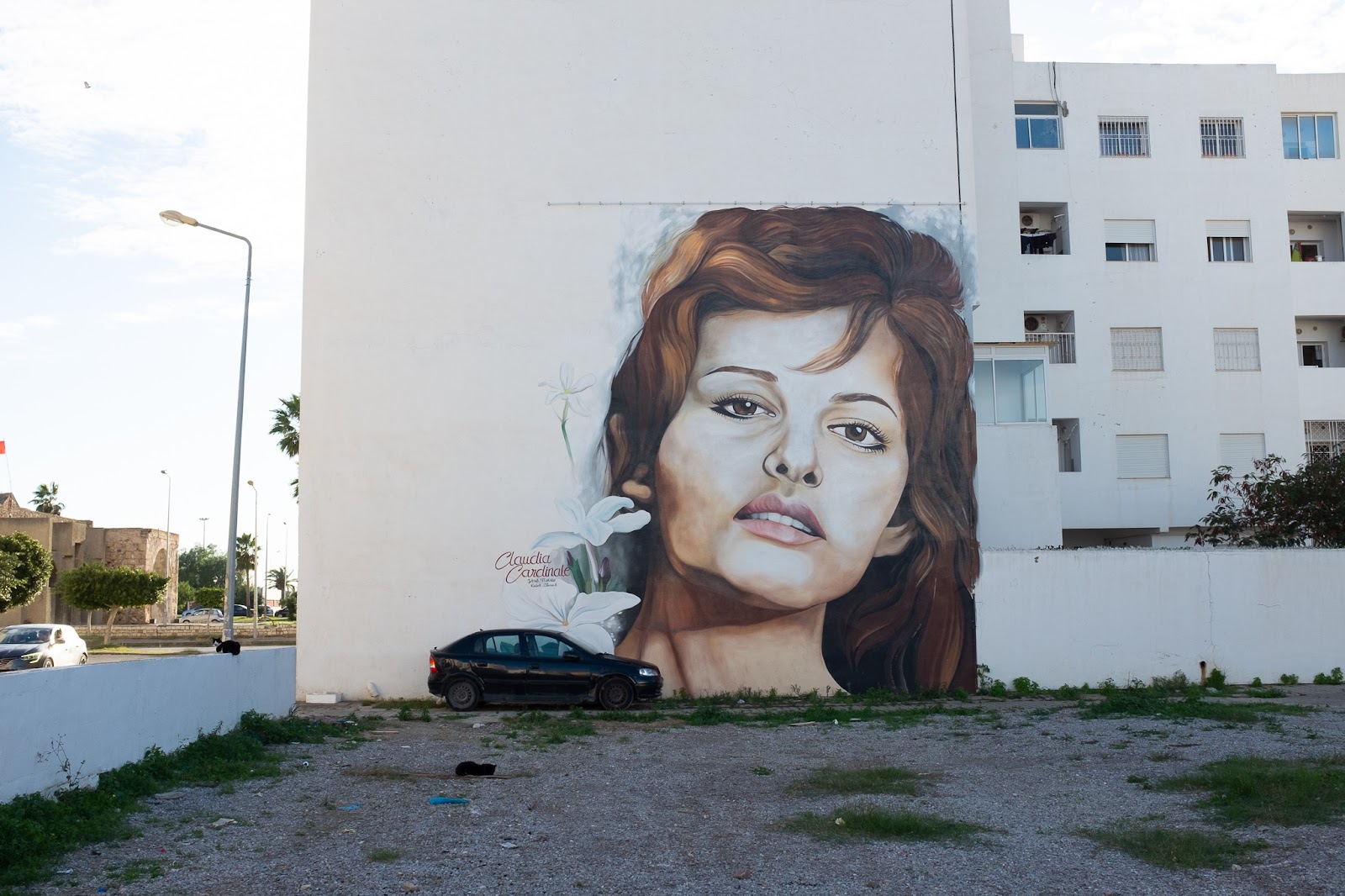
A mural featuring actress Claudia Cardinale, in the La Goulette district of Tunis. The actress's paternal grandparents, born and raised in the large Italian-Tunisian community, were fish merchants originally from Palermo. | Photo: ©Davide Mancini
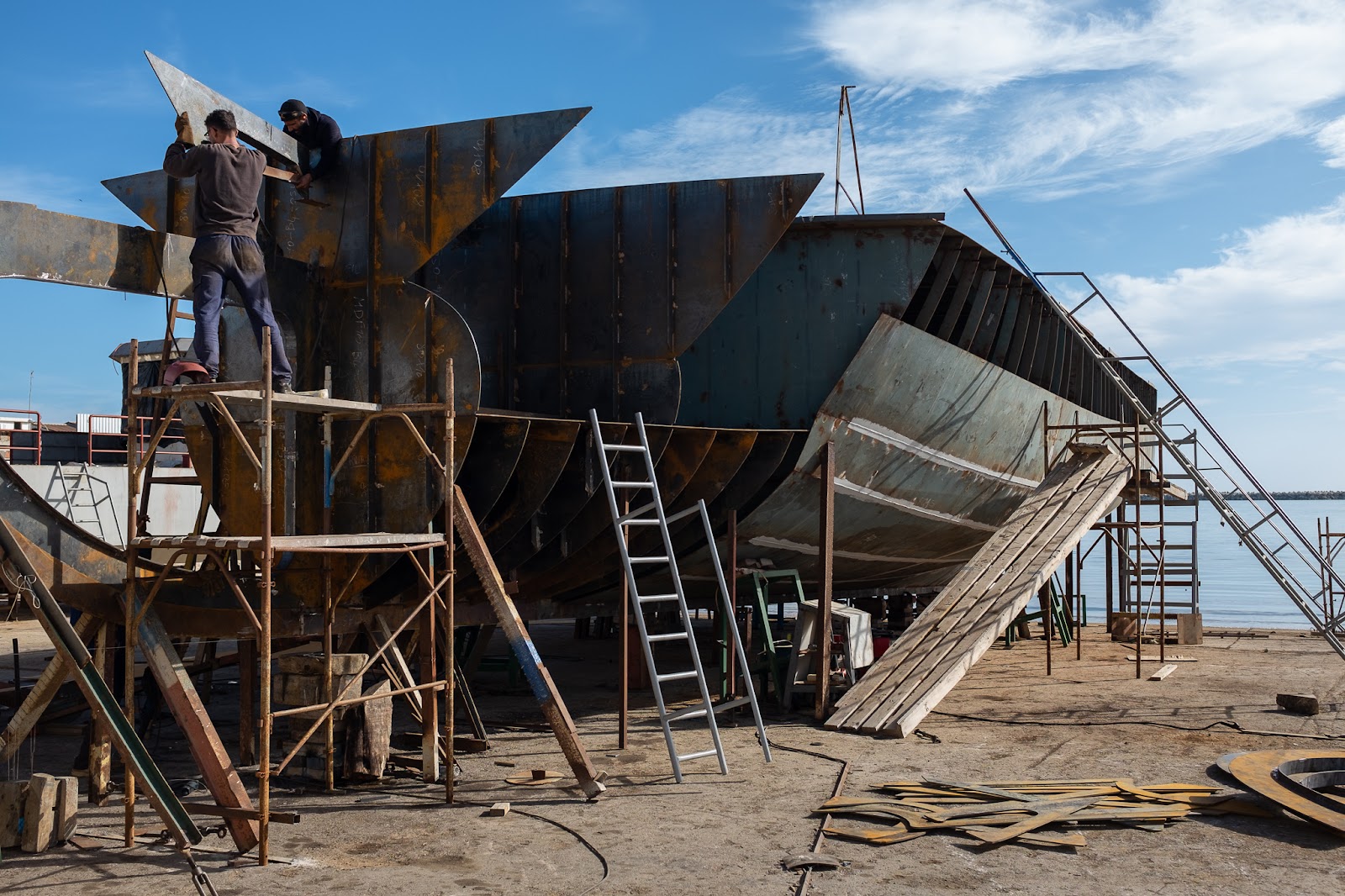
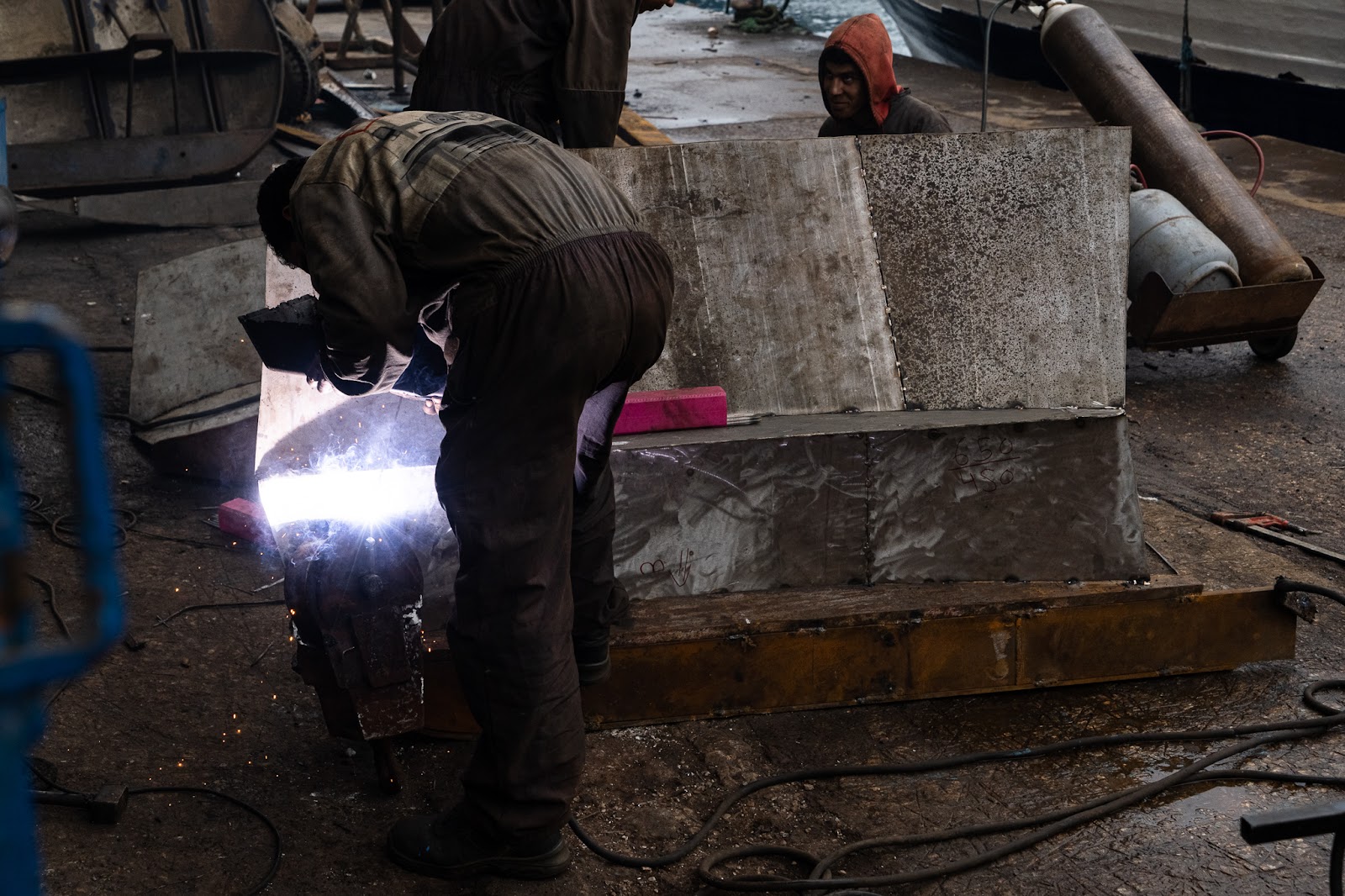
Asaro set up a shipyard together with a Tunisian partner and dedicated himself to building boats for various types of fishing. "I have built thirty boats in Mazara, and four here in Tunisia. We are now completing a 35-metre tuna-fishing boat for a Tunisian client." The metal parts of the boat come from a Genoese shipyard. Here they are assembled under the supervision of an engineer, also Sicilian, while the workers are young Tunisians and sub-Saharan Africans.
"In the Mediterranean, Tunisians, Algerians, Egyptians and Italians are all fishing. There is no real policy from the European Union. Why scrap boats just to import fish from Africa? This should not have been done. You have to try to upgrade [the sector], otherwise fishing boats in Italy will disappear and they will all move here."
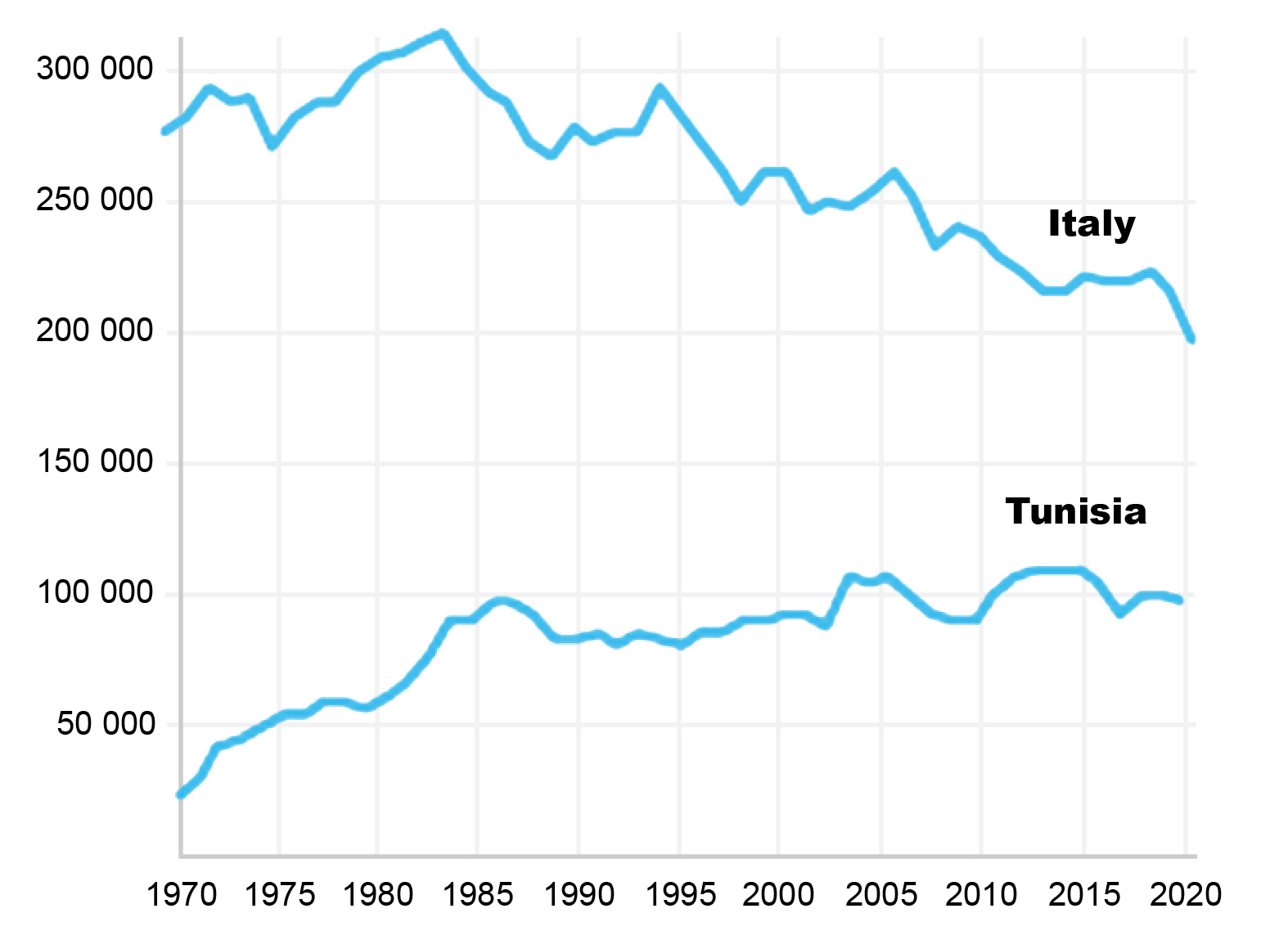
In the Mediterranean, five countries extract 64 percent of fishery products: Turkey (18.9), Italy (15.1), Tunisia (12.3), Algeria (9.1), and Egypt (8.9). However, these figures also include the Black Sea, where Turkey in particular is geographically dominant. Also according to FAO/GFCM data, the total number of fishing vessels in these two seas decreased by 2.7 percent between 2020 and 2021. As of today's data, the largest fleets by number (over 10,000 vessels) are registered in Turkey (17), Tunisia (15), Greece (14), and Italy (12).
A Sicilian fish trader (who prefers to remain anonymous) who moved to northern Tunisia in 2004 after being in the trade since the 1980s on both shores, recalls: "In Trapani there used to be a hundred boats. Today there are ten left. The destruction was done by the Sicilians. We cannot complain, we were the invaders of this area. We have been here twenty years. Mazara's dragnet has done irreparable damage." Today he acts as an intermediary between Tunisian traders and European companies, and continues to trade mainly on the Italian and Spanish markets.
"I prefer to stay here because there are too many rules in Italy," he says. Through a Facebook page, he publishes videos and photos of the daily catch in the nets of Tunisian fishermen he knows, and communicates with customers in Italy. His buyers are small restaurateurs in Naples, Ischia, and Sorrento. Among others who have their eyes on the Tunisian market are large wholesalers in the restaurant and hotel sector, such as Marr Spa (part of the Cremonini Group, one of Italy's largest food suppliers and a European leader in catering on trains such as Eurostar, with a turnover of €5 billion) and Eurofish. These companies, based in Emilia Romagna, supply tens of thousands of restaurants, wineries, hotels, and catering services throughout Italy and beyond.
Other Italian companies have outsourced the fishing and processing of anchovies to Tunisia. Examples include Iconsitt of Palermo and Delicious of Parma, historic brands whose products can be found in many Italian and European supermarkets.
Outsourcing fishing outside the EU is legal and the result of the globalised free market. But the rules introduced to ensure sustainability are not always applied in places such as Tunisia.
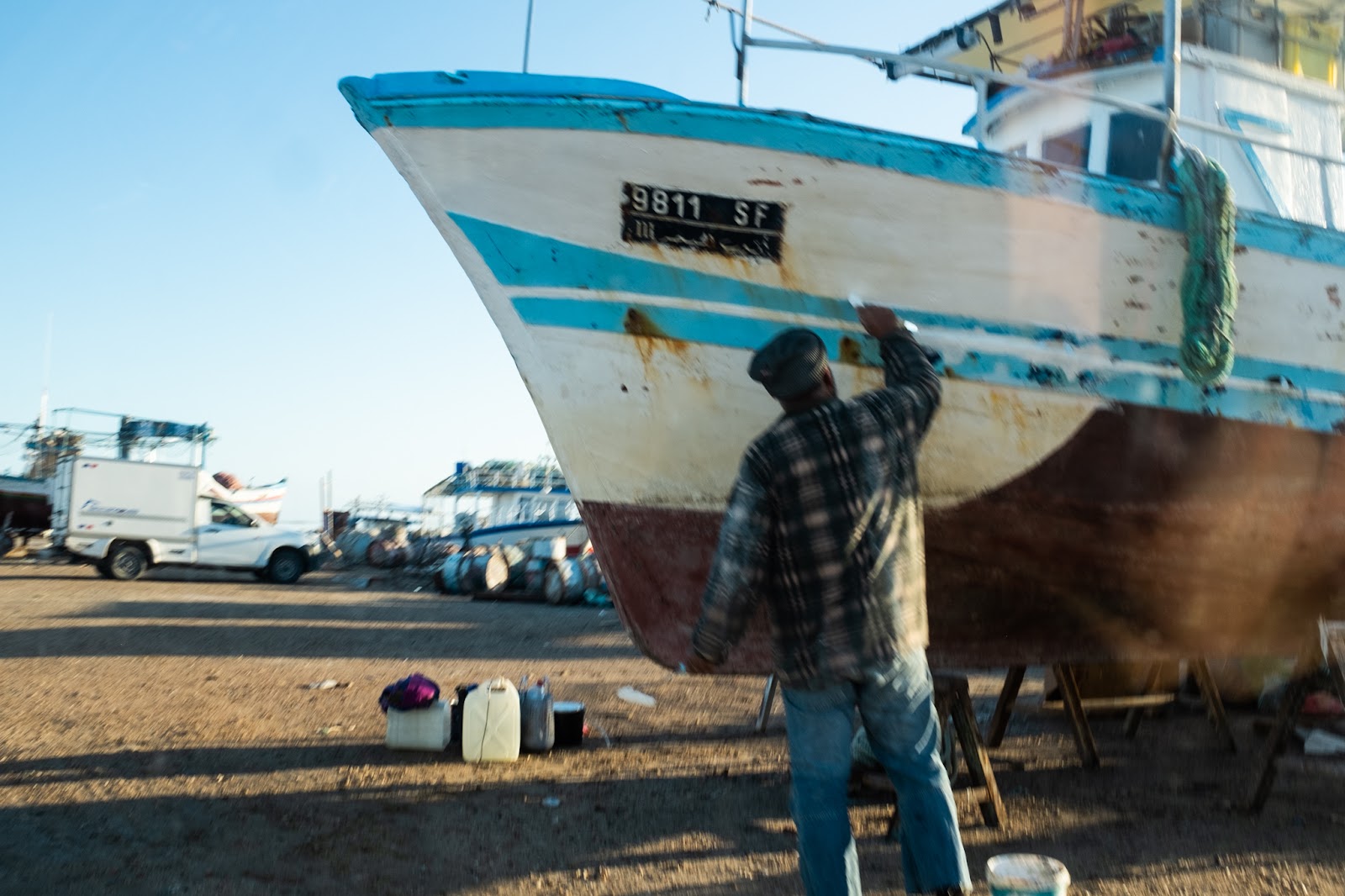
Here, more than 40,000 people – 1 percent of the population – are involved in fishing. This is partly due to the lack of alternative employment in this country going through "the worst economic crisis since independence", as its former economy minister Hakim Ben Hammouda put it. The situation has led to the exploitation of fish stocks far beyond the sustainable thresholds – indeed, into the zone of illegality. That is the case of the Gulf of Gabes, where hundreds of small fishing boats, supposedly artisanal, are conducting industrial trawls in very shallow waters. The practice is destroying the Mediterranean's largest prairies of Posidonia oceanica, a plant necessary for ensuring the health of the sea bed.
The NGOs FishAct and the Environmental Justice Foundation emphasise how products from illegal trawling are often mixed with legal catches from industrial fishing boats (this was also confirmed by several interviews carried out in the Gulf of Gabes area for this investigation). The fish arrives at exporting companies with false certificates, and is then distributed in EU countries without much further scrutiny.
The European Court of Auditors has long warned the Commission that member states' checks are not preventing illegal fish from entering the European internal market. In particular, the paper-based certification systems required to import fisheries products into the EU are considered easily falsifiable (this was confirmed by FishAct and the testimonies of Tunisian exporters). The Court emphasises the need to adopt a common database for all EU countries, in which the catch certificates submitted by exporters in each country can be verified (currently this is not compulsory). The Court has also asked the Commission to review the system of penalties applied in case of infringements. Currently, the sanctions do not seem to discourage those trading in illegally caught fish.
An investigation by the EUIUU Fishing Coalition (an umbrella NGO that aims to end illegal, irregular and unregulated fishing), concurs that EU countries' controls on fish imports are insufficient. It is certainly the case of Italy, one of Europe's main fish importers. In the period 2019-2020, Italy received more than 96,000 non-EU catch certificates and did not reject a single one due to irregularities. A rejection rate of 0% seems improbable for imports that reached 443,000 tonnes in 2020. But the remaining EU countries also recorded very few refusals of certificates for imported fish.
A foreign exporter, who has lived in Tunisia for many years and prefers to remain anonymous, recounts: "Traceability is there, but it is badly done. It is all theatre as far as documentation is concerned. There are not enough veterinarians at the ports to issue the necessary catch certificates. I can imagine the EU turning a blind eye to a situation like Tunisia. Why turn off the tap? They let it be done here because they are not prepared for the situation. Here there are a lot of marinas, a lot of artisanal fishing. It's complicated..."
"But the solution is not Brussels sanctions”, argues the exporter. “A paternalistic approach does not help. I have been saying for years that if you let the species rest, without too much pressure, then we can all gain. But it seems impossible because the small fisherman replies, 'And what do I feed my children tomorrow? Do I tell them to wait a month?'"
As in the opening credits of Luchino Visconti's film, "It is the same story that has been going on in the world for years, in all those countries where men exploit other men." However, here there is the added factor of a shared marine ecosystem that can no longer cope with human pressure. And of a situation where the responsibility of the exploiters is diluted right along the supply chain – all in the name of the free market.

Supported by Journalismfund Europe
Do you like our work?
Help multilingual European journalism to thrive, without ads or paywalls. Your one-off or regular support will keep our newsroom independent. Thank you!