









Select a language
The blow must have struck the plainclothes policeman squarely in the face. His eye is black and swollen, and blood runs down his cheek. Serbian President Aleksandar Vučić is in no doubt who left the man bruised and bleeding on the sidelines of an anti-government protest in March 2025: demonstrators armed with knuckle dusters.
Shortly afterwards, however, videos appearing online told a different story. In the videos, the plainclothes police officer runs into a line of uniformed colleagues, then collapses. Independent media outlets reviewed the videos and pieced together what had happened. Further investigations showed as well that it was a colleague who had struck the officer, not a protester.
The case has become an object lesson in the role of independent media in Serbia. Who, then, will be left to keep the government of Aleksandar Vučić in check?
More and more Serbs are asking themselves these questions. This is not about what truly happened on a single evening, but about something much bigger and more fundamental. Conditions for Serbia’s independent press have deteriorated dramatically in recent years.
Journalists are being spied on, threatened and attacked, while media outlets are coming under political and economic pressure. In the latest Press Freedom Index by Reporters Without Borders, the country has slipped to 104th place – the lowest ranking in the Balkans. Never before in the history of the index, which dates back to 2002, has the country performed so poorly.
How did it ever come to this?
Pepper spray and broken bones
Few know the current situation for journalists in Serbia better than the Independent Journalists’ Association of Serbia (NUNS). NUNS is the voice of some 2,500 journalists in Serbia and represents their interests. “We always lock the door these days,” says Marija Babić. “For safety reasons.”
Never before, says Marija Babić, have there been so many cases of violence against journalists – attempts at intimidation, threats and physical assaults. “Last year we documented 380 cases, which is a record.
But there are likely to be many more; we’ve only recorded the most serious ones. We didn’t have time for any more.” The true number of cases is also thought to be considerably higher.
“We realised that right now we need lawyers far more urgently than we need people advancing journalism,” adds her colleague Rade Đurić, shaking his head vigorously.
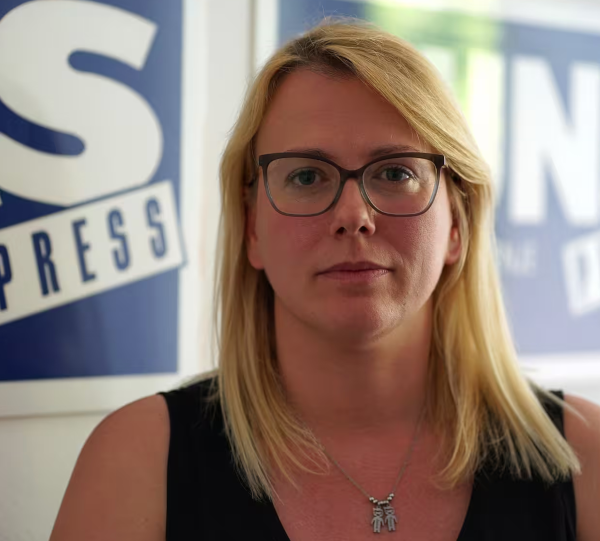
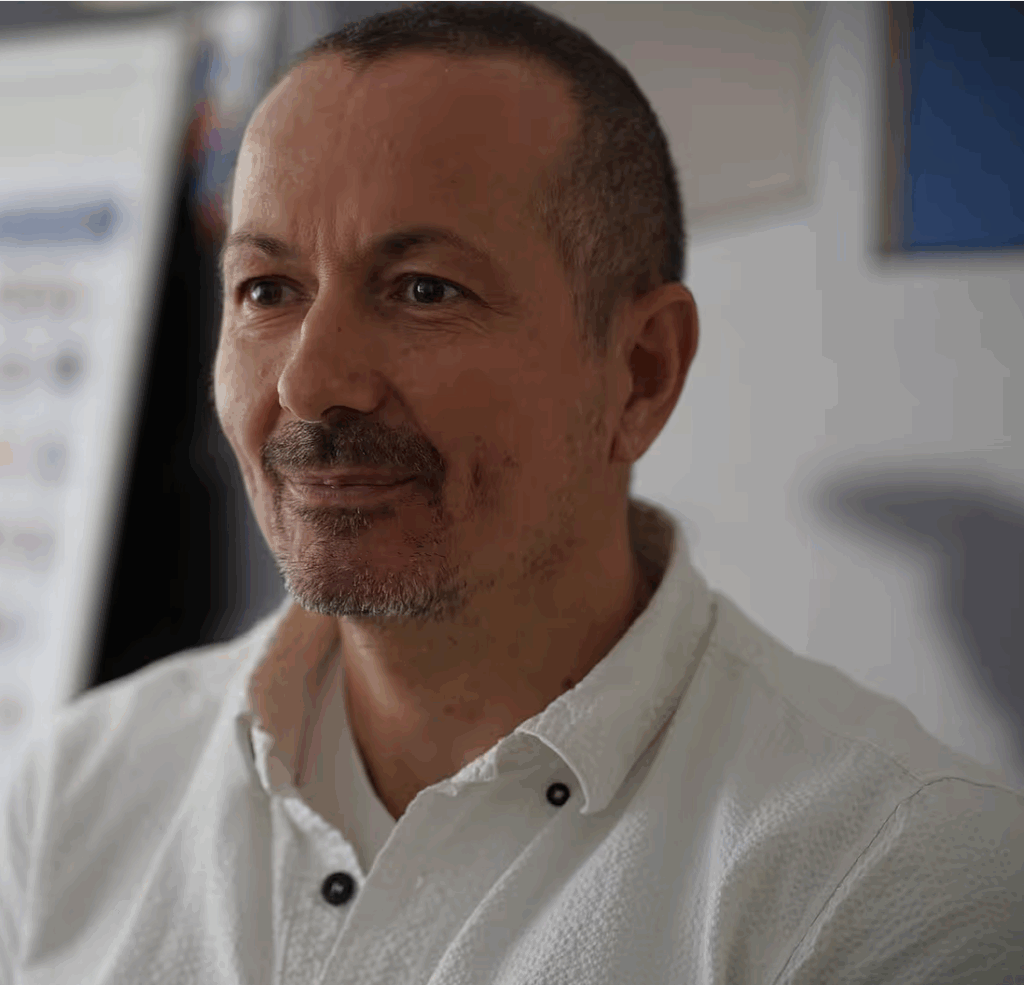
Three years ago, NUNS set up an emergency helpline. Any journalist who feels threatened or is seeking legal advice can call it at any time. Since then, hardly a day has gone by without a call. On some days, Babić and Đurić receive dozens of calls, for example in connection with the local elections at the start of 2026.
In March, a handful of municipalities in Serbia elected new councils. Many in the country regarded the election as a barometer of public sentiment. Given its importance, the vote was followed closely throughout Serbia. In the municipalities themselves, the tensions spilled over into violence.
In Bor, in the east of the country, unknown assailants ambushed a group of journalists near polling station 34 and began beating one of the journalists. When they realised they were being filmed by another journalist, they attacked him too. He fled, but the attackers chased him into a nearby river and continued beating him, breaking his cheekbones. Both journalists later required hospital treatment.
A report by the Reuters Institute for the Study of Journalism concluded that there had been such an unprecedented level of violence against journalists during the local elections “that Serbia has become one of the world’s most dangerous places [for journalists] outside active war zones.”
Media-bashing from the top
This violence does not start on the streets. It starts much earlier.
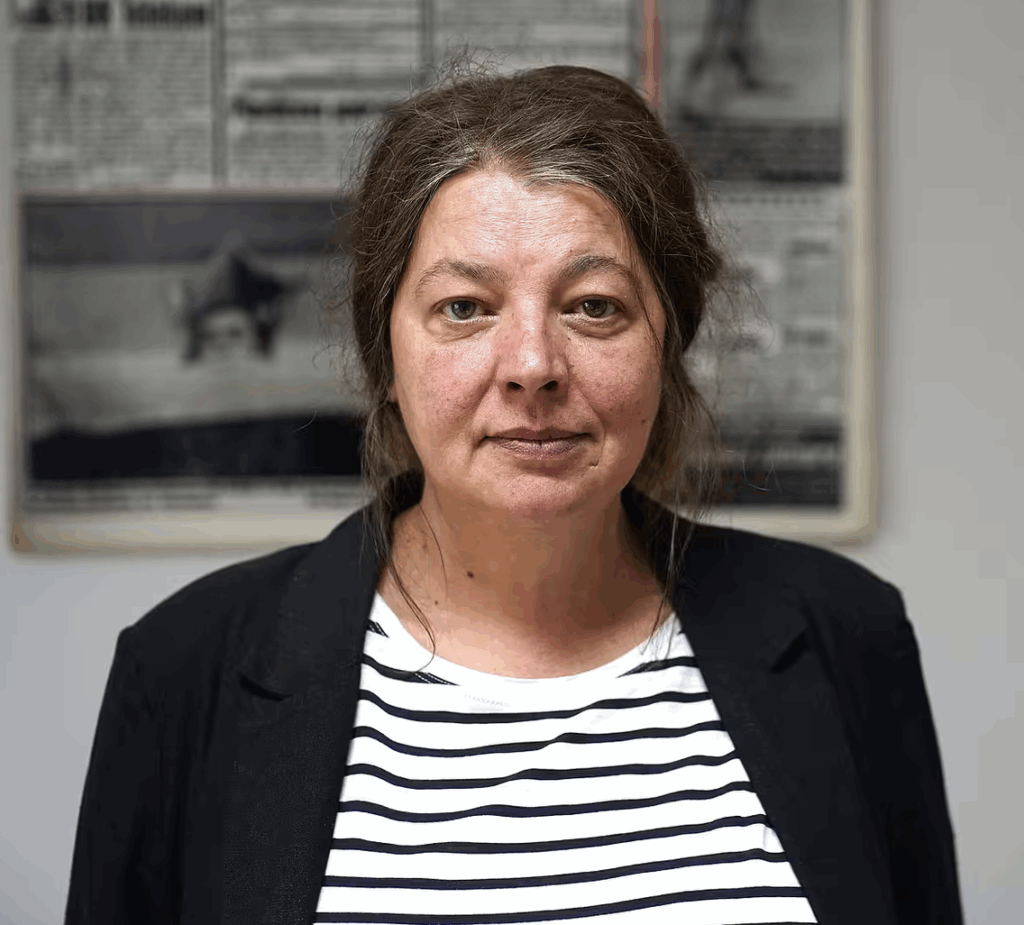
Every month, the Slavko Ćuruvija Foundation publishes a report on the political climate towards journalists. Time and again, politicians stir up hostility against journalists, insult them and attempt to discredit their work by any means necessary. Pro-government media repeatedly take up these attacks and, in turn, target media outlets critical of the government.
The Ćuruvija Foundation monitors just three high-circulation tabloid newspapers and the public statements of ten leading politicians. Yet over 100 threats against journalists are recorded every month. “If we had the resources to track everything that has been said, there would certainly be thousands,” says the director, Ivana Stefanović.
Vučić has made the fight against critical journalists a top priority; last year, for example, he pressed the public prosecutor’s office to investigate critical media outlets more aggressively. This is one reason why Reporters Without Borders has labelled him an “enemy of press freedom”.
Other high-ranking politicians describe journalists as “terrorists”, “insects” and “Nazis”. On several occasions, journalists have even been accused of taking part in a plot to kill the President and his family.
“By attacking journalists in this way, politicians are systematically creating a hostile atmosphere towards journalists,” says Stefanović. “In doing so, they normalise hatred towards reporters, particularly those who are critical in their reporting.”
And the notion “that journalists always work for whoever pays them, never in the public interest” annoys Stefanović. In the latest survey by the Reuters Institute, just 22% of Serbian respondents said they trusted the media – one of the lowest ratings in the world.
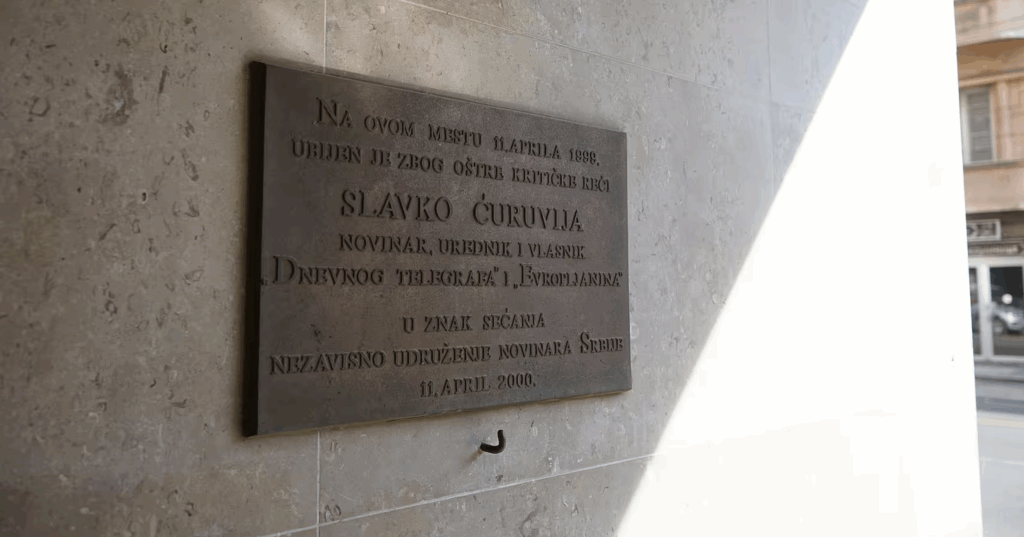
The foundation, which monitors this development in Serbia, is named after the journalist Slavko Ćuruvija, who was murdered in 1999. Ćuruvija’s death became a symbol of the erosion of press freedom in Serbia.
It took twenty years for the alleged perpetrators to be convicted. In 2023, the men were acquitted again on appeal. To this day, no one has been convicted of the murder in a final judgment.
This impunity for crimes against journalists continues to this day, says Stefanović. In 2025, the public prosecutor’s office launched investigations into 140 cases, but only three have resulted in convictions.
Despite the many parallels with the 1990s, there is still one crucial difference: no journalists have been killed so far. “But given the current climate, that may only be a matter of time.”
Firmly on the government line
Some journalists, however, remain largely able to work without hindrance.
Two public broadcasters offer television and radio programmes. Both are regarded as staunchly pro-government and are funded through a broadcasting fee, advertising and state funding. Experts estimate that this leaves around 90% of the country’s media under state control.
“They are part of a system that the government has set up to intimidate anyone who thinks differently or asks the government uncomfortable questions,” says Ivana Stefanović. Anyone who publicly voices criticism often becomes the target of a smear campaign by state-aligned media.
This is what happened, for example, to the student Nikolina S. Arrested at a protest, she later reported that a police officer had struck her on the body and head and had also threatened to rape her – allegations denied by the Ministry of the Interior.
Public outrage over the case, however, eventually became so great that even some state-aligned media outlets picked up the allegations. They illustrated their coverage – with a nude photograph of the young woman. Nikolina S. filed a complaint. But by then, the images had already spread out across the Internet and could no longer be taken down.
Although they enjoy significantly less public trust than independent media, pro-government media have become an important tool in the hands of the state to influence public opinion. The government therefore favours these outlets, offering them exclusive access to interviewees and information. It also supports them financially as best it can.
The state supports “its” media
It is mainly pro-government media that benefit from generous state advertising funds. Even private advertisers often avoid placing adverts in independent media for fear of possible negative repercussions on their businesses.
Added to this is an opaque patchwork of national and regional media funds, which are awarded through public tenders.
These funds are intended primarily to support content that serves the public interest. Every year, funding totalling around 1.5 billion dinars – equivalent to approximately 13 million euros – is awarded through various calls for proposals across the country.
In practice, however, the funds have become yet another tool that the government uses to support precisely those media outlets that provide coverage to its liking. Last year, for example, most of the money in Belgrade went to the very tabloid media outlets that had most frequently breached the press code.
At times, the public tenders are specifically tailored to pro-government media from the outset. For instance, an investigation by Balkan Insight in February revealed that a tender for the province of Vojvodina specified the exact number of digital cameras, video cameras and drones that applicants were required to have.
Coincidentally, the sister of Nemanja Starović, Minister for EU Integration, owned precisely these cameras. She was the sole bidder and, through her news portal Gradske.info, was subsequently awarded the contract for the project.
The struggle of local and independent media
Local media, in particular, “are often just keeping their heads above water,” says Ivana Stefanović.
This constant struggle for survival has pushed many other issues into the background for local journalists. A lawsuit against an editorial team can spell ruin, since there is not even enough money to cover court costs. “In Serbia, it’s very easy to be sued for all sorts of things,” warns Rade Đurić of NUNS.
In recent years, the journalists’ association has observed that lawsuits are sometimes deliberately used to silence critical editorial teams – so-called Strategic Lawsuits against Public Participation, or SLAPPs for short.
It is no secret that the last remaining independent media outlets, which somehow manage to hold out despite economic pressure, political interference, unequal market conditions, lawsuits and attacks, are a thorn in the government’s side.
Last summer, the first signs emerged that the Serbian government was seeking to extend its control over the last remaining independent media outlets. At that time, an investigative news outlet published a leaked conversation between the CEO of the state-owned Telekom Srbija, Vladimir Lučić, and Stan Miller, CEO of the United Group, which at the time still owned various independent media outlets, including N1 and NovaS.
The conversation also suggests that President Vučić was demanding that the head of United Group’s media division be replaced. “I understand that the President has phoned you and is very upset,” Miller can be heard saying in the excerpt. “I will do everything I can to help you.”
United Group confirmed the authenticity of the conversation but emphasised that the excerpts had been taken out of context. The head of the media division mentioned in the conversation was, however, indeed sacked a few months later.
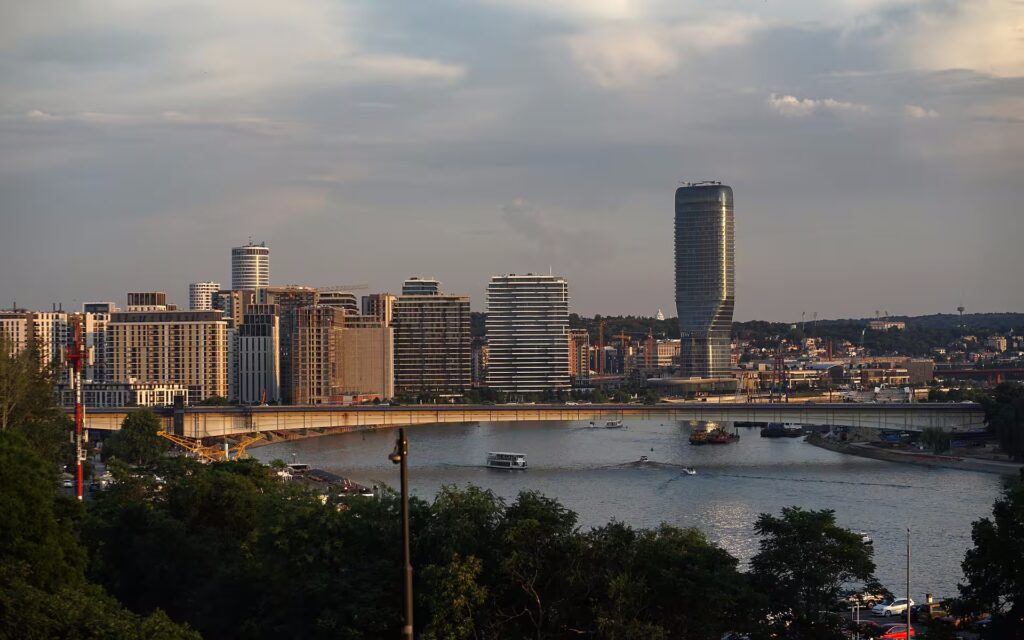
And after some back-and-forth, United Group also sold its media outlets critical of the government at the end of May. The new owner was the investment group Alpac Capital, whose head is regarded as a close confidant of Hungary’s former Prime Minister Viktor Orbán.
The new owners describe the sale as a normal business decision.
“We can see from Vučić and his attempts to gain control of United Group that he will not tolerate any critical voice, however small that voice may be, however limited its reach and influence,” says Ivana Stefanović. “He is waging a total war against the media.”
“Even on the most critical issues that affect people’s everyday lives – health policy, inflation, corruption – they are then left without information they can trust. This changes how they engage with the political process, how they vote, and provides fertile ground for all kinds of manipulation.”
Marija Babić, Rade Đurić and Ivana Stefanović are not giving up. They believe the government has underestimated one important factor – one that continues to surprise them and gives them hope: that for many journalists, journalism is not just a profession, but a calling.
“The positive impact that young journalists in particular are having on current reporting is incredible. They manage to capture moments that the major media cannot. In doing so, they show the world what is really happening,” says Babić.
And even small media outlets are refusing to give up. Some local journalists now have other jobs to make ends meet – but they continue to run their news sites after work. “Sometimes we really don’t know how they do it,” says Đurić. “But they’re surviving.”
As long as there are journalists like this who carry on despite everything they are up against, their supporters won’t give up either. “We’ll fight for them,” says Đurić.
👉 Read the original article on Jádu.
🤝 This article is published in partnership with Perspectives, a project and label co-funded by the European Union that stands for authentic, trustworthy, independent, and multi-perspective journalism. Led by the Goethe-Institute and implemented together with newsrooms from Central and Eastern Europe, Perspectives is committed to credible content that reflects Europe’s complex realities through diverse voices and viewpoints. Views and opinions expressed are those of the author(s) only and do not necessarily reflect those of the European Union or the European Commission. Neither the European Union nor the granting authority can be held responsible.

O
Do you like our work?
Help multilingual European journalism to thrive, without ads or paywalls. Your one-off or regular support will keep our newsroom independent. Thank you!