













Select a language
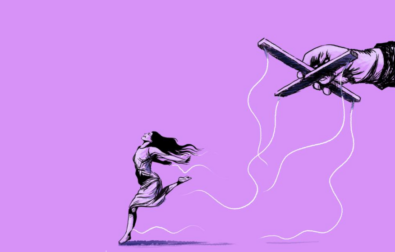
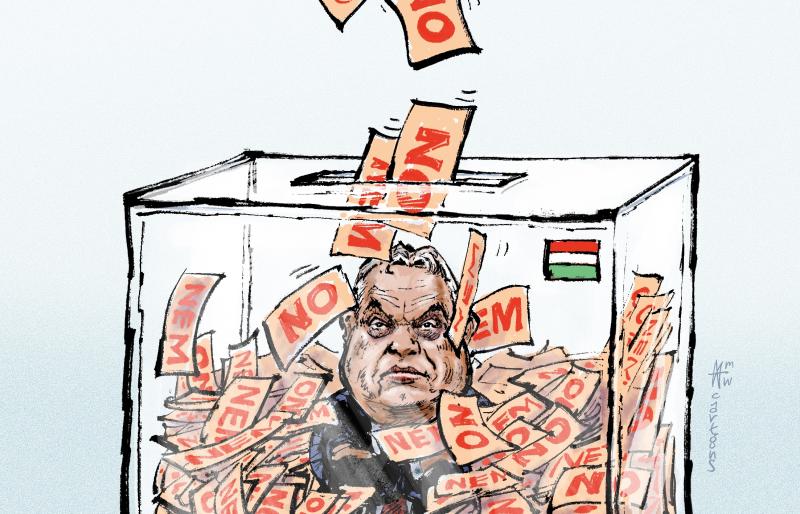
Prime Minister Viktor Orban’s defeat was due to multiple reasons, but the Hungarian independent press played a significant role. Since 2010, in a media environment largely dominated by the government, it has tirelessly fought to offer the “best available version of the truth,” to deconstruct the official “alternative reality,” and to defend freedoms and the rule of law.
This situation is reminiscent of other historical moments of liberation and liberalization around the world, such as in Spain at the end of the Franco era, in Chile during the final years of Pinochet’s rule, or in Mexico during the decline of the Institutional Revolutionary Party. Suddenly, minority media outlets, often still persecuted by the government, dominated the information landscape and became the essential reference point for a decisive segment of the elites and public opinion.
“Hungary's independent media has already won the election,” headlined the Euractiv website on April 10. “Independent and investigative websites like Direkt36, to Partizán, Telex and 444 have brought out a steady stream of scandals over the past weeks and months, proving that daring, critical journalism is far from dead, even in Hungary, where the ruling Fidesz government exerts tight control over the press” noted Eddy Wax. A few days earlier, Hungarian journalist Akos Toth had emphasized, in an article for the Project Syndicate, that independent media had “helped fuel the opposition's rise ahead of April's election.”
Throughout his 16 years of absolute rule, Viktor Orbán has been denounced for his attacks on press freedom. In the name of its electoral majority and the absolutist legitimacy it claimed to derive from it, the Fidesz party had domesticated the public service media, taken control of the regulatory authorities, deprived “rebel” radio stations of airtime and promoted the acquisition of “disruptive” media by companies close to it, in particular through the KESMA foundation (which brings together nearly 500 national and local media).
According to Reporters Without Borders, the government controlled nearly 80% of the media landscape. It had also tightly muzzled public information, depriving citizens of their right to be informed on essential matters of public interest. Non-aligned journalists were regularly subjected to pressure, including abusive legal proceedings, surveillance, harassment on social media by regime supporters, and accusations of harming the interests of the nation and the state.
As recently as the end of March, according to the European Federation of Journalists, Szabolcs Panyi, one of Hungary’s most prominent investigative journalists, was targeted by the government and accused of “espionage” and “collusion with foreign intelligence services” after revealing “Russian interference in Prime Minister Viktor Orbán’s election campaign.”
However, as RSF points out, “in various segments of the national market, independent media outlets such as the television channel RTL Klub, the YouTube channel Partizán, the daily newspaper Népszava, the weekly magazine HVG, and the news websites 24.hu, 444.hu, and Telex had maintained strong positions.” In fact, under Fidesz, Hungary had become, in a way, the model of an “elective,” “illiberal,” or “majoritarian” dictatorship, an avatar of authoritarianism in which a margin of dissent is tolerated as long as it does not threaten power, thus allowing the authorities to falsely claim to be democratic. This is the rhetoric we were able to observe closely during a Committee to Protect Journalists (CPJ) mission to Budapest in 2014.
The victory of the Hungarian democratic opposition demonstrates once again the role of these liberal media outlets in the conquest or reconquest of democracy
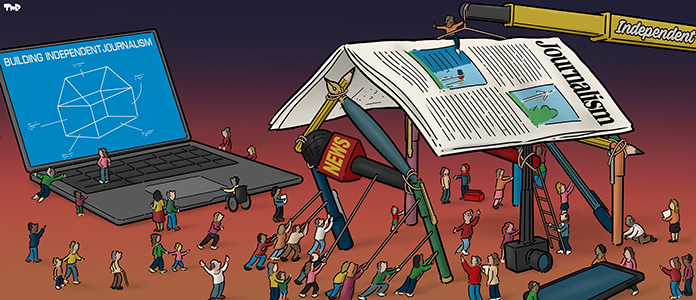
A segment of Hungarian journalists never gave up and remained steadfast in their efforts to inform the public, playing a crucial role in compensating for the loss of autonomy of "checks and balances" institutions. Their representatives also regularly spoke about their struggles in international fora, particularly at conferences organized by press freedom associations. Their revelations about nepotism, the alliance with Russia, and Fidesz's active participation in the "reactionary International" helped maintain pressure on the government and provided reliable information about Hungary's violation of its European obligations.
“This campaign showed the importance of the free media,” said Martón Kárpáti, the president of the board of Telex, Euractiv’s partner. “If you had only just read or watched the pro-government websites or outlets then you would have no idea about what’s going on in the country,” he said.
Hungary has thus become part of the history of "political transition journalism." In a number of countries around the world, the civic-driven press played a crucial role during the final years of authoritarian regimes. For example, at the end of the Franco regime, left-wing (Triunfo, Cuadernos para el dialogo) and center-left (Cambio16) weeklies gradually undermined the government's control over information.
In Chile, during the 1980s, newspapers like La Epoca and Fortín Mapocho, and magazines such as Análisis and Cauce created a media ecosystem conducive to the democratic transition. In South Africa, during the twilight of apartheid, the Rand Daily Mail, the Weekly Mail & Guardian, The Sowetan, the Vrye Weekblad, and Donald Woods' Daily Dispatch, (immortalized in the film Cry Freedom) came to dominate the battle of facts and narratives, paving the way for the establishment of a non-racial democracy. Journalism as a key player in democratization has been particularly well documented in Mexico (and analysed by media experts)(1).
The victory of the Hungarian democratic opposition demonstrates once again the role of these “liberal” media outlets (in the Anglo-Saxon sense of the term) in the conquest or reconquest of democracy. Supporting them is not only an act of solidarity, but also a defense of the values and therefore the interests of a “certain idea of Europe.”
One of the challenges of the post-Orbán era will undoubtedly be restoring media freedom and pluralism in Hungary. Journalist organisations have already established a roadmap, such as the CPJ (New York) and the International Press Institute (Vienna), both of which have defined ten key steps for restoring media freedom. The European Federation of Journalists has also called for the new political leaders to restore media pluralism.
(1) These two following books are enlightening essays on “vanguard” journalism. Chapell H. Lawson, Building the Fourth Estate, University of California Press, Berkeley, 2002; Sallie Hughes, Newsrooms in Conflict. Journalism and the Democratization of Mexico, University of Pittsburgh Press, 2006.
👉 Read this post on Jean-Paul Marthoz's Substack
Do you like our work?
Help multilingual European journalism to thrive, without ads or paywalls. Your one-off or regular support will keep our newsroom independent. Thank you!


