











Select a language
With a low voice, hunched shoulders and glazed eyes, Gurjinder Singh recounts fifteen years of exploitation in the kiwi fields of Latina province in Italy’s Lazio region. Sitting in a bar in the central square of Cisterna di Latina, he has just finished work.
Gurjinder is fifty years old and has worked for several firms in the area, earning between €5 and €6 per hour. In the smaller ones he never had a contract and received his pay in cash at the end of the day. Recently, he worked in a company where over 70 workers were employed. They were supervised in groups by foremen who often insulted them and threatened to beat them up. His is not an isolated case.
Exploitation in the kiwi chain
In 2021 Italy exported 320,000 tonnes of kiwi fruit to fifty countries, for a turnover of over €400 million. This made it Europe's leading producer and the third in the world after China and New Zealand. Lazio is Italy's top region for growing the "green berry". Globally, one third of all retail-marketed kiwis come from the multinational Zespri. Founded in New Zealand, it is a market leader and present in six countries. In Italy alone it accounts for almost 3000 hectares of fields, plus hundreds of local producers and thousands of labourers.
It is difficult to know the exact number of farm workers employed in the kiwi harvest because "they often work illegally," explains Laura Hardeep Kaur, a trade unionist with FLAI CGIL in Latina province. Most of the labourers are Indians from Punjab, of Sikh religion.

According to Italian social-security data, there are approximately 9,500 Indian labourers in Latina, with more than one million days registered in fixed-term contracts. Marco Omizzolo, a migration specialist at La Sapienza University in Rome, estimates that there are about 30,000 Sikhs in the area. He is under protection after receiving threats for his efforts to fight the "caporalato" system – a designation for abusive labour – in Lazio's Agro Pontino (Pontine Marshes). Included in the estimate are those without residence permits, residents in other provinces, and those who have recently arrived but have yet to be counted.
From more than fifty interviews conducted for this investigation in Italy and in India, between May and December 2022 – with workers, trade unionists, researchers, Indian families, Punjab travel agents and intermediaries – a picture emerges of singularly undignified working conditions. It is one of starvation-level wages, irregular contracts and the constant threat of violence. There is also the never-ending blackmail linked to the residence permit, which is impossible to renew without a company providing a formal job contract.
Wages are never more than €7 per hour, and tend to be lower, averaging between €5 and €6 – well below the approximately €9 gross per hour established by the provincial contract as the basic wage of an agricultural worker. The stratagem of so-called "grey work" is often used – the payment of wages partly regularly and partly in the black. It is a widespread system among entrepreneurs in the area, enabling them to pay lower social levies and taxes while maintaining a formal regularity that makes controls more difficult. Other abuses also seem commonplace: dismissals without justification, inadequate sanitary facilities, excessively short breaks, and a lack of – theoretically compulsory – personal protective equipment such as gloves and masks.
The business where Gurjinder Singh worked for three years sells kiwis to Zespri. In the fields, the "caporale" (supervisor) filmed him three times while he stopped to drink or because something got into his eyes. The videos served – at least that's what the supervisor threatened – as "proof" of his inefficiency, to be handed over to the head of the company. The "warning" could also serve to justify not paying other workers their full wages.
Stories of abuse by bosses and supervisors are frequent among the area's Sikh community. There have even been cases of punitive attacks on labourers who have tried to rebel. Some have been hit by cars as they cycled to the fields, others robbed and beaten up, or – on at least one occasion – threatened in front of their home with a shotgun.
Asked why he did not leave, Gurjinder Singh replies: "I had no choice, I had to earn for my four children and my wife. They stayed in India, I haven't seen them for thirteen years."
The responsible parties
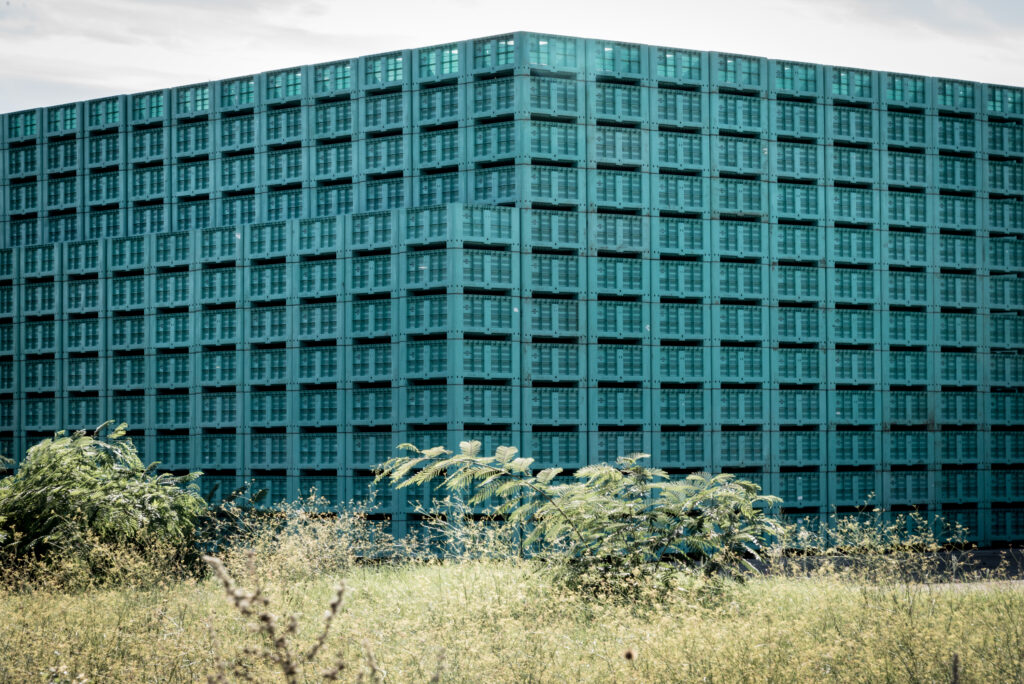
From September to November, crossing the province of Latina means immersing oneself in a landscape of kiwi fields and coloured crates, called "bins" in the parlance. Each colour of bin corresponds to a Producers' Organisation (OP), cooperatives which take charge of the kiwis destined for the foreign market. Thirteen of these have a licence to sell to Zespri.
The multinational is best known for its yellow-fleshed variety, the "SunGold", the most widely planted in Agro Pontino (69%, the rest being the green variety). Zespri is the owner of the international patent of the same name and only allows its plants to be cultivated on the basis of a contract. It determines the number of hectares and licences for cultivation, distributing them to consortia or cooperatives which, in turn, seek out farmers. The local producers do not pay for the licence, but are required to become members of the cooperatives that bear the costs of the packaging.
From the fields the kiwis are taken to the large warehouses of the OPs and then to the factories. There they are packaged and become Zespri kiwis: the multinational company's label is the first stage in their marketing across Europe. The chain is surprisingly complex. Marco Omizzolo describes it as a kind of "entrepreneurial treacle", where there are those who produce and those who sell to another producer, who in turn sells to a brand.
The system, however, clearly works. Between 2021 and 2022, Zespri had a turnover of €2.5 billion, with more than 200 million boxes of kiwi fruit sold worldwide. Helping the expansion in Lazio was the climate, which is almost identical to New Zealand's, despite changes due to global warming. While in New Zealand it is spring, in the northern hemisphere it is autumn, and vice versa: for the multinational this means year-round production and profits.
In 2019 there were 2,700 hectares of SunGold kiwis in Italy. The goal, the company announced, is to have 5,400 hectares by 2025.
Zespri not only distributes the licences, but also sets the technical characteristics of the kiwis: weight, colour, dry matter – sugars, carbohydrates and starch – and hardness. Enforcement is strict, requiring cotton gloves and delicate, precise handling. It is essential not to damage the fruit when placing it in the boxes.
There have even been cases of punitive attacks on labourers who have tried to rebel. Some have been hit by cars as they cycled to the fields, others robbed and beaten up, or – on at least one occasion – threatened in front of their home with a shotgun
The care taken with the product, however, contrasts with that taken over the farm workers. "They want us to work fast, they shout to hurry up. When they give the money, however, they always take a few hours out of the pay packet and don't pay for all the days worked," reports Amandeep Singh, who was formerly employed in Cisterna di Latina in a business that produces kiwis directly for Zespri. He has been in Italy for 20 years and says he has always been treated badly. He accepted salaries as low as €4.50 per hour in order to have a contract and be able to renew his residence permit. The days could last ten hours, for seven days a week – far beyond the limits imposed by the provincial contract.
"They would write €600-700 in my pay envelope and then give me €200-300 off the books, taking away three to seven hours of work," he explains.
The "entrepreneurial treacle"
Within the kiwi "entrepreneurial treacle", traceability sinks to the bottom: "When there are so many producers who bring the harvest to the big companies, there is a quality control system, but not much attention is paid to how the small producer treats the workers," comments Giovanni Gioia, secretary general of the Frosinone-Latina CGIL union. During the harvest season, more labourers are needed. During much of the year only 4 or so are required per site, but in the autumn it can become hundreds, depending on the hectares available. The Sikhs barely know the names of their "masters" and hardly anyone can tell whom the harvested fruit is sold to. Zespri is an unknown name among the Sikhs, and the cooperatives' warehouses are a long way from the fields. When they finish work at one company, they move on to the next, by word of mouth from friends.
Asked about the irregularities found in the course of this report among companies with a licence to produce its kiwis, Zespri replied: "The vast majority of employers in the kiwi industry take care of their employees. A small minority might not.
Any exploitation of workers is unacceptable and we are committed to holding those involved to account and to continuing to improve our compliance systems to help us do so. We take the allegations extremely seriously and have launched an investigation into the matter, including how best to support the workers involved." The company works "with more than 1,200 growers in Italy who are required to have GlobalGap's GRASP (Global Risk Assessment On Social Practice) certificate."
Each grower is assessed annually by this independent certification body. Zespri's suppliers, who package the product, are registered with Sedex, "a leading ethical trade organisation focused on improving working conditions in global supply chains", it adds.
Zespri says it has contacted both its suppliers and certifiers "to make them aware of the alleged malpractices", and that it invites "anyone with information about illegal practices" to contact the company via "the confidential EthicsPoint-Zespri hotline". The multinational says it has set up its own "task force to review Zespri's [supplier companies'] regulatory compliance programmes globally and identify initiatives and/or improvements to be introduced in the first half of this year".
Zespri's responses might give hope for a prompt "top-down" intervention to curb practices that are all too common in Agro Pontino. But there is something else that links the multinational to the area.
Craig Thompson, a director of Zespri Group Limited and Zespri International Limited – who earned over €66,000 for his function in 2022 – is a shareholder of the agricultural company Gik in Cisterna di Latina. It is owned by the consortium where Mandeep Singh and Rishi Singh signed a contract to work for €6.50 per hour without adequate safety equipment.
Gik was contacted to discuss the claims of its workers, but did not respond.
Zespri did not comment on the relationship between Thompson and the Cisterna di Latina-based company, but reiterated that it takes all allegations very seriously and has contacted independent certification bodies, outlining its concerns about the kiwi supply chain in Italy.
Sikh trafficking, from Punjab to Italy
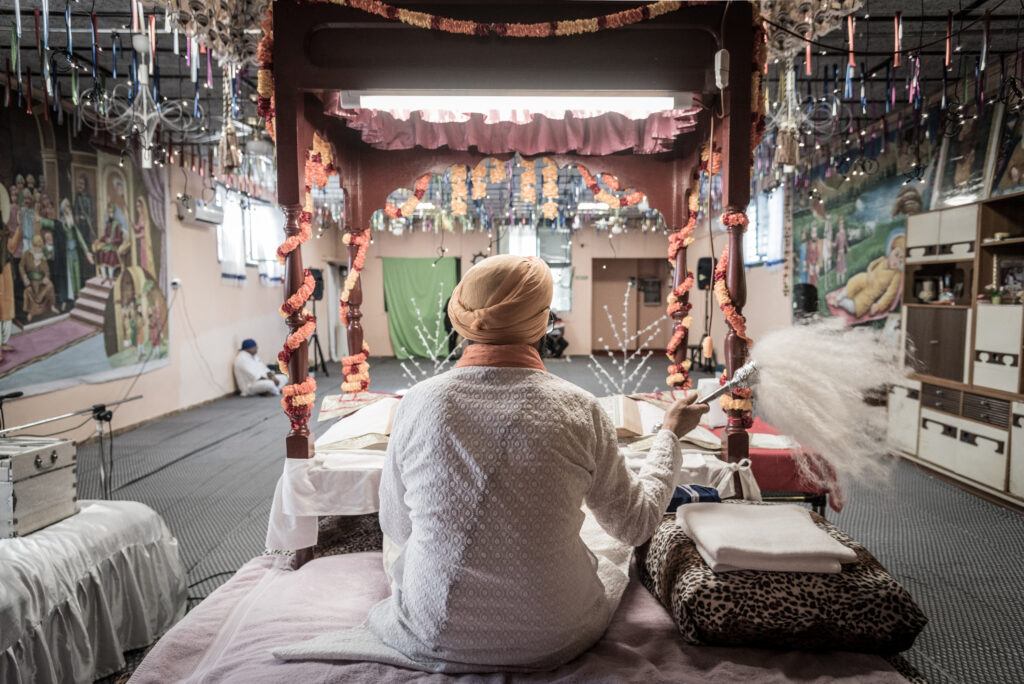
In the Sikh temples of Velletri, Cisterna and Pontinia, the word "debt" is whispered with reluctance during interviews. To get to Italy, these people paid up to €15,000. The sums were passed to Indian intermediaries in Punjab in various ways: by borrowing from acquaintances and relatives, or by selling land, cows and family jewellery. Some individuals manage to pay off their debts in about three years.
A typical monthly wage for manual labour in Punjab is between €80 and €120. An Indian labourer in Italy earns €863 on average, which is why Italy is a popular destination. With the money saved and sent to India, one can fix up one's own house or buy a bigger one, or, in some cases, educate one's children.
There are sacrifices too: being a long way from one's family, sharing a flat – sometimes just a room – with four or five others, and scrimping on daily food. Adding to the burden of living conditions are the grey paychecks that make it difficult to obtain or maintain a residence permit and thus stay legally on Italian soil. "Some bosses pay through a transfer to a bank account then coerce the worker to go to an ATM to withdraw €200-300 in cash to return it to them," says Omizzolo, illustrating the "habits" in the fields of Agro Pontino. "Some accountants make the labourer come directly to their offices and, for example, return the contributions paid to the state by the employer."
Ranbir Singh has not seen his family for four years, since he arrived in Agro Pontino. Before leaving he had paid €8,000 to an acquaintance who delivered it to an Indian in the province of Latina. In Punjab, where he had worked as a car mechanic for a little over €100 a month, he left behind his wife and four-year-old son. The intermediary from Latina dealt with the papers for the residence permit, obtained through Italy's so-called Flows decree. The referring company produced kiwis, but it was only a fictitious contract: Ranbir Singh never worked with them.
Every year, through the Flows decree, the Italian government establishes a ceiling for the number of non-EU citizens who may enter Italy to work with a contract. The application for a foreign agricultural worker still residing abroad can be submitted by an Italian employer or a legally-resident foreigner. Giorgio Carra, provincial secretary of the UILA trade union does not mince words about the system: "It lends itself to the illegal game of paid smugglers who provide workers with contracts and accommodation."
Amandeep Singh and other workers confirm that in order to enter Italy using the Flows decree, one of the options is to get a contract in a company where one does not actually work. When this contract expires, one buys another from a different company, so as to renew the residence permit. And so on, time after time. There are Indians who act as intermediaries between the workers and the companies.
The system of work permits linked to the Flows decree is on show at travel agencies in Jalandhar, Punjab. One agency, for example, claims to keep a list of sixty Italian companies willing to make contracts. Another currently has no contacts with free companies and offers other routes to reach Italy – via Malta, for example, where one can stay for a few months with a work visa and then move to the rest of the European Union. There are some that promote Romania as the country of arrival, from which one can then move to Italy. And then there is the illegal "donkey route", which involves, for example, a flight to Qatar and then from there a journey by lorry to Turkey, up through the Balkans, Hungary and Austria, and on to Italy.
The trade-union campaign that began in 2016 has led to an increase in hourly wages – from €2.50 to €6 per hour. But, according to experts like Omizzolo, this has only made the exploitation more sophisticated (with more involvement of accountants and lawyers) and difficult to dismantle. The labourers are afraid to speak out. Their fear stems in part from the assaults suffered by those who tried, like Gill Singh. He was hit over the head with a bar and thrown into a ditch by his employers in the summer of 2020, after asking for facemasks.
Giorgio Carra of UILA has a number of ongoing disputes over the recovery of unpaid wages and compliance with contracts. "For serious exploitation, we get the public prosecutor's office and the inspectorate to intervene, especially when we have the feeling that it is perpetrated by the cooperatives." However, checks carried out by IrpiMedia in recent months did not reveal any complaints or lawsuits against the cooperatives.
The trade unions, however, emphasise the need to avoid generalisations: "The province of Latina has many virtuous companies capable of valuing their workers," maintains Islam Kobt, secretary of FAI CISL, citing the Quality Agricultural Labour Network (a roundtable set up within the FISLAS, an agreement that brings together stakeholders including Confagricoltura, Coldiretti, CIA, FAI CISL, FLAI CGIL and UILA UIL). This grouping is made up of companies that are compliant with the rules and exempt from being flagged for exploitation. Through their good behaviour they are entitled to certain benefits, including micro-credits.
Over four days in October 2022, two farm workers, not even 25 years old, took their own lives on the Agro Pontino farms where they were employed. Without wishing to generalise about a complex situation, those suicides are a micro-phenomenon that has been going on for several years, as noted by the migration specialist Marco Omizzolo. One that is surely related to the living and working conditions they endured in Italy.
The workers' names have been changed to protect their identities.
This investigation was carried out with the support of Journalismfund's Modern Slavery Unveiled programme.
👉 Original article on IrpiMedia
Do you like our work?
Help multilingual European journalism to thrive, without ads or paywalls. Your one-off or regular support will keep our newsroom independent. Thank you!