
















Select a language
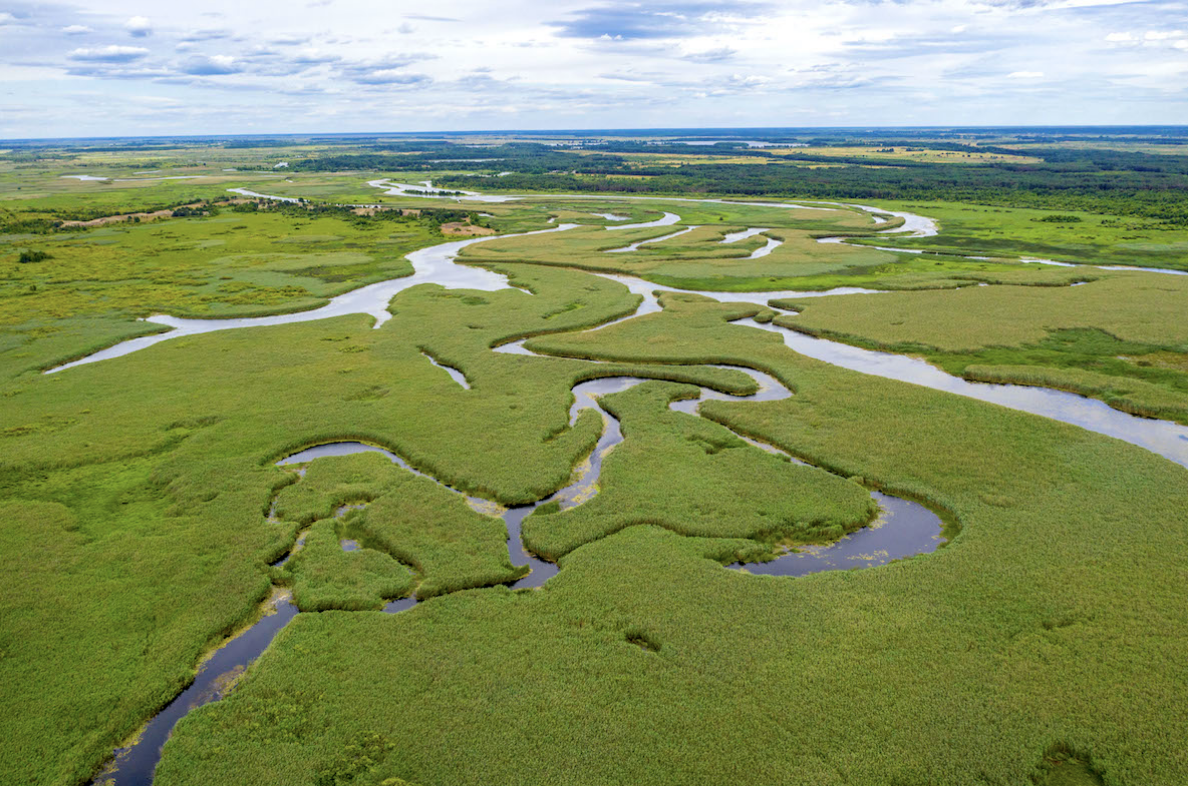
Waterway E40 is one of the most mysterious projects undergoing in Eastern Europe. This international canal, planned to have approximately 2,000 km, aims to connect the Baltic Sea with the Black Sea, passing through Poland, Belarus and Ukraine. The project in its planned route will pass through the Polesia region, one of the most pristine and largest wetlands and forest regions on the European continent, called Europe’s Amazon.
“E” on its name means that one of the main European waterways connecting the Baltic and Black Seas can pass along the rivers. A similar project was already pursued in Latvia, but eventually it was dropped.
The E40 canal aims to enable the transportation of millions of tons of cargo from producing countries further to Europe through this river gate. The total cost of the investment is calculated to be up to roughly 12 bln euros. The initial feasibility analysis of the project dated 2015 indicated the profitability of the venture, however numerous independent economic studies show that the investment is unprofitable, regardless of the proposed route variant.
On top of that unclear financial turmoil, in 2021 a group of scientists called out the planned construction of the E40 waterway as one of the top 15 nature conservation issues in the world currently. Throughout the whole time of planning the project, E40 has never been a subject to a comprehensive environmental impact assessment that would bind risks of the projects across the three involved countries.
“Our main work is currently focused on monitoring the project.” – says Helen Byron, Campaign Coordinator from NGO Save Polesia. “Even though the overall feasibility of the project may seem doubtful at the moment, those big infrastructure projects have a magical tendency to reappear when we don’t expect it.”

The organisation took on a mission to protect the pristine Polesia region by actively opposing the E40 project. They unite actions in three involved countries to keep an eye on and protest the project. “Monitoring the project is not that easy now, taking into account the war and the lack of access to the information in the partnering countries” – adds Byron. “We don’t have an official partner in Belarus, since many non-governmental organisations were closed down there. At the same time, we have troubles obtaining official responses from the Ukrainian government. Our inquiries are clearly not their top priority right now. We continue our work nevertheless, believing that monitoring is even more crucial in ambiguous times.”
This fight gathers a lot of international attention. One of the examples is a petition by You Move Europe. The movement to protect Europe's Amazon gathered more than 100,000 signatures and is still rolling. The postulates are clear: to abandon the idea of constructing the E40 waterway in Poland, Belarus and Ukraine, stop any European funding for this purpose and protect Polesia’s wild landscape along its pristine rivers.
An investment that will never pay off
An economic analysis made in 2022 by the Dutch consultancy Langhout Ecologisch Advies and published on the World Wetlands Day, reveals the serious consequences of pursuing the E40 Waterway.
The analysis shows long-term losses in the billions of euros that would result from the construction of the key part of the proposed waterway from Gdańsk (the Vistula to Dęblin) to Brest in Belarus. The report concludes that the construction of the approximately 700-kilometres long Polish section of the waterway is too expensive to be economically justified. It was also stated that shipping would unnecessarily compete with green rail transport, causing great damage to the environment.
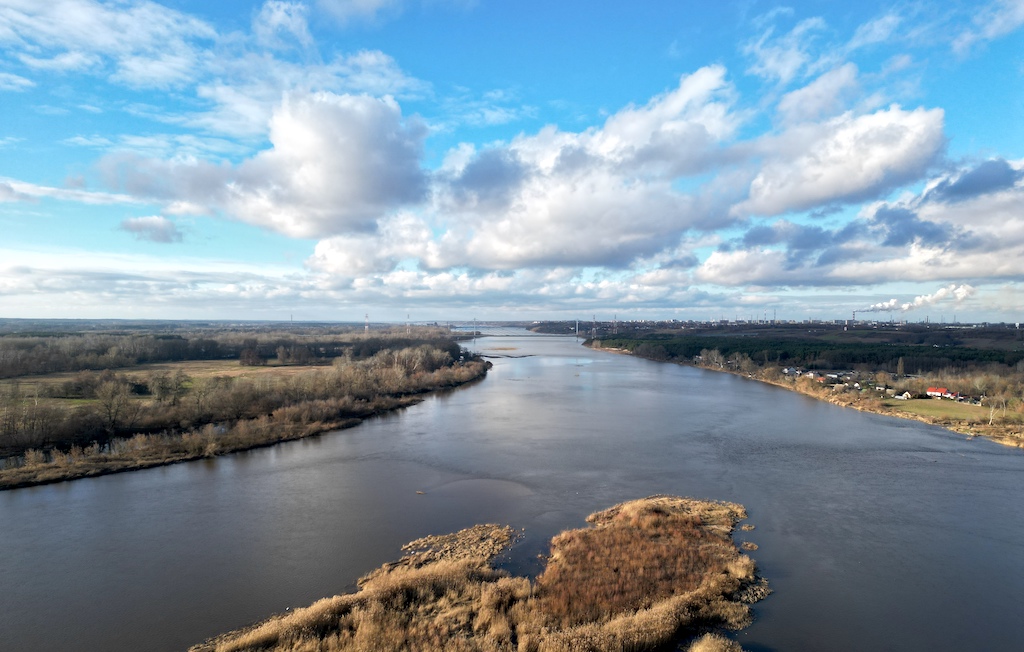
The Langhout Ecologisch Advies report shows that the investment will never really pay off. The analysis takes into account many factors, including construction time and volume of transport, and shows that even in optimistic scenarios, long-term losses on the Polish section alone would amount to billions of euros, and the cost would be of course borne by taxpayers.
The route in its most likely variant would cost over EUR 6.5 billion. The loss would be most likely even higher assuming any probable construction and financial delays. The Polish part of E40 did not find its place in the European TEN-T framework and for that reason the project has to be covered from a national budget.
The study also points to significant costs that were not previously taken into account. These include severe damage to natural habitats, impacts on hydrology and driving up water prices as well as expenses for restoration and compensation measures.
The chosen route variant of the E40 will require Poland to create additional 12 to 15 new river dams. As claimed by The Polish Society for the Protection of Birds (OTOP), this poses not only enormous cost to the taxpayers but also, more importantly, irrecoverable loss to the biodiversity along the Vistula River.
“What we are observing in the Polish case is called a salami slice trick,” says Marek Elas, from OTOP. “It’s a technique of using a series of many small actions to achieve a much larger result that otherwise would be difficult or unlawful to implement.”
It seems just about right. The E40 project is spread between various legislative and strategic documents in Poland. Some of them, like the National Shipping Program until 2030 mentions building five different dams and at least 1600 river groynes. Other documents say about only few hundreds of groynes and yet a different document, Comprehensive development of the Lower Vistula, gives a reference to only one dam in Siarzewo.
“We believe that spreading the project planning across various documents and strategies that fall under different authorities is a tactic to dissolve the accountability” – says Elas.
Proving the dissolved accountability argument, web address www.programwisla.pl, once the project’s website, now leads to an alkalising water jug producer.
In Belarus the project moves on despite the war
The E40 project continues in Belarus despite the war. It is included in strategic documents, public budgets and papers of the UNECE Inland Transport Committee. One of the components of E40 is a new port in Brest, which is nearing completion and located close to the Polish border.

Already in 2015, Mikalai Katsetski, director of the Republican Unitary Maintenance and Construction Enterprise Dnepro-Bug Waterway, said that “This idea of restoring the navigable waterway has been nurtured for more than a decade.” The enterprise is one of three companies responsible for the maintenance of Belarus' inland waterways.
In 2021, the share of cargo and passenger transportation on water was less than 0.1 percent but the volume of cargo transportation by 2025 was planned to increase by about 10 times compared to 2020.
About the same amount of money is invested in river transport in Belarus, as in other transportation means. This situation could be changed together with the E40 project development, according to its authors.
Controversial research took place during the first project
A EU-funded grant project on the waterway was launched in 2013-2015 under the name “Restoration of the E40 waterway on the Dnieper-Vistula section: from strategy to planning”. The list of participants includes seven organisations from Belarus, Ukraine and Poland, while the company Dnieper-Bug Waterway is the leading partner.
The budget amounted to €912,657,000, while almost 90 percent of it was provided by the EU. The mentioned organisation received the largest amount and paid for a feasibility study made by a consortium of five research organisations led by the Gdansk Maritime Institute from Poland (the cost of the study was €434,350 euros, 47.6 percent of the total project amount, including co-funding).
This study was criticised by economists and environmentalists. In particular, in 2019 the Business Union of Entrepreneurs and Employers wrote that it’s incomplete, doesn’t include a clear economic feasibility and can’t be considered as a E40 construction justification.
The ecological analysis of the document was also weak: the international partnership “Save Polesia” published a list of possible risks for people and the environment, including CO2 emission, protected areas and biodiversity, and impact on rivers and wetlands.
However, now there are not many activists who can resist this project. Public pressure changed the situation, in particular, the activity of Belarusian NGOs is now widely criminalised: over the past two years, more than a thousand public organisations have been closed and environmental activists are under pressure or in prisons.

What is the stage of the project now? E40 is included in strategic documents in Belarus and is discussed at the international level. The nearest parts of the project are noted on the UN Economic and Social Council. One of them is the relocation of the river port of Brest outside the urban area. The port has been moved for about ten years now, and even though the progress has been slow due to the lack of money, now it looks almost ready.
The second and even bigger part of work is upgrading the hydraulic structures on the Dnieper-Bug canal. It will be the eight upon eleven locks compliant with international cargo navigation. Upgrading of the remaining three locks is planned for 2025–2026, and the amount of its financing can be compared to the annual budget for the maintenance of the canal.
Works on the E40 project in Belarus are being continued. The National Strategy for Water Resources Management in the Conditions of Climate Change says that river regulation is a measure to mitigate the effects of fluctuations in water levels caused by climate change. However, expert says that regulating rivers doesn’t work like that in the long-term.
It seems that Dnieper-Bug Waterway has been actively promoting the E40 waterway project for many years. The project is receiving support from the Ministry of Transport and is still being implemented step by step. It is outlined in strategic national documents and is advocated at the international level. But without connecting it with the neighbouring countries, this project will not work for international shipping. The Belarusian Ministry of Transport did not provide more information nor an official answer on further intentions regarding the project.
A project that could undermine Ukraine’s natural protection against aggression from the North
“The Polesie region is a very important part of Ukraine. This area serves as a crucial water source for the country and is also a vital basin for biodiversity. Moreover, safeguarding our wetlands serves as a preventive measure against any potential military aggression from Belarus. Hence, it's safe to assert that our wetlands are a critical aspect of national security.” – says Heorhiy Veremiychyk from the National Ecological Center of Ukraine (NECU). This non-governmental organisation created in 1991 to consolidate individual actions for environmental protection in the country, doesn’t stop monitoring and protesting the idea of building E40.
Even though in July 2022 Ukraine terminated the 1998 bilateral agreement with Belarus on navigation on inland waters, the E40 Waterway remains present in the action plan for the implementation of the National Transport Strategy of Ukraine for the period until 2030. NECU sent a letter to the Ministry of Infrastructure requesting the removal of the waterway mention in the document. The response received stated that altering the transport strategy does not qualify as an urgent action as it is not related to national security. “Our findings demonstrate without a doubt that the development of E40 could jeopardise the safety of our country. Dredging the river and drying the wetlands could destroy the naturally occurring northern defence line”, says Veremiychyk.
This case, brought up by NECU, has already been proven in the ongoing war. In 2022 Ukrainian soldiers bombed a dam on the Iprin River. The wetlands created around the river helped to stop the Russian army from trying to reach Kiev.
Dnieper River is already quite well regulated and the country applied to include it in the European TEN-T framework that will allow for further regulation and development of any possible waterway.
There are various opinions regarding the radiation risk from dredging the Pripyat River, which flows past the ill-famed Chernobyl former nuclear power plant. “Any activity to deepen the river in one way or another will lead to contamination of river waters with radionuclides”, Serhiy Afanasyev, the director of the Institute of Hydrobiology of the National Academy of Sciences of Ukraine, said in 2020 at a NECU press conference on the consequences of deepening the Pripyat in the Chernobyl Exclusion zone. At the same time, The Department of Environment Radiation Monitoring under the Ukrainian Hydrometeorological Institute concluded an examination of the bottom sediments of Pripyat, saying that the dredging work within the Chernobyl Exclusion Zone is safe and without any radiation risk.

The Ukrainian government used this study to pursue the dredging works. The study however omitted the wider coastal area of the Pripyat River, which can possibly have significantly higher levels of radionuclide contamination. “Nobody knows neither the location and the quantity of radionuclides in the Pripyat nor the impacts during dredging works, because no related research exists” – said Afanasyev.
Despite being mandatory under the National Water Code and the Environmental Impact Assessment Law, the E40 waterway project in Ukraine has never undergone an Environmental Impact Assessment that made Pripyat River dredging illegal practice.
“As NECU we continue monitoring the project” – says Heorhiy Veremiychyk – “Keeping E40 in the official plans gives the temptation to continue the project after the war.”
“Murky waters are easier to swim in” – says Marek Elas from OTOP: “The hydro engineering lobby is international. Each country has different problems and challenges for dropping the idea of E40 but still, for unknown reasons, those small pieces of the project are being implemented. The reasons are well hidden in those murky waters.”
Same as a blue river flow, the idea of the project still remains wide open. One could think that in this day and age such a collaborative project between Poland, Belarus and Ukraine will be dropped but clearly, this is not the case. Each country has their own internal agenda, providing a reason to keep the E40 Waterway in the cards.
The river has great wisdom and whispers its secret to the hearts of men. – Mark Twain
Acknowledgements to Save Polesia, The Polish Society for the Protection of Birds (OTOP), Cyber Partisans, National Ecological Center of Ukraine as well as experts in ecology and transport, such as Inesa Balocina from Belarus and others, for their help in collecting information.
This investigation was supported by the Transition Media Foundation
Do you like our work?
Help multilingual European journalism to thrive, without ads or paywalls. Your one-off or regular support will keep our newsroom independent. Thank you!


