
















Select a language
When Liina Steinberg left Brussels a few years ago to return to her homeland of Estonia, her longing for forests and wild nature was one of her main reasons. But on her return, she noticed that the landscape was changing.
“More and more often, I was seeing clear-cut areas from the road. I also noticed how thin the logs were that the lorries were taking away. These weren’t large logs for furniture or timber,” she says. Steinberg grew up with forestry and inherited a piece of woodland herself, but the intensity of the logging still surprised her.
Eventually, clear-cutting reached the forests near the village where she grew up. “Suddenly, the forest where I used to forage for mushrooms was no longer there. I felt betrayed. I had returned to Estonia for its nature, yet suddenly that nature was disappearing all around me.” It was this that led her to found the association, Päästame Eesti Metsad – Save the Estonian Forests.
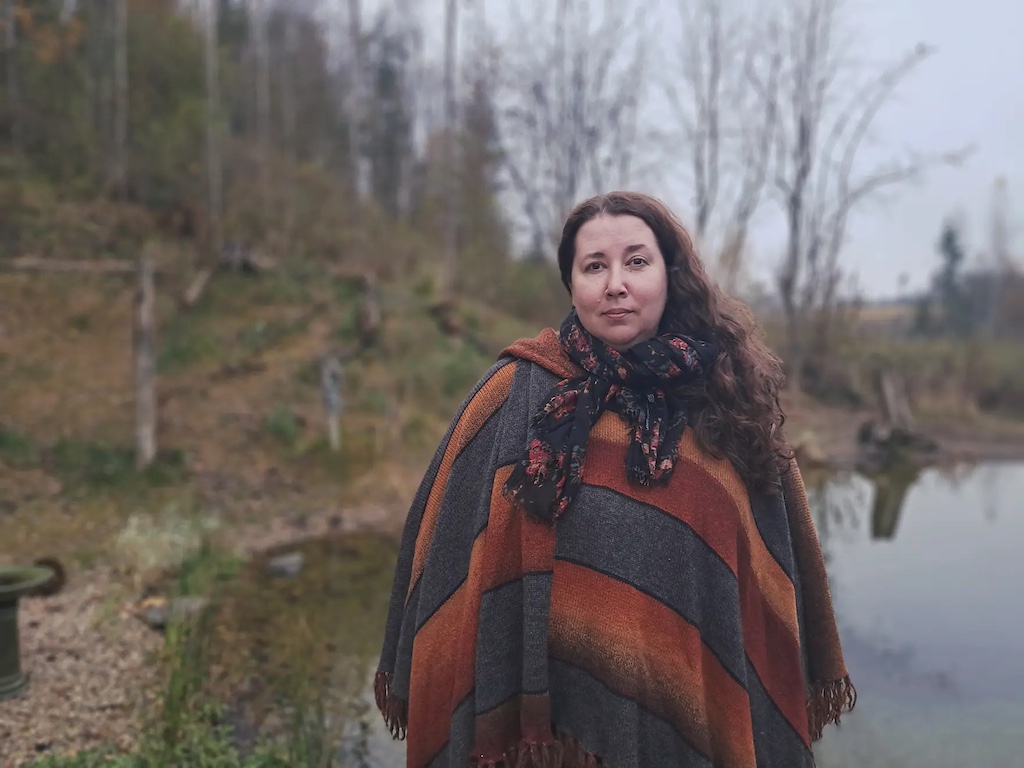
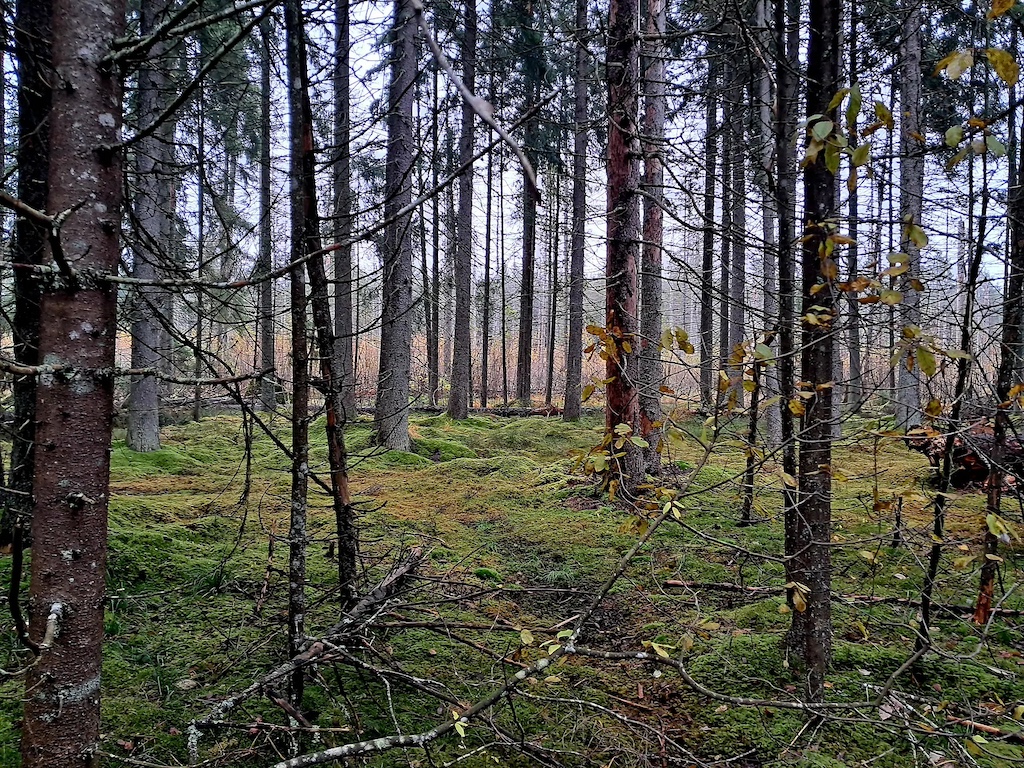
We have met up in a small observation hut near Lake Osõtsuu in south-eastern Estonia. Outside the windows, titmice, jays and woodpeckers flit between the trees. Many of these species are dependent on old-growth forests with deadwood and tree hollows. Clear-cutting destroys such habitats at a stroke.
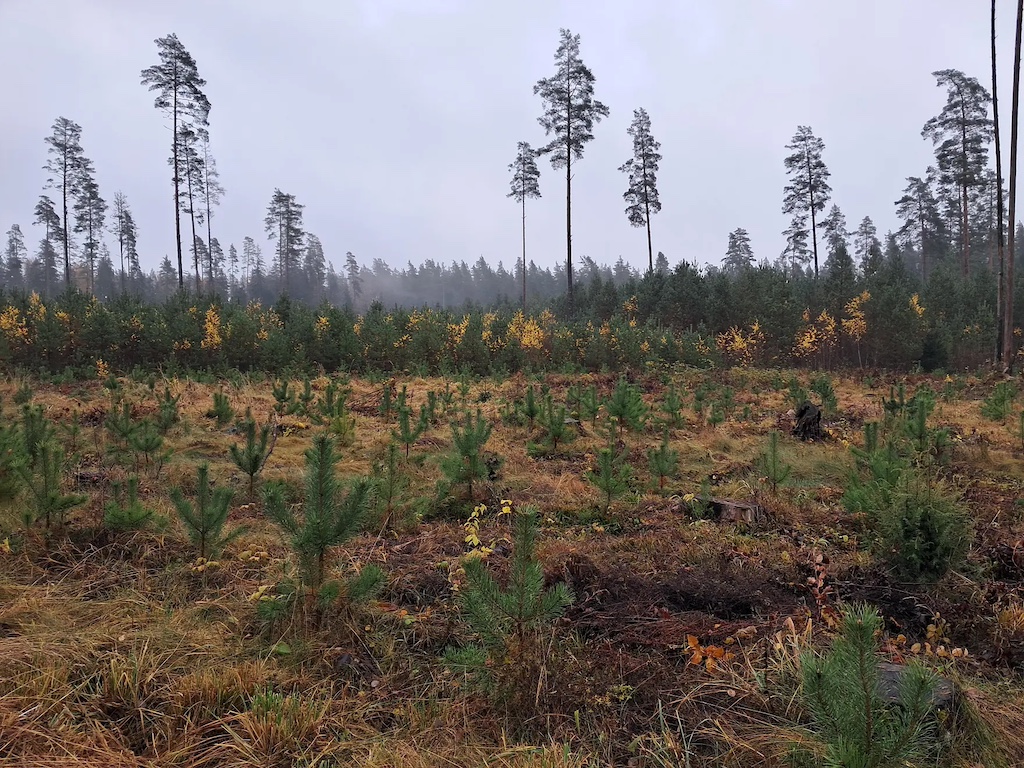
Once areas have been cleared, they are usually planted with just one or two tree species – often spruce, pine or birch. This creates homogeneous stands where all the trees are the same age. “It’s like waging war on nature,” says Steinberg. “Quite apart from anything else, the heavy machinery destroys the soil.”
As I travel through the Estonian countryside in late October, I am surrounded by clear-cut areas: freshly cleared land, young plantations, stands of trees all the same age. It is a pattern that has become part of the Estonian landscape. Many managed forests look more like fields with trees in them than complex ecosystems.
Around half of Estonia is covered by forest. Yet what counts as forest is a matter of debate: even newly planted areas are classified as forest in the statistics. Roughly half of the forests are owned by the state, the other half are in private ownership. In both cases, clear-cutting is the main method of timber harvesting.

When the forests fall silent
The consequences can be seen in the biodiversity. According to the Estonian Ornithological Society, Estonian forests lose an average of 50,000 breeding pairs every year. Species particularly at risk include the black stork, capercaillie and goshawk. Plants, fungi, lichens and mammals – including the flying squirrel, now rare in Estonia – are also suffering from the loss of old-growth forests.
“The main reason clear-cutting has intensified is the trade in biomass. A large proportion of the timber also ends up in Scandinavian pulp and paper mills,” says Liis Kuresoo, a researcher in sustainable forestry at the University of Tartu.
She stresses that she is not opposed to logging in principle, but that it becomes problematic when old-growth forests gradually disappear and the remaining forested areas are so far apart that they just form isolated islands.
Forests for sustainability
Marku Lamp spent many years as the person responsible for forestry at the Estonian Ministry of the Environment. He points to developments after the Second World War when, during the Soviet occupation, many abandoned areas were reforested. “A large proportion of those forests are now at an age where we consider them mature from a forestry perspective,” he says.
Yet only a small proportion of the harvested timber is used for durable products such as furniture or building materials. Around half is burned – and the carbon stored within it is released back into the atmosphere.
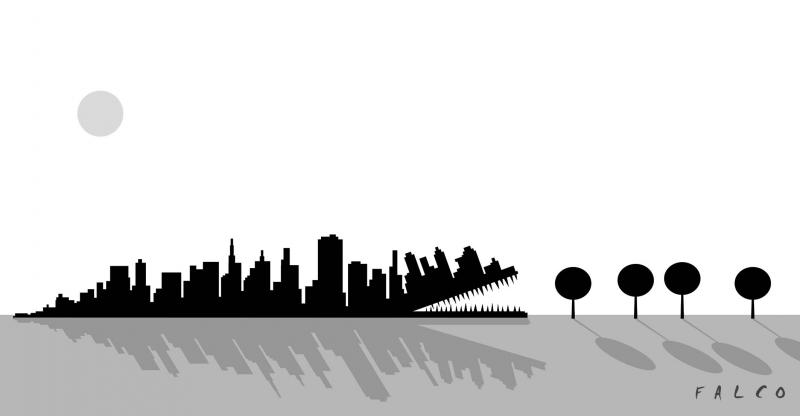
Estonia is one of the EU’s largest exporters of wood pellets. Rising demand for biomass as a fuel has intensified timber harvesting. Key buyers include Denmark, the UK and other Western European countries. These pellets do not just come from waste materials: the demand for biomass is itself a driver of forest degradation.
Demand rose after the EU classified biomass as carbon-neutral in its 2009 Renewable Energy Directive. Bioenergy is now the largest source of renewable energy in the EU. Yet scientists have been warning for years that wood burning is by no means automatically climate-neutral. When trees are felled and burned, it can take decades or even centuries for new forests to sequester comparable amounts of carbon.
This can already be seen in Estonia, where intensive logging and soil degradation mean that forests that were once major carbon sinks now produce more emissions than they absorb.

The revised EU directive of 2023 places greater emphasis on the need for forest biomass to be compatible with climate targets. It specifies protected areas where no logging should take place and is based on the cascade principle, meaning that wood should be primarily used for durable products, not for energy generation. Yet exceptions remain possible.
Questionable sustainability
“Some people in the timber industry don’t care if they’re growing low-quality wood,” says Lina Steinberg. “For them, the only thing that matters is biomass – wood chips and pellets.”
Liis Kuresoo agrees that the scale of the wood mining is no longer sustainable, pointing to the fact that Estonian forests are becoming ever younger and that some companies are already struggling to find enough suitable trees, even though they have been certified as sustainable.
Forecasts by researchers at the University of Tartu suggest that this trend could continue. If clear-cutting continues at the current rate, forest stands over 60 years old will cover just one-tenth of today’s area by 2050.
Protected areas under pressure
Along the path to the Valgesoo nature reserve, pine forests alternate with cleared areas. Even on this marked hiking trail, I am only beneath a canopy for a short while before the next clear-cut area appears. Within the reserve, I find a marshy area surrounded by old-growth forest. But as soon as the path leads out again, the landscape is once again dominated by clear-cutting and heavy machinery.
Marku Lamp argues that intensive use is offset by protected areas. “If you want to make a profit from forestry, clear-cutting has been proven to be the optimal method,” he says, adding that Estonia is trying to strike a balance between exploitation and conservation.
Environmental organisations see things differently. The Estonian National Audit Office has concluded that conservation measures have been relaxed to allow logging in areas where it was previously prohibited. In 2022, clear-cutting was permitted in 173 of the 189 protected areas with restricted forest management, leading the Audit Office to state that the system does not guarantee the protection of natural resources.
In 2021, the European Commission launched proceedings against Estonia over logging in Natura 2000 sites. According to Kuresoo, the situation has improved since then. However, there is currently renewed discussion about allowing logging in protected areas.
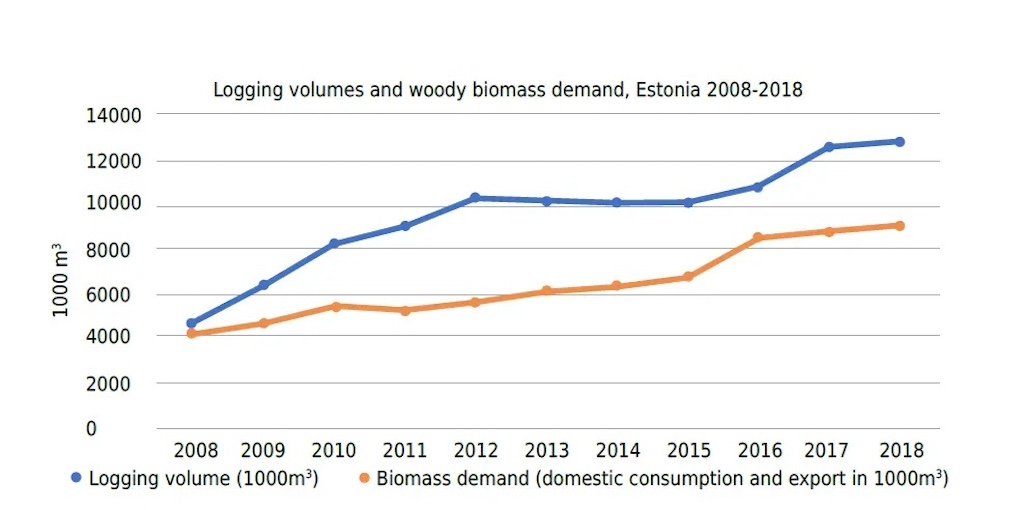
Amendments to the Forest and Nature Conservation Act proposed by the government in 2025 could further increase the pressure. The plan is to designate 70% of Estonian forests as being for commercial use. Environmental organisations warn that this could contradict Estonia’s obligations under the EU Nature Restoration Law and open ecologically valuable or protected areas to economic exploitation once again.
“If we stipulate that 70 per cent of our forests must be used commercially, further deforestation will result in the loss of protected areas too,” says Kuresoo. “Purely in mathematical terms, that is absurd.”
The Estonian Ministry of Climate did not respond to my request for an interview.
Estonians: a “forest people”
This seems particularly paradoxical in a country whose inhabitants generally view themselves as a “forest people”. A sense of connection with the country’s forests is regarded as part of the national identity. Scholar Tõnno Jonuks from the Estonian Literary Museum has investigated the origins of this concept which, though relatively new, it is now perceived as inherently Estonian.
“What I find most interesting is how widespread this attitude is,” says Jonuks. “It is almost part of our national self-image to regard ourselves as a forest people.”
Surveys show that many Estonians would like the country’s forests to be managed more sustainably. One alternative to clear-cutting is continuous cover forestry, in which trees of mixed species and ages grow side by side, the ground remains permanently forested, and the ecosystem stays more stable.
Anna-Liisa Lutsar is a member of Maavalla Koda, an organisation that preserves Estonia’s ancient non-Christian nature traditions. For her, this is not just a technical issue. “In Estonia we like to call ourselves nature lovers, but at the same time we are allowing our natural environment to be destroyed on a massive scale,” she says during a walk in Tartu. “It feels to me as if we are colonising our own country.”
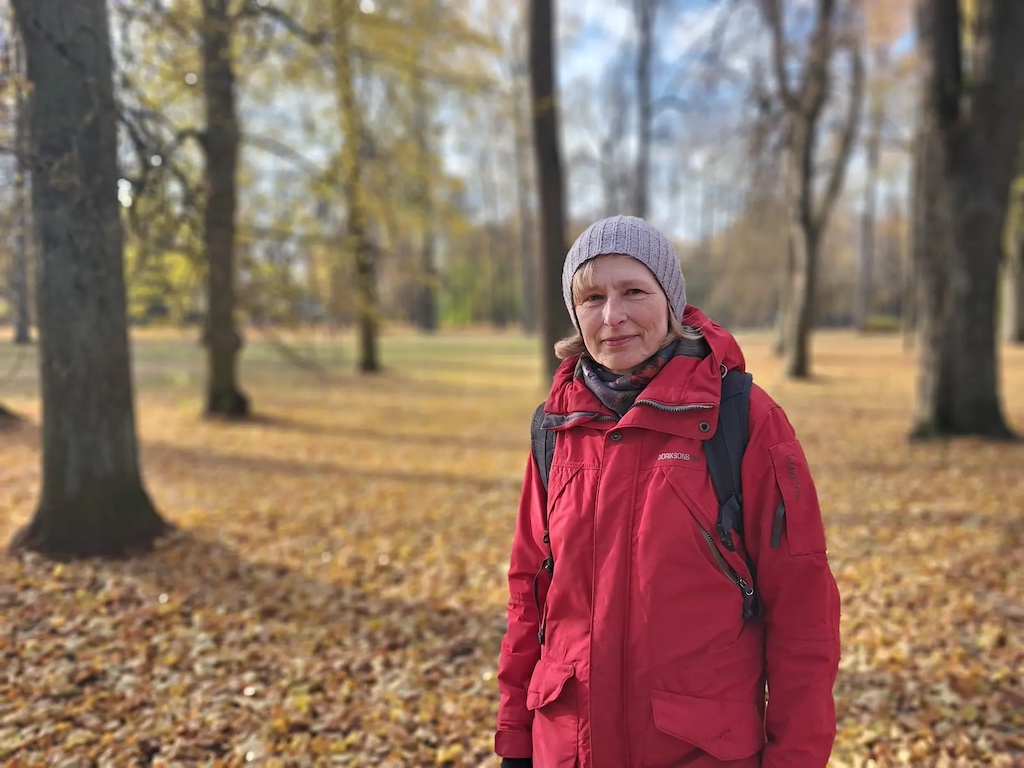
Lutsar can remember travelling from Tartu into the countryside along roads lined with forest. Now, those same roads mostly run through cleared areas or young plantations. “The landscape has changed far more than I could ever have imagined,” she says.
👉 Original article by Jádu
🤝 This article is published in partnership with Perspectives, a project and label co-funded by the European Union that stands for authentic, trustworthy, independent, and multi-perspective journalism. Led by the Goethe-Institute and implemented together with newsrooms from Central and Eastern Europe, Perspectives is committed to credible content that reflects Europe’s complex realities through diverse voices and viewpoints. Views and opinions expressed are those of the author(s) only and do not necessarily reflect those of the European Union or the European Commission. Neither the European Union nor the granting authority can be held responsible.

O
O
Do you like our work?
Help multilingual European journalism to thrive, without ads or paywalls. Your one-off or regular support will keep our newsroom independent. Thank you!


