








Select a language
This article is reserved for our subscribers
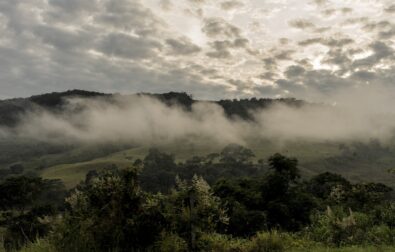
The Gran Chaco is a green jewel. Less well known than its "big sister", the Amazon, this South American forest covers 110 million hectares - more than a million square kilometres, one and a half times the size of France - between Argentina, Paraguay, Bolivia and Brazil. Jaguars, tapirs and peccaries live among the foliage, and the forest is home to nearly 5,000 different species of plants and animals, some of which are critically endangered. But for years, the region has also been a magnet for greed: a prime agricultural area where soya is grown, even if it means destroying entire tracts of vegetation.
To feed the animals that satisfy Europe’s steadily rising consumption of meat and dairy products in Europe, farmers rely heavily on imported cereals from Latin America, primarily soy. After Brazil, Argentina is the European Union's second largest supplier of soybean products, covering 21% (7.7 million tonnes in 2021) of the 27 member states' total consumption. Because of its high protein value, soy accounts for up to 25% of the feed given to industrial livestock.

Soy, mostly genetically modified, arrives in the EU both processed into meal or cake and in the form of unprocessed soybeans which are then processed into flour in European plants. Argentina is historically the world's largest exporter of the processed meal (though Brazil is likely to overtake it in 2023). Because of its high protein value, soy meal accounts for up to 25 percent of the feed given to industrial livestock.
The cultivation of soy is devastating for forest ecosystems, likely more so than any other product recently imported to Europe.
The EU is in second place (after China) for soy imports worldwide (and in third place after China and India for all commodities whose production is responsible for deforestation). Between the raw soybeans and the processed soybean meal of cake, including those specifically used for animal feed, Europe imported more than 580 billion tonnes in the ten years until September 2023, according to Eurostat data.
In particular, the EU is the largest importer of soybeans from Chaco, an ecologically sensitive region of northern Argentina. The Chaco exported 356,000 tonnes to Europe in 2019, accounting for more than 50% the area's total exports. With its major contribution to global demand, Europe has thus prompted producers to deforest large areas of this Argentinian region to make room for soybeans destined as animal feed for meat production.
Chaco is in third place among regions supplying soybeans to the European Union, after Amazonia and Cerrado (in Brazil). These latter areas, however, are mainly oriented towards the Chinese market.
In answer to the disastrous environmental impact of, among others, tropical soybean farming, in 2022 the EU passed a new regulation (called EUDR, European Union Deforestation Regulation). This bans the produce of deforested land from entering the European market.
Alas, the ban's implementation has been postponed until 2025 for large businesses. Together with legal loopholes arising from lobbying by the timber industry and its allies in some EU governments, this has left a number of forests (in Europe and beyond) languishing at the mercy of the profit motive.
And at least one third of Chaco will be excluded from the European regulation unless its remit is extended to "other forest areas", as defined in a specific review clause. That is because Chaco (like the Brazilian Cerrado) is in fact a mosaic of forests, savannas and grasslands that do not fall entirely within the FAO's narrow definition of forest, on which the EUDR is based.
Chaco deforestation: the numbers
The Chaco ecoregion is the second largest forest habitat in South America after the Amazon. It is divided into a dry portion (the largest such habitat in the world) and a wet portion, and totals 110 million hectares. 62 percent of the Gran Chaco is in Argentina , while the rest stretches into Bolivia, Paraguay and Brazil. It is home to almost 5,000 different plant and animal species, some of which are at high risk of extinction. Moreover, in order to make room for the soybeans, local people have regularly been expelled from their land by means of intimidation and violence. They include mestizos as well as indigenous peoples such as the Wichí, Pilagá, Qom, Vilela, and Moqoit.
According to a report published in 2022 by the group Periodistas por el Planeta, coordinated by the Argentinian Marina Aizen, this rampant soy production has cost around 14 million hectares of trees in the Argentinian Chaco over the past 30 years. The deforestation rate for the entire ecoregion (25 percent) exceeds that of the Amazon (17 percent) and is second only to the Cerrado (50 percent).
Besides harming biodiversity, the destruction of the Chaco forest is having an impact on global warming, as the felled trees no longer absorb carbon dioxide. Deforestation, which accounts for about 15 percent of Argentina's CO2 emissions, is the source of about 10 percent of planetary emissions. That is two thirds of all transport (land, sea and air) combined.
According to estimates by the think tank Planet Tracker, deforestation in the Chaco attributable to EU-imported soy caused the release of 7.3 million tonnes of CO2 in 2018 alone.
Data from Trase, a platform for monitoring the sustainability of agricultural commodities, shows that 95 percent of deforestation in Argentina has been in the Chaco (the only ecosystem for which accurate measurements exist). This land accounted for 10 and 4 percent, respectively, of Argentina's annual soybean production (6.6-8.9 million tonnes) and exports (over 2 million tonnes) in the 2015-2019 period (the most recent data available).
"During the same period, annual deforestation in Chaco increased from 116,000 to 211,000 hectares", points out Michael Lathuillière, a research fellow at the Stockholm Environment Institute who is responsible for supply-chain mapping at Trase: "5% (50,000 hectares) can be attributed to soybean cultivation in the period 2014-2018. The crop then occupied a total of between 2.6 and 2.8 million hectares, and it may have expanded further."
In fact, the United States Department of Agriculture estimates that Argentina's total acreage of soybeans will rise to 16.9 million hectares by 2023-2024, an increase of more than 50 percent compared to 2002 (11.5 million hectares).
Quantifying the risk
Between 2016 and 2018 there was a slowdown in Chaco deforestation. However, according to estimates provided to us by Trase, for every 1,000 tonnes of soy exported in 2019, 7.1 hectares of forest were potentially destroyed in the Argentinian province. This level of risk is barely lower than in the Cerrado (7.6 hectares).
This risk assessment is crucial since, under EU rules, forest areas are set to be classified as low, medium or high risk according to the trends in different criteria (deforestation, agricultural expansion, and agricultural production). Member states will be required to carry out more or less stringent controls, including on-the-ground audits, according to the risk level of the area from which the imported produce originates.
"The European Commission will share its risk-benchmarking scheme in 2024 and we have formulated recommendations based on our methods of analysis", says Lathuillière, the researcher at Trase.
On the basis of the most recent data, the deforestation risk of imported soy in the EU rose from 2,103 hectares per thousand tonnes in 2018 to 2,487 hectares in 2019.
Soy produced in these areas can continue to be sold on the European market as the EUDR only prohibits imports from areas deforested after 31 December 2020.
Alex Wijeratna, senior director of the NGO Mighty Earth, explains the implications: "This means that 'non-forested' areas such as grasslands, savannas or wetlands that were deforested or converted for soy cultivation before that date will remain commercial monocultures instead of benefiting from the regeneration of their natural vegetation.”
Exporters are no guarantee of sustainability
According to the methodology adopted by Trase, in 2019 five major global food traders accounted for more than 60 percent (214,632 tonnes) of EU imports of soybeans from Argentina's Chaco. They are, by order of volume: Cofco (based in China); Glencore (UK-Swiss, by means of its subsidiary Viterra created in 2020); Louis Dreyfus (Netherlands); and the US-based Cargill and Bunge (which merged with Viterra in June 2023).
Another 30 percent of imports from Chaco to the EU are in the hands of the Argentinian companies Vicentin (currently bankrupt) and Aceitera General Deheza, respectively ranked first and fourth in terms of quantities exported in 2019. In contrast, the major broker Archer Daniels Midland (ADM) extracts only a fraction of its internationally traded soy from the Chaco, and sits at the bottom of the ranking.
Soybeans processed into meal have a higher risk of deforestation than raw soybeans, by 44% in terms of hectares and 60% in terms of tonnes. The processing may be done by the traders themselves or by their Argentinian supplier.
Lathuillière explains: 'The deforestation risk of soybean exports from Chaco could be higher than we estimated because of the indirect routes that soybeans follow within Argentina before reaching the ports. These currently represent a major blind spot."
Trase's calculations are based exclusively on the direct movements of soybeans from production areas (such as Chaco) to ports, as officially recorded in Siogranos, a government database. The database, however, does not disclose the quantities of soybeans that are stored in silos and/or transferred to processing plants located elsewhere, i.e., before reaching export sites. It is therefore impossible to know exactly how much soy from the deforested areas of Chaco is exported.
This was confirmed by Viterra’s spokesperson: "Sixty percent of the production moves directly from the farm to the ports or processing plants, but the remaining 40% passes first through huge silos where beans of different origins are mixed. So the segregation of crops (i.e. those related to deforestation and those that are sustainable) is complicated."
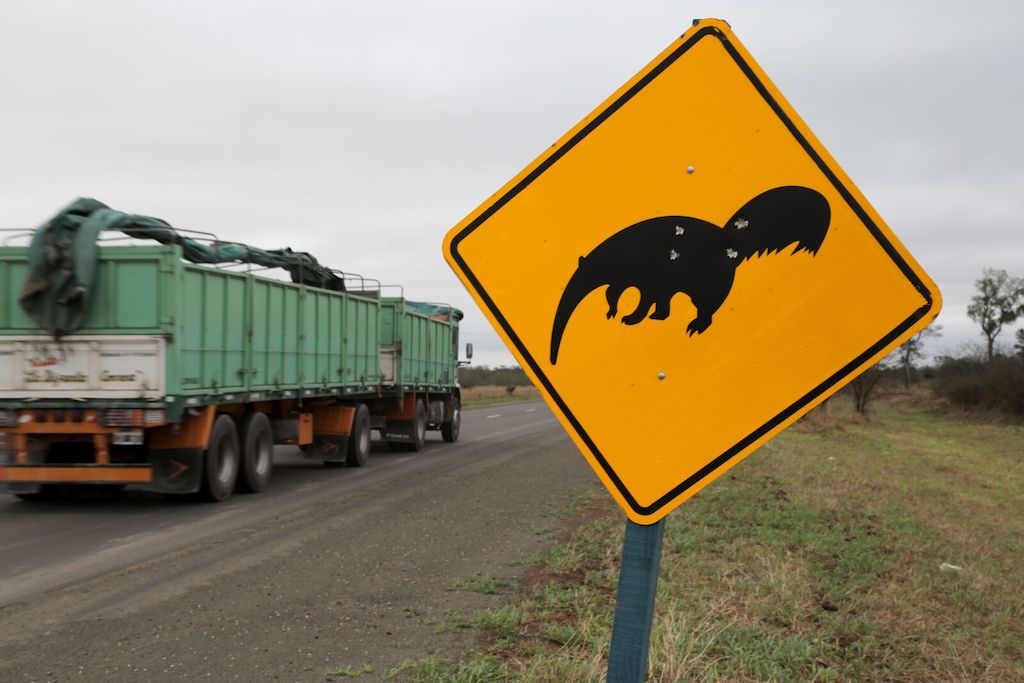
"With their storage centres, the soybean giants have increased the pressure on the region's forests", says Riccardo Tiddi, an expert in the use of mapping as a tool to monitor Chaco deforestation. Tiddi, together with Marina Aizen, of Periodistas por el Planeta, mapped and photographed large portions of forest razed for soy plantations in the provinces of Chaco, Salta and the department of Almirante Brown.
Between 2009 and 2022, this department of Chaco lost 294,000 hectares of forest (20% of the total). This released 60 million tonnes of CO2, twice as much as is emitted by London in a year.
According to Trase, Almirante Brown department contains one third (4,477 hectares) of the entire area of soy-menaced forest in the Chaco. "This is a low estimate", Tiddi points out. "It does not take into account the illegal deforestation associated with almost half of the agricultural activities in the department, as reported by the Argentine NGOs FARN and Vida Silvestre. This is especially true for soy cultivation."
Strictly speaking, the EUDR bans produce linked to illegal deforestation, even if it happened before 31 December 2020 (a date that refers only to the legal variety).
No real traceability for soy from deforestation
Among the many problematic soybean plots in Almirante Brown are those of the companies MSU and H. Primo. They are attributed the illegal destruction of respectively 1,000 and 2,000 hectares of vegetation, later remedied through administrative amnesties of dubious regularity. 'The plantations of the two companies are located in the vicinity of the silos of Bunge and Cofco", says Tiddi, the mapping specialist. "It is therefore highly likely that those warehouses also contain soy from these lands."
According to pledges made by the big soy traders in 2018, more than half of exports (compared to just over a third in 2016) come from crops that did not contribute to deforestation. The pledges include Chaco soy.
Their promises have not yet translated into concrete action, as shown in a WWF analysis. Their scores remain poor in the index of the World Benchmarking Alliance, a network of NGOs, corporate lobbies and public bodies that monitors companies' progress towards achieving the UN Sustainable Development Goals.
"I think that right now [in Argentina] no one is doing traceability well", says Ricardo Sánchez, an independent consultant in the sector. "If done well, it could reach even the individual production unit."
The companies we contacted (Bunge, Cargill, Cofco, Viterra) either did not reply, or were unable to assure us that their supply chain from Chaco is fully sustainable. None of them publishes the list of silos they source from (which is also incomplete on the Argentine government website), let alone the plantations from which the stored beans come. Their most recent environmental reports merely proclaim 100% traceability by 2025.
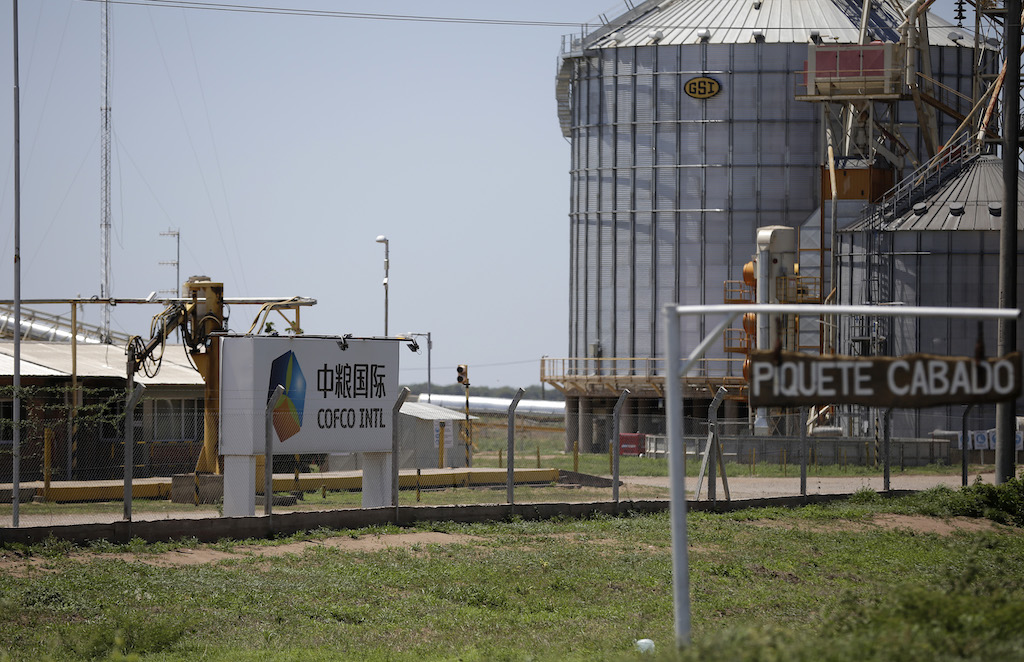
To comply with the European obligations that will come into effect in 2025, the traders ADM, Bunge, Cargill, Viterra, Cofco and Louis Dreyfus, assembled in the working group Soft Commodities Forum, have signed up to Visión Sectorial del Gran Chaco Argentino (ViSeC), a digital land-monitoring platform that focuses on the highest-priority areas of Chaco. The tool is based on the geographic information system (GIS) already adopted to safeguard the Brazilian Cerrado.
ViSeC, supported by the Land Innovation Fund, the Argentine edible oil industry association (CIARA), the NGO Nature Conservancy and numerous other organisations, is currently in the pilot phase. It aims for large-scale adoption by the end of 2024. All farmers and meal producers in Argentina will be able to use it to ensure that their soy is grown in areas that were not deforested after 31 December 2020.
"GPS coordinates of all the plots contributing to the [soybean] commodity will have to be collected," says Nathalie Lecocq, director-general of FEDIOL, the trade association representing Europe’s soy importers. "Ensuring that this is done throughout the supply chains, with many small farmers and middlemen collecting and processing the raw materials, is a major challenge."
Adrian Burtin contributed to this investigation.

Supported by Journalismfund Europe
Do you like our work?
Help multilingual European journalism to thrive, without ads or paywalls. Your one-off or regular support will keep our newsroom independent. Thank you!