












Select a language
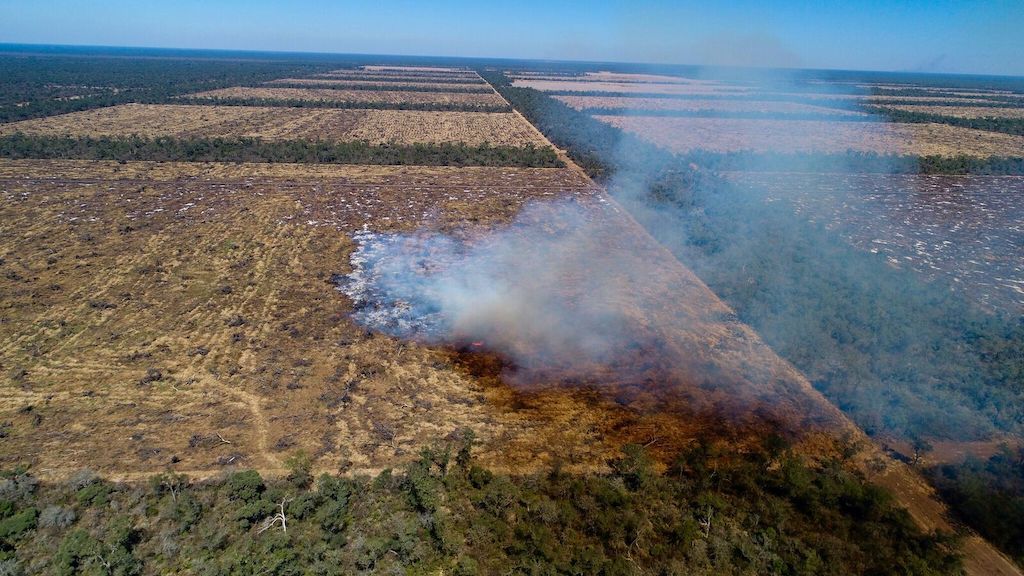
In the first part of our report we saw how soy from deforestation-prone areas in Argentina continues to arrive in Europe, despite an EU ban on the products derived from deforestation. In this second part, we will look at how prestigious brands such as Parmigiano Reggiano and San Daniele get hold of the same products by exploiting legal loopholes and abusing self-regulation.
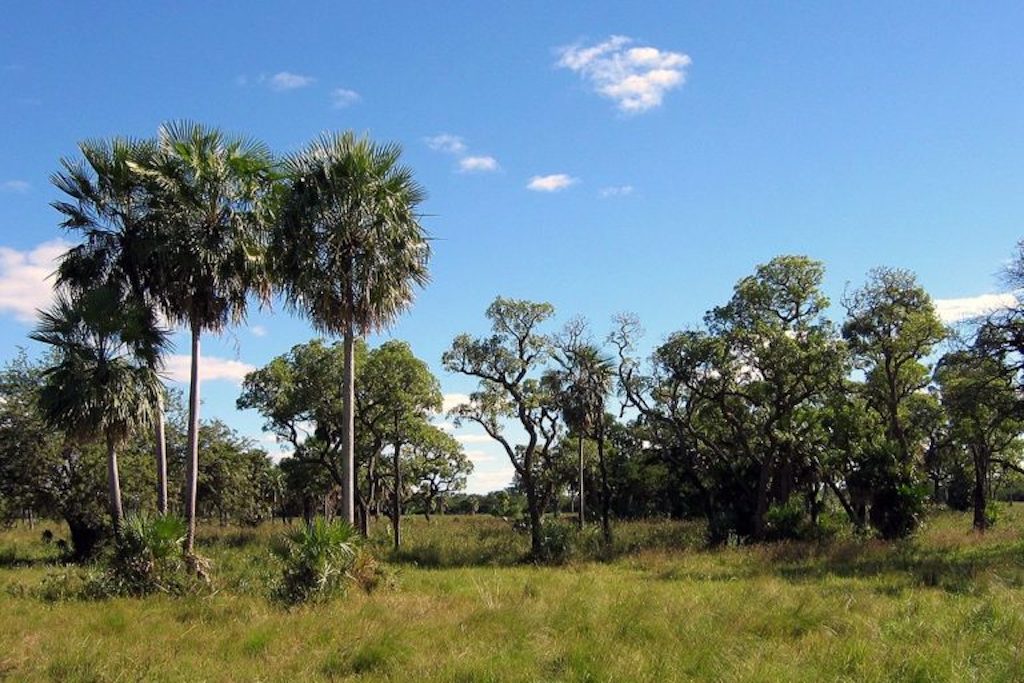
From silos in deforested areas of the Chaco ecoregion in Argentina, soybeans are transported to the ports of Rosario and San Lorenzo on Argentina’s Paraná River. Here they are processed into meal in the pressing plants of large international traders, and then loaded onto cargo ships bound for Europe.
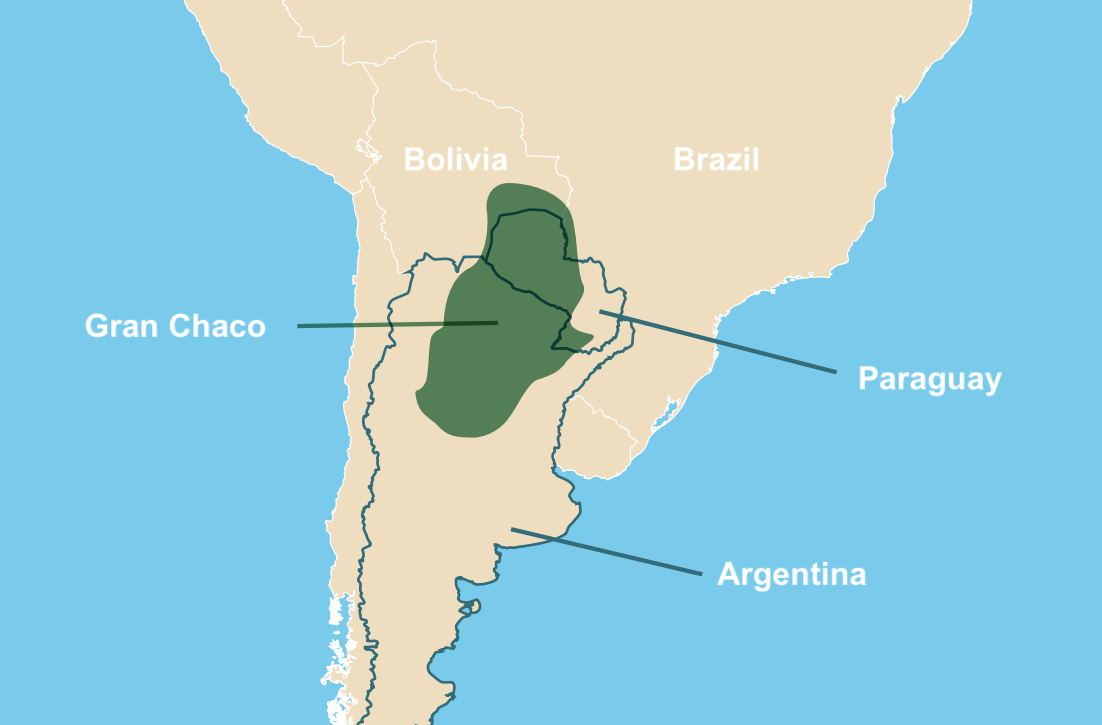
According to data from the tracking service MarineTraffic, since 2019 a number of ships have been plying the Atlantic between these two ports and ports in Italy and Spain. These two countries are respectively ranked first and second in Europe, and fifth and sixth worldwide, for imports of soybean meal or cake from Argentina and also thus for exposure to deforestation in the Chaco ecoregion.
In 2019, the European Union as a whole imported 355,979 tonnes of soy (both seeds and meal) from the Chaco ecoregion. About 2.1% of it comes from at least 2,332 hectares of potentially deforested plots. That same year, the two main European importers, Italy and Spain, imported 71,797 and 76,033 tonnes of soy (both seeds and meal) respectively. About 2.1% of it came from at least 466 and 500 hectares respectively of potentially deforested plots (1).
A third of these plots were located in Argentina's Almirante Brown department, which is the area of the Chaco province most hard-hit by deforestation for soy cultivation. This is according to the most recent data provided by Trase, a platform for monitoring the sustainability of farming commodities.
Once the meal arrives in Italy and Spain, it is mixed with other cereals by feed manufacturers who supply all the EU's national livestock sectors (pigs, poultry, eggs, beef, and dairy). It is noteworthy that Italy and Spain are respectively the first and fifth largest producers of meat on the EU market, according to data shared with us by Eurostat. Italy is also among the largest exporters of cheese on the continent.
Spanish pigs at the trough
In 2023 up till September, Spain imported more than 500,000 tonnes of soybean meal from Argentina (according to data Eurostat shared with us). The commodity was destined as feed for Spain’s pork industry, Europe's largest and fourth-placed in the world, with an output of over five million tonnes in 2022.
In 2021, almost 4.4 million tonnes of soybean meal and another 550,000 tonnes of raw soybeans were used to produce feed, according to data from the Spanish agriculture ministry.
Much of the meal is imported through the ports of Barcelona and Tarragona, to supply farms in southern Catalonia, Aragon and the east of Castilla y León (where most of Spain's pig production is concentrated). Other shipments arrive at Bilbao and La Coruña, to supply farms in the north of Spain.
In 2019 the main importers to Spain were Vicentin (a now-bankrupt Argentinian firm), Viterra (a subsidiary of the British-Swiss Glencore, recently merged with Bunge) and Netherlands-based Louis Dreyfus. They imported 31,507, 10,854 and 9,292 tonnes respectively from the Chaco ecoregion.
In ltaly, Chaco soy is up to scratch
According to official Italian statistics quoted by the Associazione Nazionale Cerealisti (a grain traders’ body) three quarters of Italian soybean meal imports come from Argentina: 1,196,566 tonnes out of a total of 1,678,000 tonnes in 2022. In 2023, 870,000 tonnes had arrived from there as of November, according to the latest data Eurostat shared with us.
In 2019, Italy's three main importers of soybean meal (including for animal feed) were China's Cofco, Argentina's Aceitera General Deheza and the USA's Bunge, with respectively 30.1, 12.5 and 9.3 million tonnes sourced from the Chaco ecoregion in 2019. These companies accounted for 70% of Italian soybean meal imports from the Argentinian part of the ecoregion.
Both Cofco and Bunge sited their soybean silos near plantations that sprung up on land that was deforested, often illegally, in the department of Almirante Brown. In 2019, the two traders together accounted for more than two thirds (100 hectares) of the areas exposed to the risk of deforestation in relation to soy export to Italy. Between 2020 and 2022, another 80,000 hectares of trees were cleared to make way for soybeans among others.
On paper, Bunge and Cofco have pledged not to buy beans from plantations on deforested land. On the other hand, both companies, along with the other big commodity traders, announced during the recent COP-28 meeting in Dubai that they might wait until 2030 to end imports from deforested areas of the Chaco and other South American ecosystems with lower forest density. They have this option because such habitats, consisting of patches of woodland alternating with open spaces, are not protected by the EU Deforestation Regulation which will ban the import of cereals from land deforested after 2020, and will enter in force in 2025.
Neither company would disclose to us the origin of the Argentinian soybeans imported into Italy (where they are mixed with beans from elsewhere). Thus it cannot be ruled out that they come from deforested areas in Almirante Brown. We reached out repeatedly to the director of Bunge Italia, Saverio Panico, but he did not reply by the time of publication.
Data shows that in the last eight months of 2023, several batches of soybeans came out of Chaco province, and in particular from Avia Terai in the nearby Independencia department, where Bunge has one of its silos. A 2018 report by the NGO Mighty Earth cites several farmers in the area – some working on plantations that have arisen from illegal deforestation such as those held by the company MSU – as saying they were selling beans to Bunge. The latter denied it.
From May to December 2023 the soybeans arrived in the city of Rosario, which concentrates 80% of Argentina's capacity for processing soybeans into meal. During the same period, according to Marine Traffic data, six cargo ships left from the adjacent port of San Lorenzo for Ravenna, on the Adriatic Sea, and three others departed for Savona, near Genoa.
These are Italy’s two major ports of entry for soybean meal. 878,019 tonnes and 240,000 tonnes were landed at the respective ports in 2022 (according to data provided to us by the port authorities). Bunge operates in both ports, while Ravenna is Cofco's only hub.
The soybeans imported by Cofco and Bunge from Argentina and other South American countries reach the feed producers via brokers at national cereal exchanges.
"We regularly purchase meal with a protein content of 46.5% (including from Argentina), from all importers and in particular from Cofco, [...] Bunge and Viterra," says Graziano Salsi, president of Progeo, one of Italy's biggest agricultural cooperatives and one of its top four feed manufacturers, with 13,000 member companies and a turnover of €295 million in 2021.
Progeo said it could not guarantee that the soybean meal it bought from the two traders is deforestation-proof. With this meal, Progeo produced and sold 5.435 million quintals of feed in 2022. Fifteen percent ended up on pig farms (according to president Graziano Salsi), while the bulk went to the dairy-cow sector, in which the cooperative is the national leader with a 40 percent market share.
The farms that are supplied by Progeo are mostly located in Emilia Romagna, Lombardy, Veneto, and Friuli-Venezia Giulia. This is where the consortia of producers of famous brands such as Parmigiano Reggiano and Prosciutto San Daniele are based. These farms are the final link in the soybean's chain of dubious sustainability, in which Progeo is an intermediate actor.
Progeo's product feeds most of the cows whose milk is used to produce Parmigiano Reggiano as well as the so-called "heavy" pigs from which Prosciutto San Daniele ham is made. The slaughterhouses that supply the consortium's producers with hams are also supplied by the farms that use Progeo's feed, according to information obtained confidentially by consortium members.
Parmesan and San Daniele: protected labels, but not against deforestation
Parmigiano Reggiano and Prosciutto San Daniele are recognised by the European Union as Protected Designation of Origin (PDO) products. The names may only be used in geographic regions that give the product its special characteristics.
The specification of Parmigiano Reggiano authorises the use of soy in feed, as does that of San Daniele. In its 2022 revision the latter even increased the admissible percentages, while guaranteeing on paper "the traceability [...] of raw materials" such as feed. Both San Daniele and Parmigiano Reggiano have recently introduced digitised tracing systems, but these do not currently cover the origin of the products used for animal feed.
Notably, in the latest version of its sustainability policy, published in 2023, San Daniele makes no commitment to remove deforestation products from its supply chain.
"The responsibility for verifying the origin of the soy does not lie with the factories that produce the ham, but with the feed producers that supply the farms from which the pigs come," according to Nicola Sivilotti, head of communications at the San Daniele Consortium, who nevertheless agrees that the EU Deforestation Regulation should be implemented.
The director of the Consorzio Parmigiano Reggiano, Riccardo Deserti, emphasises progress: 'In recent years we have been working to replace soy with alternative and local protein sources, thus contributing both to making PDO increasingly linked to the territory of origin and to reducing or eliminating the use of soy from deforestation."
But Nico Muzi of the NGO Madre Brava is sceptical: "Holders of PDO labels cannot guarantee that their pigs are not fed with Argentinian soy linked to the destruction of the Chaco forests. Their total irresponsibility, like that of the large feed producers, who import and use soy without worrying about provenance and impact, makes all European consumers accomplices – unwittingly – in this destruction."
In practice, such famous Italian brands find their way easily across borders. With a turnover of €350 million in 2022, San Daniele hams exported 57 percent of its production to the European market, with particular success among gourmets in France, Belgium, the Netherlands, Germany, Austria, Poland and Switzerland. With €56.5 million in revenues in that year, Parmigiano Reggiano saw its own export share rise to 47 percent, excelling in Germany, France, the United Kingdom, Spain, Belgium, the Netherlands, Austria, Denmark, Sweden, and Greece (according to consortium figures).
"The sustainability of the international supply chain is hindered by the fact that large retailers [supermarkets], as well as the specifications of the protected brands, do not require it", points out an industry expert on condition of anonymity. "As long as the market and the legislator do not impose sustainability as an obligation, food producers have no incentive to introduce adequate checking systems and to source only from zero-deforestation soy suppliers."
An industry hiding behind certificates
Also importing soybean meal from South America are the agri-food giant Veronesi and its competitor Amadori. They are the two largest feed producers in Italy, churning out around 1.2 million and 700,000 tonnes per year respectively. This makes them the main customers for the soybean meal imported to Italy. Together they consume around 15% of it, according to data from anonymous industry sources.
More specifically, Veronesi is the leading Italian operator with an integrated supply chain. It produces feed (through its subsidiary AIA) as well as processed meat, which it then distributes. It feeds soy to its own cattle that, once slaughtered, end up in products certified and marketed by the group.
If rumours are to be believed, Veronesi currently buys only soybean meal with 48% protein content, which in theory Argentina no longer produces since 2021. However, the Verona-based company has not officially denied (as has Amadori) that part of the soy currently used may also come – or at least has come in the past – from deforested areas in the Chaco. Veronesi and Amadori both confirmed that they use soybeans from South America. Neither were able to show evidence of its sustainability or to say whether Cofco and Bunge are among their suppliers.
Regarding imported soy, Veronesi is keen to defend its record: "Already in 2019, we were the only Italian feed producer to join the ambitious initiative promoted by the European Feed Manufacturers Federation (FEFAC) to achieve 100% use of certified sustainable, deforestation-proof soy by 2025." In their annual reports for 2021 and 2020 respectively, Veronesi and Amadori both announced that this goal would be achieved by purchasing credits on the platform of the Round Table on Responsible Soy (RTRS).
RTRS is an industry body whose members are large commodity traders (including Bunge and Cofco), feed and food manufacturers, and supermarket chains.
Based in Switzerland, RTRS boasts that it can guarantee traceability along the entire supply chain, thus ensuring that soy certified as responsible is indeed produced in a way that respects ecosystems and local communities. Each certificate corresponds to a specific quantity of soy that has been traced and declared sustainable. Producers of both feed and meat can buy up certificates issued by RTRS to soy traders to compensate for the soy of dubious origin in their supply chain.
But WWF, itself a co-founder of RTRS, now admits that the scheme does not seem to offer real protection. Nor does the EU Deforestation Regulation recognise the certificates as proof of a sustainable supply chain. When questioned about this, an EU commission spokesperson stated that such "schemes (e.g. certification) can [...] facilitate risk assessment [but] operators will still be required to carry out the appropriate checks [and] the responsibility lies [...] with the traders (in this case of soy)".
1) Calculations based on the average soybean yield per hectare in Argentina in 2018-19.
Adrian Burtin contributed to this investigation. Kudos to MarineTraffic ship tracking and maritime analytics provider for sharing the data on the ship's routes.

Supported by Journalismfund Europe
Do you like our work?
Help multilingual European journalism to thrive, without ads or paywalls. Your one-off or regular support will keep our newsroom independent. Thank you!