




Select a language
Five and a half years after the rigged presidential elections and the ensuing mass protests in Belarus neither side has turned the page. Belarusians everywhere in the world continue to speak out against the dictatorship. The regime continues to persecute its opponents by imprisoning or forcing them out of the country.
Those we have lost include Belarusians killed during the 2020 protests, those who died in prison, were driven to suicide, were tortured in captivity and released only to die shortly afterwards. The list is terrifying and unfortunately it continues to grow.
The Lawtrend organisation reports that the “purge” of NGOs continues unabated; over five years as many as 1,950 organisations have been liquidated and replaced by ones favourable to the regime.
The repression is unceasing: between the beginning of 2025 and the end of August 170 Belarusians were amnestied, released and replaced by 283 acknowledged political prisoners. The net of persecution entraps whole families in all areas of the country and solidarity actions are retrospectively declared “criminal”.
Speaking at the 2025 OSCE Warsaw Human Dimension Conference Andrej Čapiuk, a human rights defender at Viasna and former political prisoner, stated: “It is possible to form the illusion that the level of repression in the country is easing somewhat. In actual fact legislation is becoming harsher, and the number of arrests continues to grow.”
| Release of political prisoners in exchange for easing of US sanctions |
| In December 2025, Belarus released 123 political prisoners – including Nobel Peace Prize laureate Ales Bialiatski, opposition leader Viktar Babaryka, activist Maria Kalesnikava, lawyer Maksim Znak and Viasna human rights defender Uladzimir Labkovich – as part of a deal with the United States to lift sanctions on Belarusian potash, a key fertiliser component. 22 additional ones were pardoned later in December. Most of them were immediately and forcibly deported from Belarus, primarily to Ukraine and Lithuania, often without identity documents. Mid-January 2026, 1,146 people are still detained for political reasons. |
What is this if not state terror? What is the level of political persecution in Belarus today? Is it comparable to that of the repressions of 1937, or does the current level even exceed it? These are the questions that arose in discussion between Salidarnast and former political prisoners, human rights defenders and public figures.
How the regime has fortified its position
Oleg Ageev, head of the legal department of the Belarusian Association of Journalists (BAJ), talks about the level of repression in Belarus today and the record amount of pressure put on freedom of speech:
“In the Europe of 1937 you could talk of the repression exerted in the Soviet Union and in Nazi Germany. It seems to me as an amateur historian that for a proper comparison of repressive measures you must first make a comparison of figures: the size of the population and the number of people directly affected by those measures – although there are of course still no precise statistics.
“There is, however, one thing we can say with absolute certainty: over the thirty years of Aleksander Lukashenka’s reign political repression has become one of the normal tools employed by the authorities.
“Political repression has come in waves of varying intensity. Throughout the history of independent Belarus repression has started up just before each presidential election and then receded, there would be amnesties and reconciliation, a few years of a quieter life. Then it would be time for the next elections and repression would come surging back.
“This is indicative of how – on the territory of one country ruled by one regime – the authorities viewed their obligations, their citizens and the growth of the security apparatus. If I am not mistaken, back in 2016 Belarus made information about the size of the security apparatus a state secret. No information on this subject is freely available now.
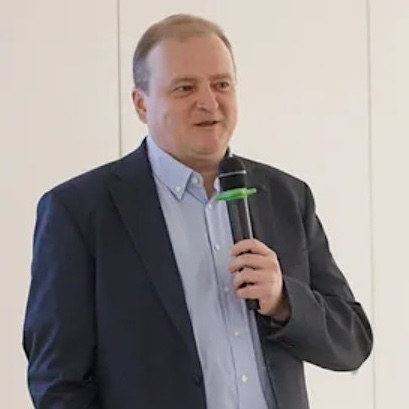
“This demonstrates that the regime was preparing itself by strengthening the ranks of its punitive squads and henchmen; it offered them gear and financial stimulation, cultivated them ideologically and guaranteed them impunity,” Ageev continues. “The level of repression in Belarus today is considerably higher than anywhere else in Europe. As regards the actual cruelty involved, the Lukashenka regime has not caught up with the Nazi Gestapo or Stalin’s People’s Commissariat for Internal Affairs, but as far as numbers of people affected are concerned, by comparing openly available information we may say cautiously that the figures are indeed comparable.”
The arithmetic is horrifying. According to various sources, between 1,548,000 and more than 1,700,000 people were arrested during the “Great Terror” of 1937-38 in the USSR. That amounts to between 0.95% and 1.05% of the population registered at the time (more than 162 million).
More than 100,000 acts of repression have been recorded in Belarus since 2020. BELPOL, the association of former members of the security apparatus, cites a figure of half a million people. In other words, at least 1.06% of the total population of Belarus (9.38 million in 2020) has suffered repression.
‘No other dictator persecutes the media more than Lukashenka’
Another clear sign of the extent of repression is the persecution of independent media outlets, journalists and bloggers. The entire information landscape has been completely purged.
The so-called all-republic “list of extremist materials” of the Ministry of Information now contains 1,846 pages. Books, videos, both printed and internet publications, pages from the social media – whatever the authorities regard as extremist – are added to it weekly.
Oleg Ageev observes that the current level of persecution suffered by media workers is now at the highest level ever in the history of independent Belarus.
Monitoring by BAJ shows that throughout the whole period of the Lukashenka regime the mass repression of the media and journalists in particular reached a peak at the end of 2020 and the beginning of 2021.
Ratings compiled by international associations of journalists show, on the basis of the number of journalists behind bars per head of the total population, that for two years together Lukashenka has repressed the media more than anyone else in the world.
| Journalists in prison in Belarus |
| In Belarus, 28 media workers are currently serving prison sentences ranging from three to 14 years, according to the Belarusian Association of Journalists. At least 13 media workers were detained in absentia for up to 20 years cumulatively. Among the most widespread criminal articles are “organisation of mass riots” and “harming national security”. In September 2025, Ihar IIyash was sentenced to four years in prison for “discrediting Belarus” and “facilitating extremist activities.” His wife, Belsat journalist Katsiaryna Andreyeva (Bakhvalava), has been behind bars since 2020. She was initially sentenced to two years, but was given an additional eight-year sentence on charges of “high treason”, which the Supreme Court later reclassified as “espionage”. In 2025, 15 journalists were released by Alexander Lukashenka for political reasons. On 20 January 2026, Belarusian state media have aired a report claiming the “liquidation of a large network of radio spies” during an alleged KGB “operation” were presented by Roman Protasevich, on the STV public television channel, Reform reports. The broadcast said a network had been dismantled that allegedly “extracted state secrets from the airwaves.” According to STV, more than 50 people have been held liable, 500 pieces of radio equipment seized, and about 66,000 recordings of “intercepted communications” discovered. |
Only China and Myanmar rank higher than Belarus on this list of repressive regimes. Israel was added to the list in 2024, but most likely for specific reasons – a start was made on counting the number of imprisoned Palestinians who are regarded as journalists. Taking the size of Myanmar's and China's populations into account, none of the dictators persecutes the media more than Lukashenka.
Our friends and colleagues are subjected to arbitrary arrest and unfair trials simply for doing their jobs as journalists. Almost one third of them have been tortured.
The whole world knows that a war is currently raging in Ukraine. Thousands of people, including both military personnel and civilians, are dying – the number of casualties is truly horrifying. However, close to this war there is a country – Belarus – where terror is being used against its own people. In my view, that is exactly the way to describe the situation there.
Repression has now reached the level of state terror. The regime uses arrests, courts and prison sentences to create an atmosphere of fear that pervades society. Many people are now drawing comparisons with the Stalinist terror of 1937. However, many consider such a comparison to be an exaggeration, as citizens in Belarus are not executed for their political views.
‘Repressions aren’t decreasing; they’re only taking on other forms’
According to Siarhei Ustinov, a lawyer and human rights defender from Pravovaya Initsiativa [Legal Initiative, one of the oldest human rights organisations in Belarus], it does not make much sense to speak of a “new 1937” – but not because of any kind of humanism on the part of the Lukashenka regime.
“In those days the life of a person, especially in the USSR, was worthless,” he explains:
“Today the price of life has become much higher, even more so in European countries, where the death penalty has been abolished. Incidentally, Belarus was playing with the possibility of abolishing it for a very long time. And today very close attention is being paid to this issue – if the death penalty is carried out in our country, human rights defenders and the international community immediately react with statements.
“Under Stalin there were extremely broad opportunities for repression, looking back at that time. Today the regime also has big opportunities, but the human rights situation is under enormous scrutiny from the West and the civilised world, despite the destruction of the country’s independent media and human rights organisations.
“And like it or not, AlexanderLukashenka is sensitive to this attention, to sanctions. In my view, this is precisely what’s holding him back from complete lawlessness. Otherwise we really would have had repressions akin to those of Stalin.
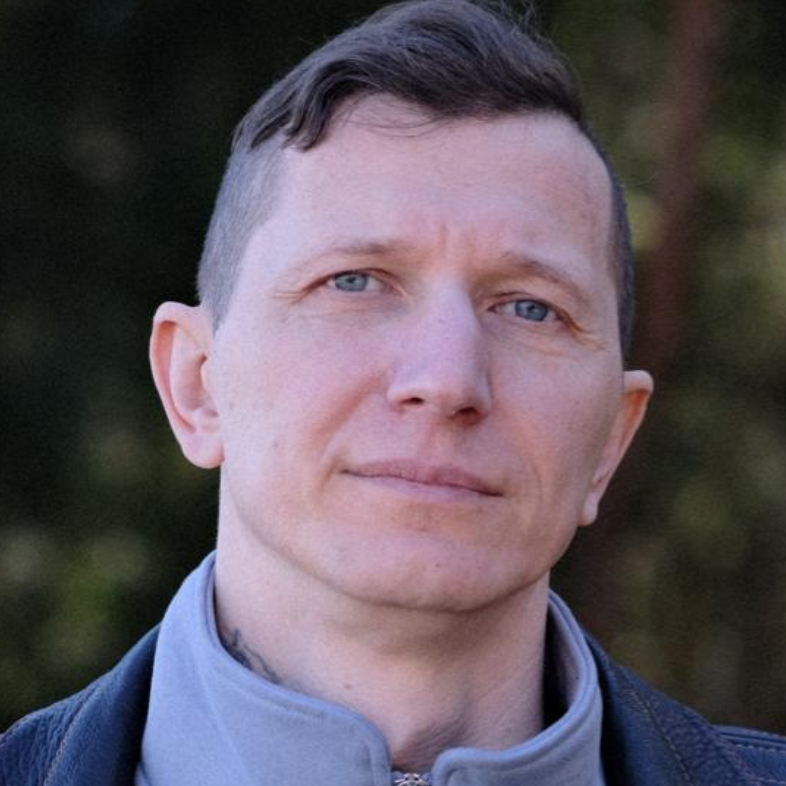
“In my view, ‘the new 1937’ is all the same a powerful metaphor,” agrees Sviatlana Golovneva, a lawyer from the Viasna human rights centre. “But I understand why they are using it. Repressions in Belarus aren’t actually decreasing; they’re only mutating, taking on other forms.”
Ustinov explains that there is currently relatively little information about political persecution in the public domain: the country’s security services have stopped releasing 'repentance videos', and the schedule of court hearings on the Supreme Court website is no longer publicly accessible. However, this does not mean that the scale of political persecution has diminished.
“The level of repression hasn’t decreased; the attitude towards political prisoners has not improved. If people were kept in normal conditions, there wouldn’t be so many deaths in captivity”, he says. As of today, nine political prisoners are known to have died behind bars.
'Even when a person is released, they remain under preventive supervision. They know they’re being monitored and are forced to censor themselves,' adds Golovneva. ‘They’re treated as sub-human and aren’t given the opportunity to do what is required of them. ‘Politicals’ are blocked from having jobs, opening bank accounts or getting cards, and they can’t even leave the city without police permission.”
‘People in Belarus are basically afraid of the security forces’
It is worth remembering that purges are ongoing, with politically motivated dismissals occurring in every sector. It is impossible to say precisely how many Belarusians have lost their jobs for political reasons — more than 6,000 teachers have been dismissed alone — or how many students have been expelled. But the figures are undoubtedly enormous.
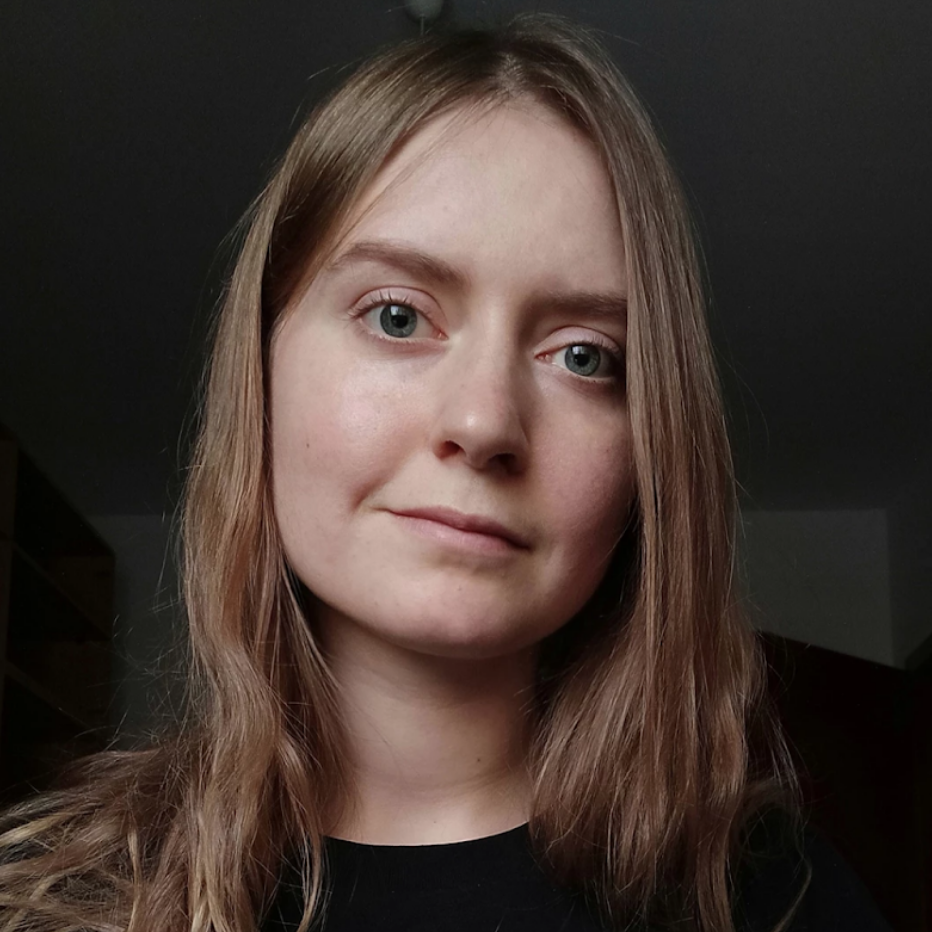
“It’s hard to estimate the number of politically motivated dismissals. People often don’t talk about such cases, and the political context is not always obvious,” explains Golovneva. “It’s not as simple as: ‘Aha! You’re wearing a white-red-white band [the flag of the Belarusian democratic opposition] on your arm, so we’re going to fire you’ – they might simply not renew your contract, ‘optimise human resources’, or force you to resign by mutual consent. And it’s very difficult to verify cases like this.”
“Similarly, the level of fear in Belarusian society cannot be measured. This is simply because such methods do not currently exist, so we have to judge by indirect signs. For example, we can look at the number of people who have unsubscribed from channels that the authorities consider ‘extremist’”, she explains.
“This is a general trend,” says Siarhei Ustinov:
“People are afraid of information containing dissent or anti-regime content. You know that any security officer can stop you in the street and ask to see your phone. If you refuse, they’ll take you to the station where it’s clear who you’ve liked and who you’re subscribed to.
“People are also afraid to donate – it’s now a criminal offence. They’re afraid of providing any information – remember the ‘Gayun Affair’? Gayun was a Telegram chatbot that published information on the movement of Russian troops and equipment inside Belarus. Viasna is already aware of at least 78 Belarusians who have been arrested for providing information. They’re afraid of publicly speaking out against the regime. People in Belarus are basically afraid of the security forces right now. I think it’s truly comparable to the Stalinist era.
“People are also afraid to donate – it’s now a criminal liability. They’re afraid of supplying any kind of information – recall the ‘Gayun Affair’ [Gayun was a Telegram chatbot that published information on the movement of Russian troops and equipment inside Belarus; Viasna is already aware of at least 78 Belarusians who have been arrested for supplying information]. They’re afraid of saying something publicly against the regime. People in Belarus are basically afraid of the security forces right now. It’s total fear, I think, truly comparable to the Stalinist era.”
At the same time, he adds, Stalinist practices such as denunciation and snitching are flourishing. Anything can serve as a reason: for example, one woman sang Ukrainian songs at home; a family hung up New Year fairy lights in the “wrong” colour combination.
| No place for LGBT+ |
| In recent years, the Minsk regime intensified efforts to erase LGBT+ visibility through both legislative changes and physical crackdowns, Salidarnast reports. Key legislative measures include a Ministry of Culture decree that reclassifies depictions of "non-traditional relations" as pornography, enabling criminal prosecution. Additionally, new laws ban "LGBT propaganda" and gender reassignment, often grouping these topics with pedophilia and "childfree" lifestyles to incite public hostility. State media reinforces this by framing the community as "hostile elements" and tools of Western influence. On the ground, security forces conduct raids and arrests, specifically targeting individuals for possessing rainbow symbols or attending community events. Reports highlight severe abuses, including forced "detransitioning" for transgender individuals and invasive digital searches. This hostile environment has decimated safe spaces and triggered a wave of migration to countries like Germany, Spain, and Argentina. Despite the crackdown, activist groups like "Prismatica" continue to support the community from exile. These systematic actions are part of a broader state campaign to legitimise discrimination and instill fear through total marginalisation. |
“The repressions are getting even harsher, I’d say,” says Golovneva:
“For the fourth year now, Viasna and the International Committee for Investigation of Torture in Belarus have been documenting cases of torture and cruelty – five years have passed, and we’re continuing to do this. But the victims' stories look different now.
“At the beginning of the protests, events unfolded very intensely: a person could pass through three circles of hell in three days of custody. Former political prisoners now tell stories of being detained in pre-trial centres and penal colonies, and of enduring prolonged torture and cruelty.
“While these problems do not appear to be directly related to criminal prosecution, they logically stem from it and can affect a person for the rest of their life, even if they leave Belarus.
“The security forces' cruelty in 2020 was systematic. After all, it wasn’t just one boss at the Okrestina detention centre who lost his mind and ordered people to be beaten up; it was happening everywhere. The stories we’re now hearing are about how the penal system is inhumane by design and only traumatises people.
‘We’re still not at the level of 1937. Not because the Lukashenka regime is particularly humane or because it’s frightened by the spectre of The Hague’s International Criminal Court, but because international attention to human rights is far higher than a hundred years ago’ – Siarhei Ustinov
“Another classic ‘glorious tradition’ is torture,” explains Ustinov. “It’s not just being practised now as it was under Stalin. Propagandists publicly declare: ‘well yes, we torture, but we’re torturing bad people, zmagary [protesters], dissenters.’”
“What else? Blackmail. The relatives of persecuted Belarusians are hostages. There are situations when they are directly threatened, or they’re used to intimidate activists”, he continues. “So many people are scared to speak out openly about the situation in Belarus; they’re afraid to be the ‘face’ of a human rights organisation or other initiatives, because they have relatives in Belarus. And since there is legal chaos in the country, they can just be taken away.”
“Extremists” and “terrorists”, the new “enemies of the people”
“As I see it, these numbers [as of 10 October 2025 in Belarus 5,875 people were recognised as ‘extremists’, while 1,344 people were on the Belarusian KGB’s ‘terrorist’ list] speak to something a little different, than simply labelling them as ‘enemies of the people’”, says Golovneva:
“The label of ‘enemy of the people’ meant a person would be stripped of many civil and political rights compared to other citizens, who in the Stalinist system were also very restricted in their rights and freedoms. And in Belarus right now, thousands of people are ‘extremists’ and ‘terrorists’; it’s harder to isolate them so forcibly from the rest of society and to ostracise them.
“Hardened measures for fighting ‘extremism’ – I would say that this is one of the tools for suppressing absolutely any dissent. These are not the regime’s most serious enemies – people who have shown merely some kind of disloyalty to the regime can be assigned to the category of ‘extremists.’
“As for the label of ‘terrorists’ – the people added to this list, as we see, are either those that the regime considers a threat, or those who support activity that is dangerous for the authorities. For example, a great many people have faced persecution for donations, but some have been able to escape a criminal case, though if the donation was made to the Kastuś Kalinoŭski Regiment [a battalion of Belarusian volunteers formed in 2022 to defend Ukraine from Russian aggression] then it almost always leads to a prison term.
“That is, these lists allow us to see what kind of activity the security forces are pursuing out of a need to intimidate further, and which types of activity they really consider critical and are making greater efforts to identify people.
“To sum up – we’re still not at the level of 1937,” says Ustinov:
“But – I’ll say it again – not because the Lukashenka regime is particularly humane or because it’s frightened by the spectre of The Hague's International Criminal Court, but because international attention to human rights is far higher than a hundred years ago. And Lukashenka wants a good life for his children, he wants to trade with the West, to avoid new sanctions – so he’s wiggling around: letting go in some places, trying not to press too hard in others. Though I think if it were his will, he’d just like to shoot everyone. Or at least exile them from the country, as they did in the USSR. As we see, he’s already doing the latter.”
“I’d also add that for all that, Stalinism, like fascism, is very closely tied to ideology and the militarisation of society, and is based upon a strict hierarchy,” concludes Golovneva:
“Fortunately, this can’t be said of today’s Belarus – there’s no complete indoctrination of society like this (perhaps, yet). Although the authorities, of course, are using many ways of intimidating people, of discouraging them not only from political activity, but also from social activism. And this is where Belarusians have a certain potential to resist everything that’s happening.”
👉 This article is a compilation of two analyses published by Solidarnast in October 2025. The first is available here. The second is available here. The boxes were updated later.
Do you like our work?
Help multilingual European journalism to thrive, without ads or paywalls. Your one-off or regular support will keep our newsroom independent. Thank you!