








Select a language
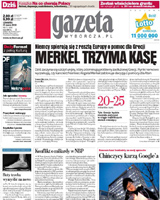 On its front page, Gazeta Wyborcza wonders who will dominate the EU summit on the 25 and 26 of March: "Lady Europe or Frau Germania?" According to the Polish daily "from now on the Germans will defend their interests, as the French, the Spanish and the British have done for years." Another Polish newspaper, Polska, explains that "Germany is determined to rid itself of its "EU banker" image in the light of the findings of a recent poll which reveals that 40% of Germans believe that they would be better off with the Deutschmark rather than the euro. In the run-up to May elections in North Rhine-Westphalia, scheduled for 9 May, this shift in public opinion is more important to Merkel than the problems experienced by Greece," affirms the daily. According to a front-page report in La Tribune, which announces "a red alert for the European currency," Germany's all-time record deficit of 80.2 billion euros is the main reason "for Berlin's refusal to rescue Greece."
A cat and mouse game
For Le Soir, the main news is "a crisis brewing in Franco-German relations" that could bring Europe to a standstill. The Belgian daily notes that "whereas we often resent the Franco-German leadership couple, marital discord between Europe's main economies is extremely worrying. Without solid agreement between Paris and Berlin, no progress can be made in Europe." This development is also lamented by Le Figaro which notes that "the most recent Franco-German meeting in Brussels was marked by a pledge to work 'hand in hand' to pull Greece and the Euro out of the rut." Now it appears that "six weeks later, French president Nicolas Sarkozy and Angela Merkel will have their work cut out to come to an agreement to make good on that promise and convince rather sceptical markets".
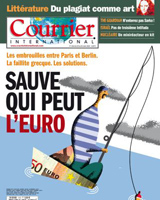 "Every man for himself on the good ship Euro," headlinesCourrier international, which devotes its front page to "the cat and mouse game" being played out in Brussels between the different protagonists – Germany, France and Greece. Quoting from the Washington Post, the French weekly speaks of "growing discord within the European Union," which is now "a region confronting a mounting array of economic and diplomatic problems."
Light years from the Mitterrand / Kohl era
From a Central European point of view, the debate about the eurozone crisis reveals "a double standard in the treatment of eastern and southern states within the EU," writes Jacques Rupnik in an op-ed piece published by Le Temps and Hospodářské noviny. For the Franco-Czech political scientist, the countries of Central Europe fighting to join the monetary union will suffer the effects of a crisis "for which they are not responsible." Future criteria for East European eurozone candidates will be "made more rigorous by southern countries' failure to respect criteria that applied when they joined the single currency." Attempts to rescue the public finances of southern European states will have a negative impact on eurozone enlargement to the East, which is why Rupnik believes that it is highly likely that the countries of Central Europe will support a hardline position adopted by Angela Merkel.
As for the outcome of the summit, Il Sole 24 Ore predicts that "in all likelihood, participants will agree on a dual solution for Greece: an IMF intervention financially supported by the members of the eurozone." A compromise, which the Italian business daily notes, will ensure "that Greece does not stand alone when it knocks on the door of the IMF, and will also prevent its partners from defining all the conditions of their intervention." And whereas this appears to be "sensible" solution, the newspaper is highly critical of the "execrable manner, in which agreement will be marked by an internecine struggle and recrimination between Berlin, Paris, and the main European countries, without a whit of coordination or strategy." In short, "we are light years from the times when Helmut Kohl and François Mitterrand agreed on a single currency" or from that period when "Jacques Chirac and Gerhardt Schröder met on the eve of a summit to determine the Union's financial objectives for the next seven years."
Portugal
After Greece, can Portugal be far behind?
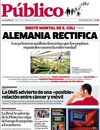 Bad news for Portugal on the day that parliament debates the Program for Stability and Growth (PEC), a set of Government measures to cut the budget deficit from 9.3% to 3% by 2013. Fitch, a major financial agency, has downgraded the country’s rating, as it forecasts “weak economic growth” this year. “The pressure couldn’t be any more forthright”, writes Público in a front page article. In a last-minute deal struck between the governing Socialist Party, who lacks an absolute majority, and the main opposition party, the Social-Democrats, who criticise PEC for relying too heavily on taxation, expensive public works, and not enough austerity, the latter agreed to abstain in the parliamentary vote.
Do you like our work?
Help multilingual European journalism to thrive, without ads or paywalls. Your one-off or regular support will keep our newsroom independent. Thank you!