














Select a language
Introduction
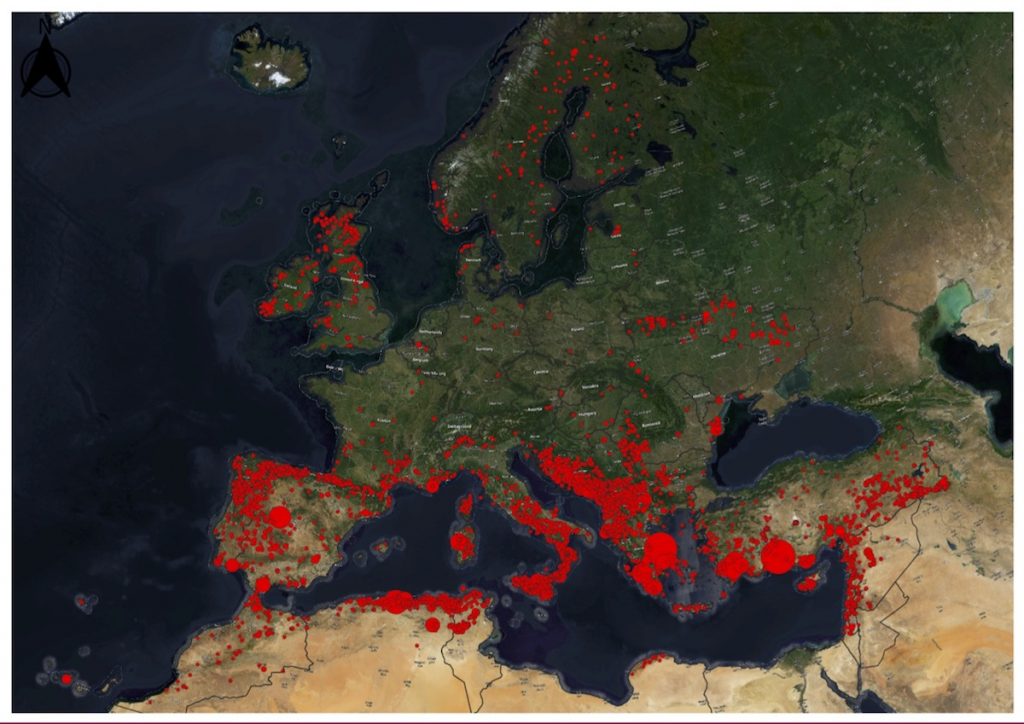
Looking at the map of the depopulation in inland areas of the Mediterranean, one can see that it overlaps to a large extent with the map of forest fires recorded by satellites. This is nothing new for researchers working on fires and climate change: the relationship between the two phenomena is well known. Yet it would not be correct to attribute causality without considering other factors. To understand the relationship between fires and rural exodus, we went to the sites of the most devastating fires of summer 2021 in Spain, Italy, Greece and Cyprus.
Discover the investigation, including this story
Part 1. Italy and Greece: friendly fire and enemy fire
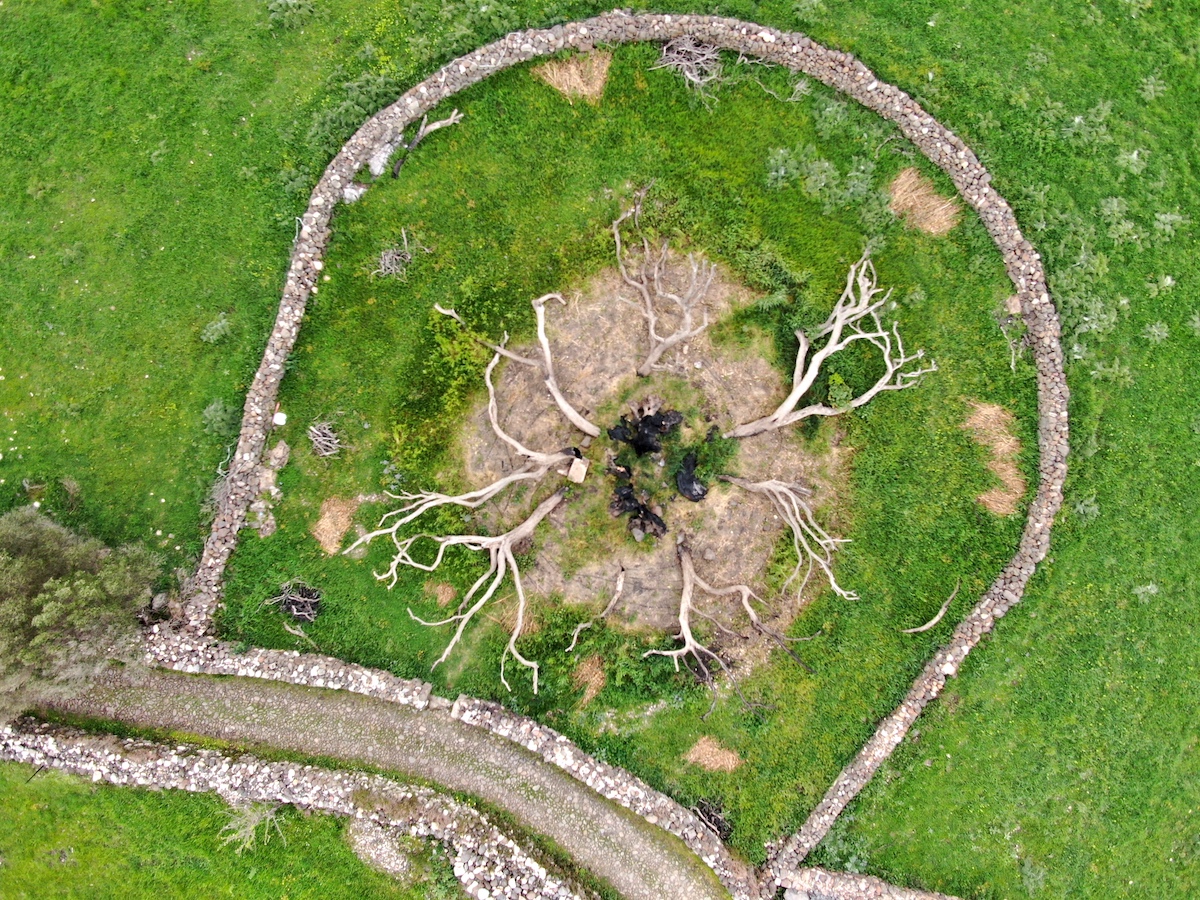
Sa Tanca Manna, the thousand-year-old olive tree symbol of Cuglieri, was a source of real pride for local people. Sixteen metres tall and ten metres wide, the tree was considered the progenitor of all the olive trees in this corner of northwestern Sardinia known for the quality of its oil. It was an example of botanical archaeology. The tree died last summer, victim of a brutal fire that swept through the Montiferru countryside, burning more than 20,000 hectares of land and bringing the entire local economy to its knees.
"The flames destroyed more than half of our olive trees, and last autumn's harvest was so poor that we produced less than half of the previous year's crop," says Laura Cocco, 26, manager of the Peddio oil company, which was among the many businesses that suffered heavy losses. "Many have been replanted, but it will take years, perhaps decades, before the trees are as productive as they once were."

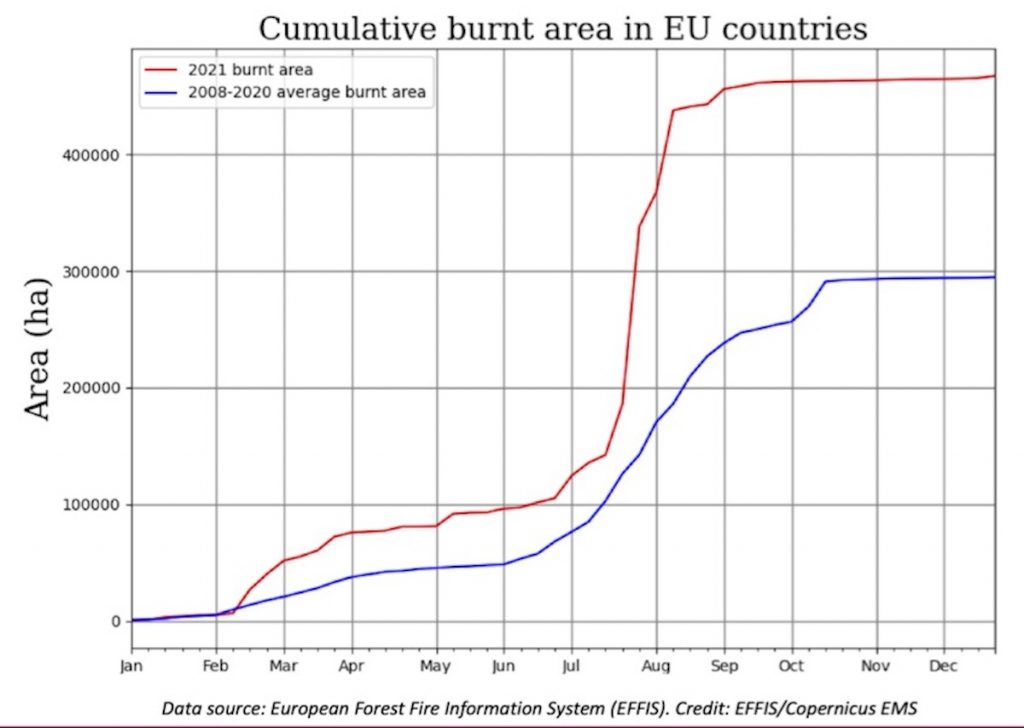
The Montiferru fire was one of many that ravaged Italy last summer in what was the hottest year ever for the country. Four times the forest area was destroyed compared to the previous decade's average. Things were no better in the rest of Europe. According to Effis, the European Forest Fire Information System, more than half a million hectares of land went up in smoke in the European Union in 2021, the second worst figure ever recorded on the continent. The Mediterranean region suffered the most.
Yet, if one looks at the overall picture, the number of fires on the northern side of the Mediterranean has decreased in recent decades. What has increased are what are called mega-fires, i.e. those covering an area of more than a thousand hectares. The appearance of this new generation of fires is closely linked to ongoing climate change, which in the Mediterranean region is creating weather conditions favourable to fires. But the changing climate also interacts with another trend taking place throughout the Mediterranean region: expanding forests.
As recently as a century ago, when many European countries still depended on local timber to construct buildings and boats and infrastructure, forests covered only about 3 percent of the continent's land. Today the figure has almost quadrupled due to reforestation schemes, more efficient building materials, and urbanisation. In the Mediterranean area, where forests have expanded by about 28 percent since the 1990s, woodlands occupy 21 percent of the land area.
The increase has been particularly striking in Italy, where forests have grown by 75 percent in the last 80 years to cover almost half of the country. Many of these forests have reappeared in rural areas that have been gradually abandoned by humans and their farming and grazing activities. The municipality of Cuglieri, for example, has gone from 2980 to 2500 inhabitants in the last ten years, a population decline of 20 percent. In Italy there are 3805 municipalities – more than half of the total – where the average number of inhabitants has fallen by 22 percent. 44 percent of these are located in the south and on the islands, the same areas where fires have increased in intensity and frequency.
This is why, according to many experts, it is sometimes misleading to look at the number of hectares burned by fires each year as a measure to define good or bad forest management. Francisco Moreira, a forest-ecology expert at the University of Porto in Portugal, says that this paradigm partly contributes to the unprecedented fires we have been facing for the past few years. Faced with this new type of event, Moreira explains, the current strategy consisting essentially of the suppression of any and all fires is highly inefficient. It can lead to mega-fires which, once triggered, are all but impossible to contain.

For this reason, the researcher argues, it is necessary to "move from a logic of fire suppression to one of mitigation of fires’ negative impacts". Priority should be given to policies that can prevent the situations giving rise to the most devastating fires, rather than to investments in new aircraft or firefighting equipment. "One of the main challenges for Mediterranean forests is to ensure that the ecological benefits of rural exodus (such as reforestation and increased carbon dioxide uptake) are not outweighed by the negative effects of extreme fires."
According to Andrea Duane, a researcher specialising in fire management at the Centre for Forest Science and Technology in Catalonia, Spain, fire management needs to be designed to ensure that ecosystems function well. "It is crucial to understand the type and extent of vegetation and its structure in order to plan for a landscape that can absorb carbon dioxide and at the same time ensure that there are no risks for those who live in these places."
With the gradual abandonment of rural areas, forests have become crowded with shrubs and plants. These used to be cleared through grazing, through the collection of wood for fuel, and by small fires controlled by local inhabitants. This prevented any excessive accumulation of flammable organic matter. The end of these activities is coinciding with abnormal climatic conditions that make the landscapes a huge reservoir of fuel ready to ignite.
As forests come closer to inhabited areas, they are thus becoming a threat to homes and farms, putting further pressure on local people and the fragile farming economy. Moreover, Mediterranean forests are the habitat of three quarters of the land mammals of these regions, about half of the Mediterranean vertebrate species and almost 75 percent of the insects.
Devastated Euboea
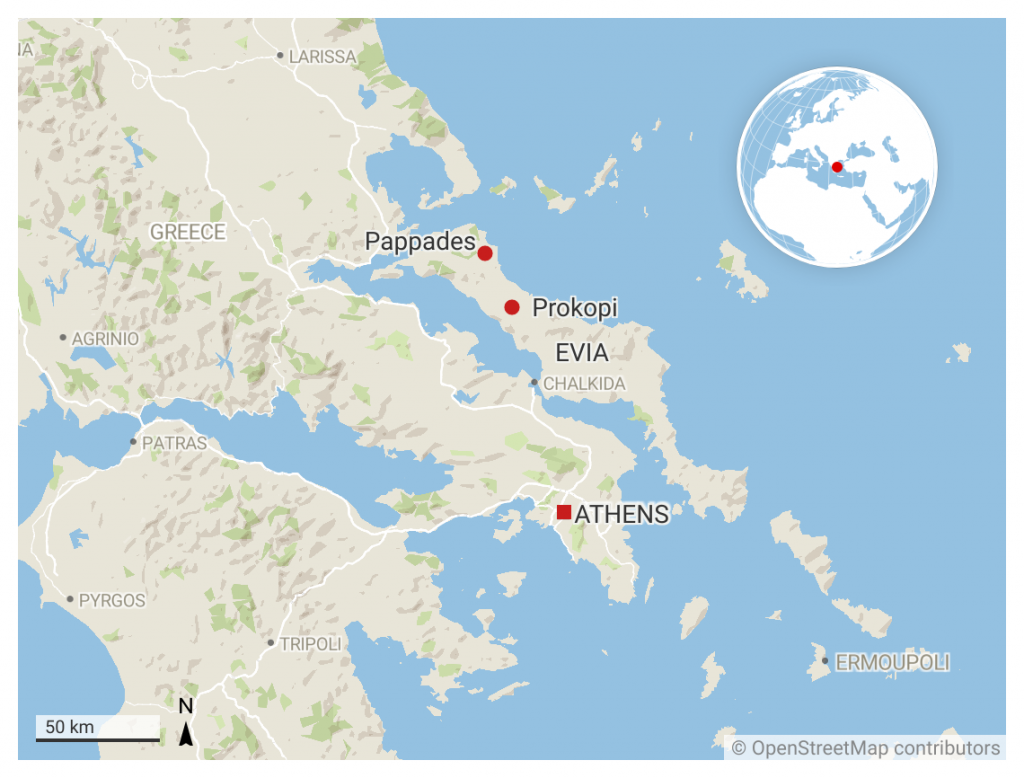
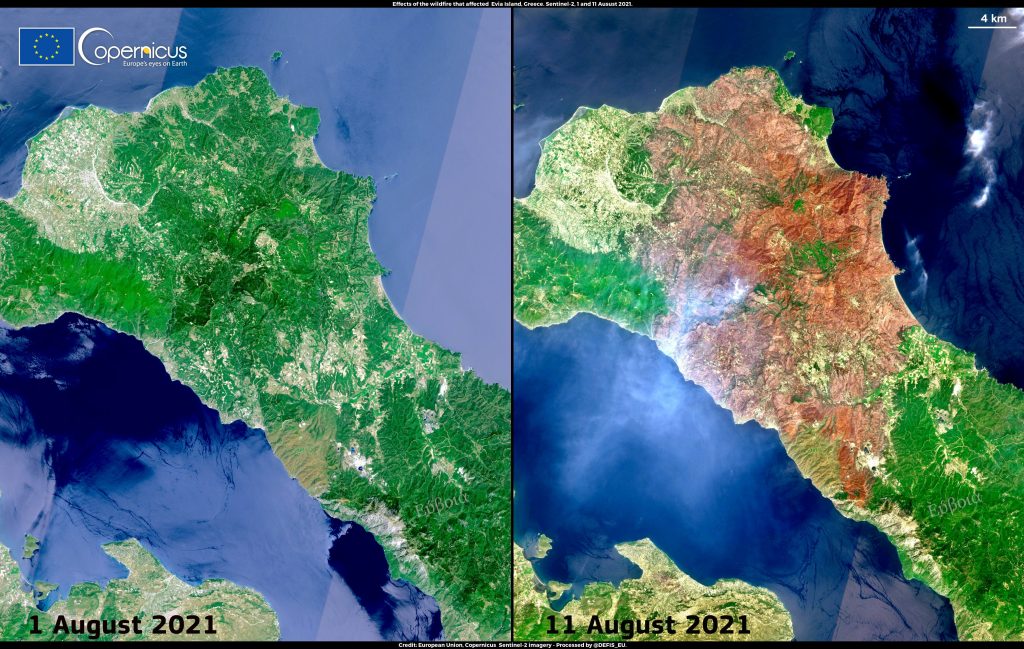
The fire on the island of Euboea, Greece, set a record for size in that country, with 50,000 hectares gone up in smoke. Seventy percent of the area was forest. The fire of August 2021 was certainly not the first one on the island: other major fires occurred in 1977, 2018 and 2019. But this latest one brought the local economy, tied to forest products and tourism, to its knees. The director of the Greek Environment and Climate Change Agency (NECCA – ΟΦΥΠΕΚΑ), Ioannis Mitsopoulos, has worked for years in the pine forests of Euboea, and argues that climate change alone cannot be blamed. "A lot has to do with the use of funding. For every ten euros spent on forest management, two go to prevention and eight to extinguishing ongoing fires," says Mitsopoulos.
This logic is what Moreira calls a "trap", i.e. of investing more and more in resources to extinguish fires. It works in the case of minor fires but proves useless in the case of exceptionally big ones, which alas are becoming less exceptional. Not to mention that putting out every minor fire today can lead to the accumulation of flammable material that ends up feeding tomorrow's mega-fire.
"The common view of people living in cities and urban areas is that fires are unwanted external events and that they are always catastrophic," Duane argues. This, he says, has led to the blanket rejection of all fires, which ignores the counterintuitive effect that this will have on extreme fires. "Many species of plants and animals even need fire to some extent in order to reproduce and thrive. What is detrimental to biodiversity is the change in fire patterns, for example in their frequency and extent," says Duane.
Before the rural areas of the Mediterranean became depopulated, the technique of counter-fire was widely used in traditional rural communities. This consisted in setting fire to specific areas of the forest in the path of a larger fire in order to stem its advance. In the last two or three generations, and with laws prohibiting it, the practice has been abandoned. In its place, aircraft and other costly technological solutions have been used.
Today, so-called "prescribed fires" employ that traditional rationale of burning certain forest areas in a preventive and controlled manner so as to ensure that any later fire, intentional or not, does not find fuel and turn into an extreme and devastating event. In Australia and California, this approach has made it possible to prevent enormous damage to forests far larger than those of the Mediterranean.
The problem with the expansion of forests is that today between 60 and 70 percent of these areas belong to private owners who may not take care of them properly. "Often the private owners who have inherited these forest fragments no longer have any knowledge of the use of fire for preventive purposes. So they do not give their permission for prescribed fires to be carried out," says Duane.
On the island of Euboea, the fire brigade of Prokopi has been sending letters every year to the authorities warning them of the imminent danger due to neglect by private forest owners. According to these volunteers, the state has not done enough to incentivise private individuals to take care of their part of the forest. The long-term economic and social impact of the Euboea fire is still incalculable.
The mayor of the village of Pappades, where 160 mainly elderly people live, believes that this fire will lead to the slow death of the village, because no young people will be interested in coming to such a devastated area. The Forest Village hotel and resort in Pappades was partially destroyed by the fire.
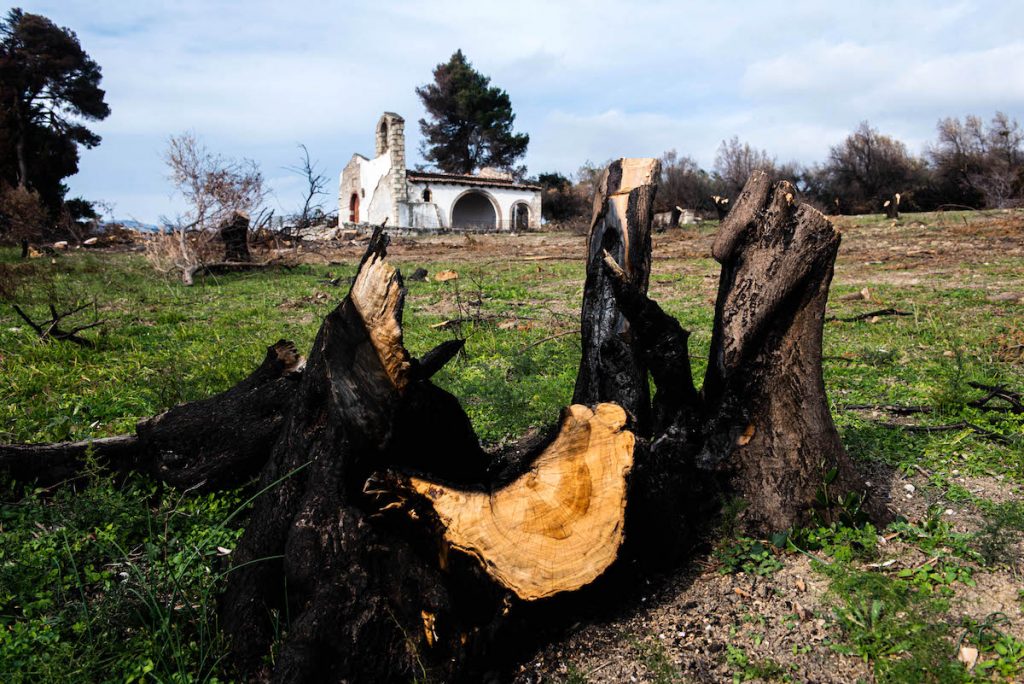
This put many locals out of work and they are now considering moving elsewhere to seek employment. Similarly, the loss of the olive trees in Cuglieri will have a terrible impact on oil production in the coming years and cause inevitable job losses in the sector. "Our company has four employees and during the harvest we employ 25 seasonal workers. This year we couldn't call them", says Laura Cocco. Her olive-oil farm has lost 40 percent of its olive trees.
It will take at least a decade for production to return to pre-fire levels. Such a severe blow to the fragile agricultural and tourist economy will lead to further depopulation if no concrete incentives are found to encourage people to stay. It is symbolic of rural life in today’s Mediterranean, grappling with the worst climatic crisis in memory.
This article is part of a collaborative investigation between journalists of CIVIO (Spain), MIIR (Greece), Voxeurop (France) and freelance journalists Chloe Emmanouilidis (Cyprus), Davide Mancini and Marcello Rossi (Italy). The latter two also coordinated the team's work.

Supported by Journalismfund Europe
Do you like our work?
Help multilingual European journalism to thrive, without ads or paywalls. Your one-off or regular support will keep our newsroom independent. Thank you!


