










Select a language
“They’re just waiting for me to die too. After all these years, it won’t be long now: everyone else around here is already gone. The truth is that nothing has ever been done for us or for our ruined land, and by now it’s obvious that nothing ever will.” Pierino Antonioli speaks softly, with the resignation of someone who has spent decades waiting for justice.
He is one of the farmers whose life was upended by the toxic pollution released by Caffaro Chimica in Brescia – an industrial complex built just 900 metres from the historic centre of the northern Italian city, beside a primary school and hemmed in by housing.
A thousand kilometres away, in Marseille, Maguy Fèvre echoes his words. She lives in a district contaminated by heavy metals from the former Legré-Mante factory, at levels she calls “demonic”. “They’re just waiting for us to die. They pass the problem on to someone else because they don’t have the courage to enforce the law.”

Brescia, Marseille and Zwijndrecht, in Belgium’s Flanders region, sit under three different national legal systems. Next to their contaminated sites, residents ask the same question. The EU has a Polluter Pays Principle (PPP, see box). So why, decades on, are ordinary citizens still the ones paying the highest price?
Stéphane Horel, an investigative journalist at Le Monde and coordinator of the Forever Pollution Project, watched this happen across Europe. Residents, she observes, often accept a compromise with their own health without quite realising it, and they make it alone.
Brescia’s toxic legacy
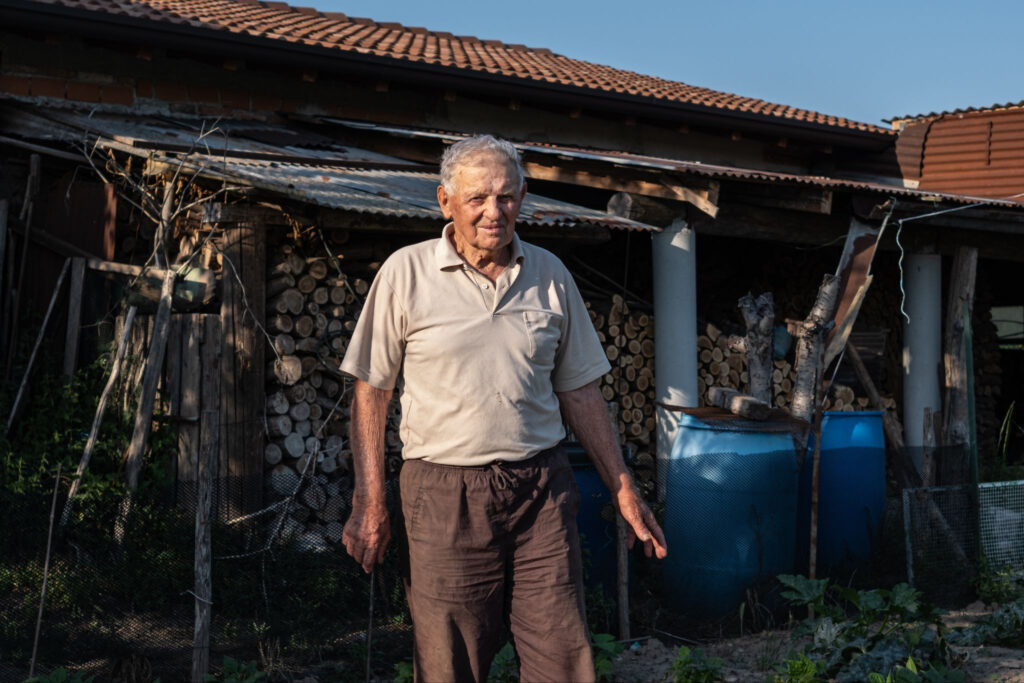
Pierino and his wife Franca still tell their story to anyone who visits their farmhouse, a few metres south of the factory. Inside, the furniture and the veranda look exactly as they did in 2001. That was the year contamination by polychlorinated biphenyls (PCBs), dioxins, hexavalent chromium, mercury and other heavy metals became public.
Soil, groundwater and aquifers were polluted for kilometres around. Entire neighbourhoods needed cleaning up, and more than 30,000 families were affected.
The Antoniolis then learned that PCBs had entered their bloodstream, and their children’s. Their tests showed 600 nanograms of PCBs per millilitre of blood. The estimated upper safety threshold is 10.
Pierino lost a lifetime’s work overnight. His fields, livestock and crops were all contaminated. Twenty-five years later, the family has received no compensation. At one point they were even told to pay property tax on land the pollution had made unusable. “On top of the damage came the insult,” he recalls.
Franca is now 81 and Pierino is 83. His blood still carries PCBs, and he is being treated for his fifth cancer.
A few metres north of the farmhouse, hundreds of families sent their children to school for years without knowing what lay beneath them. “In 2006 we discovered that children were no longer allowed to play in the school garden. We asked why, but nobody answered,” says Guido Menapace, one of the organisers of a residents’ movement in one of the worst-hit neighbourhoods.
“The contamination was there. The authorities knew about it, but nobody told us. We had to uncover the truth ourselves through freedom of information requests, piecing together what had happened bit by bit”.
First, the movement had to win over sceptical neighbours. “Many people told us to let it go. They were afraid talk of contamination would drive down property prices. Some were ashamed to admit they lived in a polluted neighbourhood.”
It took seven years of protests before residents got answers. They occupied the school, the municipal environment department and the local health authority. The school garden was cleaned up in 2016. Public parks, where children had been told to keep off the grass, waited another decade.
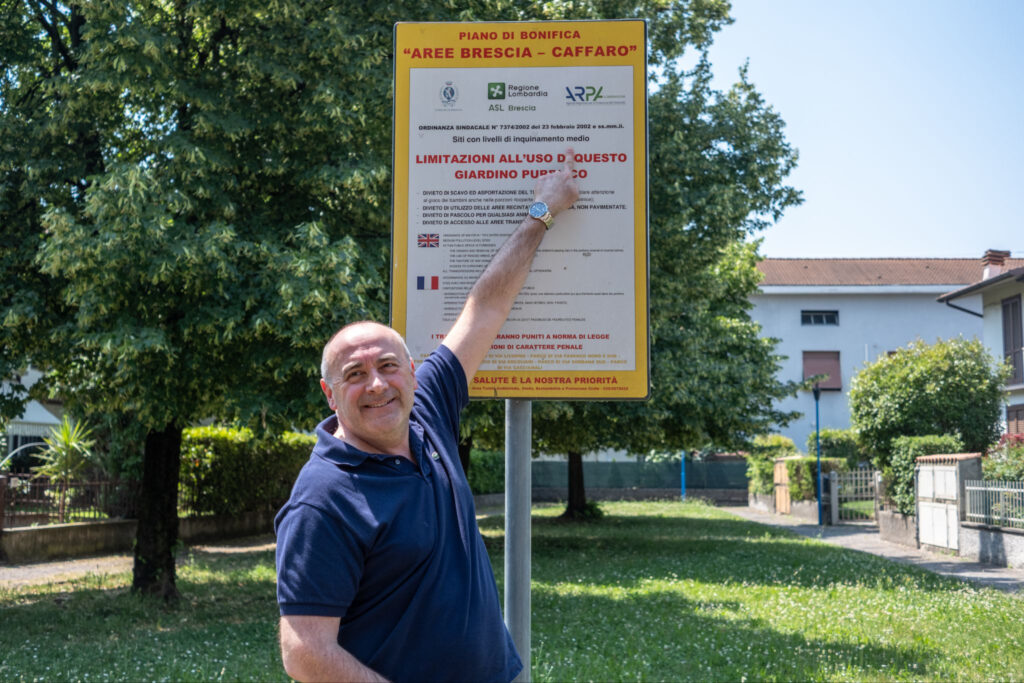
The polluter did not foot the bill. “The principle should be simple: the polluter pays. Here, it’s still the victims who are paying,” Menapace argues. The work was paid for with public money that, he notes, “has been diverted from other public services”. On private land, the cost still falls on the owners. “Many people avoid testing the soil in their gardens or vegetable plots. If contamination is confirmed, they could be legally required to pay for the clean-up themselves. Estimates run between €1,050 and €1,200 per square metre. Better not to know.”
Zwijndrecht: an American giant in Flanders
Since 2022, the 3M chemical plant in Zwijndrecht, near Antwerp, has been legally required by the Flemish government to investigate and clean up the contaminated soil on its own land. It is not required to compensate the people living around it.
Jeroen Van Reeth can see the US multinational’s factory from his bedroom window. He was as shocked as anyone in 2021, when news broke of extensive contamination by per- and polyfluoroalkyl substances (PFAS), the so-called forever chemicals. “There are plenty of laws, and emissions are supposed to be strictly regulated, so we believed everything was under control.”
Chronic exposure to PFAS, even at low levels, has been linked to liver damage, raised cholesterol, weaker immune response, low birth weight and several cancers.
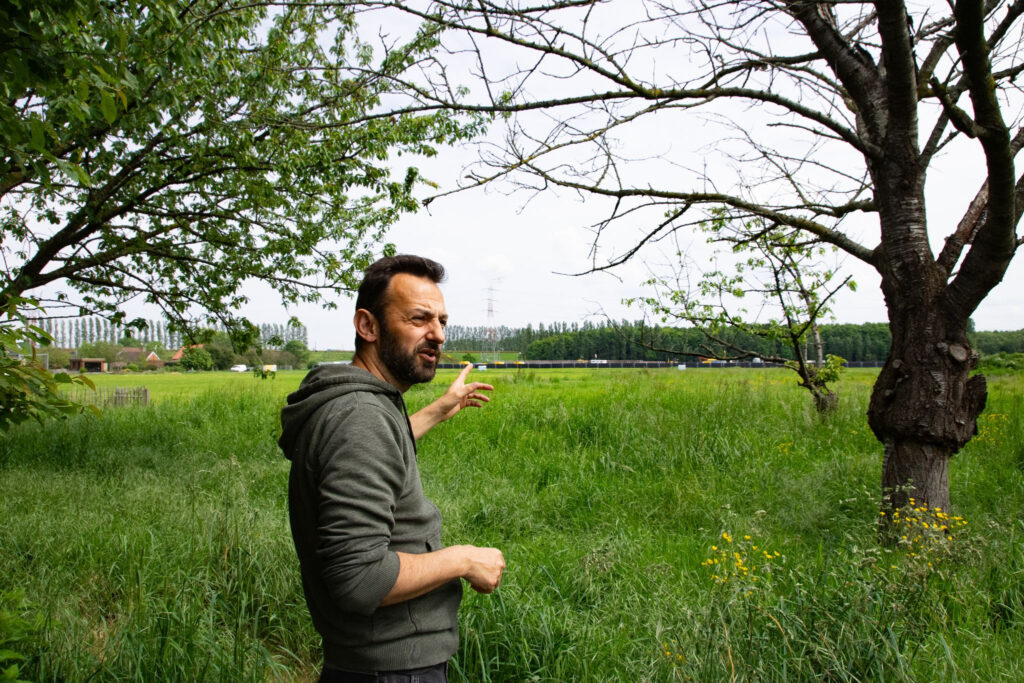
His neighbours, Wendy D’Hollander and Stefanie Bellinkx, still follow the health advice issued at the time. They no longer eat vegetables or eggs from their own gardens, and they try to keep their children from playing in the soil.
Local women led much of the mobilisation. In 2023, Hedwig Rooman, Wendy and other mothers had their breast milk analysed and found high concentrations of PFAS. “We’re still fighting for them,” they say of their children.
After years of investigation, the Flemish public waste agency (OVAM), which oversees soil protection, concluded that residential areas around the site also need cleaning up. The work is due to start by the end of the year.
Because earlier blood-testing campaigns found such high contamination, 3M also agreed to remove and replace the top 70 centimetres of soil in gardens inside the so-called red zone.
“Some people have spent twenty years creating beautiful gardens, and they’ll be compensated for rebuilding them,” explains Els D’Hondt, a former Zwijndrecht resident. “But anyone who doesn’t want to go through with it should have the right to refuse having their garden dug up. Some people have even moved away because of this.”
Refusing comes at a cost. As Els and Stefanie point out, OVAM has said that homeowners who opt out of the clean-up will have their property officially registered as contaminated, and that cuts its market value sharply.
Others, aware of the system’s shortcomings, have stayed. “It’s difficult for me to sell my house to someone else knowing it’s still contaminated,” admits Toon, who has lived all his life inside what is now the red zone.
Nor does the clean-up reach the source. “There are still around 60 tonnes of PFAS beneath the 3M site,” Jeroen warns. “And that’s only what we know about, because the buildings where the contamination started are due to be demolished.” [Source for 60 tonnes beyond Jeroen?] The stream that crosses the site, he adds, carries pollution past the canal into other waterways and, eventually, the main river.
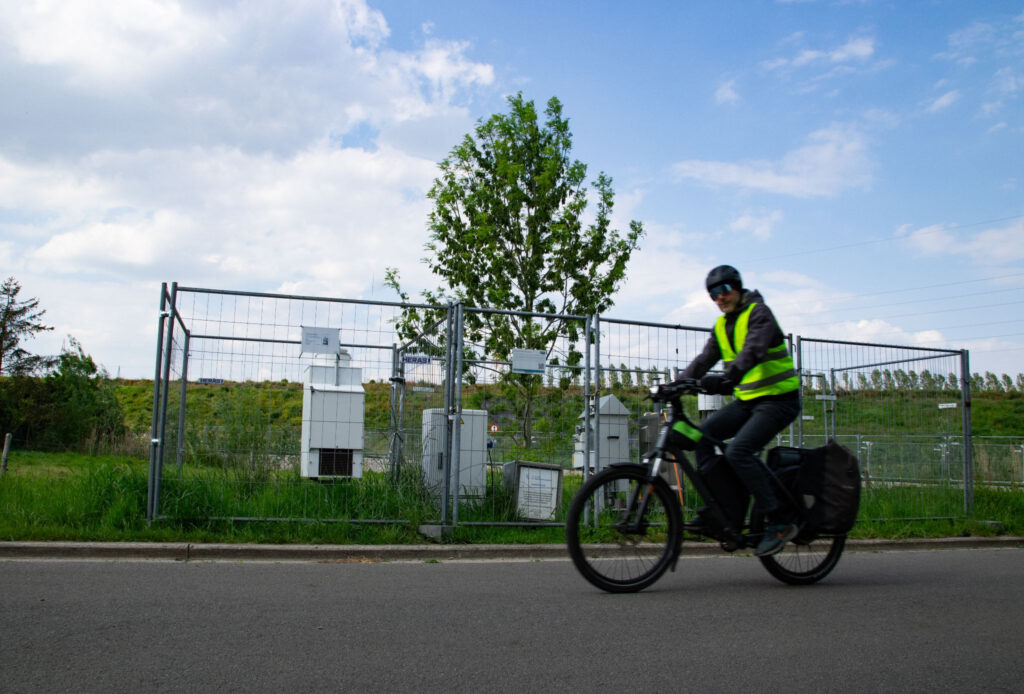
The health question remains open. A Flemish government biomonitoring study carried out between 2023 and 2025 found lower levels of PFOS, a specific PFAS compound, in residents’ blood than in 2021. It concluded that no causal link between PFAS exposure and health effects could be drawn.
The 2021 and 2023–25 campaigns were run by different authorities using different methods, which makes comparison difficult. And the Flemish government decided not to extend blood testing to former residents or a wider area. Toon suspects why: “Their greatest fear is that a connection will be established between their products and people’s health problems.”
For Els, living next to a chemical plant while trying to challenge it is a fight she cannot win. “Completely cleaning up the contamination would require extremely expensive technologies, far beyond what anyone can realistically afford for an area like this.”
Two sets of rules in Marseille
“For us, this is huge. It’s a landmark ruling with nationwide significance in France.” That is how Rolland Dadena, one of the coordinators of the Association Santé Littoral Sud (ASLS), describes the December 2024 decision of the Marseille administrative court.
The court found the French state liable for failing to act. It ruled that the state had not used its powers to force the clean-up of land contaminated by more than a century of industry in the Marseille calanques, including the former Legré-Mante factory. According to the judgment, the site holds lead, arsenic and zinc at up to 500 times normal levels, causing significant harm to ecosystems and residents.
The ruling marked a turning point for ASLS and other local groups. They have been fighting both the state and the investment fund Ginkgo, which now owns the Legré-Mante site and plans a large housing development there.
The victory has produced mixed results. Inside the Calanques National Park, the state has launched containment works that Dadena calls “titanic”. At Legré-Mante, where the clean-up is Ginkgo’s responsibility, the process has stalled.
The court ordered the prefect – the representative of the central government – to use his powers to make the owner start work within ten months of being notified of the judgment. To date, nothing has happened.
“Why was it possible there, but not here?” Dadena asks.
The frustration runs through the neighbourhood. Maguy believes her husband’s death from blood cancer was probably linked to years of exposure to industrial pollution. She wants the prefect to force Ginkgo to clean up the site before any building starts.
For François, a resident and former Legré-Mante worker, the Polluter Pays Principle “simply doesn’t exist. It isn’t enforced. The people who are protected are the owners – the polluters – not the residents.”
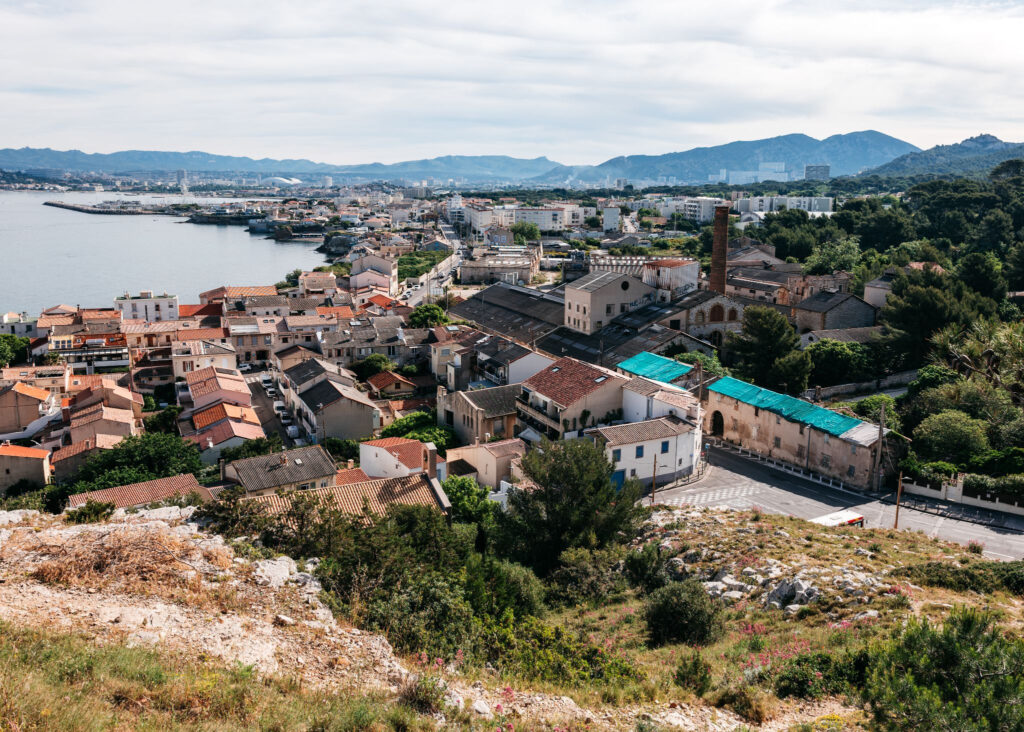
Heavy metals have also turned up in some private gardens. The authorities have advised residents not to eat home-grown vegetables and to limit their exposure to contaminated dust.
Several residents have since joined a collective criminal complaint alleging that their lives were knowingly endangered. They want financial compensation, but above all recognition of the moral harm they have suffered. “We have never been treated with respect,” François says.
Even polluted places can be happy ones
In all three places, the pattern repeats. Pollution surfaces years after the fact. Institutions step in late. Responsibility splinters between companies, owners and the state.
In the meantime, people go on living with toxic substances while the courts work out a simple question: what is the damage worth?
Horel offers her own answer. “What is thirty extra years of life worth if you develop cancer at fifty? Even if you recover, your health is permanently altered. If politicians had been honest about the terms of this implicit contract, would we, as a society, ever have agreed to it? I’m convinced we wouldn’t.”
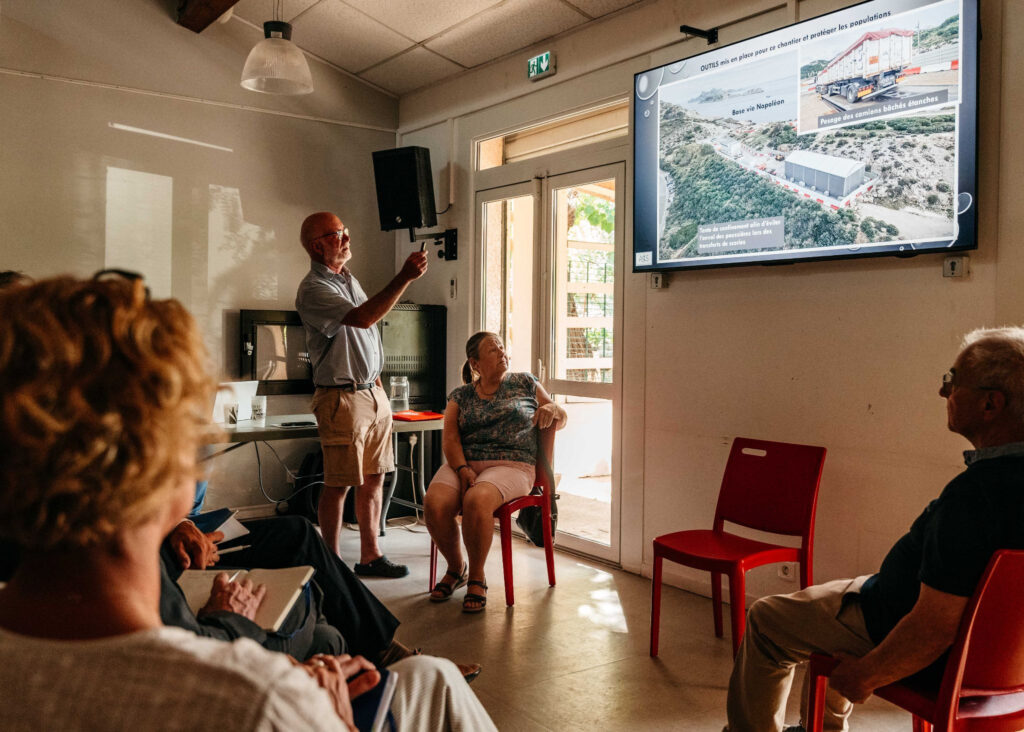
The principle has not vanished. It has narrowed, from a promise of redress to an obligation to clean up the site. In Brescia, Marseille and Zwijndrecht, residents stand in gardens that are polluted but full of memories, and ask why a liability established in law has never extended to their health or their homes.
Pierino and Franca have lived all these years on a pension of a few hundred euros a month. “But we’re simple people,” Pierino says. “We don’t need much to get by. Every now and then there’s talk of new money for the clean-up, or compensation from the state. We’ve never seen a single cent. And now… we’re old.”
The Polluter Pays Principle
The Polluter Pays Principle is a cornerstone of EU environmental law, enshrined in Article 191(2) of the Treaty on the Functioning of the European Union (TFEU). The costs of preventing, controlling and remedying pollution should fall on those who cause it, not on those who suffer it.
Origins. The Organisation for Economic Co-operation and Development (OECD) introduced the principle in 1972. It has since grown from covering prevention and control costs to liability for environmental damage, including pollution within legal limits or caused by accidents.
How it works. In the EU, the main tool is the Environmental Liability Directive (ELD, 2004/35/EC). It requires operators to act when environmental damage is imminent, and to remediate once damage has occurred. The principle also runs through the Waste Framework Directive, the Water Framework Directive and EU rules on environmental impact assessment.
What it covers – and what it doesn’t. Polluters must clean up contaminated sites and restore damaged ecosystems. The principle gives affected people no automatic right to compensation for harm to their health, property or income. To get it, they must go to court, prove the damage and prove a causal link to the pollution. EU law has no mechanism for collective compensation.
Where it falls short. The European Court of Auditors found in 2021 that the principle is applied unevenly (Special Report 12/2021). Clean-up costs often fall on public authorities, especially when the polluter can’t be identified, is insolvent, or when national law lacks enforcement tools. The European Commission has said the principle should also apply to PFAS clean-up, with public money reserved for “orphan sites” where nobody can be held liable. The EU still has no common framework for compensating health damage caused by pollution, so protection depends on national law and on people’s ability to sue.
The fitness check. Recognising the gaps, the Commission launched a “fitness check”, a review of how the principle is applied across 76 pieces of EU legislation and funding instruments in all 27 member states. It looks at who ultimately pays for prevention, control, remediation and compensation. The final report was due in 2025 and has not yet been published.
The European Court of Human Rights. The European Court of Human Rights (ECtHR) does not enforce the Polluter Pays Principle. It can, however, hold states responsible for failing to act against pollution under the European Convention on Human Rights: the right to life (Article 2) and the right to respect for private and family life (Article 8).
Two recent rulings mark a shift. In April 2024, in Verein KlimaSeniorinnen Schweiz and Others v. Switzerland, the Grand Chamber held that a state’s failure to act adequately on climate change can violate human rights.
In January 2025, in Cannavacciuolo and Others v. Italy, the Court found that Italy had violated the right to life of people in the so-called Land of Fires (Terra dei Fuochi) near Naples, where waste was illegally dumped and burned for decades. It was the first time the Court linked a breach of Article 2 to prolonged exposure to pollution. It gave Italy two years to adopt a comprehensive strategy, set up an independent monitoring mechanism and create a public information platform.
🤝 With the support of Journalismfund Europe

Do you like our work?
Help multilingual European journalism to thrive, without ads or paywalls. Your one-off or regular support will keep our newsroom independent. Thank you!