














Select a language
Introduction
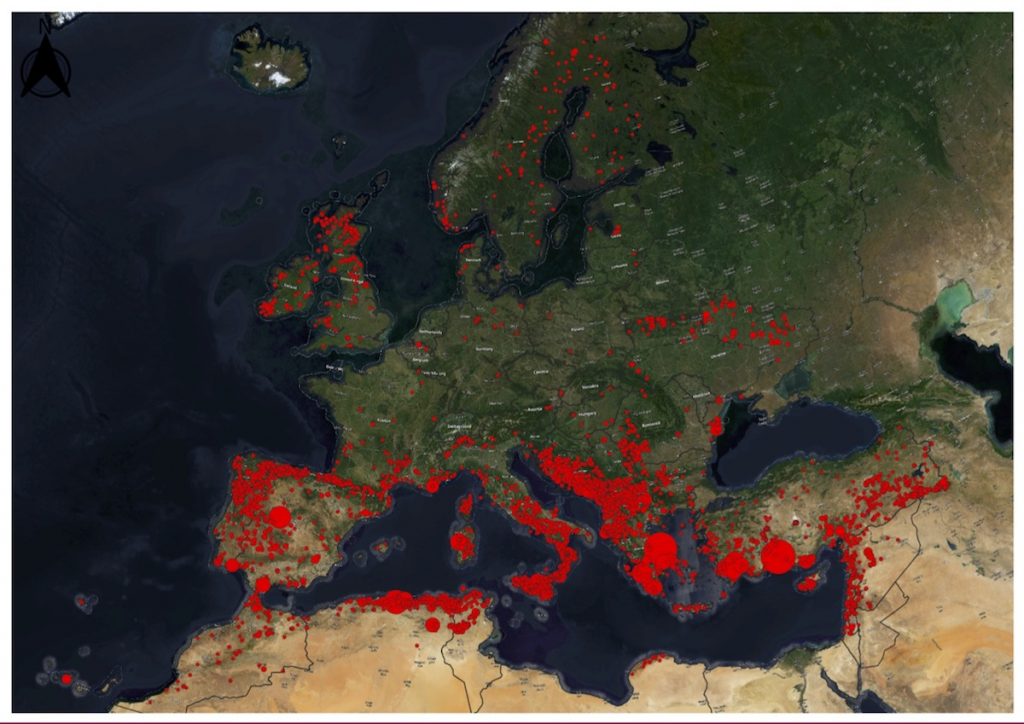
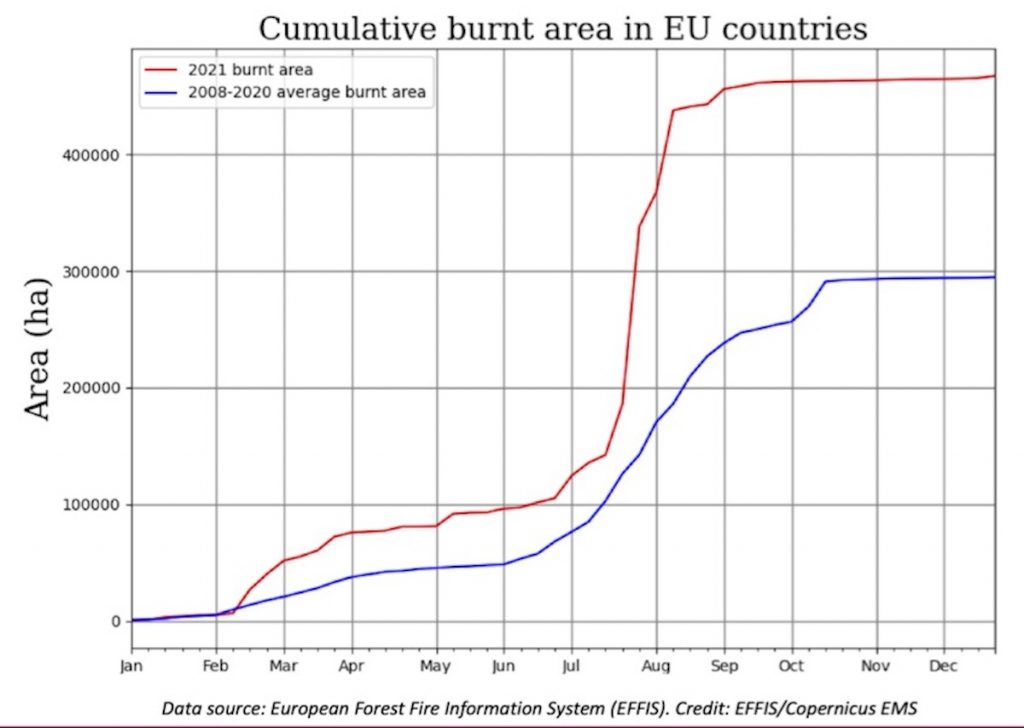
Looking at the map of the depopulation in inland areas of the Mediterranean, one can see that it overlaps to a large extent with the map of forest fires recorded by satellites. This is nothing new for researchers working on fires and climate change: the relationship between the two phenomena is well known. Yet it would not be correct to attribute causality without considering other factors. To understand the relationship between fires and rural exodus, we went to the sites of the most devastating fires of summer 2021 in Spain, Italy, Greece and Cyprus.
Discover the investigation, including this story
Part 2. Cyprus and Spain: forgotten landscapes
Curbing depopulation and caring for forests has both an environmental and a social value. Many of the funds allocated by the European Union for this purpose are not used, and their real impact is not measured. Meanwhile, the fires of summer 2021 in Cyprus and Spain confirmed a general trend across Mediterranean Europe.

In the village of Arakapas on the island of Cyprus, the number of inhabitants has dropped from 500 to 160 in 30 years, and most of these people are now retired. Here, last summer saw Cyprus’s largest fire in ten years, with 4500 hectares devastated.
Like the Montiferru area in Sardinia, the island of Evia in Greece, and many other parts of the Mediterranean, the inland areas of Cyprus have also experienced a population decline since the Second World War, while the forest area has gradually expanded over the same period.
"In the past, farmland acted as a barrier for fire, preventing it from spreading. In vineyards, for example, only the first or second rows were burnt, not the entire crop, as the fire ran out of fuel. Today, due to rural abandonment, the vegetation has merged with the forest," explains Charalampos Alexandrou, director of the Cypriot National Forestry Department.
The dynamics of the Arakapas fire are similar to those seen in other Mediterranean regions that are facing depopulation in addition to abnormal heat waves, droughts and rising temperatures caused by climate change. This is why it is becoming increasingly urgent to adapt to the new normal, and to move towards a policy of preventing mega-fires. But, looking at the data on European funds allocated for this purpose – and often not used – it seems we have a long way to go.
Funding for Europe's forests is far lower than for agriculture, accounting for only 1 percent of the Common Agricultural Policy. This is despite the fact that forests and woodland cover 45 percent of the EU's surface area, and are in a predominantly "poor" state (54 percent), or in otherwise “bad” (31 percent), with only 14 percent classified as being in "good" condition. The European Fund for Rural Development pools most of the funds allocated to forests. These funds can be used for the conservation and restoration of forest areas, including for fire prevention and climate-change mitigation.
According to a survey by the European Court of Auditors, in the 2014-2020 period only 49 percent of the funds available for forest measures were used by member states, amounting to €4.166 billion. Spain and Italy benefited the most from these funds, while Cyprus is at the bottom of the ranking.
The survey notes that the low uptake of EU funds is explained by several factors, chief among them the fact that around 60 percent of the EU's forests are privately owned. Many of the landowners we interviewed said they did not apply for a grant because the process was "too complex or bureaucratic".
To remedy this, and to encourage better care and prevention against mega-fires, some of those interviewed proposed transforming the environmental value of private forest land into direct subsidies to owners to pay for its care. This might mean, for example, a form of compensation for each hectare of forested or reforested land belonging to private owners, in return for maintenance to avoid dangerous accumulations of flammable matter.
Sixth-generation fires
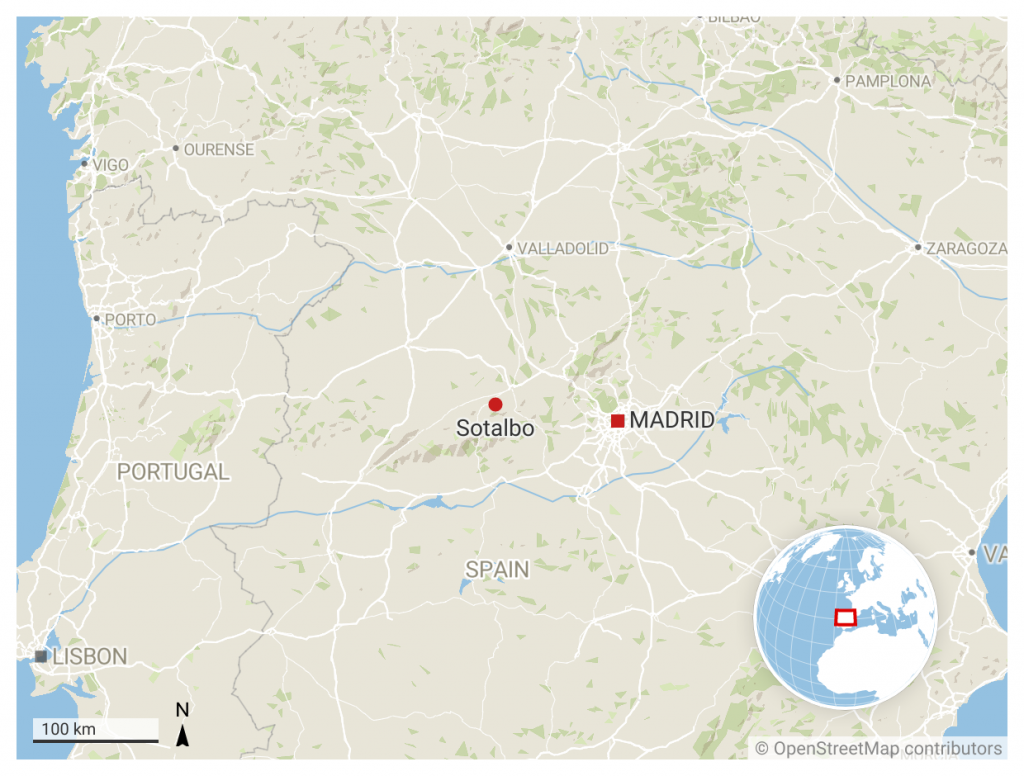
"The fire we experienced is called a sixth-generation fire and it is the type we will see from now on. They don't burn three or ten hectares but rather twenty thousand, as happened here, and the damage caused continues beyond the fire." This was the conclusion of Ana Maria Jiménez, representative of the municipality of Sotalbo, near Ávila in the Spanish region of Castilla y León, where the fire that erupted last August was the largest ever recorded locally, until the one that broke out in mid-June 2022 in the Sierra de la Culebra, in the same region, which seems to have now exceeded 30,000 hectares.
The consequences are still clearly visible. Several villages in the area continue to suffer water shortages due to the damage to pipes caused by the fire, which also contaminated most of the springs. "The intense depopulation of inland rural areas is leading the region to a slow and silent death," warns a recent WWF report.
In the case of the fire in Ávila, the forest area from which the flames originated is public property. According to Rodrigo Gandia, responsible for the environment and territory in the Junta de Castilla y León, the area was regularly maintained. Ana Maria Jiménez disagrees. "It was so well managed that 22,000 hectares were burnt," she smiles. In her view, the lack of firebreaks and the accumulation of bushes, branches and organic matter created the ideal conditions for the mega-fire during the heatwave of August 2021.
Another issue identified by the European Court of Auditors concerns the methodology used to assess the work paid for using EU funds allocated to forest areas. Under the current scheme, the EU simply counts how much money has been spent. The problem is that this method cannot measure the actual benefits of projects for biodiversity and climate-change mitigation. As a result, there are no global indicators concerning the impact these investments have on forests. Some regions have created their own indicators.
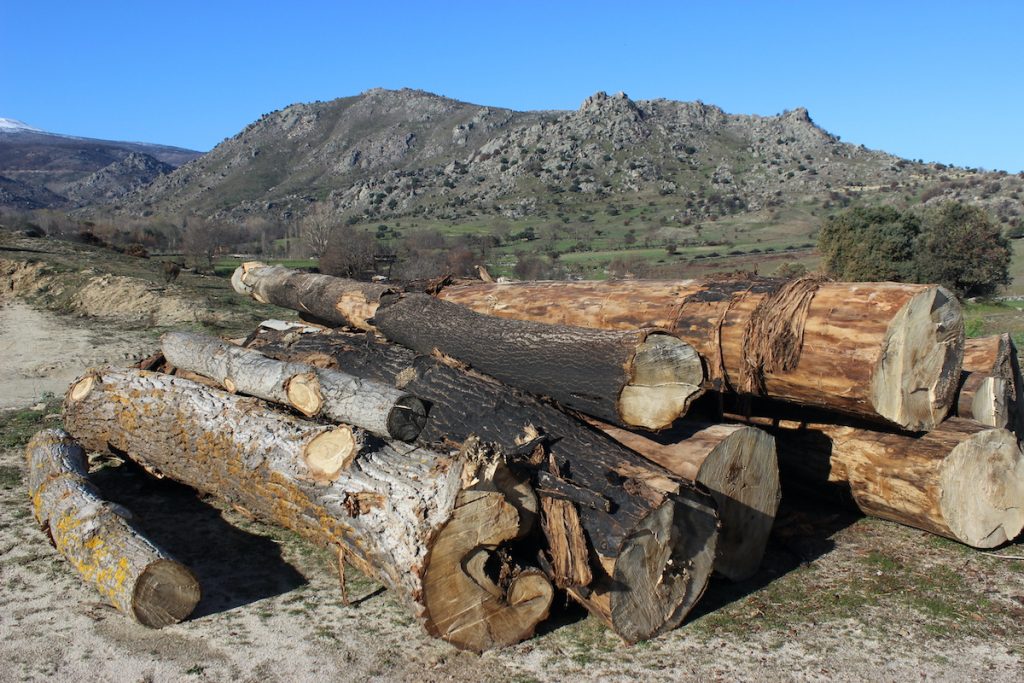
"Uncontrolled fires lead to negative and irreversible effects in three scenarios," says Andrea Duane, who studies methods of predicting fire types and characteristics at the Centre for Forest Technology and Science in Catalonia. "When fires are very intense, the high temperatures also destroy the seeds, and the plants cannot regenerate. Or when the burnt area is very large, the seeds carried naturally by the surrounding plants cannot reach the burnt ground and regenerate. Or when, due to climate change, fires are so frequent and droughts are so long that trees are unable to regrow, and in this scenario other better-adapted species, such as the maquis, prevail."
The fragile agricultural economy of Mediterranean Europe is on the front line of the climate crisis. This is evident in Arakapas, home to Kostas Cheimonas, a beekeeper from a generations-long beekeeping family. Kostas, 68, has always needed a harmonious relationship with the landscape thanks to the vital function of his pollinating insects. Recently he lost one thousand hives that he used to produce honey, which was the main source of income for him and his family. "The biggest loss is the three or four years we will have to wait for this to become a beekeeping region again. Now there is nothing," he says, apprehensively opening one of the newly installed hives.
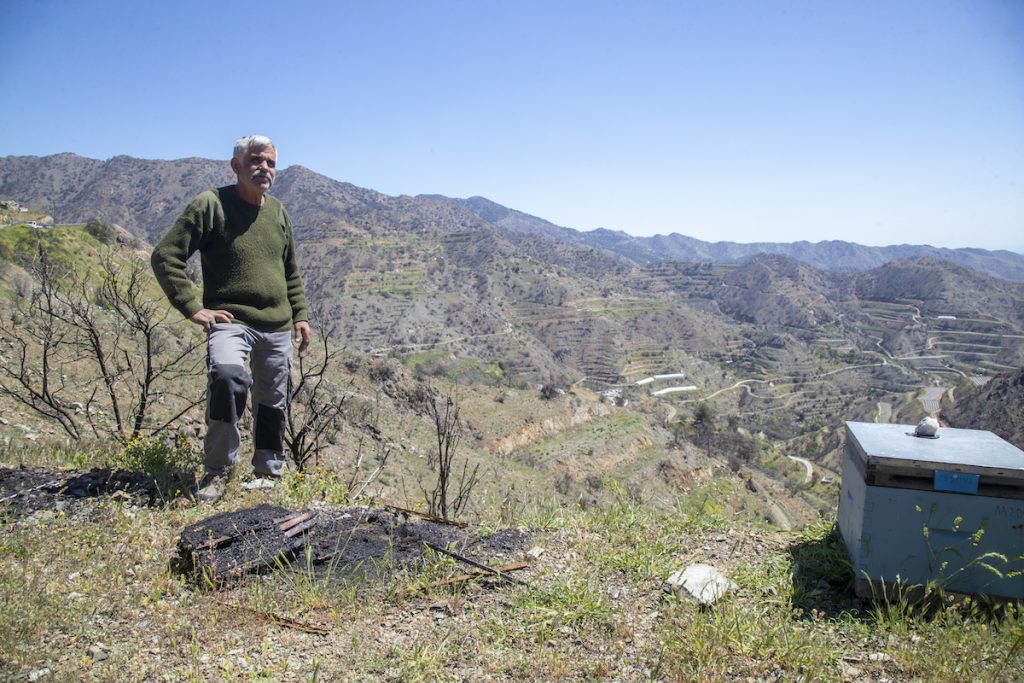
Those who have lived a lifetime on their own land do not have much time for self-pity. Resilience in the face of adversity is a typical trait of people who depend on the climate and the environment in these peripheral regions of Europe. "Far more than to climate and geology, the Mediterranean owes its coherence to an early and remarkably tenacious network of towns and villages: the Mediterranean space was formed around it, is animated by it and receives life from it," wrote historian Maurice Aymard.
But who will be left to take care of the Mediterranean landscape? Reversing rural depopulation means recovering the vitality and knowledge of the agricultural world. With the current climate scenarios, it has also become a necessary measure if we are to mitigate environmental damage and preserve the role of forests in capturing carbon dioxide, all while ensuring that they do not generate new and devastating fires every summer.
This article is part of a collaborative investigation between journalists of CIVIO (Spain), MIIR (Greece), Voxeurop (Europe) and freelance journalists Chloe Emmanouilidis (Cyprus), Davide Mancini and Marcello Rossi (Italy).

Supported by Journalismfund.eu
Do you like our work?
Help multilingual European journalism to thrive, without ads or paywalls. Your one-off or regular support will keep our newsroom independent. Thank you!


