










Select a language
When life together in a marriage becomes unbearable, the spouses decide to divorce. And when, after long and wearisome discussions and horrible formalities that are degrading to all involved, this divorce finally takes effect, both parties experience a yawning emptiness. The emptiness of a cleared-out home, the emptiness of a human amputation, the empty sound of the silence where now there is nothing. And this despite the fact that there have been frequent rows, yes, even hatred. But where there is hate there is also love, as any trashy novel will tell you.
Such were my thoughts in 1991.
Archipelago Yugoslavia
- The “Better life” that never was (Kosovo)
- Life in the crime scene (Serbia)
- The apocalyptic clock ticking inside me (Bosnia and Herzegovina)
- In Slovenia, we dreamed of democracy and woke up under capitalism
- I don’t write about war because I want to, but because I have no choice (Croatia)
Thirty years later, I regard José Saramago’s novel, The Stone Raft, as a better metaphor for the disintegration of this state than the title proposed by Traduki for a series of essays about the Yugoslavian archipelago. The novel tells the story of the Iberian Peninsula, where a tiny line scratched with an elm branch triggers tectonic upheavals, whereupon the peninsula splits off from the continent and becomes an island, a stone raft, drifting out to sea; incompetent politicians and the wealthy hastily remove their money, abandoned hotels at the coast are occupied by the homeless, chaos ensues.
This may sound familiar to us, for something similar happened with Yugoslavia where, on becoming an archipelago, a handful of invisible lines that had formed between us also caused bridges between the islands to collapse, ferries to sink, even the telephone wires and underground cables that had once connected us to be cut. And for quite a long time, too.
Now the ships sail again and the cables positively buzz with communication.
These days I can talk about Yugoslavia in literary metaphors. Back then, in 1991, my reflections were more personal. How could they not be, when I had spent my whole life until then in the state that bore that name? I thought about the moment of separation between Slovenia and Yugoslavia, I even compared it to highly personal experiences, by which I mean the experiences of friends and relatives who had been through such things.
The difficult discussions are already underway, the grasping spouses are already moving their assets to safety. Reason tells us it had to be this way, for this state was never very stable. And yet: we have spent our whole lives with it, in it. I love Dalmatia, I have sentimental memories of its wine-soaked nights, the beguiling scents of the Mediterranean, the cool stone of its squares and churches, its Classical and Renaissance remains, the silence in the gardens of the Catholic monasteries on its islands. Of the Bosnian rivers, the interchange between Sarajevo's cultures and religions, the hustle of oriental trade, the tapping of fine hammers on copper in the workshops in the narrow alleyways.
Of biblical Macedonia, the rattling language of my Macedonian friends, full of emotional and clever leaps of thought. Of the wide Danube, of festivals in Novi Sad, where we celebrated the transient moments of theatre glory with mandolin music and drowned the equally transient moments of (undeserved) defeats in wine. Of Belgrade with its endless vitality, its morning aromas from countless small bakeries, Serbian colleagues with their black political humour and self-mockery that seem now to have vanished. Of Southern Serbia, Vranje, where against my will I spent a whole year of my life as a soldier, experiencing alongside the unpleasantness of the barracks a paradoxical combination of oriental hedonism and orthodox mysticism; sweet sorrow, the Morava, Slavic songs accompanied by oriental drums and trumpets.
And, not least, of nearby Zagreb, though it would certainly not wish to be linked with Belgrade or – heaven forfend! – Southern Serbia in this essay. Zagreb with its eyes on Vienna and both feet in the Balkans, Zagreb, almost Slovenia and yet different after all, its historical pathos, its Croatian chessboards, its pointed Catholic messianism, at the heart of a landscape defending Western civilisation: Antemurale Christianitatis. Yes, Zagreb, too, would soon find itself in a new state called the Republic of Croatia. And, not without a touch of startled vanity, I must also think of my books on the shelves and in the windows of bookshops in all these towns and cities, in various languages, fonts and editions, on the stages of theatres large and small, where actors brought the intensity of mind and body to my dramatic inventions.
Sometimes I look back at Yugoslavia with nostalgia, sometimes with anger. Nostalgia for its enormous cultural diversity and my friends, anger at its dictatorship and the stupid politicians who ruled over it. Had Yugoslavia been a democracy it would in all likelihood not have fallen apart.
Is it really possible that all that has been lost?
This is how I thought, wrote and spoke.
Predrag Matvejević was right when he responded to such expressions on my part by calling me a Yugonostalgic, carefully adding “in the cultural sense”. I was and I still am, both in the narrowest and the broadest sense, albeit genuinely only because of the culture.
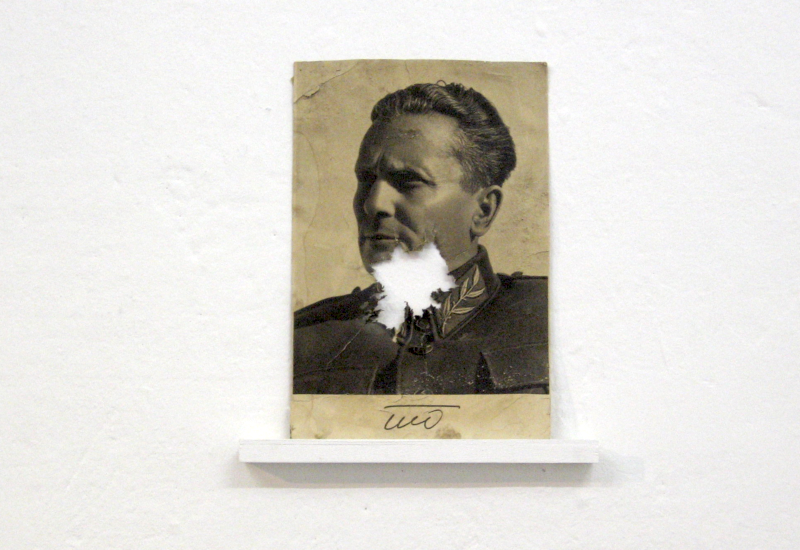
Sometimes I look back at Yugoslavia with nostalgia, sometimes with anger. Nostalgia for its enormous cultural diversity and my friends, anger at its dictatorship and the stupid politicians who ruled over it. Had Yugoslavia been a democracy it would in all likelihood not have fallen apart. But it was a dictatorship, with a single, infallible state leader at its head, and a powerful apparatus made up of military, police, bureaucracy, Pioneer silk, and rituals in enormous stadia on Tito’s birthday. I knew people who were interned in a Yugoslavian gulag on the island of Goli Otok, I knew others who had lost their fathers in revolutionary violence, others, too, who found themselves in prison for political reasons, sometimes just for a single unwise remark spoken in company, a comment or joke about Tito or some other communist leader.
All this only became clear to me in my adolescent years, however, and when a young person develops common sense – by which I mean knowledge and a view of the world – it goes hand in hand with scepticism and resistance. Until then I had surrendered myself to the happy illusion that it was a beautiful thing “to be young in our homeland”, as we sang at the Pioneer ceremonies. Yugoslavia was a dictatorship, even if it was much freer than other communist states. In the 1960s the borders were opened, people could see that they had it better than in Hungary or Czechoslovakia. Cultural life and creativity were much more open in our country. It would have been hard to imagine works by Solzhenitsyn, Kundera, Bunin, Camus or Orwell in the bookshops of other Eastern European countries, the way they were in Ljubljana or Belgrade. Critical literary magazines were published, many works were made available in translation, the theatres were exciting places where aesthetic freedom and socially critical productions were to be found. The “Black Wave” (Crni talas) of Yugoslavian film represented the peak of artistic accomplishment and provided biting resistance to the lack of political ambiguity.
But open borders and cultural freedoms are not the same as political freedom. We lived in the paradoxical situation that, despite them, the state, with its one-party system and its many institutions, nevertheless remained a dictatorship. And the politicians did not understand that Europe and the world were changing. Or that the economy was collapsing as the direct result of this kind of political order and mentality. In the 1980s we were contemplating the transformation of Yugoslavia into a democratic confederation. Given the blockhead generals and people at the top of the Party in Yugoslavia, however, this could not happen. Yugoslavia’s collapse was not just the result of the various nationalisms, or the cultural and economic disparities: these differences might have had a centrifugal effect, but it was the dictatorship that was to blame for the break-up. The people in power did not understand that it was time for change. Even now I still believe that the state of Yugoslavia would not have disintegrated into today’s archipelago if we had had a democratic system. Or, even if it had, then not in such a terrible way.
War broke out, first, briefly, in Slovenia, where the tanks of the Yugoslav People’s Army rolled in from the barracks, then Croatia, then the hell of Bosnia and Herzegovina. I was in Sarajevo during the war and saw what was going on. That was a painful experience. I wrote about it in my travel essay, “Short Report from a Long-Besieged City” (Kratak izvještaj iz dugo opsjednutog grada). Many friends and acquaintances became estranged in those years, many were swept up in the maelstrom of a war in which they had taken this side or that. At a Frankfurt Book Fair in the late 1990s, a group of writers from all the new states of what was by then already the “former” Yugoslavia spent three days in discussion.
We wanted to make a stand against the nonsensical demolition of all cultural ties and exchange, and the complete breakdown in communication between the islands of the archipelago. In the end we issued a declaration of the necessity of renewing cultural collaboration on the territory of the former Yugoslavia. We sent this signed declaration to all the leading daily newspapers and other media from Ljubljana to Skopje. It met with very little response. Only a small number of outlets published our text; it was attacked in some quarters, but for the most part it was simply dismissed: Who do these writers think they are? No one cared, people were wrapped up in their lives on their own islands. Lives that were already being lived against the backdrop of the frenzied race to acquire money and power on each individual island, and the internal political carnage that went with it – what the Germans call Selbstzerfleischung.
Before we fully realised what was happening, we found ourselves in an era that those of us who had campaigned for democracy did not understand in the least. At some point I wrote, “We dreamed of democracy and woke up under capitalism”. And what a capitalism it was! Not the usual kind. They called it “transformational capitalism”. A savage version that left many people behind, impoverished, isolated, lost.
Despite my aversion to the Party apparatus of the Yugoslav state, as soon as it began to collapse I reflected on the fact that it would be no easy thing to suddenly find myself among only my beloved Slovenes, en route for Europe, babbling European phrases, surrounded by loud, coarse entrepreneurs and gentler singers, caught between all-knowingness and the sharp tongues, resentment and schadenfreude that go with it.
Writers know their environment and its weaknesses, you see. But that was only part of the problem: what lay in store for us came as much more of a surprise. For those of us, at least, who thought democracy was a magic formula against social problems of every kind. I do not know exactly what we had imagined. A parliamentary system, certainly, along with freedom of the press and of expression, and an economic boom. Before we fully realised what was happening, we found ourselves in an era that those of us who had campaigned for democracy did not understand in the least. At some point I wrote, “We dreamed of democracy and woke up under capitalism”. And what a capitalism it was! Not the usual kind. They called it “transformational capitalism”. A savage version that left many people behind, impoverished, isolated, lost. Not just in Slovenia and the other countries of the former Yugoslavia, but throughout Eastern Europe. All physical and “social” assets had to acquire owners, privatisation ran its course, a process for which the Russians invented the term, “prichvatizacija”.
We people of the pen and the book, not just in Slovenia and other countries of the former Yugoslavia but elsewhere in Eastern Europe too, had not given much thought to the fact that capitalism has its own rules, and that the owners of capital can influence politics, the media – the entirety of social and even cultural life, in fact.
Or the fact that democracy is such a fragile form of society: there is always someone trying to appropriate as much economic and social space as possible. For the avoidance of doubt, I do of course still agree with Churchill that while democracy may be the worst form of government, there is none that is better. But life in this brave new world was not exactly easy to understand.
We were suddenly living in a completely different world: nouveau riche types sprang up, having made themselves rich through semi-criminal privatisations; social inequalities increased, political battles became brutally demagogic. Democratic life had not just brought the freedom to express opinions, but also the freedom to express malice, anger and envy. This was partly due to the national character, a characteristic of all small nations where people are happier focusing on themselves rather than dealing with the larger world around them. To this was added the wild materialistic race of this so-called transformation period: tycoons sprang up, some rough, others oh-so-refined, and there emerged a stratum of the impoverished, barely able to get by. Hand in hand with the media, political demagogy of all stripes exploited the still fresh wartime suffering and unhealed wounds to exact a crude reckoning and to consolidate the positions of the new rulers on each of the individual islands.
The advent of the internet and, with it, the discussions and words of wisdom in the online forums well and truly exposed this demagogic chaos and intolerance of every kind. It was a huge triumph for the ignorant and often brutal know-it-alls, willing to inflict any amount of harm, and not just with words either.
In the 1990s and early years of the new century I expended a lot of energy writing journalistic texts criticising these developments and the new, intolerant social atmosphere. But then I realised the windmills were both real and extremely powerful, and that they would smash me into the ground at any moment, and so I gave up this social engagement and devoted myself exclusively to literature.
What remains? For me? For all of us as a whole?
From the past, memories of a shared life; for the future, the European utopian ideal. For those of us who lived in Yugoslavia, alongside this ideal also the fear that Europe could go the same way as the Yugoslavian Federation. After all the painful experiences of the twentieth century, all the wars and national and ideological conflicts, this alliance was the best thing that could happen, for all the nations of Europe. Right now it seems that Europe is once more facing a period of crisis. I am often asked whether I think the borders will be closed again, whether Europe is on the brink of disintegration; whether what happened to Yugoslavia could also happen to the EU. I think the comparison is flawed, because values such as human rights, freedom of expression, open borders and all the rest mean that, in Europe, it is possible to talk. At a certain point in Yugoslavia, that was no longer possible.
And despite this disastrous coronavirus, intermittent economic recessions, Islamist terrorism and the so-called migration crisis, the people of Europe will never again allow open borders, human freedoms and democracy to be taken away from them.
From the past, memories of a shared life; for the future, the European utopian ideal. For those of us who lived in Yugoslavia, alongside this ideal also the fear that Europe could go the same way as the Yugoslavian Federation. After all the painful experiences of the twentieth century, all the wars and national and ideological conflicts, this alliance was the best thing that could happen, for all the nations of Europe.
When I think of Europe as it is today, I also often think of my life in Yugoslavia and life in the Yugoslav archipelago after 1991. I am writing this at a time of quarantine, when freedom of movement is limited and every day our TV screens bring us the latest numbers of infections and deaths from Covid-19. We are living in uncertainty, peering fearfully into the future, and sometimes it seems to me that we have come to the end of all utopias, that we have stepped into a dystopian age. Perhaps it began with the fall of the 20th century utopias. When you think of all the things people have believed in! Social utopia, the greatness of one’s own nation, the triumph of our belief over theirs … the Yugoslavian utopia too. And were prepared to sacrifice their lives for them, their own, yes, but mostly other people’s. At least “Europe”, with its pragmatism and the high value it accords to human rights, remains to us as a somewhat more modest cause, a small, not yet fully achieved utopia that we can believe in; I believe in it, at least.
Writers stand on the sidelines here: they have long since ceased to be a moral authority, there is no Tolstoy or Camus to be found, certainly not in the age of the internet, when everyone knows everything and can say everything too.
And so I stand on the sidelines, observe life and write about it, be that in its historical or present-day form.
Here, at the end of a thirty-year journey out of Yugoslavia and into a new, different world, at a moment of uncertainty for Europe and the world, caught between quarantines, lockdowns, people with masks on their faces, I wait: not for something new any more (I am a little afraid of that now), but for a return to normal life. In these thirty years I have travelled very often from my Slovenian island to the many other islands of the Yugoslavian archipelago, mainly for readings of my books, which have been published on all these islands. I no longer concern myself with the political storms that still prevail on and between them.
A short time ago I was sitting in a café in Belgrade with a younger friend, the poet and publisher Gojko Božović, who published my last novel. About politics we hardly spoke a word. The distances between the islands have become so great that the experience of one makes it difficult to understand what is happening on the others. We did talk a lot about the diversity and artistic power of literary works we had both read, however. The name of Gojko’s publishing company is Arhipelag. I have no doubt that he called it that because the works it publishes provide a wealth of literary artistry, an interesting array of poetry, an extraordinary range of life experiences, and an expanse of stunning landscapes. This is the literary archipelago which I now inhabit too. At a time when we can barely venture to the nearest supermarket – and only then, with a mask on our face – it enables me to travel far and wide, sometimes also to the past, even to the time of my youth, when we still lived side by side until – like those who found themselves on Saramago’s stone raft – we were carried away on our own islands.
This article is part of the Archipelago Yugoslavia project by Traduki. It is published in collaboration with the S. Fischer Stiftung.
Do you like our work?
Help multilingual European journalism to thrive, without ads or paywalls. Your one-off or regular support will keep our newsroom independent. Thank you!


