







Select a language
The era of my personal cataclysm begins on 21 April 1992. That was the day armed Serbian extremists, supported by the former Yugoslav People’s Army, attacked my town. These were our “neighbours”, fellow citizens, who had withdrawn from the town in a concerted action in order to attack us from the surrounding mountains. The attack on my country had begun even before this date, for by 21 April many of the towns on the eastern border with Serbia (still called Yugoslavia at that time) had already been destroyed. The moment Slovenia, Croatia and Bosnia and Herzegovina left Yugoslavia, that state nominally ceased to exist in all our minds. Yet it turned against all of us who had loved it and contributed to its success in every possible way.
Archipelago Yugoslavia
- The “Better life” that never was (Kosovo)
- Life in the crime scene (Serbia)
- The apocalyptic clock ticking inside me (Bosnia and Herzegovina)
- In Slovenia, we dreamed of democracy and woke up under capitalism
- I don’t write about war because I want to, but because I have no choice (Croatia)
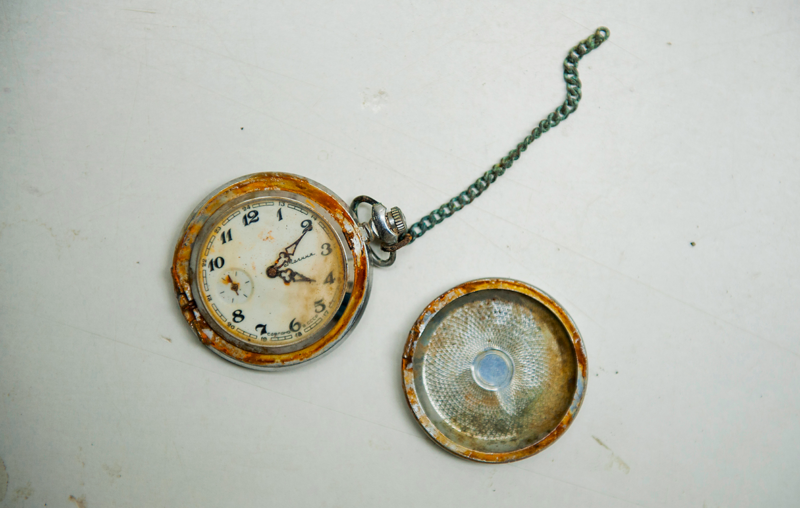
Every citizen of Bosnia and Herzegovina carries these two clocks, these two chronologies, deep within our consciousness, in our minds, bodies and hearts.
The first clock starts ticking at the moment it all officially began, the second is a far more important, more personal clock, measuring the time since the moment we were driven from our homes. It measures the time since we became refugees, or it counts the hours since the moment of our personal wounding, the death in war of someone close to us. Some clocks count down the time until the hour of our death. In my town, the clocks of five hundred soldiers will tick for as long as we, the survivors, exist. For as long as we remember our dead friends, relatives and fellow combatants.
It is impossible to put on paper everything measured by this personal clock. I have been trying for the last twenty years, ever since I started appearing in public as a writer, but I know I have barely moved beyond my starting point. Even the tragedy of a single person is indescribable, but here we are talking about the tragedies of hundreds of thousands of people from this country.
This personal clock is an apocalyptic clock. Every human has one. War is the apocalypse; it is just that there was no one back then to tell us. Just as there was no one after the war to tell us that we were living in the post-apocalyptic age. All we had to explain the kind of society we were now living in was the technical term, “post-conflict society”, handed to us by well-meaning people from abroad.
The cool terminology of academic language cannot begin to capture the full implications of the apocalyptic clock. It does not even recognise its existence, since the term “post-conflict society” only sees “warring parties”. Not every war has warring parties: sometimes there are just the attackers and the attacked. This is why the term is wholly wrong, just as the term “civil war”, which well-meaning foreigners use to describe our war, our apocalypse, is both wrong and a disgrace.
The apocalypse does not consist in the destroyed towns, villages, bridges, maternity hospitals and cemeteries. For me, the apocalypse is the moment in which all the values of civil society break down. The moment in which everything dreadful, abnormal and terrible becomes wholly normal, socially acceptable, even desirable.
The apocalypse does not consist in the destroyed towns, villages, bridges, maternity hospitals and cemeteries. For me, the apocalypse is the moment in which all the values of civil society break down. The moment in which everything dreadful, abnormal and terrible becomes wholly normal, socially acceptable, even desirable.
This apocalypse occurs before the actual physical destruction. It occurs quietly, invisibly. The attentive newspaper-reader can detect the signs. All too often it takes the form of dehumanisation of certain social groups, individuals or entire peoples.
As an example, before the 1992 war broke out the Prijedor newspaper Kozarski Vijesnik published a series of articles dehumanising residents of Bosnian, Croatian and other nationalities. In one case, both Kozarski Vijesnik and Radio Prijedor carried reports about a trainee gynaecologist from Prijedor, Dr Željko Sikor, who had “induced abortions in Serbian women carrying male foetuses and castrated Serbian newborns”. Despite being ethnically Czech, the doctor was regarded by the evildoers as Croatian, since the Serbian nationalists at that time equated all Croatians with the Ustashas.
The Belgrade daily newspaper Ekspres politika dubbed him “the monster doctor”. Dr Sikora, along with two doctors of Bosnian nationality, is named in the official report of the then Federal Republic of Yugoslavia to the UN Commission of Experts under the heading, “Circumstantial evidence of perpetrators of inhuman treatment of civilians in Prijedor 1989-1992”. Their main crime is listed as the “Systematic suppression of the birth rate among the Serbian population in the district of Prijedor by means of the castration of newborns of Serbian nationality […] They used a range of medication and experiments to sterilise children in the Prijedor hospital, and deliberately misdiagnosed adults of Serbian nationality and gave them the wrong medication.”
As a result of these accusations in the media, Dr Sikora was murdered in the Keraterm concentration camp, a fate he shared with thousands of his fellow citizens of the “wrong” ethnic origin in other camps. His body was found next to a waste container in the camp grounds. Before being killed, he had been beaten up daily.
Kozarski Vjesnik is still published regularly. If you do a search on Željko Sikora in the newspaper archive, you will find no information about him whatsoever. Željko Sikora was the last male descendant of the Sikora family. Not a shred of evidence was ever found for his “crimes”, nor was he ever brought to trial. Even now, his name has not been cleared of this slander.
Dehumanisation and demonisation of groups, individuals and entire peoples had been going on long before war broke out on the territory of the disintegrating Yugoslavia. The aim of this approach was to prepare ordinary people to regard murders, massacres and ultimately even genocide as perfectly normal events.
I first became a refugee on 21 April 1992, and I do not suppose I will ever wholly cease to be one now, for refugeedom is not just a status in some Red Cross file, it is the feeling, deep inside, of belonging to nothing and no one. I love the land I live in, but not as a state, just as the land: the sum of its landscapes and natural beauties.
I first became a refugee on 21 April 1992, and I do not suppose I will ever wholly cease to be one now, for refugeedom is not just a status in some Red Cross file, it is the feeling, deep inside, of belonging to nothing and no one. I love the land I live in, but not as a state, just as the land: the sum of its landscapes and natural beauties.
Becoming a refugee does not hurt physically, it is a totally pain-free process; but there are other, invisible parts of you that will experience terrible phantom pains for years afterwards. “Phantom pain” is the medical term for pain from a limb you no longer have, a limb that has been cut off. We have been cut off from our pre-war lives and these phantom pains are something we will carry with us to our graves.
One is confronted with one’s own life story and has to accept it, like all the scars carried on body and soul. In this way one is always moving forward, for the only thing that cannot be destroyed by an artillery shell in war is life itself. The desire for life is greater and stronger than everything else.
And so I reached for my weapon and became a soldier.
At readings in other countries I am often asked if I was a volunteer. This is always a problem for me, for how am I supposed to explain to people that I was driven out of my home, my street and my district, just because my eyes were a different colour? Of course I immediately reached for my weapon, though actually it was just a pistol, since in April 1992 we were not exactly abundantly armed.
The outside world in the shape of the United Nations imposed an arms embargo on our country, thereby abandoning us to the enemy, who were armed to the teeth.
The reason we were left in the lurch was that enemy propaganda had been highly effective at portraying us as foreign tissue in the body of Europe. We were labelled bloodthirsty Muslims, the green menace, Mujahideen, even though many of us were atheists, secularists, Yugoslavs, Bosnians, left-wingers, cosmopolitans, new wavers, punks etc. All these identities were killed and buried. And while this was happening, certain high-ranking European politicians spoke of the “painful but realistic restoration of Christian Europe”. We were the guinea pigs in the development of the global Islamophobia we see today.
I was by no means a volunteer, since reaching for my weapon was not a matter of free will: rather, I was forced to fight for my biological survival. In April 1992 we were already surrounded on all sides and so it was not possible to flee the war and act the know-it-all pacifist uttering cynicisms about warring parties from a safe distance.
We were the guinea pigs in the development of the global Islamophobia we see today.
I have written numerous poems, short stories, a novel and many journalistic articles about my experiences as a soldier in the war, so it would be superfluous to repeat it all here. I was a member of the Army of Bosnia and Herzegovina, not some “Muslim” army as both our enemy and the international observers called us in 1992-95. At one point my left foot was badly injured and I spent half a year on crutches. Afterwards I returned to my unit, resuming the duties I had performed before my injury. I became a platoon leader (the pillar of any army) and towards the end of the war I was leading 130 men in offensive actions. Like most people in Bosnia and Herzegovina, I had PTSD, the effects of which only make themselves felt once the war is over.
I was awarded several decorations for my military skills, both during and after the war.
When the war was over I tried to go back to what I had been before, a third-year veterinary student. But I soon gave that up and enrolled for a degree in Literature instead. I began writing every day on a 1967 Olympia Monica typewriter. I wanted to become an author, and that is what I did.
The manuscript of my novel Cimetna pisma ("Cinnamon Letters contains the following passage, which comes closest to illustrating the kind of world we were living in after the war had ended in name only:
It was not a ruin bar, or at least, it had not yet become one. And we called it the Magic Cube, not because it was cube-shaped, much less magical, but because it sounded good.
We went there every day, for daily and nightly therapy. The whole town was one enormous open-air ruin bar, really, while the Magic Cube was tidy, clean and fairly new. I do not know where the captain had found the necessary fittings and fixtures, but there they were, shining like the long-lost suns of some peace or other.
[…]
The waiters must have had nerves of steel, for our first war had just ended. We could not know back then that this was just the first of our wars. Who could have known what would happen once we had completely rebuilt everything that needed rebuilding? First we patched up the houses, rebuilt them. The interior work within ourselves proceeded only slowly. Invisible fire damage was harder to repair. Replacement parts for interior reconstruction were not available to us, for the rest of the world had temporarily excluded us from the modern workings of civilisation. And war is followed by corruption and the continuation of war by peaceful means; nationalism proliferates like a weed and is difficult to hold back. Some things happen behind the scenes. Our scenes are ruins full of cold ashes, there is something beyond our will and growing, although we pay it no attention because we are fully occupied with our own wounds.
Wounds matter, and it is important to take care of them, both our own and those of the town. The fact we paid no attention to the hatred does not mean it did not do its work in the silence. The horrors of war cured us of hatred. But anyone who has experienced the extremities of war knows that hatred is instilled in people in order to make it easier to accomplish the never-changing goals of war: the fight for territory and the wealth that goes with it.
In many people the hatred already exists and does not need to be incited. Evil has first and last names, an eye colour, fingers, chest hair, birthmarks and moles, scars from the playing field. Evil is family-friendly, likes children, evil is sociable, frequents pre-war cafés, has a wide smile and still has all its teeth. This is the grey, petty bourgeois evil. There is also another evil, a drunken evil, a lumpenproletariat with gaps in its teeth. Evil is hard to classify simply, it defies description and classification.
Evil is never banal.
We drank in the Magic Cube, that’s all we craved, we couldn’t think of anything else we should or could have been doing. There were no psychologists or psychiatrists walking around with magic capsules to heal us. There was nobody on the streets, other than us and the stray dogs who, sensing the return of human warmth, had come to warm themselves. We didn’t think we needed medicine: how could we have done, when we didn’t consider ourselves sick? We weren’t sick, it was just the times.
None of us knew what the acronym PTSD even meant. We just went with the peacetime flow. To the endless discussions in the Magic Cube. And maybe that healed us too, for I can remember a moment when the Xanax did not work, when it did not help when I felt the heat rising from my belly into my chest and my head, a fierce energy that made me fear I would burst into flames and light up the room like a flare, alone, hidden somewhere in the burnt-out crafts centre, illuminated by moonlight, in the shadow of the exploded house of worship with its tower pointing towards the earth and the underworld.
The more life resumes its normal course, the more space the fear of death takes up. Left to ourselves, we solved the problem by means of alcohol and light narcotics once the tablets stopped working. We thought unrestrained pleasure-seeking would be more likely to return us to civilian normality.
If you have survived a war, it is best to move away from that part of the world immediately and never return. Why had no one been able to tell us that? But even if someone had told us, we wouldn’t have believed them. We would have gone on doing our thing.
Where does our first war end and where does it begin? This is a question we asked ourselves often, until we lost the desire to ask it any longer.
What saved me was love, the strong belief in life as a meaningful order of things in time and space, when time and space were still linear. For with the first shells, time and space and all the other dimensions irrevocably lost their innocent rectilinearity. We tried to repair the damage that had been done to the linear course of time and space and all the other dimensions, but we did not succeed. We wanted to be linear individuals in a non-linear world. It did not work. Even if we had known then that some time in the future it would become fashionable to appreciate vintage objects, vintage poetics, retro style, we still would not have thought of ourselves as pioneers, for our lives were not a fashion style. You can only mourn the present when you have lost everything, when your own time and space have been irreversibly annulled. We weren’t hipsters, even if we did like old and unusual things.
It is true that people came from abroad, offering courses on how to go on living after the apocalypse, but I didn’t take them seriously, hardly anyone did. How could they possibly know how we should live, when they themselves had never survived a war?
This excerpt shows how the apocalyptic clock goes on ticking even after the apocalypse is officially over. It goes on doing its work. Surviving an apocalypse entails more than just physically surviving the war and the destruction all around you. Many people only believe they have survived, in reality the war has devalued them in their essence and made it impossible for them to go on living in peacetime. They are war zombies, for they will never make it back from the war. It rules their minds, their nerves.
My apocalyptic clock is now showing the 29th year since the start of my personal war. I have learned to live with its ticking. This clock is a part of me and does not disturb me in the least, for I can write about it. I have synchronised myself with its tick.
In many people the hatred already exists and does not need to be incited. Evil has first and last names, an eye colour, fingers, chest hair, birthmarks and moles, scars from the playing field. Evil is family-friendly, likes children, evil is sociable, frequents pre-war cafés, has a wide smile and still has all its teeth. This is the grey, petty bourgeois evil. There is also another evil, a drunken evil, a lumpenproletariat with gaps in its teeth. Evil is hard to classify simply, it defies description and classification. Evil is never banal.
Very few people are this fortunate, but they somehow manage to survive the horrors of peace, for we know that life is greater and stronger than all evil, greater and stronger than destruction and apocalypse of any kind.
Oh, and in case anyone is wondering whether I killed people: yes, I killed enemy soldiers in close combat on the battlefield. There is no remorse there. Unfortunately, war is mankind’s oldest occupation. Those who survive can tell stories, write. Those who have no experience of war or flight, no traumatic borderline experience of any kind, have the great privilege of listening to the survivors, in order that there will never again be war, for anyone. This is a utopian hope, that may one day come true. It is a utopia I firmly believe in.
This article is part of the Archipelago Yugoslavia project by Traduki. It is published in collaboration with the S. Fischer Stiftung.
Do you like our work?
Help multilingual European journalism to thrive, without ads or paywalls. Your one-off or regular support will keep our newsroom independent. Thank you!


