












Select a language
This article is reserved for our subscribers
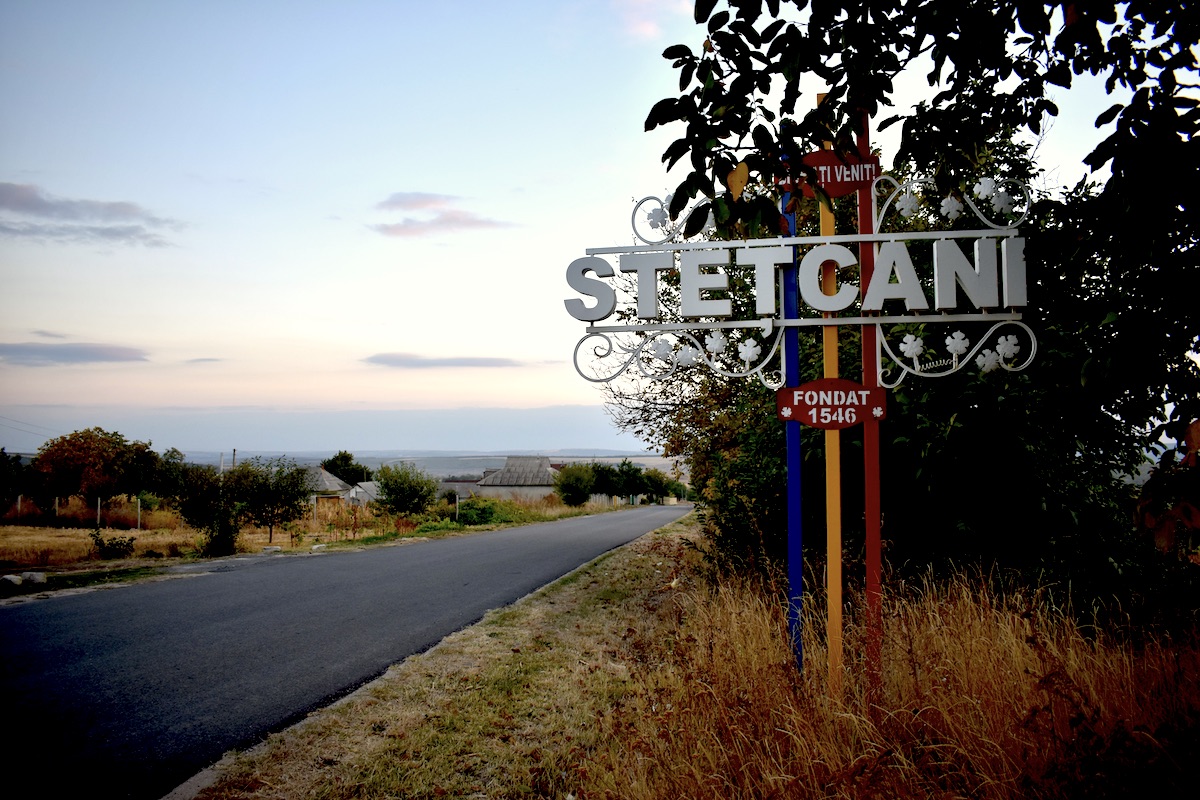
Costea Haiducu, 60, is a winegrower. He lives in Stețcani, a village north of Chișinău, Moldova's capital. Although the population of Stețcani now numbers no more than a hundred, that was not always the case. "The only ones left are 60-year-olds like me. People are fleeing this country and that makes me very sad. It's become normal in the villages here", laments Haiducu. As soon as people get the chance, they leave their homes in the hope of a better life in the capital or abroad. In the wake of this mass exodus: eerily deserted villages.
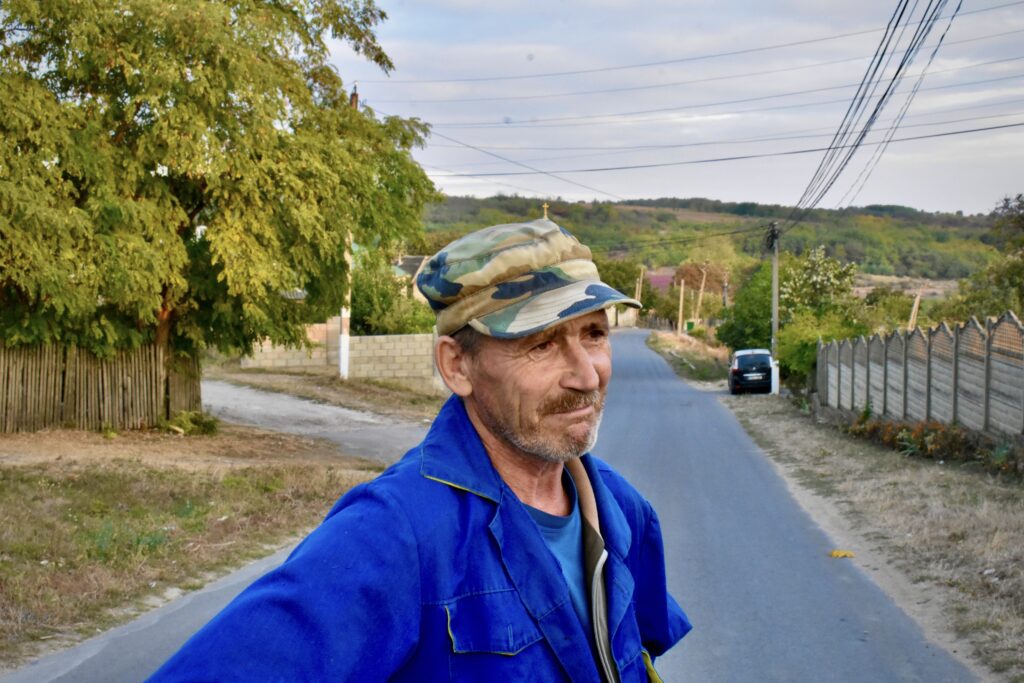
"Young people aren't the only ones leaving the country," says Costea Haiducu, who is dressed in faded overalls. While most people try to reach the capital, the wealthiest take the direct route to Western Europe. Costea is a direct victim of the exodus: "My wife left to work in Italy 10 years ago. I miss her so much", he says. Tears welling up in his eyes, he heads off back to his small home. We are on the only tarmac road in the village.
Since gaining independence in 1991 after the collapse of the USSR, this country wedged between Romania and Ukraine has been one of the poorest in Europe. The size of Belgium and with a population of 2.6 million – a third of whom live and work abroad – Moldova has repeatedly found itself torn between authoritarianism and democracy.
It is the country's villages that have paid the highest price for this instability. There has been a dearth of investment in public infrastructure. Medical deserts have appeared, and public transport is non-existent. "150 more villages could disappear in the next population census", observes Moldovan population researcher Valeriu Sainsus.
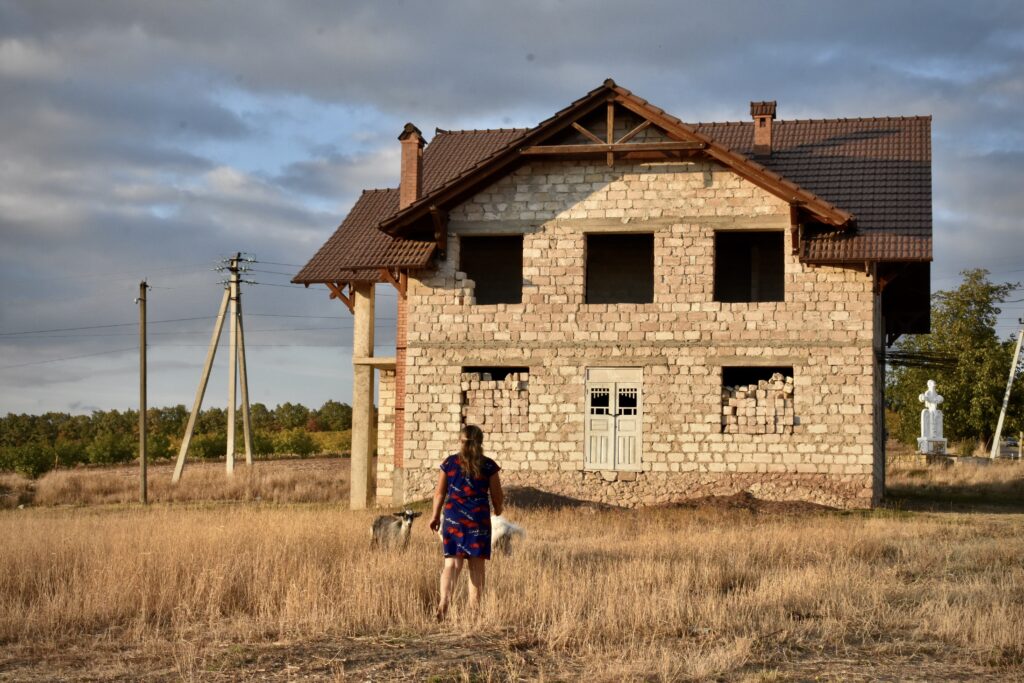
In the country's rural areas, stray dogs sometimes outnumber humans. The carcasses of abandoned houses, some still under construction, become kennels at the start of winter.
Well-trodden paths of exile
There is no shortage of ways to leave the country, and certain paths of exile have become well established over the last thirty years. Every Wednesday and Friday, the same scene repeats itself at Chișinău bus station: at 10.15am, a EuropaTur bus sets off for Paris. Colea, a Moldovan in his thirties, is once again leaving his partner to return to work in France. It will take him more than 20 hours to reach the French capital.
In 2023, more than one million Moldovans were living abroad. While the majority of the diaspora now lives in Romania or Ukraine, thousands of expatriates also work in Italy or Spain. On these buses, it is the skilled workforce that is leaving the country. Moldova is economically dependent on this diaspora, which sends part of its wages to families back home.
150 more villages could disappear in the next population census
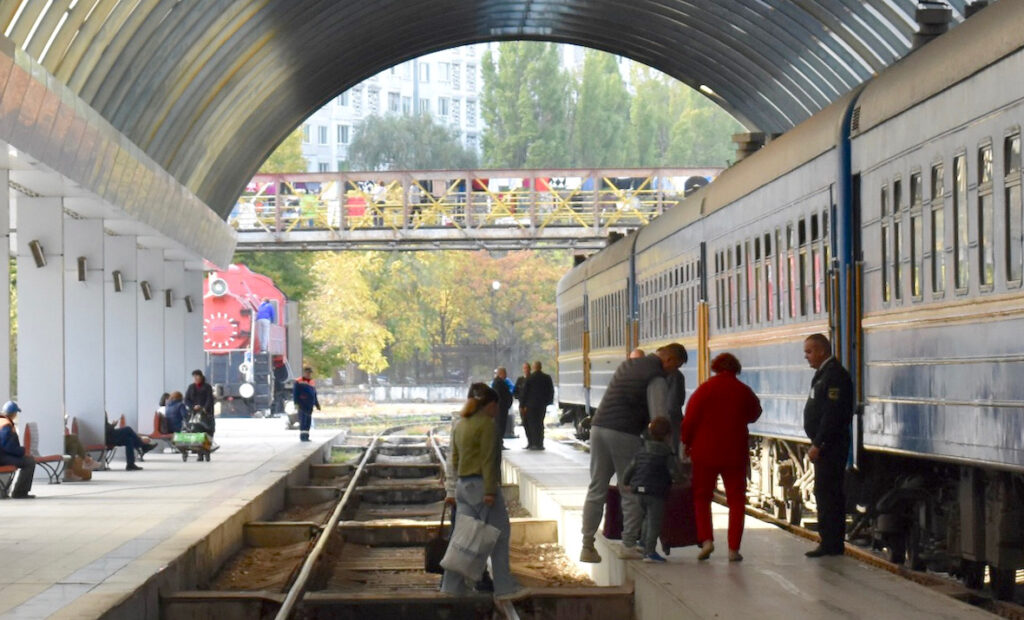
Moldovans are also leaving the country by rail. At 5.20pm, at Gara Centru, a daily service to Bucharest is preparing to depart. It is one of the last Soviet trains in Europe. The travellers, sometimes laden down with luggage that betrays expatriation, discover the rustic bunks they will have to endure until seven o'clock the next morning.
For some the journey is a one-way trip, but others are more experienced. One of these is Edgar, a 30-year-old professor at Bucharest Polytechnic University. Settled and married in Romania, he is part of the generation that did not believe in its future in Moldova: "I only come back two or three times a year to see my parents", he explains.
Having come to power in 2020, President Maia Sandu has made joining the EU her priority. In the capital, every Moldovan flag flies alongside the twelve-starred one. On 23 June 2022, the same day as Ukraine, Moldova was granted EU candidate status. The government sees this as a chance to quickly improve living conditions and thus halt depopulation.
But EU membership is unlikely to come before 2030. Corruption and Russian pressure in Transnistria remain major obstacles. Nevertheless, Moldovan interior minister Adrian Efros does not mince his words when talking about the country's future membership: "Joining the European Union will bring Moldova freedom, prosperity, democracy and peace."
Younger Moldovans are hopeful too. They need only look to neighbouring Romania, which joined the EU in 2007, to see a possible future. In rural areas of Romania that are just as impoverished as their Moldovan equivalent, dilapidated dwellings stand side by side with new infrastructure financed by Europe.
Mihai, 20, is a student in the capital. He is one of the first generation of Moldovans to learn English at school, and now speaks it with ease. Surprised to meet a journalist from another European country, Mihai supports the EU project with enthusiasm, and "[hopes] with all [his] heart that Moldova will join the European Union as soon as possible". It will give the youth of his country a future, he says.
This article is published within the Come Together collaborative project
Do you like our work?
Help multilingual European journalism to thrive, without ads or paywalls. Your one-off or regular support will keep our newsroom independent. Thank you!